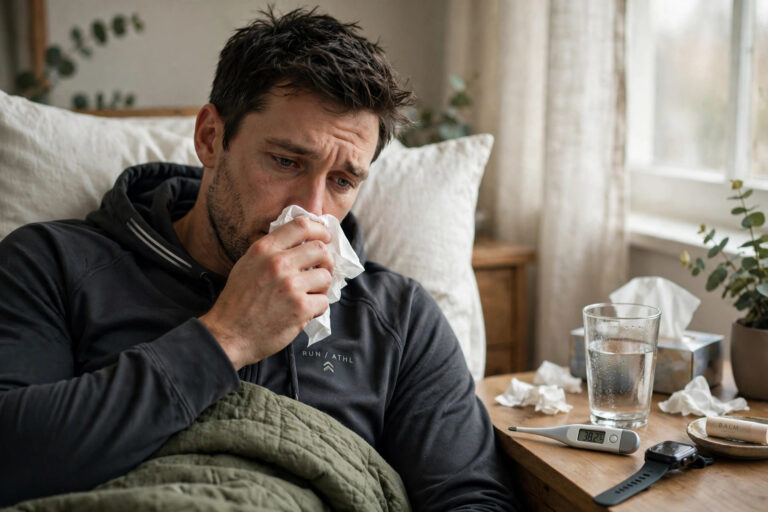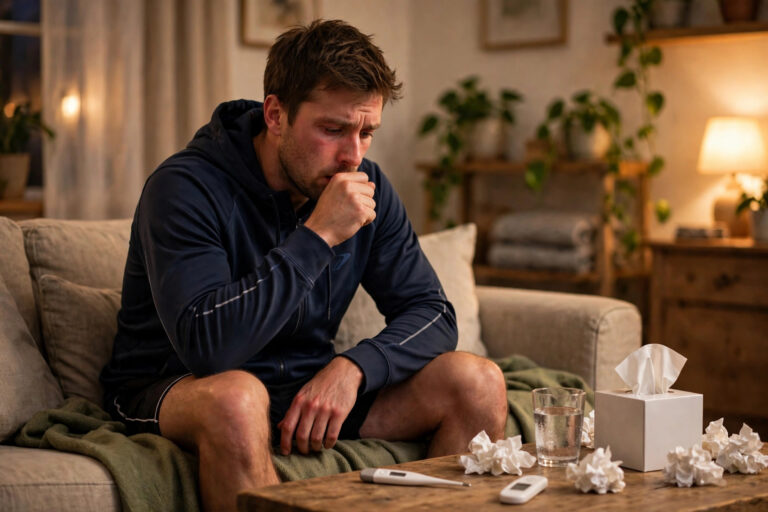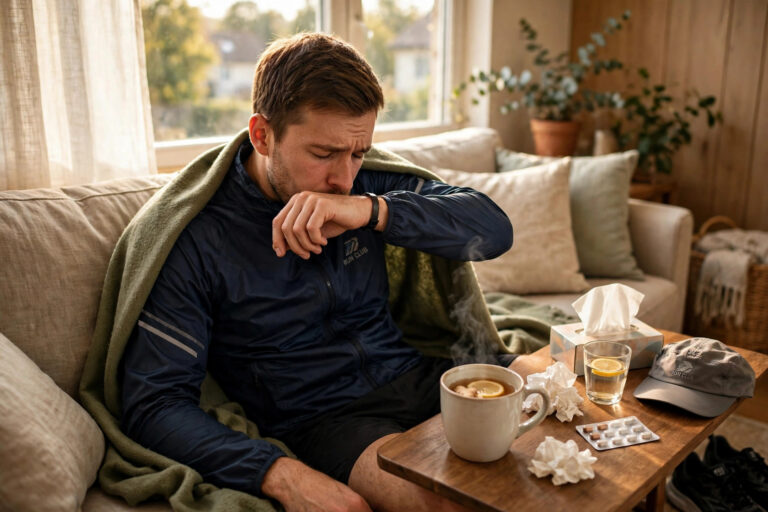


I once watched a teammate swallow, wince, and then announce he was fine to play. His throat looked like it had been sandpapered from the inside, he had a fever, and he’d barely slept — but because he could still jog, he figured it was just a bad cold. Two days later, half the squad had the same throat. He didn’t have a cold. He had strep throat, and he’d trained straight through the most contagious part of it.
That’s the thing about strep: it doesn’t announce itself with a dramatic collapse. It looks like a sore throat, feels like a sore throat, and then quietly turns out to be a bacterial infection that needs antibiotics, rest, and a bit of patience. So what does strep throat actually look like — and how do you tell it apart from the dozen other things that make your throat hurt?
It’s a question a lot of people are asking right now. In a September 2026 analysis of US search data, “What does strep throat look like?” ranked as the fifth most-Googled respiratory health question in the country, at an estimated 57,000 searches a month. Virus season is here — our flu-season training guide covers how athletes should handle training when viruses are circulating — and everyone with a raw throat wants to know where they stand.
What Strep Throat Actually Is
Strep throat is an infection of the throat and tonsils caused by a bacterium called group A Streptococcus — group A strep for short. That single fact is what separates it from most sore throats, which are caused by viruses. A viral sore throat usually rides along with a cold. Strep throat is a bacterial infection in its own right, and it behaves differently: it tends to come on fast, hit harder, and — crucially — it responds to antibiotics, while a viral sore throat doesn’t.
It’s most common in school-age children. According to the CDC, up to 30 percent of children with a sore throat have strep throat, compared with only about 10 percent of adults. Adults who spend a lot of time around kids — parents, coaches, teachers — pick it up more often too. You can catch it at any time of year, but it’s most common in late fall and early spring, which is exactly where we are now.
Strep Throat Symptoms: What to Look For
If you could peek inside a strep throat, here’s what you’d typically see — and feel:
- A sore throat that starts quickly and hurts a lot when you swallow. Not a scratchy morning throat that fades after tea. A proper, wincing pain.
- A fever of 101°F (about 38.3°C) or above. Strep usually brings a real fever, not just feeling warm.
- Red, swollen tonsils, sometimes with white patches or streaks of pus. This is the classic visual sign people picture when they ask what strep throat looks like. The white patches are pus on the tonsils — unpleasant, but a useful clue.
- Tiny red spots on the roof of your mouth. Doctors call these petechiae. They’re small, pinprick spots on the soft or hard palate, and they’re one of the more distinctive strep throat symptoms.
- Swollen lymph nodes in the front of your neck. Tender lumps under your jaw or along the front of the neck that hurt when you press them.
- Headache, nausea, or vomiting. Stomach upset shows up more often in children, but adults get it too.
- A sandpaper-like rash. If a fine, rough rash appears along with the sore throat and fever, that’s scarlet fever — a form of strep infection that needs prompt medical attention.
Now here’s the equally important half of the picture: what strep throat usually does NOT look like. A cough, a runny nose, hoarseness, and congestion are not typical strep throat symptoms. If your throat hurts and you’re also sneezing and blowing your nose all day, a virus is the more likely culprit. Strep tends to arrive without the cold symptoms — sore throat, fever, and swollen glands, minus the sniffles. That’s one of the quickest ways to tell the two apart.
The Mirror Test: A 60-Second Self-Check
You can’t diagnose strep throat by looking in the mirror — only a test can do that, and I’ll get to that in a moment. But a quick self-check tells you whether it’s worth getting tested today rather than waiting it out:
- Look at your tonsils. Are they red and swollen, with white patches or streaks?
- Check the roof of your mouth. Any tiny red spots?
- Feel your neck. Are the glands at the front tender or swollen?
- Take your temperature. Is it 101°F or higher?
- Ask about the cold symptoms. No cough, no runny nose, but a throat that hurts to swallow?
The more of these you tick, the stronger the case for a test. One sore throat on its own could be anything. A sore throat plus fever plus white patches plus swollen glands and no cough — that’s a pattern worth a clinician’s attention, not another day of throat lozenges and hope.
Strep vs a Viral Sore Throat: The Side-by-Side
| Strep throat | Viral sore throat |
|---|---|
| Cause: Group A strep bacteria | Cause: A virus (often a cold virus) |
| Onset: Sudden, over hours | Onset: Gradual, over a day or two |
| Fever: Usually 101°F or higher | Fever: Mild or none |
| Tonsils: Red, swollen, white patches | Tonsils: Red, but usually no white patches |
| Roof of mouth: Tiny red spots possible | Roof of mouth: Usually normal |
| Cough / runny nose: Usually absent | Cough / runny nose: Usually present |
| Swollen neck glands: Common, tender | Swollen neck glands: Less common |
| Treatment: Antibiotics | Treatment: Rest, fluids, symptom relief |
If your row reads mostly like the left-hand column, stop guessing and get tested. If it reads like the right, rest and fluids are probably the right call — but if it worsens or drags on, get checked anyway.
How Strep Is Actually Diagnosed
This part matters, because it’s where a lot of people go wrong. Looking at your throat — even a clinician looking at your throat — is not enough to diagnose strep throat. The CDC’s clinical guidance for group A strep pharyngitis is clear on this: a strep test is needed to tell whether group A strep bacteria are causing a sore throat.
The usual process is simple. A clinician swabs the back of your throat and tonsils, and a rapid strep test gives a result in minutes. If that test is positive, you have strep throat and antibiotics can be prescribed. If it’s negative but your clinician still strongly suspects strep, they’ll send a throat culture to the lab — that takes longer, but it’s more sensitive and catches cases the rapid test misses.
Don’t try to shortcut this. I’ve seen athletes self-diagnose from a photo online and either take leftover antibiotics they didn’t need or — worse — skip antibiotics they did need because their throat “didn’t look that bad.” A five-minute swab beats a week of guessing.
How Long Is Strep Throat Contagious?
This is the question that matters most if you train with other people, live with family, or coach kids. The answer depends entirely on whether you’re treated:
- Without antibiotics, you can stay contagious for two to three weeks. The bacteria don’t politely leave when you start feeling a bit better — feeling better is not the same as no longer spreading it. It’s the same two-clocks problem we covered with bronchitis: contagious for days, coughing for weeks.
- With antibiotics, the picture changes fast. CDC clinical guidance says treatment for 12 hours or longer limits your ability to transmit the bacteria, and people with strep throat should stay home until they are fever-free and at least 12–24 hours into appropriate antibiotic therapy. The practical rule most clinicians use: 24 hours of antibiotics plus no fever, and you’re generally no longer contagious.
The incubation period — the gap between catching it and symptoms starting — is two to five days. So if your training partner tested positive on Thursday, and your throat starts hurting on Sunday, that’s not a coincidence. It’s the timeline working exactly as expected.
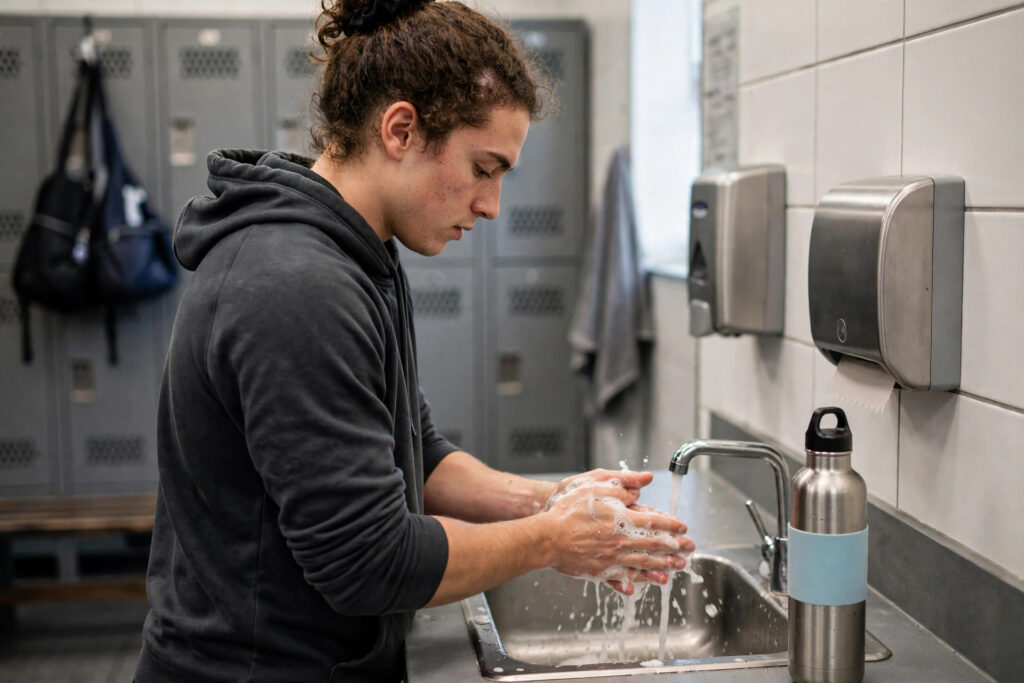
For the household, the boring basics do the real work: wash your hands often, don’t share cups, bottles, or utensils, cover coughs and sneezes, and don’t share a water bottle at the gym — ever, but especially now. There is no vaccine for strep throat, so hygiene and prompt treatment are the whole prevention plan.
Treatment: What Antibiotics Actually Do
If the test is positive, antibiotics are the treatment — usually a full course of around ten days, and the exact drug and dose are your clinician’s call, not the internet’s. Here’s what they do for you:
- Shorten the illness. Most people start feeling better within a day or two of starting antibiotics.
- Reduce your symptoms. The throat pain and fever ease faster than they would on their own.
- Stop the spread. As above, you’re generally no longer contagious after about 24 hours on them.
- Prevent complications. This is the one people underestimate. Untreated strep can lead to more serious problems, including tonsil and sinus infections and, rarely, acute rheumatic fever — an inflammatory disease that can affect the heart, joints, skin, and brain.
Two rules come with the prescription. First, finish the entire course, even when you feel better — stopping early risks a return of the infection and contributes to antibiotic resistance. Second, call your clinician if you don’t feel better after 48 hours on antibiotics. That’s the checkpoint the CDC itself flags: no improvement in two days means something needs re-checking.
For symptom relief while the antibiotics work, the usual measures help: rest, plenty of fluids, salt-water gargles, and over-the-counter pain relief for fever and throat pain, used as directed. None of these replace antibiotics for strep — they just make the wait more bearable.
Athletes: When Can You Train Again?
Here’s the honest version, not the motivational-poster version. Strep throat is not a cold you can push through, because it’s a bacterial infection with a fever, and your body is genuinely fighting something. Training hard while feverish is a bad idea for any illness, and strep adds a contagiousness problem on top: training while you’re still within that first 24 hours of antibiotics puts your whole squad at risk.
Use this ladder instead:
Step 1: Full rest while feverish or clearly unwell. No training, no “just an easy session.” Rest is the program, and you’re also protecting everyone else by staying home.
Step 2: Wait for the 24-hour mark. Fever-free, and at least 24 hours into your antibiotics. That’s your earliest return window — and only if you actually feel up to it.
Step 3: Start easy. A short, light session — a walk, gentle mobility, half your normal easy duration. See how you feel the next day, not just during the workout. If the throat pain or fever creeps back, drop back to rest. Our training-with-a-cold comeback timeline uses the same easy-first ladder for ordinary colds.
Step 4: Build back over a few days. Add duration before intensity. Most people feel substantially better within three to five days of starting antibiotics, so a gradual return over that window is realistic — but let your body, not your training plan, set the pace.

One more thing worth knowing: if you keep getting strep throat again and again — especially in a household or team where it keeps going around — tell your clinician. Recurrent strep sometimes means someone close to you is carrying the bacteria without symptoms, or that the infection wasn’t fully cleared. It’s a pattern worth investigating, not just bad luck to accept.
Myth vs Fact: Strep Throat Edition
Myth: “If there’s no white stuff on my tonsils, it can’t be strep.” Fact: White patches are common but not universal. Some strep throats show redness and swelling without obvious patches — and some viral throats look nasty too. Only a test settles it.
Myth: “Feeling better means I’m not contagious anymore.” Fact: Not without treatment. Untreated strep can spread for two to three weeks, even as symptoms ease. With antibiotics, the 24-hour rule is what counts — not how you feel.
Myth: “Antibiotics will fix it overnight.” Fact: Most people feel better in a day or two, but the full course still matters. Stopping early because you feel fine is how infections come back.
Myth: “A sore throat with a cough is probably strep.” Fact: Usually the opposite. Cough and runny nose point away from strep and toward a virus. Strep’s signature is a sore throat WITHOUT the cold symptoms.
Myth: “Kids get strep, adults don’t need to worry.” Fact: Adults get it too — about 10 percent of adult sore throats are strep — and adults around children get it more often. If your kid has strep and your throat starts hurting, don’t dismiss it as sympathy pain.
When to Get Medical Help Fast
Most strep throat clears well with antibiotics. Get seen promptly — or urgently if these show up — if you have difficulty breathing or swallowing, drooling because swallowing hurts too much, a stiff neck, a rash that looks like sandpaper, symptoms that worsen after starting antibiotics, or no improvement after 48 hours on them. And if a sore throat keeps coming back, or you have repeated episodes, that’s a conversation for your clinician, not a repeat of whatever worked last time.
FAQs About Strep Throat
What does strep throat look like in the mirror?
Typically red, swollen tonsils — often with white patches or streaks of pus — plus possibly tiny red spots on the roof of the mouth and tender, swollen glands at the front of the neck. But appearance alone can’t diagnose it; a rapid strep test or throat culture is needed to confirm.
How long does strep throat last with antibiotics?
Most people start feeling better within one to two days of starting antibiotics, and symptoms usually improve significantly within three to five days. Without treatment, it can last longer and stay contagious for two to three weeks. Always finish the full prescribed course.
Can you train with strep throat?
Not while you’re feverish or within the first 24 hours of antibiotics — rest, and stay away from training partners while you’re contagious. Once you’re fever-free, 24 hours into antibiotics, and feeling better, return gradually: easy sessions first, then build duration before intensity.
The Bottom Line
So, what does strep throat look like? A throat that’s red and swollen, often with white patches on the tonsils, tiny red spots on the roof of the mouth, a fever of 101°F or more, and tender glands in the neck — all usually WITHOUT a cough or runny nose. But the real takeaway isn’t the picture. It’s that the picture alone isn’t a diagnosis.
My teammate’s throat looked bad enough that everyone in the room could see it. What nobody could see was whether it was bacterial — and that one fact decided everything: antibiotics or not, contagious for days or for weeks, train or stay home. A five-minute swab answered it. If your throat matches the pattern above, get the swab, take the full course, sit out the 24 hours, and come back properly. Your season will survive a few days off. It won’t survive you handing strep to the whole squad.
This article is for general information only and isn’t medical advice. If you’re worried about your symptoms, have trouble breathing or swallowing, or aren’t improving on antibiotics, talk to a healthcare professional promptly.