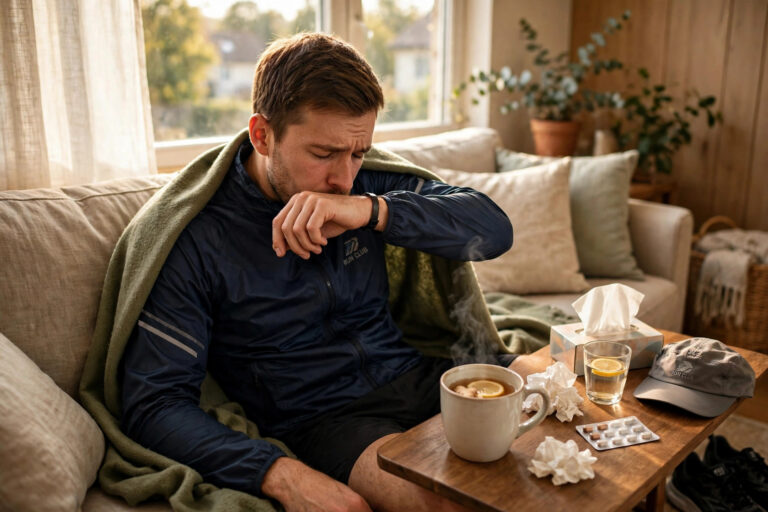
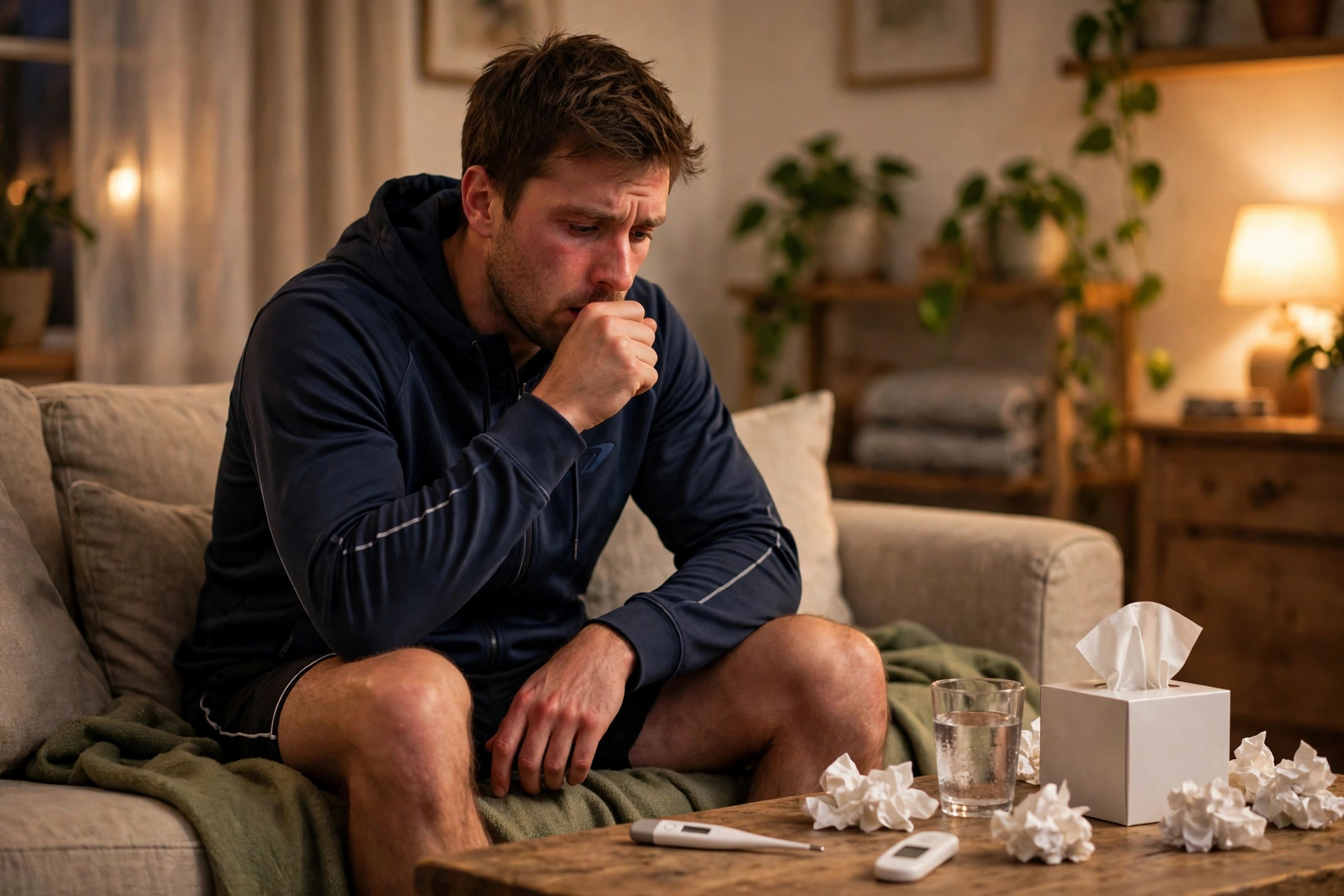

Last winter, a friend of mine texted our whole running group the same message nobody wants to get: “I’ve got pneumonia. Sorry, I was coughing all through Saturday’s run.” That message made me ask: is pneumonia contagious?
Within minutes, the replies split into two camps. Half the group was Googling frantically. The other half shrugged it off — “you can’t catch pneumonia, it’s not like a cold.” Both sides were half right, and that’s exactly why this question causes so much confusion.
Here’s the honest answer up front: you can’t catch “pneumonia” itself off someone like you’d catch a cold. But you absolutely can catch the germs that cause it. Whether those germs then turn into pneumonia in your lungs depends on the germ, your immune system, and a bit of luck.
It’s no wonder people keep asking. A recent analysis of US search data ranked “is pneumonia contagious?” as the most-Googled respiratory health question in the country, at an estimated 137,000 searches a month. So let’s settle it properly — germ by germ.
What Pneumonia Actually Is
Pneumonia isn’t one disease. It’s a name for an infection of the lungs, and a whole cast of different germs can cause it. The CDC puts it plainly: many different bacteria, fungi, and viruses can cause pneumonia.
Think of your lungs like a sponge made of tiny air sacs. When those sacs get inflamed and fill with fluid or pus, oxygen struggles to get into your blood. That’s why pneumonia feels so different from an ordinary cold — it’s not just a stuffy nose, it’s your breathing itself under pressure.
The Short Answer to Is Pneumonia Contagious, Germ by Germ
This is the part most articles skip, and it’s the part that actually matters. “Is pneumonia contagious?” depends entirely on which type you’re talking about:
| Type of pneumonia | Can it spread person to person? | Typical contagious window |
|---|---|---|
| Viral (flu, RSV, COVID-19) | Yes | Until fever resolves and symptoms clearly improve, usually several days |
| Bacterial (e.g. Streptococcus pneumoniae) | Yes, via the bacteria | Generally around 24–48 hours after effective antibiotics begin |
| Walking pneumonia (Mycoplasma pneumoniae) | Yes | Can be 2–3 weeks or longer — this is the sneaky one |
| Fungal (from soil or bird droppings) | No | Not spread between people |
| Aspiration (food or liquid inhaled into the lungs) | No | Not an infection you catch at all |
Those windows are general ranges, not guarantees. Your own case can differ, which is why a clinician’s advice for your specific infection always beats a table — including this one.
Walking pneumonia deserves a special mention because it fools everyone. The Mayo Clinic notes that Mycoplasma pneumonia typically produces milder symptoms than other types — people often feel well enough to keep going to work, the gym, or training. That’s literally how it got its name: patients are still walking around. The CDC estimates about 2 million cases of Mycoplasma pneumonia a year in the United States in an average year, and because people don’t feel sick enough to stay home, it spreads quietly through households, dorms, and teams.
Myth vs. Fact: What People Get Wrong
Myth: “If someone has pneumonia, I’ll get pneumonia.”
Fact: You’ll be exposed to their germs, not their diagnosis. Your body might fight those germs off entirely, or you might get a cold, or — if conditions line up badly — you might develop pneumonia yourself. Same germ, different outcomes.
Myth: “Once the fever’s gone, I’m totally safe to be around.”
Fact: Mostly true for viral pneumonia, but not a clean rule for walking pneumonia, which can linger and spread for weeks. Feeling better is a good sign, not a guarantee.
Myth: “Fungal pneumonia spreads like the rest.”
Fact: No. Fungal pneumonia comes from inhaling organisms found in soil or bird droppings, and it mostly affects people with chronic health problems or weakened immune systems. You can’t catch it from a coughing coworker.
Myth: “Antibiotics make you instantly non-contagious.”
Fact: For bacterial pneumonia, the usual guide is around 24–48 hours after starting an effective antibiotic — and “effective” is doing a lot of work there. If the antibiotic isn’t the right one, or you stop early, that clock doesn’t count. Finish the course your clinician prescribed.
Myth: “Only old or frail people need to worry.”
Fact: Age and chronic illness raise the risk, absolutely. But athletes get pneumonia too, and a lung infection that knocks out your breathing knocks out your training far longer than a sore muscle ever will.
How Is Pneumonia Contagious in Real Life?
Picture a Saturday morning gym session. Someone with early walking pneumonia is coughing between sets — not dramatically, just a nagging cough they blame on “a cold that won’t quit.” They touch the dumbbells, chat close with a training partner, and head home.
That’s the classic chain: droplets from coughing or sneezing, inhaled at close range; hands picking up germs from surfaces and then touching eyes, nose, or mouth. Nothing exotic. Just ordinary close contact, repeated all day.
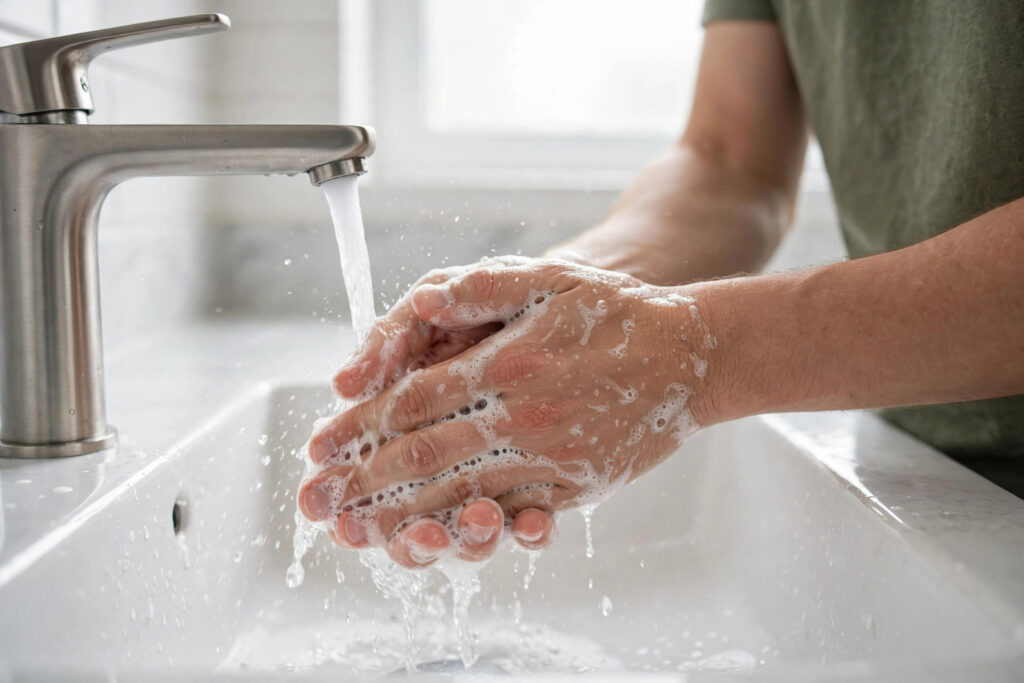
The practical version of that advice: wash your hands often with soap and water for at least 20 seconds, cover coughs and sneezes, disinfect frequently touched surfaces, and stay home from work, school, or training while you’re sick. Boring? Yes. Effective? Also yes.
When to Stay Home — and When to Get Help Fast
Most colds improve steadily over a few days. Pneumonia often announces itself differently. Watch for a cough that produces mucus, chest pain when you breathe or cough, shortness of breath, fever and chills that hang on, and unusual fatigue. Confusion, nausea, or vomiting can show up too, especially in older adults.
Get urgent help straight away if there’s difficulty breathing at rest, lips or face turning blue or grey, new or worsening chest pain, or confusion. Those are emergency signs, not “wait and see” signs.
This matters even more in virus season. The flu can lead directly to pneumonia, and bacterial pneumonia after influenza is a well-known complication — which is one more reason the annual flu shot does double duty. If you’re already tracking this season’s respiratory risks, our flu-season training guide lays out how athletes should handle training when viruses are circulating, and the same stay-home logic applies here.
Athletes: Can You Train Through It?
Short answer: no. Not through pneumonia.
I know the temptation. You’ve got a race in six weeks, a match on Saturday, a streak you don’t want to break. But pneumonia isn’t a cold, and your lungs aren’t a muscle you can push through. Training hard while your air sacs are inflamed is like trying to sprint with a blocked airway — you won’t get the adaptation, and you risk a much longer layoff.
What does a sensible return look like? First, clinician clearance — not your training partner’s opinion, not a forum post. Then a genuinely gradual rebuild: easy walking before jogging, short easy sessions before full training load, and a hard stop if breathlessness, chest pain, or fever return. If you’ve been through a respiratory illness before, you know the comeback timeline is slower than your ego wants — our guide to training with a cold showed that even ordinary colds took athletes a median of over a week to get back to full training. Pneumonia is a step beyond that, so patience isn’t optional, it’s the program.

Is Pneumonia Contagious? How to Lower Your Risk
You can’t avoid every germ. You can tilt the odds hard in your favour:
Get the vaccines that apply to you. The CDC recommends pneumococcal conjugate vaccination for all previously unvaccinated adults aged 50 and older, and for adults aged 19–49 who are at increased risk. The annual flu shot matters too, because preventing flu prevents a common route into pneumonia. RSV vaccination is available for certain adults as well — ask your clinician what’s recommended for your age and health situation.
Protect the basics. Sleep, decent nutrition, and not smoking all feed directly into how well your immune system handles a respiratory germ. That’s not wellness fluff; it’s the difference between fighting off an exposure and developing an infection.
Know your risk group. Older adults, young children, people with asthma, COPD, diabetes, or heart disease, people with weakened immune systems, and smokers all face higher risk. If that’s you, or someone in your household, the vaccine conversation and the stay-home rule matter even more.
Watch the household chain. If someone at home has pneumonia, the rest of the household should be extra careful about hand hygiene, ventilation, and not sharing towels or utensils — and extra honest about their own symptoms. Early care beats late care, every time.
Is Pneumonia Contagious? Frequently Asked Questions
Is pneumonia contagious after antibiotics?
For bacterial pneumonia, generally around 24–48 hours after starting an effective antibiotic — but “effective” means the right antibiotic, taken as prescribed. Viral pneumonia doesn’t respond to antibiotics at all, and walking pneumonia can spread for weeks. When in doubt, ask your clinician when it’s safe to be around others again rather than guessing from the calendar.
Can you catch pneumonia from kissing or sharing food?
You can catch the germs that cause pneumonia through close contact like kissing, or by touching contaminated surfaces and then your face. Sharing utensils or drinks with someone who is sick raises that risk. The germs are the contagious part — whether they become pneumonia in you is a separate question.
How long should I stay home with pneumonia?
Until your fever has resolved, your symptoms are clearly improving, and — for bacterial pneumonia — you’ve been on effective antibiotics for at least a day or two. For walking pneumonia, expect a longer caution period, since it can spread for weeks. Your clinician’s guidance for your specific type overrides any general timeline, including the ones in this article.
The Bottom Line: Is Pneumonia Contagious?
So, is pneumonia contagious? The germs that cause most types of pneumonia are — through coughs, close contact, and shared surfaces. But pneumonia itself isn’t something you simply “catch” like a cold. The same exposure might leave one person fine, give another a cold, and put a third in bed with a lung infection.
That distinction is actually good news. It means the boring, unglamorous stuff — staying home when you’re sick, washing your hands, covering coughs, getting the vaccines recommended for you — genuinely breaks the chain. And it means the question to ask isn’t just “is this contagious?” but “what type is it, and what does that type require?”
My running-group friend recovered fully, by the way. She stayed home, finished her antibiotics, and came back to easy runs weeks later — slower than she wanted, but back. Nobody else in the group got pneumonia. A couple of us got colds. That’s the whole story in miniature: the germs travelled, the outcomes differed, and patience did the rest.
This article is for general information only and is not medical advice. If you have breathing difficulty, persistent fever, chest pain, or symptoms that are worsening, seek medical care promptly and follow your clinician’s advice for your specific situation.