
Here’s a flu season scenario I bet sounds familiar: you’re four weeks into a training block, everything’s clicking, and then your throat starts scratching on a Tuesday. By Thursday you’re flat on the couch. By Sunday you’ve missed your long run, your tempo session, and nearly all of your motivation.
Now imagine that hitting mid-season instead of mid-winter. That’s where we’re headed: flu season 2026 is arriving earlier than usual — cases started climbing in mid-October, search interest spiked hard around October 13–14, and “CDC flu map” is one of the fastest-rising queries in the country. If you train or compete, here’s what you need to know.
Why This Flu Season Is Different
Most years, flu activity doesn’t pick up until November or December. This year, multiple outlets reported in mid-October that flu cases are rising earlier than usual — and Google Trends backs it up, with “flu season” searches peaking on October 13 and staying elevated since.
An early start matters for two reasons. First, a longer season gives the virus more weeks to find you. Second — the one athletes should care about — it overlaps with fall racing season, marathon training peaks, and winter sports conditioning. Getting knocked out during your peak block can end a season.
The good news? An early warning is still a warning. You have time to act.
Flu vs. Cold vs. “Just Tired” — Know the Difference
One of the fastest-rising flu questions right now is “difference between flu A and B” (+300% this week). Quick answer: both cause seasonal epidemics, but Flu A drives most severe seasons. In practice the letter doesn’t change what you do — same symptoms, same response.
The distinction that actually matters is flu vs. cold. A cold creeps in slowly — runny nose, sneezing, mild sore throat — and you feel okay below the neck. Flu hits like a truck: sudden fever (often 100–102°F+), body aches, chills, crushing fatigue. Fine to flattened in a few hours? That’s flu, not a cold.
And don’t confuse flu with overtraining fatigue. Overtraining feels like heavy legs and constant tiredness — but it doesn’t give you a fever or a sore throat that appeared overnight. Temperature means illness, not training load. Rest.

The Athlete’s Train-or-Rest Rule
Settle it with the rule sports medicine doctors use: above the neck / below the neck.
Above the neck only (runny nose, sneezing, mild sore throat, no fever): a light, easy session is usually fine. Conversational pace, half intensity, no intervals. Non-negotiable: no fever, nothing in the chest.
Below the neck (fever, body aches, chills, chest congestion, vomiting): do not train. Full stop. Training with a fever is genuinely dangerous — dehydration, prolonged illness, and in rare cases serious heart inflammation, one of the real dangers doctors flag with viral infections in athletes.
A marathoner friend tried to “sweat out” the flu with a tempo run three years ago. Three weeks in bed instead of one — and a missed goal race. The workout you skip when sick always costs less than the weeks you lose by training through it.
How to Come Back After the Flu
Fever’s gone and you’re itching to move. Ease back, don’t sprint back:
Days 1–2: Easy aerobic work at ~50% of normal volume. Slow jog, easy spin. Feel good during and after? You’re on track.
Days 3–4: Build to 70–80%, still no hard intervals. Check morning resting heart rate — 5–10 beats above normal means you’re not recovered yet.
Day 5+: Normal training only after two easy days with no relapse and a normal resting heart rate.
Golden rule: one easy day for every day you had a fever. It feels slow. It’s faster than relapsing.
Your normal recovery habits do the heavy lifting — sleep, hydration, easy nutrition. Our post-workout recovery routine for athletes covers the fundamentals, and they apply just as well after illness: your body can’t tell the difference between recovering from a hard session and recovering from being sick.
Your Flu-Season Defense Playbook
Prevention is where athletes have an edge — most of it is stuff you’re already doing, aimed at the right target.
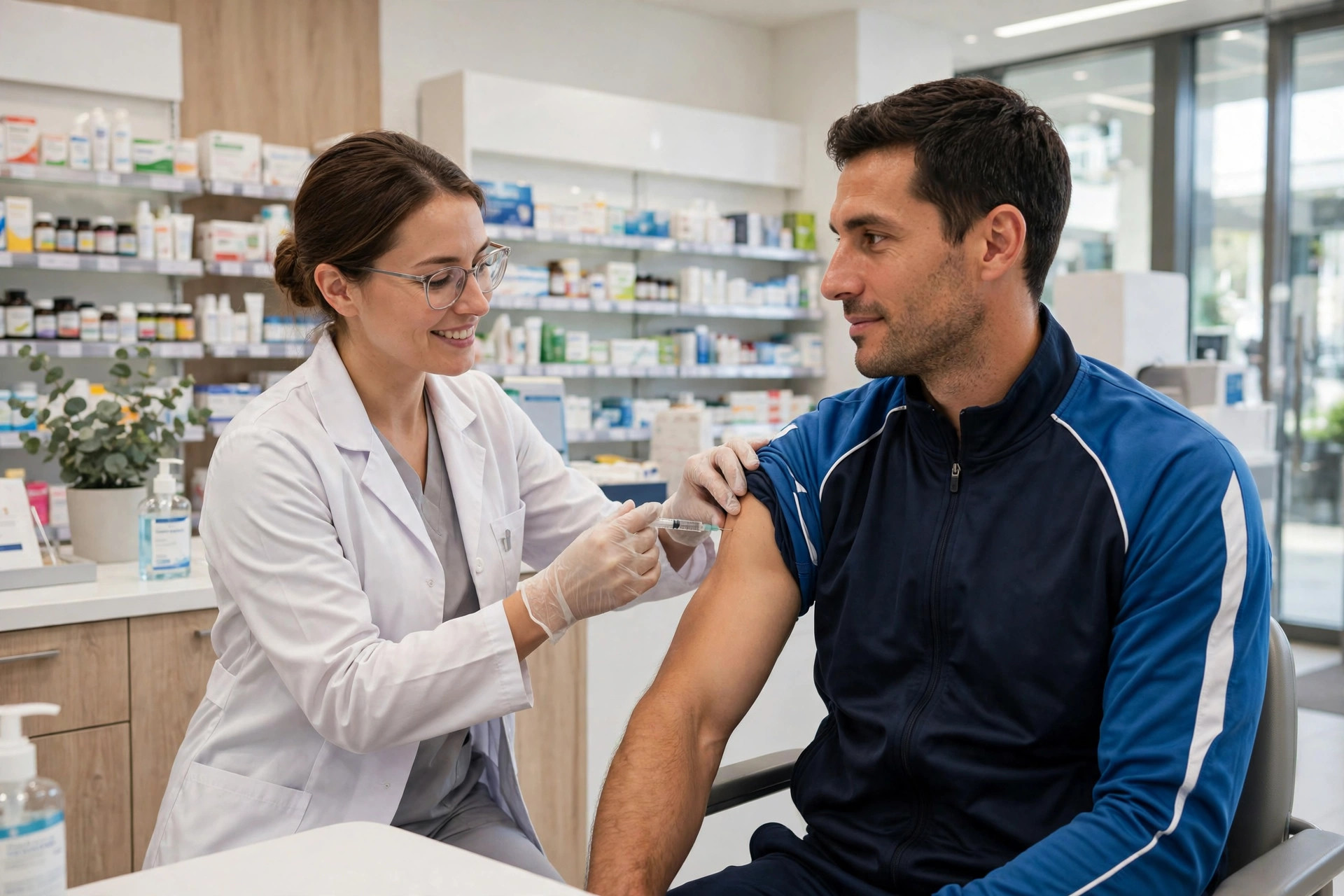
Get the flu shot — yes, even if you’re “healthy.” “I never get sick” is the most expensive sentence in amateur sports. The vaccine cuts your risk and makes breakthrough cases milder and shorter. “FluMist,” the nasal spray option, is up 200% in searches this week and is a legitimate needle-free choice for eligible adults. Get it now — protection takes about two weeks to kick in.
Sleep like it’s your job. Poor sleep measurably weakens immune response — one well-known study found people sleeping under six hours were over four times more likely to catch a cold virus. As we’ve covered before, sleep is the most underrated performance enhancer you’ve got, and flu season is when that investment pays off most.
Eat for your immune system. “Immune boosting foods flu season” is a breakout search right now. The unsexy truth: no single food “boosts” immunity, but consistent protein, colorful produce, and enough total calories (under-fueling tanks immune function) keep your defenses up. It’s part of protecting your athletic health — see our complete guide to protecting your athletic health for the full picture.
Hygiene basics, athlete edition. Wash your hands after the gym. Wipe down equipment. Don’t share water bottles, even with your training partner. And keep an eye on the CDC’s flu activity map to track what’s happening in your state.
Flu Season FAQs
Should I get the flu shot as an athlete?
Yes — highest-return move on this list. Side effects are usually a sore arm or a day of mild fatigue (schedule it for a rest day). It cuts both your infection risk and severity. A slightly lighter training week beats a lost month.
What’s the difference between Flu A and Flu B?
Both cause seasonal flu; Flu A drives most severe seasons and every recorded flu pandemic, while Flu B is generally milder. It doesn’t change your response: same symptoms, same train-or-rest rule, same prevention.
How long should I wait to train after a fever?
Fever-free for 24 hours without medication — that’s the medical baseline. Then one easy day per fever day before hard training. Resting heart rate still elevated, or symptoms creeping back? Add more easy days. Patience here saves your season.
The Bottom Line
Flu season 2026 showed up early, and for athletes that’s a training story, not just a health story. Know flu from a cold, respect the above-the-neck rule, never train through a fever, and rebuild gradually.
Don’t wait to get sick before acting. Get the flu shot now, protect your sleep, fuel properly, and watch local flu activity. Athletes who stay healthy through flu season aren’t lucky — they’re prepared. Be one of them.
This article is for informational purposes only and is not medical advice. Flu symptoms, who should get the vaccine, and return-to-activity decisions vary from person to person — talk to your doctor, especially if you have existing health conditions or symptoms that get worse.