


I’ll be honest with you — I used to feel guilty about my own training schedule. Some weeks, work swallowed Monday through Friday whole, and the only sessions I managed were two sweaty ones on the weekend. Every Monday, the same little voice piped up: that wasn’t enough. You’re falling behind.
That voice, it turns out, was wrong. And in 2026, a whole stack of new research has shown up to prove it.
If your weeks are packed but your weekends are yours, keep reading. Because the “weekend warrior” approach — cramming your training into one or two big sessions — just got some serious scientific backing, including the biggest studies ever done on it.
What Does “Weekend Warrior” Actually Mean?
The term sounds like a joke, but researchers use it very precisely. A weekend warrior is someone who hits the weekly activity guidelines — at least 150 minutes of moderate-to-vigorous exercise — but does it in just one or two sessions instead of spreading it across the week.
Same total dose. Different schedule.
The name comes from the classic office-worker stereotype: chained to a desk Monday to Friday, then going full beast mode on Saturday morning. Millions of people live this way — not by choice, but because life doesn’t hand out free hours. Parents, shift workers, startup founders, med students — the people who need exercise most are often the ones with the least time to do it.
That’s what makes this research genuinely useful. It’s not about an exotic new method. It’s about whether the only schedule many of us can keep is actually good enough.
What the 2026 Research Found (This Is Where It Gets Interesting)
The evidence has been building for years, but 2026 brought the heavy hitters.
The chronic-disease study. Published this year, Huang and colleagues followed 15,079 adults who already had heart disease, diabetes, or stroke for about a decade. The weekend warriors — those packing 150+ minutes into 1–2 days — had a 36% lower risk of dying than the inactive group. The regularly active folks (training across the week) were at 40%. That’s essentially the same ballpark — from two days instead of five.
The mega review. Also 2026: a systematic review and meta-analysis (published in BMC Public Health) pooled the weekend-warrior studies and found the pattern delivered comparable mortality reductions to regular exercise. In people with chronic disease, the hazard ratio for all-cause mortality was 0.67 for weekend warriors versus 0.63 for regular exercisers — a real but small gap. For cardiovascular death specifically, the two patterns were virtually identical (0.80 vs 0.79).
The accelerometer study. In nearly 90,000 UK adults with wrist-worn activity trackers, concentrating exercise into 1–2 days was linked to similarly lower cardiovascular risk as spreading it out. And here’s the part that surprised everyone: musculoskeletal injury rates were similar in both groups. The classic warning — “you’ll hurt yourself doing it all at once” — didn’t hold up in the data.
The diabetes data. A 2025 study in the Annals of Internal Medicine tracked 51,650 adults with diabetes. Weekend warriors had 21% lower all-cause mortality and 33% lower cardiovascular mortality than inactive participants — right in line with the regular exercisers.
So the headline is legit: when the weekly total is the same, the calendar pattern matters far less than we thought.
The Catches Nobody Mentions
Okay, deep breath. Before you cancel your weekday gym membership, let’s be honest about the fine print — because the internet is already turning this into “weekends only, no excuses, go crush it,” and that’s not quite what the science says.
First, every one of these studies is observational. Researchers watched what people did and what happened to them; they didn’t randomly assign people to training schedules. That means we can’t fully rule out that weekend warriors differ in other ways — maybe they’re just more motivated people overall. The effect is consistent and large, but it’s an association, not a proven cause.
Second, regular activity still edges ahead for some groups. In the chronic-disease subgroup of the meta-analysis, spreading activity across the week was slightly stronger (0.63 vs 0.67). If you have diabetes or heart disease, talk to your doctor — but the message is still encouraging: an imperfect schedule beats the couch by a mile.
Third, jumping straight into two monster sessions is how people get hurt. The studies looked at people who’d settled into their pattern. If you’ve been sedentary for a year and suddenly do a 3-hour Saturday smash session, that’s not “weekend warrior” — that’s a sprained ankle with extra steps. Ramp up over 3–4 weeks.
How to Build a Smart 2-Day Training Week
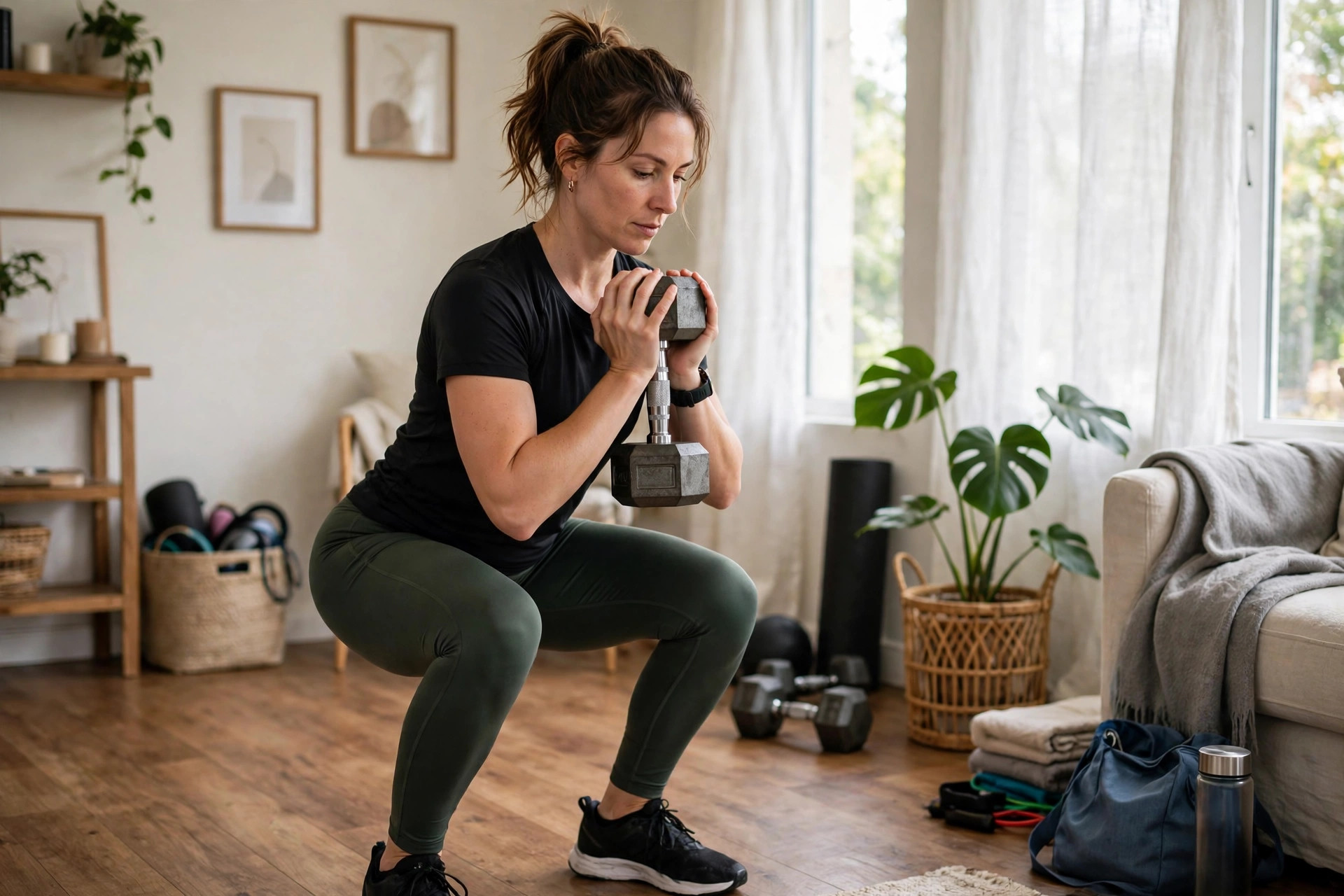
Here’s a template I actually like, built around the 150–180 minute weekly target the research is based on. Nothing fancy — just solid, balanced work.
Saturday: Strength day (60–75 minutes)
Warm up 10 minutes — easy cardio, then light sets of your first exercise. Then: a squat pattern (goblet squats, leg press), a hinge (deadlift or Romanian deadlift), a push (bench or overhead press), a pull (rows or pull-ups), and a carry (farmer’s walks are gold). Three sets of 6–10 reps each. Rest 2 minutes between heavy sets — your nervous system will thank you.
Sunday: Conditioning day (45–60 minutes)
Pick one: interval session (e.g., 8 rounds of 1 minute hard / 2 minutes easy on a bike, rower, or hill), or a longer steady session at conversational pace. Runners can alternate weeks. If you’ve been following the exercise-snacks research, think of this as the main course after a week of potential micro-sessions.

The rules that make it work:
- Don’t double your volume overnight. If you’ve been doing nothing, start with two 30-minute sessions and add 10 minutes a week.
- Warm up like you mean it. Ten minutes isn’t optional when you’re condensing a week’s training into two days.
- Protect your sleep. One rough night tanks your recovery — and with only two sessions, you can’t afford a wasted one.
- Midweek movement helps. A 10-minute walk or mobility flow on Wednesday isn’t “training,” but it keeps you from going full statue between sessions. (The research on short 4-minute daily workouts for older adults shows even tiny doses add up.)
- Eat for it. Two big sessions mean two big recovery windows. Protein after training, real meals, and water — the weighted vest research this year reminded us that the unglamorous basics drive most of the result.
Your Weekend Warrior Questions, Answered
Is it bad to exercise only on weekends?
Not according to the data. Multiple large studies — including 2026 research on over 15,000 people with chronic conditions — found weekend warriors had dramatically lower mortality than inactive people, matching regular exercisers. The key is hitting roughly 150 minutes of meaningful effort per week. Two focused sessions do that fine.
Can weekend warriors actually build muscle?
Yes, with one caveat: muscle growth responds best to training each muscle group at least twice a week in most studies. A weekend warrior can cover that — just make sure Saturday’s strength session hits everything (push, pull, legs), and add a short 20-minute bodyweight or band session midweek if you can. Two full-body strength days beats one “bro split” day, always.
How long should each weekend workout be?
Aim for 60–90 minutes per session, which lands you at 120–180 minutes for the week — right in the zone the research studied. Quality beats duration: 60 focused minutes with progressive overload outperforms 2 hours of scrolling between sets. Start shorter if you’re new, and build up.
The Bottom Line
Here’s what I want you to take away from all of this: the perfect schedule you can’t keep will always lose to the imperfect one you can.
If your life only gives you Saturday and Sunday, stop apologizing for it and start using it. Two hard, smart sessions a week — strength one day, conditioning the next, built up gradually — is one of the best-supported training patterns in the 2026 literature. Not a compromise. Not a guilty shortcut. A legitimate plan.
The research didn’t say weekends are better than spreading it out. It said something more useful: they count. And for millions of busy people, “it counts” is the difference between training and quitting.
This article is for informational purposes only and is not medical advice. Talk to your doctor or a qualified health professional before starting a new exercise program, especially if you have a heart condition, diabetes, or any chronic illness.