
The 2026 Finding That Made Me Pay Attention
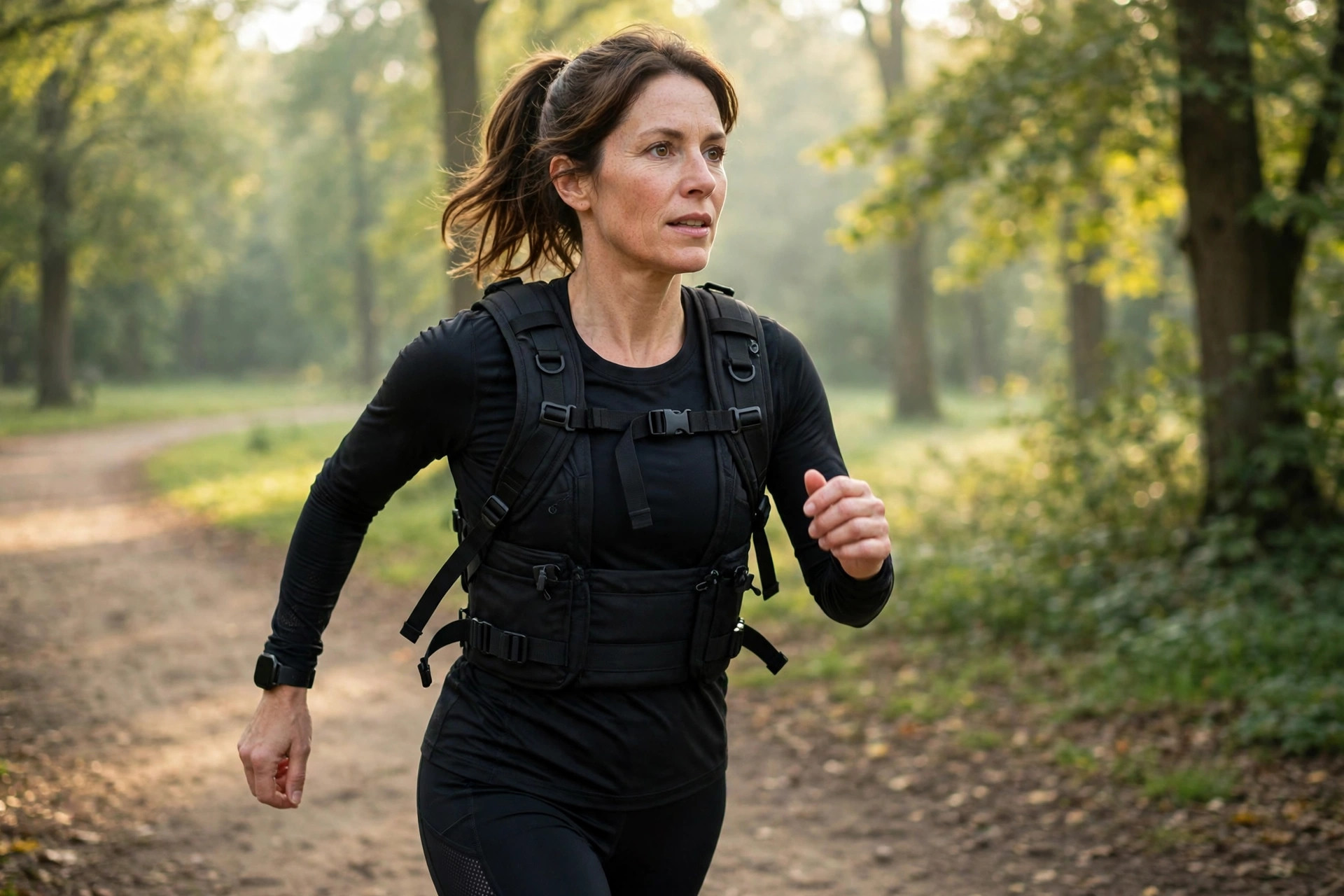
Last month I counted four of them on a single morning walk — neighbors I’d never seen break a sweat, all trudging past my house looking like they were headed to boot camp. Weighted vests. I’d seen the TikToks. I’d rolled my eyes at the TikToks. But then the studies started piling up in 2026, and I did what any self-respecting health nerd does: I went down the rabbit hole so you don’t have to.
Here’s the situation a lot of us are in. You walk every day, you eat reasonably, and the scale just… sits there. You don’t have an hour for the gym, and honestly, you don’t want one. The pitch for the weighted vest is seductive: strap on 10–20 pounds, do exactly what you’re already doing, and get more out of it. More fat burned, stronger bones, legs that don’t complain on stairs.
It’s a great pitch. The question is whether it’s true. Nine randomized trials, one very big year-long study, and a fresh trial published this month finally give us an honest answer — and it’s more interesting than either the hype or the eye-rolling suggests.
The 2026 Study That Made Me Pay Attention
Earlier this year, researchers pooled the best available evidence in Osteoporosis International: nine randomized controlled trials, 368 middle-aged and older adults, all testing weighted vests. This is the strongest summary we have, and the results split into two clean verdicts.
Compared with doing basically nothing (the “usual activity” groups), vest-plus-exercise programs improved hip and spine bone density and cut body fat by about 2.7 kg. High-certainty evidence. That’s genuinely good.
But here’s the part that matters: when researchers compared vest exercise against the same exercise without a vest, the vest added only about 0.7 kg of extra fat loss — and no confirmed extra bone benefit. That last comparison rested on very limited evidence, but the pattern across the research is consistent.
It lines up with what the scientists themselves keep saying: the exercise does the heavy lifting, and the vest just makes that exercise harder. That single sentence deflates about 90% of the marketing claims — and honestly makes the real benefits easier to trust.
Fat Loss: Where the Evidence Is Actually Decent
This is the claim with the most going for it. Start with the cleverest experiment: in 2020, Swedish researchers recruited 69 adults with obesity and gave half a heavy vest (11% of body weight) and half a near-weightless one. Everyone wore it 8 hours a day for three weeks. No diet changes. No exercise changes. The heavy-vest group lost 4.04% of their total fat mass; the light-vest group lost 0.31%. Muscle mass stayed put in both groups.
A follow-up in 2025 ran five weeks with precise CT scans and found the same flavor of result: fat mass down 2.6%, lean mass up 1.4%, waist down 2.3% — while the number on the scale barely moved. That’s textbook body recomposition, produced by wearing a vest and changing nothing else.
Then came the Wake Forest pilot, reported in June 2026. Eighteen older adults with obesity all dieted for six months; half also wore a weighted vest up to 10 hours a day. Both groups lost similar weight — but the vest group maintained their resting metabolic rate (burning roughly 220 extra calories a day at rest), while the diet-only group slowed down. Two years later, the vest group had kept off about half the weight they’d lost. The diet-only group had regained nearly all of it.
I’ll be straight with you: that pilot had about nine people per group, which is tiny. It’s promising, not proven. But it fits a real theory — the “gravitostat,” the idea that your bones sense how much load you’re carrying and tell your brain how much you weigh. Lose fat, the load drops, and your brain fights back by slowing your metabolism. A vest may trick the sensor into thinking the weight never left.
Bones: The Part the Ads Conveniently Skip
If fat loss is the vest’s strongest claim, bone health is where the hype falls apart — and this matters, because half the ads I see promise “stronger bones.”
The biggest vest trial ever run, INVEST in Bone Health (JAMA Network Open, 2025), followed 150 older adults through a year of weight loss. The vest group wore it around 7–8 hours a day. Result: the vest did not prevent the hip bone loss that comes with losing weight. Neither did resistance training, for the record — this is a genuinely hard problem.
A 2026 analysis from the same Wake Forest group added a crucial detail: more time standing or stepping while wearing the vest showed positive changes in bone density — but sitting around in one didn’t cut it. You have to move.
And the meta-analysis? Vest-plus-exercise beat doing nothing for bones, but it didn’t clearly beat the same exercise without the vest. So the honest reading is this: walking with a vest beats sitting on the couch for your bones. Whether it beats walking without one? The evidence isn’t there yet. Don’t buy a vest for osteoporosis. Do buy one knowing it won’t hurt your bones the way aggressive dieting can — if you actually walk in it.
The Newest Study: 3x Leg Strength, With an Asterisk
Just this month, an 8-week randomized trial out of Thailand found that older women doing exercise with a weighted vest gained roughly three times the leg strength of the exercise-only group. Leg strength is the stuff of real life — stairs, curbs, getting up off the floor.
But there was no bone change, and the caveats are loud: bone was estimated with a bioimpedance scale, not a proper DXA scan; effort was tracked by feel, not heart rate, so the vest group may simply have worked harder; and the participants were healthy Thai women aged 60–80, so the results don’t automatically apply to everyone. Encouraging — not a revolution.
How to Actually Use One (Without Wrecking Your Joints)
If you’re convinced enough to try, do it the way the trials did — not the way the ads do.
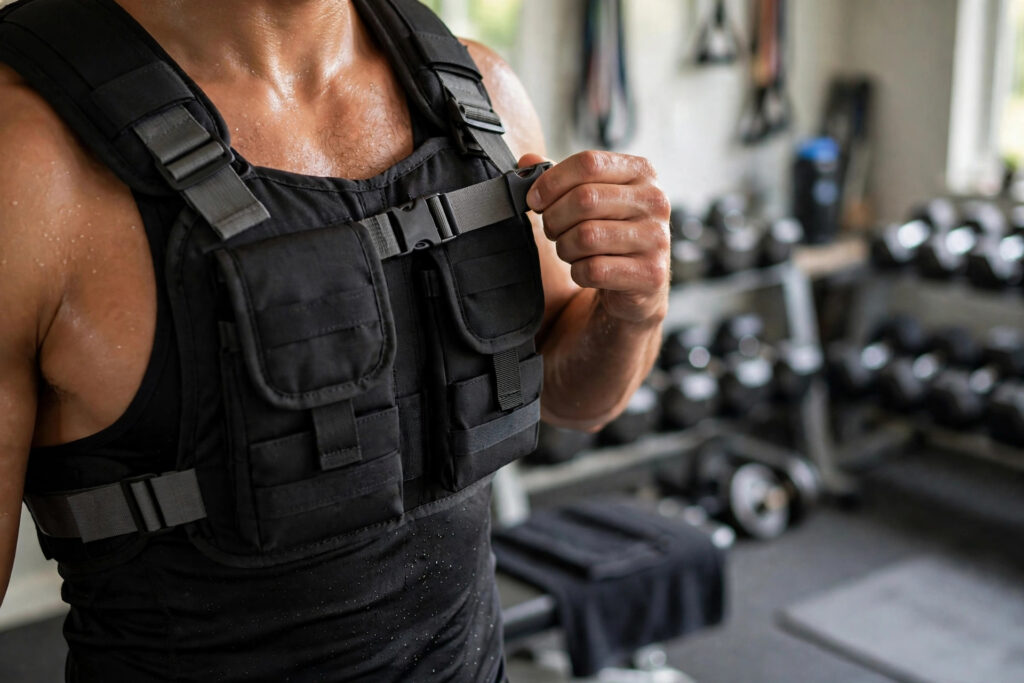
Start at 5–10% of your body weight. That’s the range most studies used, and it’s where the benefits showed up. Walk before you “ruck.” Your knees will thank you.
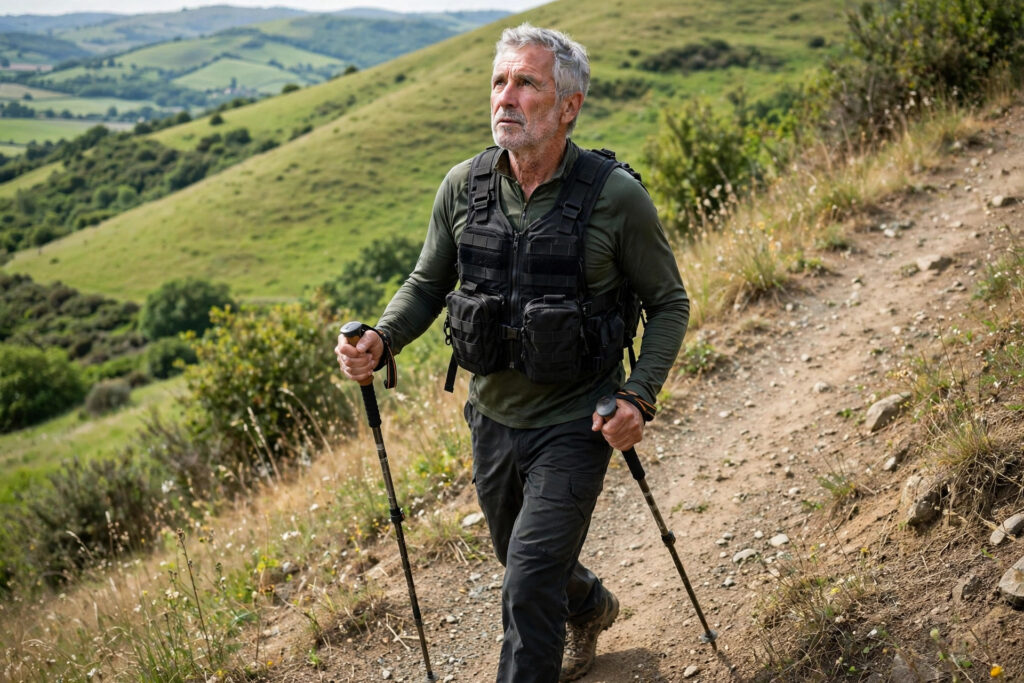
Wear it while moving, not while sitting. Standing, stepping, walking, stairs — that’s where every positive result lives. Strapping one on for your desk job is just a heavy fashion choice.
Keep it snug and high. A vest bouncing around your lower back is a backache waiting to happen. It should sit tight across your chest and upper back, weight evenly distributed.
Check with a clinician first if you have knee or hip arthritis, osteoporosis with fracture risk, back problems, or you’re pregnant. A couple of these trials explicitly didn’t report joint outcomes, so don’t assume it’s joint-friendly.
Treat it as an amplifier, not a program. Even the best vest studies don’t replace progressive strength training — and pairing your walks with a real routine, even a 4-minute daily workout, or stacking it into your exercise snacks throughout the day, gets you far more than any single gadget.
FAQs
How heavy should my weighted vest be?
Start with 5–10% of your body weight — that’s roughly 7–15 pounds for most adults, and it matches what the trials actually tested. Some studies went up to 11%, but more isn’t automatically better. If your form falls apart or your joints complain, it’s too heavy. Progress the way you’d progress anything: gradually.
Can I just wear it around the house all day?
You can, but the bone research says the benefit tracks with time spent upright and moving, not total hours worn. The Wake Forest dieting study had people wearing vests up to 10 hours a day and found the metabolic payoff — but for bones, sitting in a vest was nearly useless. Best use: wear it for walks, errands on foot, and active chores.
Will a weighted vest replace strength training?
No — and the honest version of the science is clear on this. The meta-analysis found the vest adds only a modest bonus on top of exercise itself. For muscle and bone, progressive resistance training is still king. Think of the vest as turning your daily walks into slightly harder workouts, not as a shortcut past the gym.
The Bottom Line
So, do weighted vests actually work? Yes — for specific things, in specific ways. They modestly boost the fat loss you get from walking, may blunt the metabolic slowdown that makes dieting so miserable (early evidence, take it with a grain of salt), and can meaningfully improve leg strength in older adults. They are not a bone-building miracle, and the exercise itself deserves most of the credit.
If you already walk and want more from those steps, a vest is a cheap, honest upgrade. Just don’t pay miracle prices for miracle promises — the research is better than the hype in some ways and worse in others, and that’s exactly what makes it worth knowing. Wake Forest’s own researchers put it well: if you’re going to wear the weight, make sure you’re moving.
This article is for informational purposes only and is not medical advice. Talk to your doctor or a qualified health professional before starting a weighted vest program, especially if you have joint, bone, heart, or metabolic conditions.