
My uncle took up pickleball last spring. He’s 63, retired, and he’d never played a racket sport in his life. Three weeks in, he was hooked — out on the courts four mornings a week, new paddle, new shoes, new group of friends. Five weeks in, he tripped chasing a dink, put his hand out to break the fall, and came home with a fractured wrist and a six-week sentence in a cast — his first brush with pickleball injuries.
He’s not the exception. He’s the statistic.
Pickleball is the fastest-growing sport in America, and its injury count is growing even faster. The good news? Almost all of these injuries are preventable — if you know what actually hurts people and you stop treating warm-ups like an optional extra. This is what the newest research says, and what to do about it before your next game.
Pickleball Injuries: The Numbers Are Hard to Ignore
Let’s start with the scale of it, because it’s genuinely startling.
Around 24.3 million Americans played pickleball in 2025, and participation grew 171% between 2022 and 2025 alone. That’s the fun part. Here’s the part nobody puts on the flyers: emergency department visits for pickleball-related orthopedic injuries have risen roughly 750% since 2016, with an estimated 109,272 ED visits across the decade from 2016 to 2025.
And it’s not just that more people are playing. A study published online on October 30, 2026 in the journal Injury tracked pickleball and tennis injuries in US emergency departments from 2014 to 2024. Tennis injuries stayed flat over those eleven years. Pickleball injuries surged — especially after 2022. The average pickleball patient was 60 years old, compared with 41 for tennis, and adults 65 and older made up more than half of all pickleball injury cases. Pickleball injuries were also twice as likely to end in a hospital admission: 7.8% versus 3.9% for tennis.
One more number, because it tells you who’s really at risk: in a 2025 survey of 1,758 players nationwide, 68.5% reported some injury or physical complaint tied to play in the previous twelve months. More than two in three players. That’s not a fringe problem — that’s the normal experience of the sport right now.
The 5 Pickleball Injuries That Actually Send People to the ER
Not every ache matters. These are the five that show up in emergency departments, over and over.
1. Wrist fractures from falls
This is the big one. A 2026 study in the Journal of Hand and Microsurgery counted an estimated 30,906 pickleball-related upper-extremity injuries treated in US emergency departments between 2015 and 2024 — and the annual count jumped from 642 in 2015 to 6,766 in 2024, a rise of nearly 954%. The wrist was the single most injured body part at 45% of cases, and fractures made up 68.7% of the diagnoses.
Do the math on that: roughly 3,000 wrist injuries walked — or were carried — into an emergency department in a single year, most of them fractures. The mechanism is almost always the same: a quick sideways lunge, a loss of balance, and an outstretched hand hitting the court. Women accounted for 68.5% of these upper-extremity injuries, and 84.5% of patients were 60 or older.
2. Shoulder, elbow, and wrist overuse
A follow-up analysis of that same national player survey, published in early 2026, found that 39% of players had a shoulder, elbow, or wrist problem — higher in men (42%) than women (37%). Pickleball shoulder is real: the game is a thousand short, sharp swings with very little rest between them. “Pickleball elbow” is tennis elbow’s younger cousin, and it shows up fast in people who jump from zero to five sessions a week.
3. Achilles and calf injuries
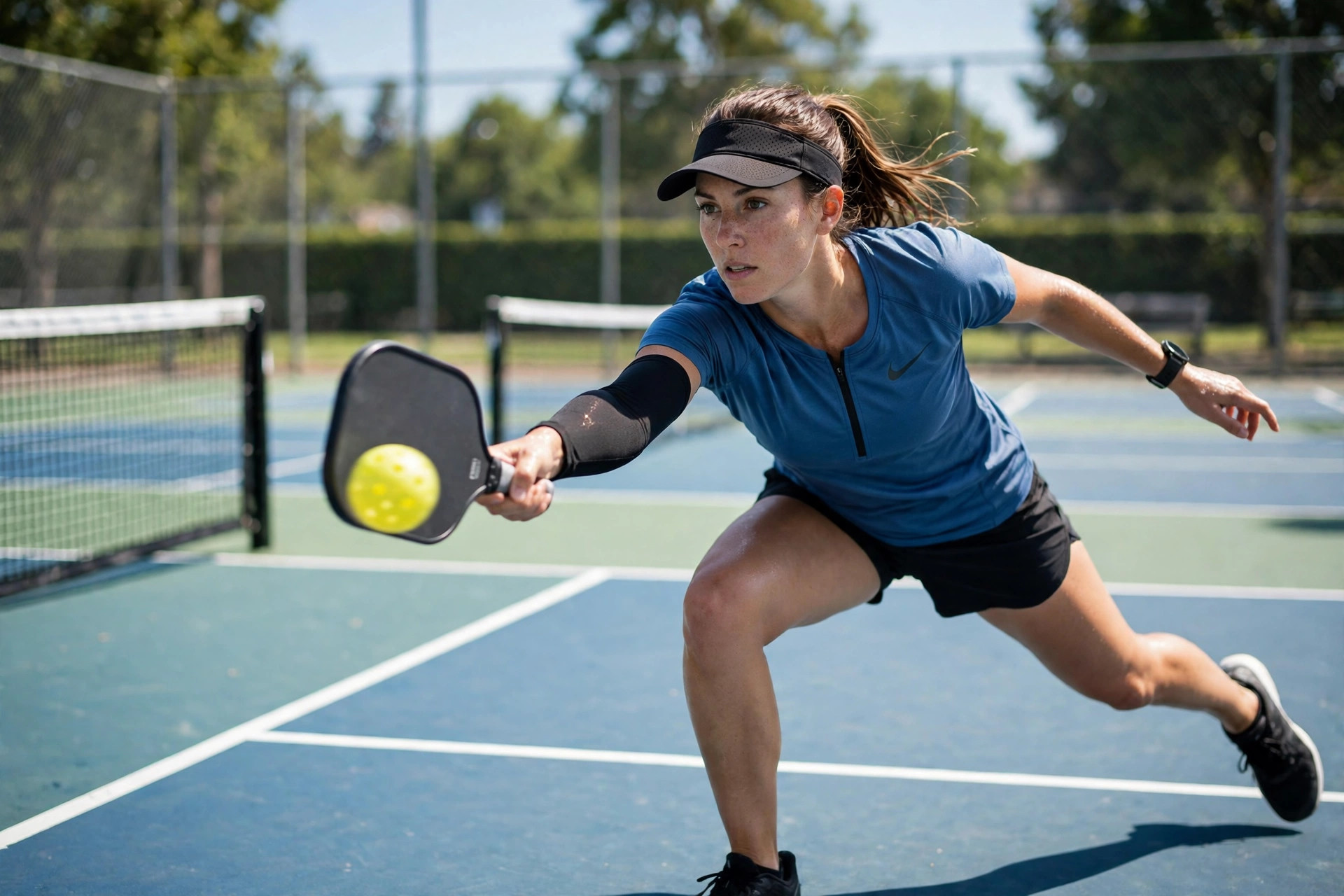
The kitchen line is where Achilles tendons go to die. You’re sprinting forward, stopping dead, then pushing off backward — all on a hard court, often in running shoes that were never designed for lateral movement. A sudden pop in the back of the calf mid-game is the classic story, and it’s the injury that ends seasons, not weekends.
4. Knee sprains and meniscus tears
Same story, different joint. The stop-start lunging loads the knee in directions it doesn’t love, especially if the muscles around it are weak or tired. Older players with a bit of existing arthritis are the most vulnerable — a twist that a 30-year-old shakes off can be the moment a 65-year-old’s knee finally gives way.
5. Eye injuries — the one nobody sees coming
This is the finding that genuinely shocked researchers. A study in JAMA Ophthalmology found an estimated 3,112 pickleball-related eye injuries treated in US emergency departments between 2005 and 2024 — and 1,262 of them happened in 2024 alone. The annual count was climbing by roughly 405 cases a year from 2021 to 2024.
The most common injuries were cuts around the eye (35%) and corneal abrasions (16%). But the severe ones are frightening: retinal detachment, orbital fractures, globe trauma, and bleeding inside the eye. A pickleball is light, but at close range — and the kitchen line puts you seven feet from your opponent — it arrives fast enough to do real damage. And here’s the kicker: a 2026 follow-up study found that among amateur players who wear any eyewear on court, only 38.81% are wearing dedicated protective eyewear. The rest are in regular glasses, which can shatter, or nothing at all.
Why Pickleball Injuries Are Different From Tennis Injuries
It looks gentle. That’s the trap.
Tennis players expect a physical sport. They warm up, they train, they know they’re athletes. Pickleball sells itself as the friendly game anyone can play — and that’s true right up until it isn’t. Most new players are over 50, many haven’t done a lateral movement in decades, and almost nobody warms up before a “casual” game.
The court itself is the problem. It’s small, so the rallies are fast and the reactions are instant. The kitchen line forces you into a crouch, then a lunge, then a backpedal, all within a couple of seconds. There’s no gentle jog between points to recover — it’s burst, stop, burst, stop, for an hour or two.
Then there’s the schedule. Tennis players play twice a week. Pickleball players play four mornings a week because it’s social, it’s fun, and the courts are full of their friends. The load adds up quietly, and the body doesn’t send a warning memo. It just breaks one Tuesday.
If you’re coming from tennis, the recovery tips from tennis still apply — but the injury pattern is different enough that you can’t just copy your old routine and expect it to hold.
The 10-Minute Warm-Up That Protects You From Pickleball Injuries
Here’s the part most articles skip: what to actually do. Not vague advice — ten minutes, before every session, no exceptions.
Minutes 0–3: Get warm. Brisk walking around the court, easy side shuffles, arm circles. You’re raising your temperature, not proving anything.
Minutes 3–6: Wake up the legs. Ten bodyweight squats. Ten lunges, slow, holding the bottom for a second. Ten calf raises. This is the part that protects your Achilles and your knees — cold tendons tear, warm ones stretch.
Minutes 6–8: Wake up the shoulders. Gentle paddle swings, starting small and building up. Ten arm circles each way. A few practice dinks from the kitchen line before you start keeping score.
Minutes 8–10: Practice the scary movements slowly. A couple of controlled lateral shuffles. A slow backpedal. One or two easy lunges toward the net. You’re rehearsing the exact movements that cause falls — at half speed, while you’re still in control.
That’s it. Ten minutes, and you’ve addressed the three biggest injury mechanisms in the sport: cold tendons, cold shoulders, and unpracticed balance. My uncle now does this every single time. His wrist healed, he’s back on court — and he’s the one telling the new players to warm up.

Myth vs. Fact: What Players Get Wrong About Pickleball Injuries
Myth: “It’s a low-impact sport, so it’s safe for anyone.”
Fact: It’s low-impact on your heart and high-impact on your joints. The stop-start lunging and the fall risk are the whole story — 91% of pickleball ER injuries in one ten-year analysis happened to players aged 50 and older, and fractures and sprains tied as the leading diagnoses.
Myth: “If it doesn’t hurt, I’m fine.”
Fact: Overuse injuries don’t announce themselves. The shoulder and elbow problems in the 2026 survey built up over weeks of daily play. If you’re playing five days a week and something feels “a bit tight,” that’s your warning. Learn the warning signs your body is overloaded before it becomes a diagnosis.
Myth: “Protective eyewear is for pros.”
Fact: The pros mostly play with eyewear already. It’s the casual players getting hit. Eye injuries rose from fewer than 200 a year in 2021 to an estimated 1,262 in 2024 — and most victims were over 50, the exact group least likely to be wearing protection.
Myth: “I need to play through the soreness or I’ll lose my spot.”
Fact: You’ll lose a lot more than your spot if you tear something. One rest day a week costs you nothing. One torn Achilles costs you six months. The recovery techniques that actually work are boring — sleep, easy movement, patience — and they’re boring because they work.
Hurt Already? What to Do in the First 48 Hours
If something goes wrong on court, the first two days decide how long you’re out.
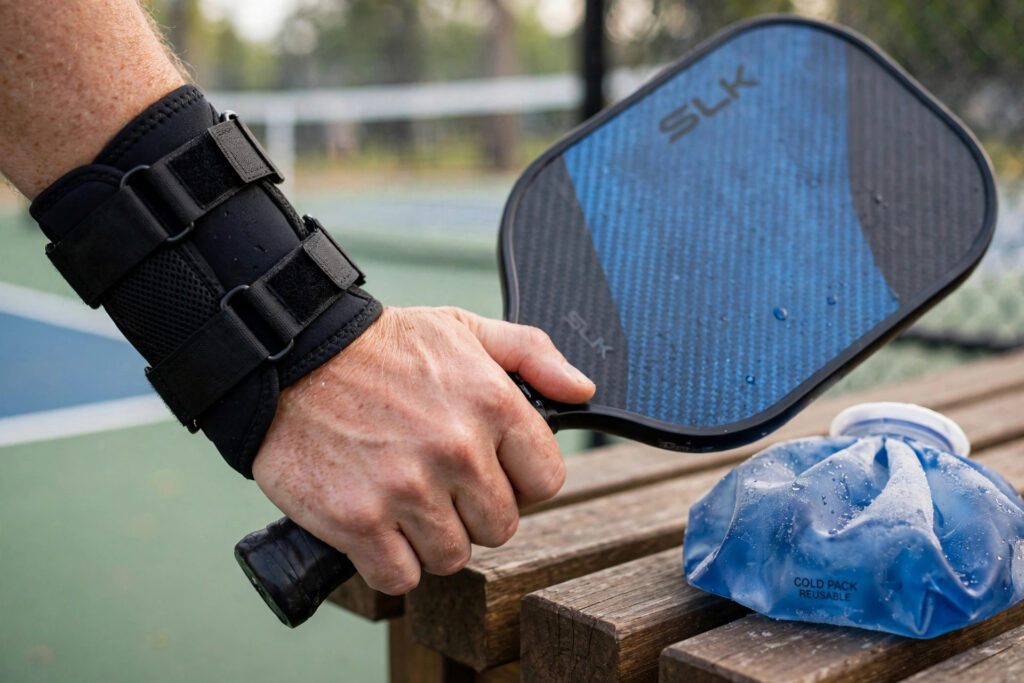
Stop playing immediately — not after “one more game.” Ice the area for 15 minutes at a time, a few times a day, with a cloth between the ice and your skin. Keep it elevated if it’s a wrist or ankle. Don’t test it the next morning to “see if it’s better” — that’s how a sprain becomes a tear.
Get checked the same day if you can’t bear weight, if a joint looks deformed or swells fast, if you heard a pop, or if there’s any eye pain, vision change, or bleeding after a ball strike. Eye injuries are the one category where waiting is never the right call.
And if it’s just soreness? Take two full days off, move gently, sleep properly, and come back at half intensity. Your future self will thank you.
Frequently Asked Questions
Are pickleball injuries really that common?
Yes — more common than most players expect. In a 2025 survey of 1,758 players, 68.5% reported an injury or physical complaint in the past year, and emergency department visits for pickleball injuries have risen about 750% since 2016. Most are minor, but wrist fractures and eye injuries are rising fast.
What’s the most common pickleball injury?
Falls leading to wrist fractures top the list in emergency department data — the wrist accounts for about 45% of upper-extremity pickleball injuries, and nearly 69% of those are fractures. Shoulder, elbow, and wrist overuse problems are the most common complaint overall, affecting about 39% of players.
Should I wear protective eyewear for pickleball?
Yes — and this is the single cheapest, easiest safety upgrade in the sport. Eye injuries jumped to an estimated 1,262 emergency department cases in 2024 alone, and fewer than 40% of amateurs who wear any eyewear on court use dedicated protective glasses. A pair of proper sports glasses costs less than a new paddle.
The Bottom Line
Pickleball isn’t dangerous — but it isn’t harmless either, and pretending it is has put tens of thousands of players in emergency departments. The research is clear: the injuries are concentrated in older players, they come from falls and overuse, and they’re rising faster than the sport itself.
The fix isn’t complicated. Warm up for ten minutes. Wear proper court shoes, not running shoes. Wear protective eyewear. Play three or four days a week, not seven. And the moment something feels wrong, stop — the game will still be there tomorrow.
My uncle’s back on court now, cast long gone, warming up like it’s a religion. He still plays four mornings a week. He just doesn’t skip the ten minutes anymore. Neither should you.
This article is for general information only and isn’t medical advice. If you’re injured, or you have a health condition that affects exercise, talk to a doctor or a qualified healthcare professional before playing.