
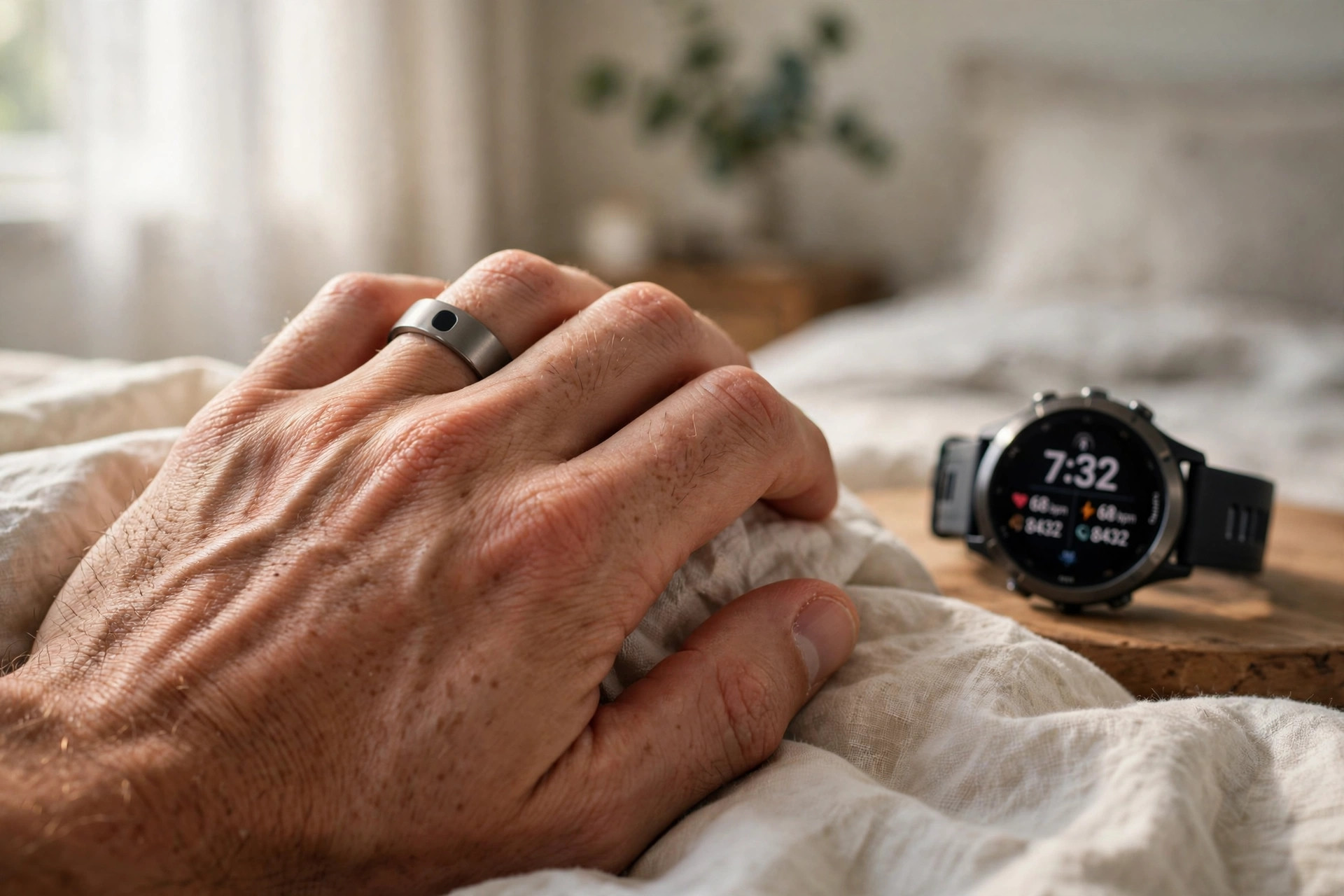

I used to wake up with my sports watch digging into my wrist — a red strap mark, a screen lighting up every time I rolled over. So when a teammate showed up wearing nothing but a plain titanium band on his finger and casually mentioned his sleep score over breakfast, I was curious.
He wasn’t alone. Searches for smart rings have shot up through 2026, with “smart ring for women” up 187% in a year. But can something the size of a wedding band really tell you how well you recovered, or is it just expensive jewellery with good marketing? I checked the peer-reviewed studies, not the product pages, and the answer is more interesting than either side admits.
Why Everyone Suddenly Wears a Ring Instead of a Watch
A smart ring is a small titanium band packed with the same optical heart-rate sensors, skin-temperature sensor and accelerometer you’d find in a watch. What it doesn’t have is a screen, GPS, or notifications. You wear it, forget about it, and read everything in an app the next morning.
That simplicity is the point. Sleep is where recovery happens, and a ring is far more comfortable to sleep in than a watch — lighter, no snagging on bedsheets, no glowing at 3am. A watch also gives you a hundred things to check mid-workout; a ring gives you nothing in the moment, which suits athletes trying to train by feel. That’s a big part of why smart rings for athletes have taken off: they track the hours that matter most, the ones you spend asleep, without getting in the way of training.
What a Smart Ring Actually Measures (and What It Can’t)
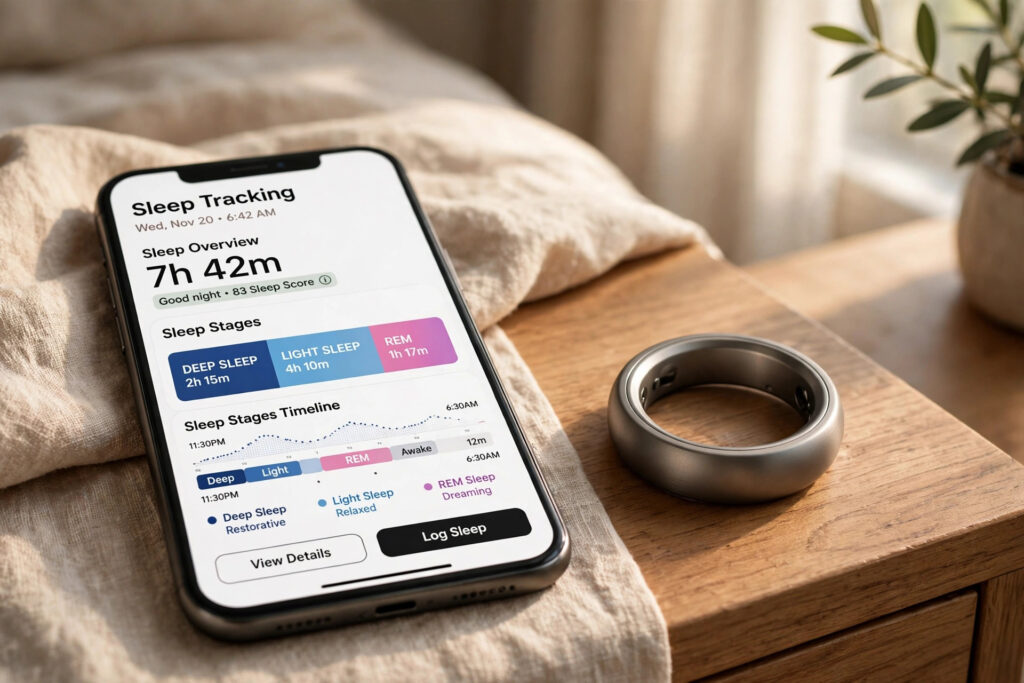
Most rings track resting heart rate, heart-rate variability (HRV), skin temperature trends, blood oxygen, sleep duration and stages, and daily movement. The better apps turn those into two scores athletes care about — a sleep score and a readiness or recovery score.
Here’s what a ring can’t do. It can’t measure live heart rate reliably during a hard interval session: optical sensors on the finger struggle when your hands are moving, gripping, or cold — which describes most of training. For accurate heart-rate data in a workout, a chest strap is still king, and it isn’t close.
A ring also can’t diagnose anything. A low readiness score isn’t a medical finding, a “breathing disturbance” flag isn’t a sleep study, and no consumer ring can rule out sleep apnoea. These are wellness devices, not medical ones, and that matters the moment you start making training or health decisions from what they say.
How Accurate Are They, Really?
The strongest evidence belongs to Oura, because it’s the most studied ring. A systematic review and meta-analysis published in November 2025 pooled six studies with 388 participants and compared the Oura Ring against polysomnography — the gold-standard sleep-lab test — and actigraphy. It found no statistically significant differences for total sleep time, sleep efficiency, wake time after falling asleep, or time taken to fall asleep. On average, the ring’s headline sleep numbers lined up with the lab’s.
An earlier study in Sensors (2021) tested the ring across 440 nights from 106 people: 96% accuracy for telling sleep from wake, and 79% for sorting sleep into its four stages (light, deep, REM, wake). That four-stage number is the honest one to remember — good, not perfect.
But averages hide the catch. A 2025 study in Scientific Reports tested three commercial rings against polysomnography in a real sleep-lab population, including people with sleep disorders. The group average for total sleep time was within 12 minutes of the lab result, yet individual nights could be way off, and sleep-versus-wake accuracy sat around 85%. The authors were blunt: fine for tracking your own trends over weeks, not for clinical sleep medicine, because on any single night the number might be wrong.
Keep that framing. A smart ring is a trend instrument, not a truth machine. One night’s score is noise. Four weeks of scores is a signal.
The Rings Athletes Are Actually Buying in 2026
Oura Ring 4 is still the default pick. Around $349, battery up to about 8 days, and the most polished sleep, readiness and stress coaching in the category, built from 50-plus metrics. The catch: full access costs $5.99 a month or $69.99 a year, first month free. Without it, you pay premium hardware prices for a fraction of the insight.
Samsung Galaxy Ring starts at around $399 with no subscription at all, battery up to 7 days, and an Energy Score inside the Samsung Health app. The trade-off is ecosystem: several features need a Samsung Galaxy phone, so iPhone owners should rule it out first.
RingConn Gen 2 is the quiet value pick at around $299, no subscription, and the longest battery — 10 to 12 days. It even flags possible sleep apnoea risk. Its app isn’t as polished as Oura’s, but for athletes who just want the numbers without a monthly bill, it’s hard to argue with.
Ultrahuman Ring AIR is the recovery-coaching option, also with no required subscription, but its battery is the shortest at roughly 4 to 6 days and the evidence behind some metrics is thinner.
What Each Ring Really Costs Over Two Years
The sticker price lies. Using published US prices from November 2026:
- Oura Ring 4: $349 + $69.99 a year × 2 = about $489
- Samsung Galaxy Ring: $399 + $0 = $399
- RingConn Gen 2: $299 + $0 = $299
The “cheapest” ring in the shop can easily become the most expensive one you own. Multiply the subscription by the years you’ll wear it before you buy. That one calculation has talked more athletes out of Oura — or into it, eyes open — than any spec sheet.
Myth vs Fact
Myth: “My recovery score is 92, so I’m ready to smash a personal best today.” Fact: A readiness score blends last night’s sleep, HRV and temperature into one number. It doesn’t know your training load, your mood, or that a cold is coming on. Treat it as one vote, not a verdict. If the ring says you’re fresh but your legs say otherwise, trust your legs.
Myth: “Rings can diagnose sleep apnoea.” Fact: No consumer ring can. Some flag breathing disturbances or estimate risk, but a diagnosis needs a proper sleep study. If your ring keeps flagging disturbed breathing, talk to a doctor — that’s a reason to get checked, not a diagnosis.
Myth: “More sensors means a more accurate ring.” Fact: Two rings can carry identical sensors and disagree wildly. What matters is the algorithm, the sampling, and how the app handles messy real-world data. That’s why one brand has six peer-reviewed validation studies and others have none.
Who Should Buy One — and Who Shouldn’t
Smart rings for athletes make the most sense if sleep and recovery data matter more than live workout stats, if you hate sleeping in a watch, or if you want 24/7 tracking without looking like you’re wearing a computer. They’re at their best for endurance athletes, lifters tracking recovery between heavy sessions, and anyone whose coach keeps asking “how did you sleep?”
They make less sense if you need GPS, a live display, or reliable heart-rate data during training — that’s still a sports watch or chest strap’s job. And think twice if your sport is grip-heavy: a ring can pinch under a loaded barbell, and knurled bars chew up titanium finishes. Plenty of lifters wear it on their non-dominant hand, or take it off for heavy pulls and put it back on after. It’s a recovery tool, not lifting equipment.
Two practical notes before ordering. First, use the free sizing kit every serious brand ships — finger size changes through the day with heat, training and salt, so wear the plastic sizer for 24 hours, including a workout and a night’s sleep, before choosing. Second, check phone compatibility: the Galaxy Ring needs a Samsung phone for its best features, and every brand has quirks about which phones get which features.
How to Actually Use the Data
The fastest way to waste $400 is to check your scores every morning and let them run your day. Here’s what works instead.
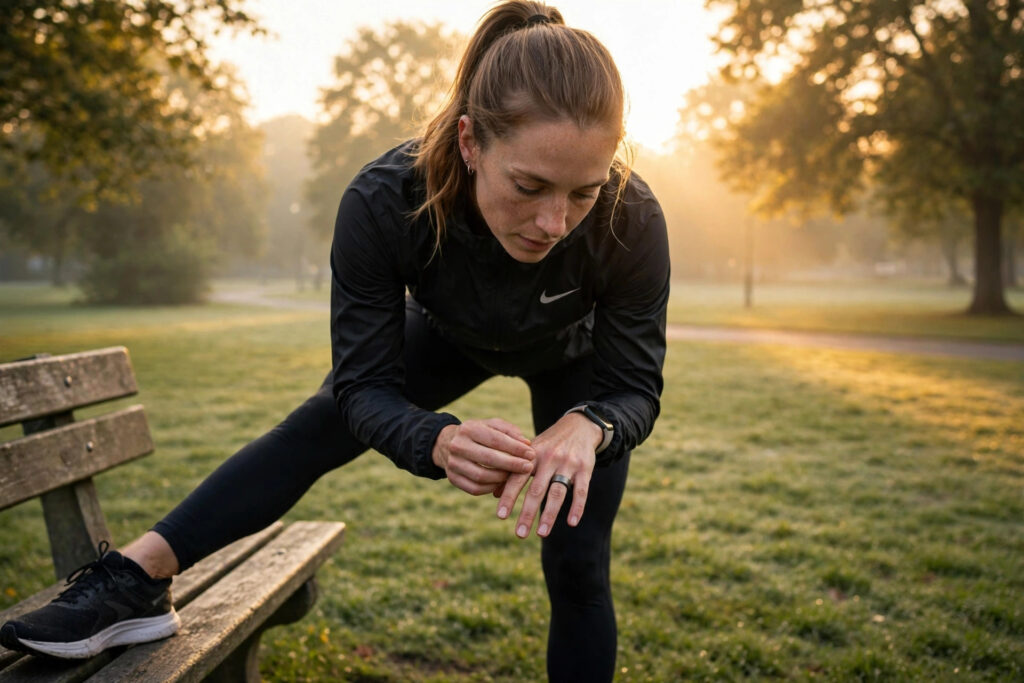
Look at weekly trends, not daily numbers. Is resting heart rate drifting up over two weeks? Is HRV trending down as training load climbs? Those patterns are worth acting on. A single bad night is just life.
Pair the ring with one thing it can’t measure: how you feel. Rate energy and soreness out of ten each morning for a month, then compare with your readiness score. Most athletes find the ring agrees with them about 80% of the time — and the 20% where it disagrees teaches you whether you under- or over-rate your own fatigue.
Set one rule and stick to it. Mine is simple: two red readiness days in a row means I cut the next hard session to 70%. Not because the ring told me to, but because I decided in advance what I’d do with the information. Data without a decision rule is just anxiety with a subscription fee.
Can a smart ring replace my sports watch?
No — and it isn’t trying to. A ring has no GPS, no live display and no reliable live heart rate during hard exercise. It’s a recovery and sleep tracker you wear around the clock; your watch is a training tool for workouts. Many athletes use both, each for what it’s good at.
Is a smart ring accurate for heart rate during workouts?
At rest and overnight, yes — that’s where finger-based optical sensors are best. During intense exercise, accuracy drops: gripping, hand movement and cold fingers interfere. For intervals or racing, a chest strap remains the most reliable option.
Do I need to pay a subscription for a smart ring?
It depends on the brand. Oura’s best insights need its $5.99-a-month membership, about $140 over two years. Samsung’s Galaxy Ring, RingConn and Ultrahuman give core features with no monthly fee. Work out the two-year total before you buy, not after.
The Bottom Line
A smart ring won’t make you faster, stronger, or better rested. What it can do — if you pick the right one and use it the right way — is show you patterns you’d otherwise miss: the slow creep of poor sleep before a hard training block, the HRV dip that arrives two days before you feel run down, the recovery cost of a late night you thought you’d got away with. The research backs the sleep tracking as genuinely useful for trends, while warning you not to trust any single night.
So the real question isn’t whether a ring can track your recovery. It’s whether you’ll do anything with what it tells you. Buy the ring that fits your phone, your budget over two years, and your tolerance for subscriptions — then set your rule, watch the trends, and keep training by feel. The ring is the assistant. You’re still the athlete.
This article is for general information only and is not medical advice. Smart rings are wellness devices, not diagnostic tools. If you have a sleep disorder, heart condition, or any health concern, talk to a qualified healthcare professional before making training or health decisions based on wearable data.