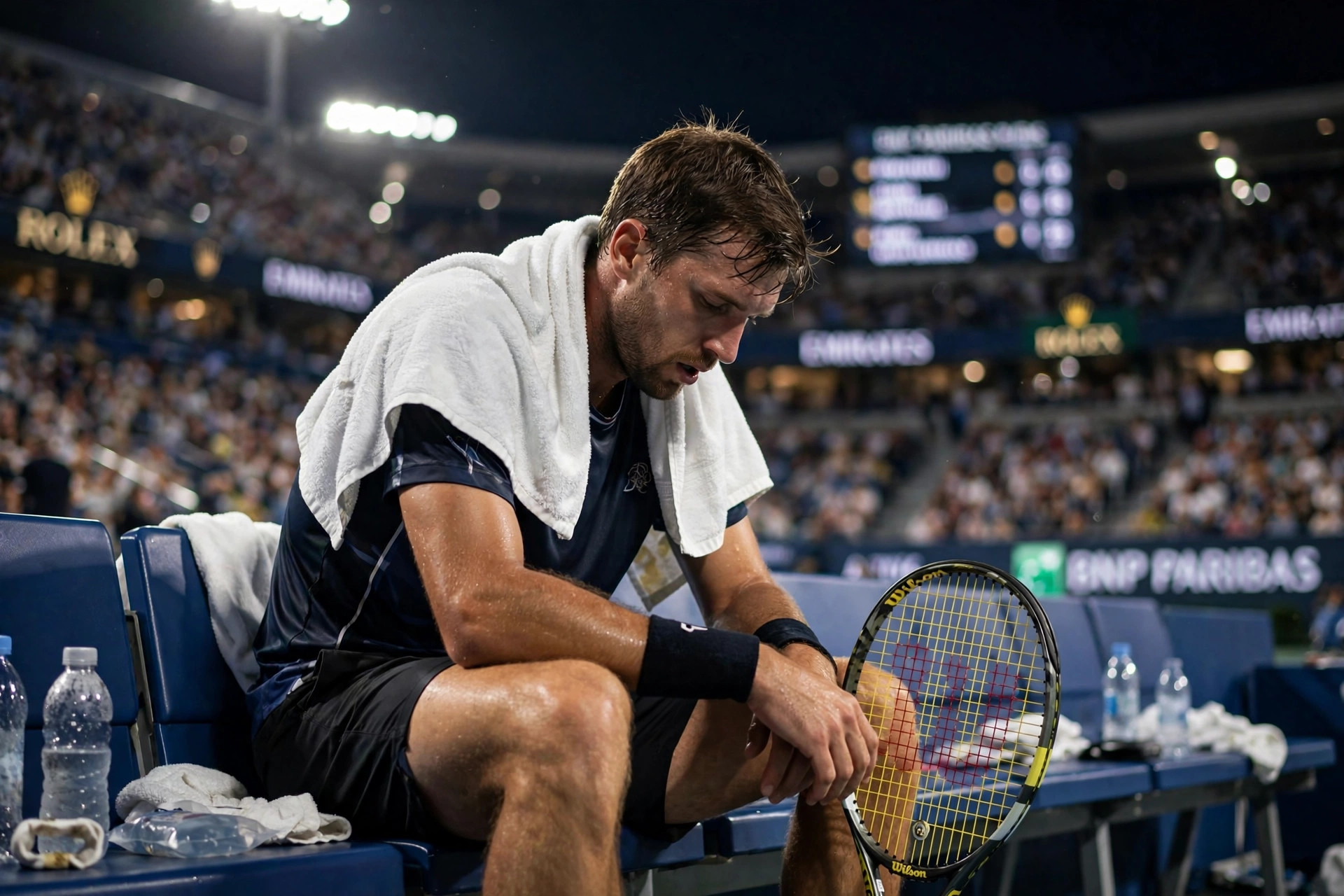

“I’m not a robot, I’m a human being, I get tired.”
That’s Alexander Zverev, speaking after he lost the Shanghai Masters semifinal 5-7, 6-4, 6-3 to Alejandro Davidovich Fokina on Saturday. The world No. 2 — French Open and US Open champion this year, guaranteed to finish the season ranked No. 1 — looked like he’d hit a wall. Because he had.
“I had one day off in total since the US Open,” he said. “I carried a little bit of injury, I carried fatigue into the tournament.” He’s played more than 75 singles matches this season. Meanwhile, today’s final features two rested-looking Spaniards: Davidovich Fokina, and 20-year-old Rafael Jódar — the youngest Shanghai finalist ever — who climbed from world No. 283 a year ago to the biggest final of his life by beating Daniil Medvedev 6-3, 6-4.
At this level, talent is roughly equal. What separates players who survive a week like that from players who fade is what they do between matches. Steal these tennis recovery tips — they work for your Saturday league just as well.
What Actually Decided the Shanghai Semifinal
Zverev’s press conference was unusually honest. “I feel like I’ve actually, in a way, maybe overachieved this week because of how much tennis I played,” he admitted. “We’re all human beings, even the best players in the world.”
His schedule tells the story: US Open title, Laver Cup, Beijing, then straight to Shanghai — four wins, then flat from the first ball. He’d felt flat since his fourth-round tussle with Alexander Bublik went to a deciding tie-break.
Jódar, meanwhile, has played five matches this week — coming from a set down in four of them — and still had the legs to take Medvedev apart in straight sets. Recovery isn’t a luxury at this level. It’s the margin.
1. Sleep Like Your Ranking Depends on It
Deep sleep is when growth hormone does its quiet repair work on battered muscles and tendons — the USTA calls it the “recharge” in its four Rs of recovery (refuel, rebuild, rehydrate, recharge).
Zverev’s problem wasn’t one bad night; it was weeks of accumulated travel and late finishes. For the rest of us, the fix is simpler: guard your sleep the night after a match like a trophy. Seven to nine hours, cool dark room, phone in another room. I’ve watched club players skip the post-tournament dinner buzz and turn in early, then shock themselves the next morning. It works because sleep is the most underrated performance enhancer in tennis — treat it as non-negotiable, not a bonus.
2. Eat Like You’re Playing Again Tomorrow
A brutal three-setter drains muscle glycogen like a long drive drains a tank — and low glycogen the next day feels like slow first steps and flat footwork. Within 30–60 minutes of the match, eat carbs plus protein: yogurt with fruit, a chicken wrap, rice with eggs. Simple, familiar foods.
Keep eating normally through the evening — balanced meals, not one giant “recovery dinner.” And hydrate with intent: roughly 24 fl oz of water per pound of body weight lost, plus electrolytes if it was hot. Zverev’s flat returns in the third set were fatigue talking, and fatigue starts in the fuel tank.
3. Move Gently to Feel Human Again
The biggest mistake I see after a match? Walking off the court and collapsing into the car. Twenty minutes of sitting locks in stiffness; muscles cool down fast and the next morning your legs feel like wood.
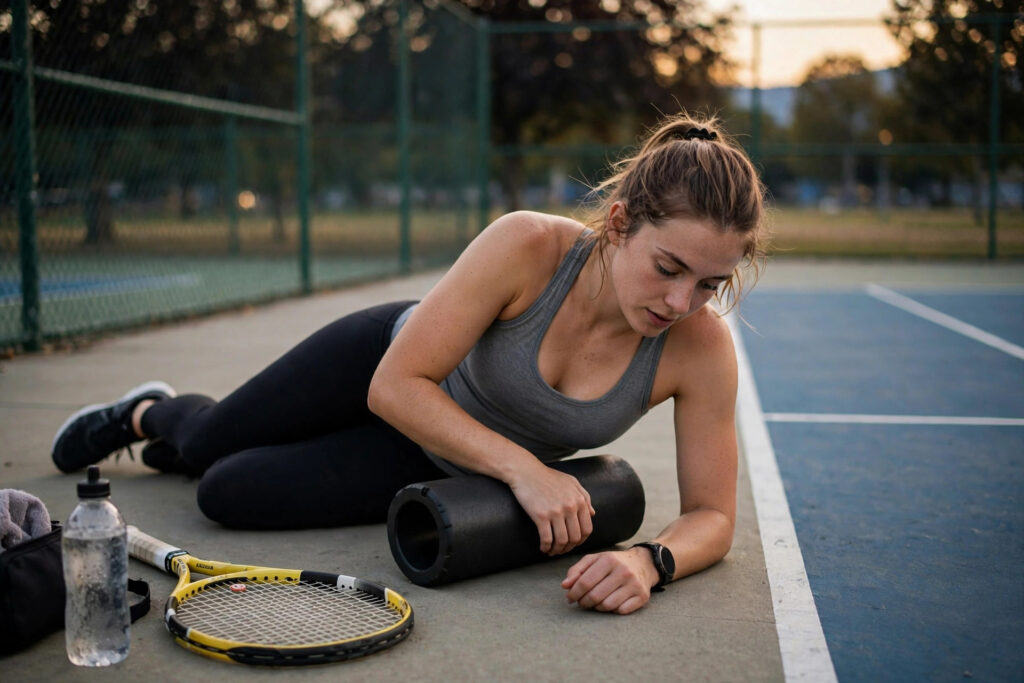
The pro alternative takes ten minutes: a gentle five-minute walk, slow calf raises, ankle circles, and a foam-rolling pass over quads, calves, and glutes. A simple 15-minute foam rolling routine loosens tight tissue and gets blood flowing where it’s needed. Save the deep static stretching for later in the evening when muscles are warm.
4. Cold Water: The Pro Secret That’s Almost Free
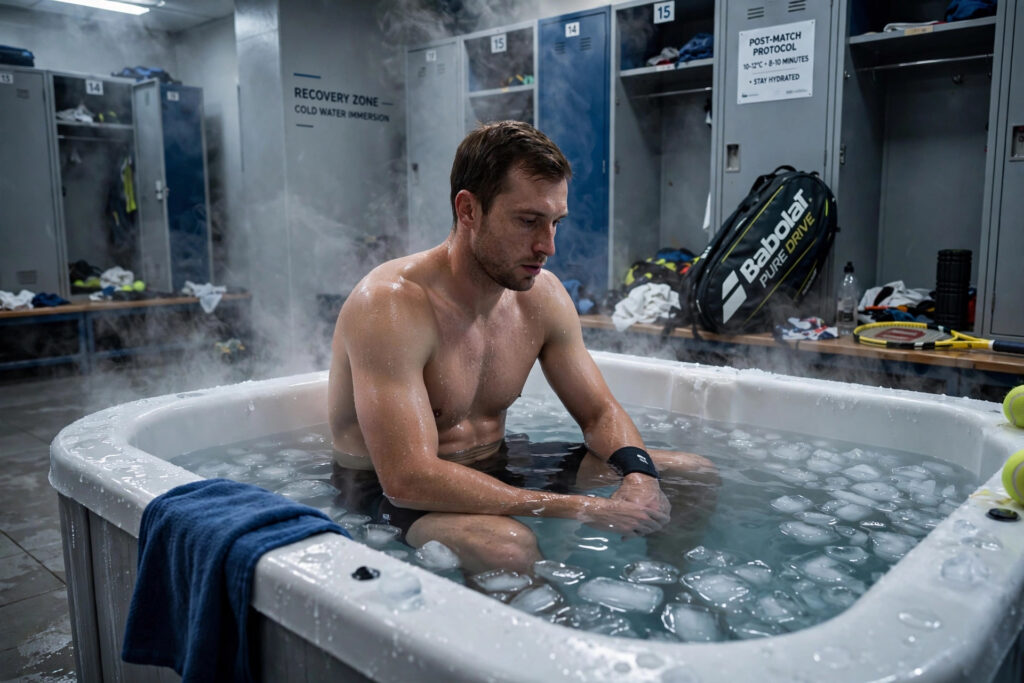
Cold water immersion (10–15 minutes at 10–15°C) is one of the most widely used tennis recovery tips on tour — it reduces soreness and helps players feel fresher the next day. Real next-day readiness, which is exactly what a tournament demands.
You don’t need a pro facility: a tub with a few bags of ice works, and a cold shower beats skipping it entirely (ice baths vs cold showers). Skip immersion right before your next match (cold numbs more than it loosens). The USTA’s sports-medicine experts also note that tendons temporarily lose collagen and strength in the 24–36 hours after hard activity — so smart pros protect their bodies in that window instead of piling on extra training (USTA: Overuse injuries in tennis).
5. Reset Your Head, Not Just Your Legs
Watch a pro between matches and you’ll notice the routine: headphones on, phone away, sometimes a short walk alone. The mental battery drains as fast as the physical one. Zverev’s “I’m not a robot” line was as much about mental fatigue as physical.
Steal the habit: after your match, give yourself a genuine off-switch. No replaying the double fault at 4-4. A walk, music, a meal with friends — anything that tells your nervous system the match is over. Players who mentally “leave” the match recover noticeably faster than players who carry it to dinner.
Your 24-Hour Between-Matches Recovery Plan
0–30 minutes after the match: Gentle five-minute walk, cooldown stretches, change into dry clothes. Eat carbs + protein. Start sipping fluids with electrolytes.
Evening: 15 minutes of foam rolling and mobility. Legs up against a wall for a few minutes if they feel heavy. Eat a normal balanced dinner — don’t skip it.
Night: Screens off early, cool dark room, 7–9 hours of sleep. The single highest-leverage move on the list.
Next morning: Light hit or easy walk to wake the legs up, dynamic warm-up before you play. Save static stretching for after.
That’s it. No cryo chamber, no magic supplement. Just the unglamorous fundamentals the best players in the world actually do.
How long does it take to fully recover between tennis matches?
For a recreational player, 24 hours of smart recovery is usually enough to feel fresh for a casual match; after a grueling three-setter in heat, give it 36–48 hours before anything intense. Pros often play daily — but they also have physios, ice baths, and no day job. Calibrate to your life, not theirs.
Should I stretch right after a match?
Light, easy movement right after — yes. Deep static stretching on cold muscles — not yet. Do a gentle cooldown, refuel, then stretch or foam roll later in the evening when muscles are warm and calm.
Is an ice bath better than a cold shower?
An ice bath (10–15 minutes in cold water) delivers a stronger, more even cooling effect and is the tour standard for post-match recovery. But a cold shower still helps — especially 2–3 minutes of cold water on the legs — and it’s far better than skipping cold exposure entirely.
The Takeaway Zverev Handed Us
The most remarkable thing about Zverev’s press conference wasn’t the loss — it was a player with two Grand Slams and a locked-up No. 1 ranking saying out loud what every tired athlete feels: even the best in the world get tired. The difference is that they recover like professionals.
You don’t need a physio team to do the same. Sleep hard, refuel fast, move gently, cool down, and switch your brain off. Do that after every match and you’ll start noticing the thing Jódar had against Medvedev and Zverev lacked against Davidovich Fokina: legs that are still there on the biggest day.
This article is for general information only and isn’t medical advice. If you’re dealing with persistent pain, swelling, or a suspected injury, see a sports-medicine professional before playing through it.