

My 10K time stalled, so I added a fifth run per week. Then a sixth. My reward? Running slower than ever, a cold that wouldn’t quit, and lying awake at 3 a.m. staring at the ceiling. Sound familiar? Indeed, those are classic signs of overtraining syndrome, what happens when training stress keeps piling on and recovery never catches up.
In other words, this doesn’t just happen to elites. The good news: it’s recognizable and reversible. The hard part is admitting you’re the problem, not your lack of effort.

What Overtraining Syndrome Is: Signs of Overtraining Syndrome Explained
However, every training session is controlled damage. You stress your body, then during recovery it rebuilds slightly stronger. Stress, recover, adapt, repeat.
Fortunately, overtraining syndrome is what happens when the “recover” step stops happening. Stress keeps arriving week after week, but your body never gets the downtime to rebuild. This isn’t normal tiredness after one hard session. Hormones shift, immunity drops, sleep gets weird, and performance slides even though you’re training harder than ever.
For example, researchers separate “overreaching”, a short dip fixed by easy days, from full overtraining syndrome, which can take weeks or months to fix. Spotting the signs early is the difference between a deload week and a lost season. The Hospital for Special Surgery’s guide to overtraining has more on symptoms and recovery.
The Warning Signs of Overtraining Syndrome, From Experience
To begin, your performance drops even though you’re working harder. The big one. You’re adding volume and grinding, yet lifts are flat and times are slower. When more work produces worse results, the problem isn’t effort. It’s recovery.
Next, fatigue that sleep doesn’t fix. You wake up unrefreshed, legs heavy all day, and a full night’s sleep barely dents it. Normal tiredness responds to rest. This doesn’t.
Then, your resting heart rate creeps up. Check it first thing in the morning. A sustained rise of 5 to 10 beats per minute above your baseline is one of the most objective overtraining symptoms, your nervous system stuck in fight-or-flight.
Similarly, you catch every cold going around. And they linger. Hard training briefly suppresses immunity, but when under-recovery is your default, your defense budget is spent.
In addition, sleep falls apart in a very specific way. Stress hormones stay elevated, so you can’t fall or stay asleep. The classic pattern is wired-but-exhausted: body spent, brain racing, wide awake at 3 a.m. I’d finish an evening run feeling dead, then lie in bed with my heart pounding. Makes zero sense until it does.
Finally, your mood tanks. Irritability, anxiety, flatness, dread toward training you used to love. I started resenting my gym bag. Don’t write this off as laziness. Building mental resilience techniques for athletes can help.
In contrast, soreness that won’t leave. Normal soreness fades in two to three days. When muscles stay achy for four or five, tissues aren’t finishing repairs before the next session.
Specifically, appetite and weight get weird. Overtrained athletes often lose their appetite or drop weight without trying. High stress hormones scramble hunger signals.
Subsequently, mental fog. Trouble concentrating, forgetting simple things, feeling sluggish at work. Your brain needs recovery resources too, and a chronically stressed body doesn’t spare any for thinking.
Ultimately, nagging injuries that never fully heal. Tendons and bones remodel slower than muscles and break down quietly. Stress reactions, cranky tendons, lingering aches, often the final warning before something forces you to stop.
As a result, one or two of these after a hard block? Normal. Four or five persisting for weeks? That’s your body filing a formal complaint.
Overtraining vs Burnout: Signs of Overtraining Syndrome vs Burnout
In fact, quick distinction, because people mix these up. Overtraining is mainly physiological, training load exceeding recovery, with measurable markers like declining performance and a shifted heart rate. It can strike while you’re still totally motivated.
Therefore, burnout is mainly psychological, exhaustion and lost motivation from chronic stress of any kind. You can be burnt out on training while your body is objectively fine. In practice the two travel together, and the recovery playbook below works for both.
How to Recover From Overtraining: Signs of Overtraining Syndrome Recovery Guide
First, cut training volume. Hard. Reduce volume by 50 to 70 percent, or take one to two weeks fully off if things are bad. Swap intensity for easy movement: walks, gentle cycling, mobility work. Doing less when you feel behind feels wrong, but resting is what gets you back to progressing.
Certainly, protect your sleep like it’s your job. Aim for 8 to 9 hours, consistent bedtimes, a dark cool room, no screens in the last hour. Sleep is where actual repair happens.
Indeed, eat enough. Under-fueling both causes and amplifies overtraining. Aim for protein around 1.6 to 2.2 grams per kilogram of bodyweight, and don’t skimp on carbs. For a structured daily protocol, follow our post-workout recovery routine.
Typically, deal with life stress. Your body can’t tell a brutal interval session from a brutal week at work. Stress is stress. If life is heavy, training has to be lighter. Cut back on alcohol and late nights too.
Thus, return gradually. Add roughly 10 percent volume per week, and watch morning resting heart rate, sleep, and mood. Schedule a deload week every three to four weeks so you don’t end up here again.
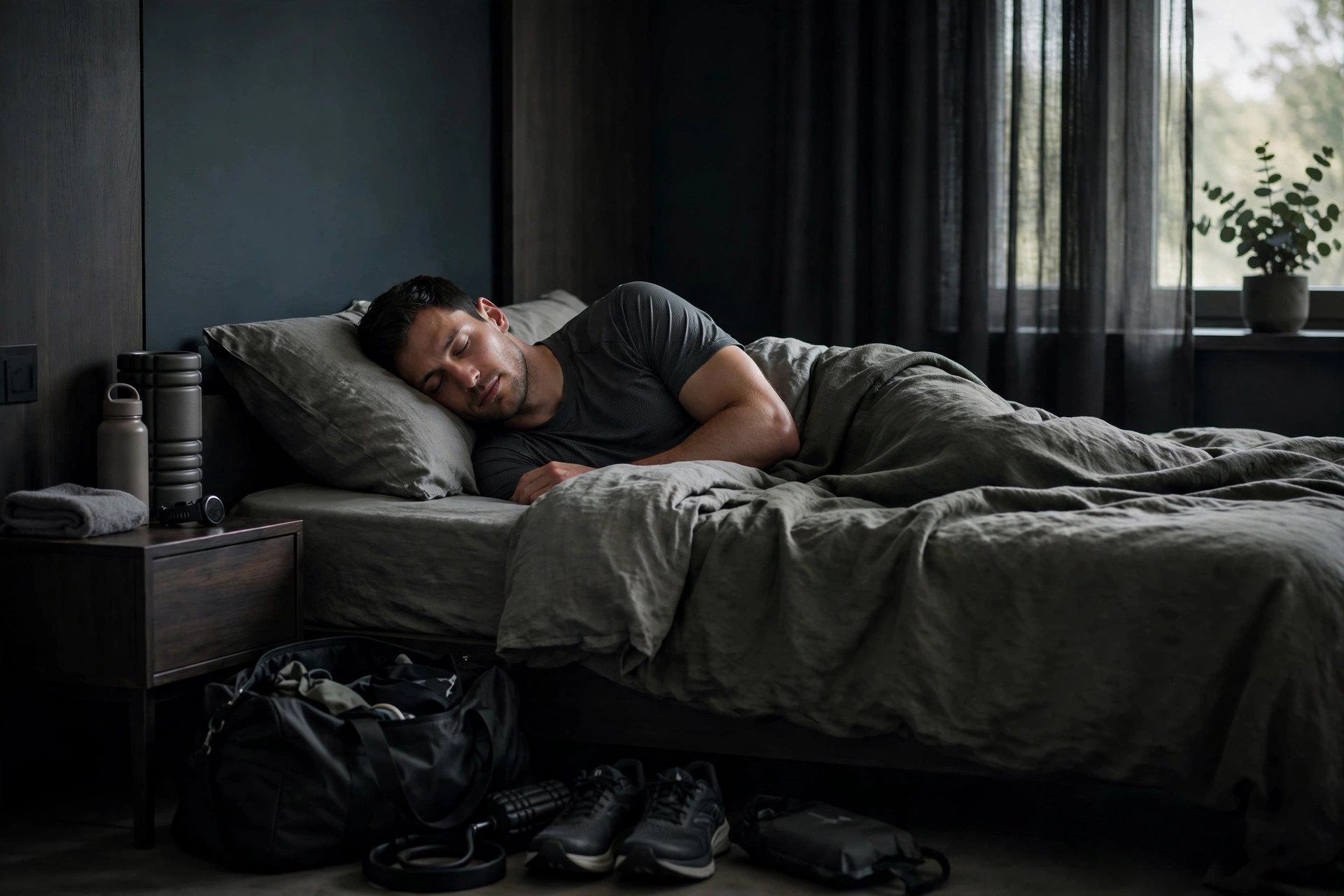
Signs of Overtraining Syndrome FAQs
How long does it take to recover from overtraining?
Alternatively, mild overreaching clears up in days to two weeks. True overtraining syndrome usually needs several weeks to a few months of reduced training.
Can lifters overtrain, or is it just an endurance thing?
For instance, lifters absolutely can. Too much volume, hitting the same muscles too often, skipping rest days, and combining heavy lifting with a calorie deficit or bad sleep all produce overtraining symptoms.
Is soreness after every workout a warning sign?
No, soreness fading within 48 to 72 hours is normal. It becomes a warning sign when it lingers way beyond that, or when it shows up alongside declining performance.
Signs of Overtraining Syndrome: Final Thoughts
Learning to spot the signs of overtraining syndrome is one of the most valuable skills you can build as an athlete. Treat declining performance as information, not failure. Training is only half of fitness; recovery is the other half. Back off, sleep, eat, and you’ll come back stronger than the version of you that refused to rest.
This article is for informational purposes only and is not medical advice. Consult a healthcare professional before making significant training changes or if symptoms persist.