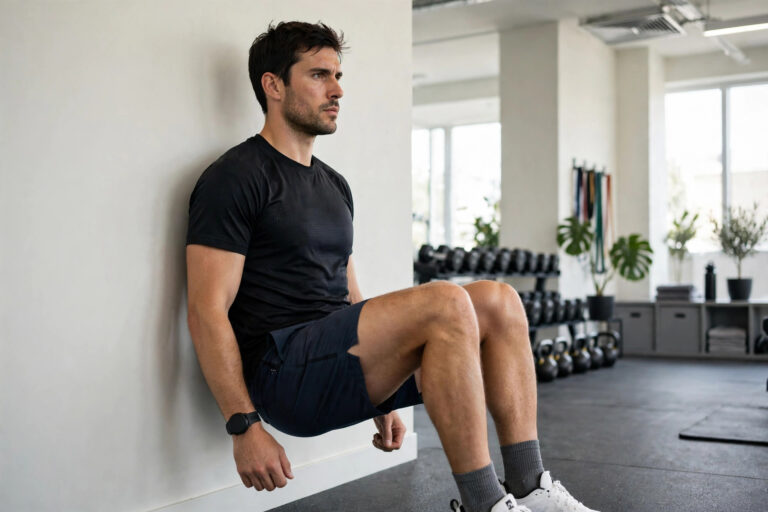

Picture two NFL teams chasing the same thin air in completely different ways. One week in November 2026, the San Francisco 49ers flew to Colorado Springs and practised at 7,258 feet above sea level. Their opponents, the Minnesota Vikings, stayed home in Minnesota and built an altitude chamber at their own facility, putting players through sessions that simulated elevations up to 12,000 feet. Both teams were preparing for the same game, played at 7,352 feet in Mexico City.
The logic behind both plans sounds bulletproof: less oxygen forces the body to make more haemoglobin, more haemoglobin carries more oxygen, and more oxygen means more speed. The altitude training benefits athletes chase are real enough on paper. But a new study of elite cyclists, published in 2026, just tested that chain of logic from start to finish — and one of the links snapped.
What the New Study Actually Tested
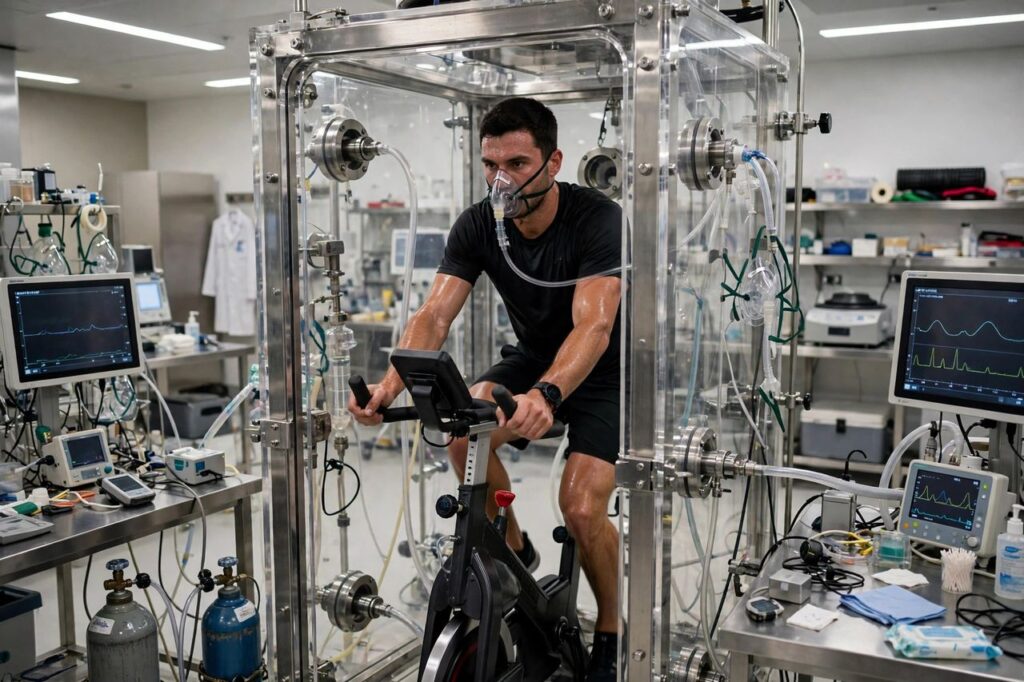
The study, led by Claes Cubel and colleagues and published in Experimental Physiology, followed 12 elite male cyclists through a classic in-season altitude camp. They lived and trained at 3,000 metres for 21 days, straight after their national championships. This setup is called “live high, train high”: the athletes slept, ate and worked out at the same elevation, around the clock.
The blood results were exactly what altitude coaches hope for. Total haemoglobin mass — the total amount of the oxygen-carrying protein in the blood — rose by 3.5% on average, a statistically strong result. Starting from roughly 960 grams, that works out to about 34 extra grams of haemoglobin.
Then came the catch. Ten days after the cyclists returned to sea level, their haemoglobin mass was back where it started. And at both test points — two to three days after coming down, and again at ten days — neither maximal oxygen uptake nor actual exercise performance had improved at all. Even more telling, the cyclists whose blood changed the most were not the ones whose performance changed the most. The two numbers simply did not move together.
Seven of the cyclists also completed a heat-training block in the off-season: six one-hour sessions a week for five weeks. Their haemoglobin mass rose by 5.4% — statistically no different from the altitude result.
The 10-Day Clock: A Worked Example
Numbers make the problem concrete. Take a cyclist who starts camp with 960 grams of total haemoglobin mass. After 21 days at 3,000 metres, that figure climbs to roughly 994 grams. Sounds like a win — until the calendar does its work.
Come down from altitude on a Sunday, and the clock starts ticking. By the following Wednesday, the extra haemoglobin is already fading. By the second weekend, about ten days after descent, it is gone entirely. A race scheduled two weeks after the camp ends would be contested with exactly the same blood the athlete had before leaving home.
Worse, the study found no extra speed even inside that ten-day window, when the blood gain was still present. The cyclists were tested two to three days after coming down, at the point where the haemoglobin boost should have been near its peak, and their performance was unchanged.
Why More Blood Doesn’t Always Mean More Speed
Haemoglobin mass is a proxy. It measures the body’s oxygen-carrying capacity, which is one ingredient in endurance performance, not the performance itself.
A 2026 perspective in Frontiers in Physiology pulled the wider evidence together, and the pattern is sobering. Across 17 studies of live-high-train-high camps, only six — about 35% — reported improved performance. Seven found no additional effect, and four reported negative mechanisms. The better-studied live-high-train-low approach, where athletes sleep at altitude but train at sea level, fared better: 23 of 42 studies, about 55%, showed a benefit. Still barely better than a coin flip.
The reasons are not mysterious. Training at altitude usually means training slower, because the thin air caps intensity. Sleep gets worse at elevation, appetite drops, recovery drags, and long exposures can even cost muscle. An athlete can gain a few grams of haemoglobin while quietly losing the training quality that actually builds fitness — and the net result is a wash.
Heat Training: The Cheaper Stand-In
Here is where the study gets genuinely useful. If the goal is a haemoglobin boost, heat may deliver a similar one without the airfare. A separate 2026 study by McDonald and colleagues found that just eight days of exercise heat acclimation raised haemoglobin mass by roughly 24 to 26 grams — about 2 to 3% — in trained male cyclists, in dry and humid heat alike. Cubel’s own five-week heat block produced the 5.4% rise mentioned above.
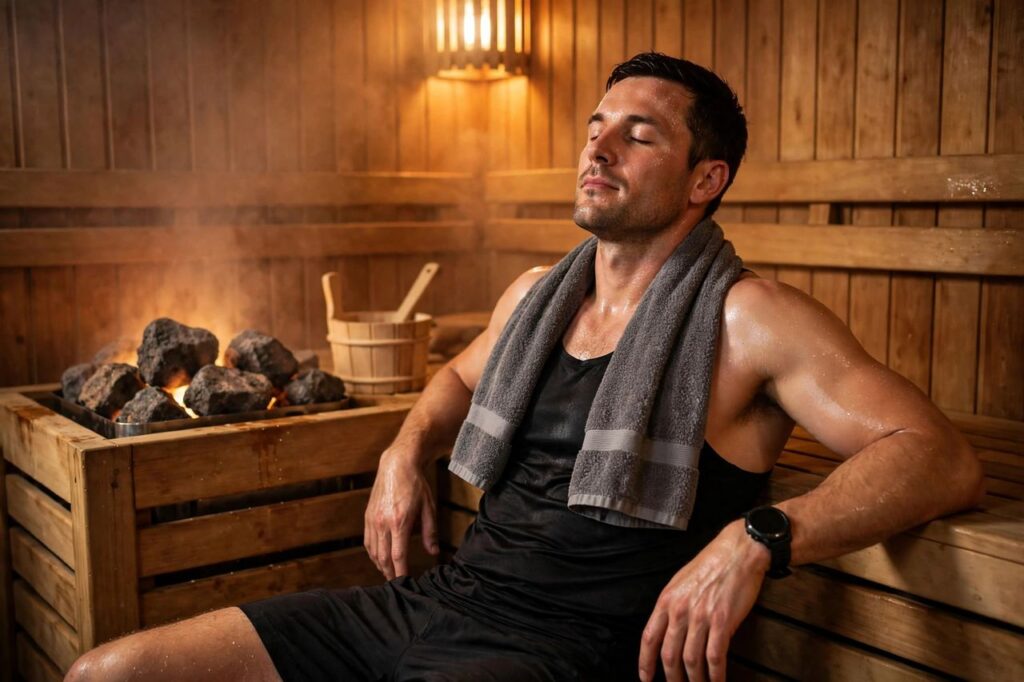
Heat is also far easier to control. A sauna session or a hot-room workout after normal training fits around real life, costs little, and does not wreck sleep or training intensity the way a three-week mountain camp can. It is not a magic shortcut either — the same warning applies, since the performance payoff is still unproven — but as a way to nudge the same blood marker, it is a serious alternative worth knowing about. And for anyone training through a hot summer, fuelling in extreme heat matters just as much as the heat itself.
Myth vs Fact
Myth: An altitude camp guarantees a personal best.
Fact: In the Cubel study, performance did not improve at all, even while haemoglobin mass was up 3.5%. Across the literature, most live-high-train-high studies show no performance gain.
Myth: The higher the camp, the better the result.
Fact: The study used 3,000 metres — high enough to trigger the response, but higher camps bring worse sleep, weaker training sessions and more fatigue. More altitude is not automatically more adaptation.
Myth: The blood boost lasts all season.
Fact: The gain was gone ten days after descent. Without a maintenance stimulus, an athlete is back to baseline within a fortnight.
Myth: You need a mountain to get the effect.
Fact: Structured heat training produced a comparable haemoglobin rise in the same study, and other approaches that support oxygen delivery — including beetroot juice — target the same system from a different angle.
How to Use Altitude Training Sensibly
So where does that leave an athlete weighing up a camp? The altitude training benefits are real but narrow, and the way to capture them is to plan around the evidence rather than the hype.
First, choose the format with the best track record. Live high, train low — sleeping at altitude, training at sea level — outperformed live high, train high in the Frontiers review, because it protects training intensity. Altitude tents and chambers make this possible without moving to the mountains, which is exactly what the Vikings did with their in-house chamber.
Second, mind the calendar. If a key race is the goal, the camp needs to end days before it, not weeks — and even then, treat the blood gain as a bonus, not the plan. A race three weeks after descent gets nothing from the camp at all.
Third, sort the basics first. Get iron status checked before the camp, because the body cannot build extra red cells without enough iron available. Protect sleep, eat enough, and arrive early if the race itself is at altitude — acclimation is the one benefit nobody disputes.
Fourth, keep perspective on cost. Three weeks away from home, at altitude, is expensive in money, time and training quality. For most non-elite athletes, the same weeks spent on consistent training, good sleep and smart fuelling will buy far more speed than a temporary 3.5% bump in a blood marker. Recovery tools like hyperbaric oxygen therapy attract similar hype and deserve the same sceptical look before the wallet opens.
Frequently Asked Questions
Does altitude training work for amateur athletes?
The evidence comes almost entirely from elite and well-trained athletes, so there is no direct data for amateurs. The blood response probably works the same way, but amateurs have more to lose from disrupted sleep and reduced training quality, and more to gain from simply training consistently. For most amateurs, a camp is a luxury, not a lever.
How long do altitude training gains last?
In the Cubel study, the haemoglobin gain was gone within ten days of returning to sea level. Any performance benefit, if it exists at all, would need to be used inside that short window — and in this study, no performance benefit appeared even inside it.
Is heat training as good as altitude training?
For raising haemoglobin mass, the evidence says roughly yes: the heat block in the same study produced a similar rise, and an eight-day heat protocol raised it by 2 to 3%. For actual performance, neither approach showed a gain in this study. Heat wins on cost, convenience and control — it is the more practical experiment for most athletes.
The Bottom Line
Altitude training does something measurable: three weeks at 3,000 metres raised elite cyclists’ haemoglobin mass by 3.5%. It also does something humbling: that gain vanished within ten days, and speed never improved at all. The blood changed; the athlete did not.
That is not a reason to mock altitude camps, and it is not a reason to book one on faith. It is a reason to be precise about what is being bought. If the race is at altitude, go early and acclimatise — that works. If the goal is coming home faster, the evidence says the boost is small, brief and unreliable, and that heat training can nudge the same marker for a fraction of the cost and disruption.
Sources
- Cubel C, Klaris MB, Larsen JV, Faiss R, Nybo L, Lundby C. Haematological adaptations to high-altitude and heat acclimation training in elite male cyclists. Experimental Physiology. 2026;111(3):820–833. doi: 10.1113/EP092968
- McDonald et al. Exercise heat acclimation and haemoglobin mass in trained male cyclists. The Journal of Physiology. 2026. doi: 10.1113/JP290089
- “Live high, train smart: translating altitude physiology to best practice with mechanistic insights.” Frontiers in Physiology. 11 May 2026. doi: 10.3389/fphys.2026.1834288
- San Francisco 49ers. “Keeping Up With the 49ers: Week 11 in Mexico City.” 49ers.com, November 2026. https://www.49ers.com/news/keeping-up-with-the-49ers-week-11-in-mexico-city
This article is for informational purposes only and is not medical advice. Altitude training and heat training can carry risks, especially for people with heart, lung or blood conditions — consult a qualified healthcare professional before beginning either.