

I used to finish every hard session the same way: ten minutes of stretching, convinced I was “flushing out the lactic acid” so I wouldn’t be sore the next day. Then I’d wake up two days later barely able to sit down, and wonder what I’d done wrong.
The answer was nothing — except believing a story that science retired decades ago. Recovery advice is full of confident claims that fall apart when you check them. Some techniques genuinely work. Some help a little, in specific situations. And a few are mostly marketing with a thin coat of science. This guide sorts them out honestly, then gives you a plan you can follow after different kinds of training.
First, Retire the Lactic Acid Story
The burn you feel during a hard set is real — but the soreness that arrives a day or two later is not lactic acid sitting in your muscles waiting to be “flushed out.”
Lactate clears from your blood within about an hour of finishing exercise. One study measured its half-life at roughly 16 minutes during active recovery, about 21 minutes at rest. Meanwhile, soreness — delayed-onset muscle soreness, or DOMS — doesn’t even start for 8 to 12 hours and peaks 24 to 72 hours later. The timelines don’t overlap at all.
The cleanest proof came from a 1983 experiment: runners did 45 minutes on a level treadmill and, on another day, the same time running downhill. The level run pushed lactate way up and produced almost no soreness. The downhill run barely moved lactate — but left them distinctly sore for days. The difference was the downhill slope: running downhill loads muscles while they lengthen under tension, and that eccentric work causes microscopic damage to muscle fibres. The soreness is your body repairing that damage, with inflammation as part of the cleanup.
So stretching doesn’t flush lactic acid, because there’s nothing left to flush by the time you’re stretching. Light movement after a session can still help — but for a different reason. If you want the full story, Houston Methodist’s sports-medicine team explains it well: Is Lactic Acid Buildup Really What Causes Muscle Soreness After Working Out?
The Techniques, Ranked by What the Evidence Actually Supports
Sleep — Verdict: Strong
Sleep is the one recovery tool with no serious debate around it. During deep sleep your body releases growth hormone, repairs muscle tissue, and consolidates the motor skills you practised that day. Skimp on it and everything else on this list works less well. Aim for 7 to 9 hours, a consistent bedtime and wake time, a cool, dark bedroom, and no screens for the last hour before bed. A 20-minute nap after lunch is a genuine tool, not a luxury. Our guide to sleep as a performance enhancer covers the practical side.

Food and Water — Verdict: Strong
Recovery starts in the kitchen, not the ice bath. After training you need fluid and electrolytes replaced, plus protein and carbohydrate to rebuild. A meal with roughly 20 to 40 grams of protein and some complex carbs within a couple of hours of finishing is a solid target, and across the whole day most athletes do best around 1.6 grams of protein per kilo of body weight. Drink to thirst plus a little extra after sweaty sessions — if your urine looks like apple juice, you under-drank. Nobody sells a supplement for “eat enough and drink water,” which is exactly why it gets skipped.
Active Recovery — Verdict: Moderate
A light walk, easy swim, or gentle 20-minute spin the day after a hard session genuinely helps — not by flushing anything out, but by keeping blood flowing through sore muscles, which delivers nutrients and clears the normal byproducts of the repair process. Meta-analyses find it modestly reduces soreness and speeds the return of performance. Keep it at a conversational pace. If you’re breathing hard, it’s not recovery — it’s another workout wearing a disguise.
Cold Water Immersion — Verdict: Moderate for Soreness, With a Catch
Ice baths do reduce soreness. A Cochrane review of 17 trials found cold-water immersion cut DOMS at 24 and 48 hours compared with doing nothing, and a 2025 umbrella review of 161 studies confirmed the benefit holds up to 96 hours. The sweet spot is 10 to 15°C for 10 to 15 minutes.
Here’s the catch: used regularly right after resistance training, cold water blunts the very adaptations you’re training for. Repeated immersion dampens the signals that build muscle, and studies show smaller strength and size gains over weeks of training. So use ice baths when you need to feel better fast — between competition days or in a brutal training block — and skip them after ordinary strength sessions. A cold shower is a milder version of the same idea; our ice bath vs cold shower comparison breaks down when each one makes sense.
Stretching — Verdict: Limited for Injury Prevention, Real for Flexibility
This one needs honesty, because the old article promised too much. Stretching reliably improves flexibility and range of motion — that part is well supported. What it does not do is prevent injuries. A 2014 meta-analysis in the British Journal of Sports Medicine pooled 25 trials and over 26,000 people and found stretching left injury risk essentially unchanged, while strength training cut it to less than a third. A large 2025 review of more than 9,000 participants reached the same conclusion.
Stretching also barely touches soreness: a Cochrane review found it reduced next-day soreness by about one point on a 100-point scale — too small to notice. Keep stretching if your sport needs the range, and do it after training, not as a long static hold before explosive effort, where it can briefly blunt power. Just don’t count it as injury insurance. Strength work is the real injury prevention.
Foam Rolling — Verdict: Moderate for Soreness, Small for Everything Else
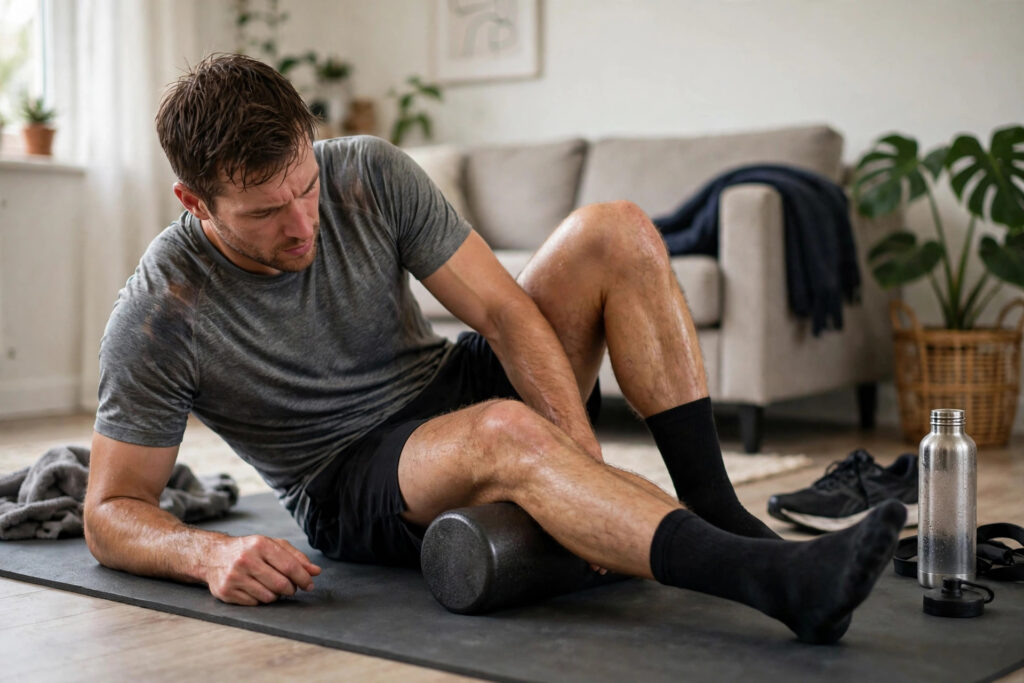
Foam rolling is the most useful of the “feel-good” tools. A 2019 meta-analysis of 21 studies found rolling after exercise reduced perceived soreness by a small-to-moderate amount and slightly sped up the return of sprint and strength performance, while a 2020 meta-analysis found a solid short-term boost in range of motion — a few degrees, lasting 10 to 30 minutes. It does not break up scar tissue or release fascia; the forces are far too small. It works mostly by calming the nervous system’s protective response. Ten minutes on the sore spots, slow passes, breathing normally — that’s the protocol. Don’t roll directly on a joint or an injury, and don’t press so hard you’re grimacing.
Massage — Verdict: Moderate for Soreness
Hands-on massage has the best evidence of any “feel-good” recovery tool for reducing soreness and perceived fatigue — a 2018 meta-analysis of 99 studies found small-to-moderate benefits. It doesn’t directly improve next-day performance, but feeling less battered matters in a heavy week. If a professional massage isn’t in the budget, a foam roller covers much of the same ground for free.
Compression Garments — Verdict: Limited
Compression tights and socks give a small, real reduction in soreness — a 2017 meta-analysis of 23 studies found a small overall benefit, and an earlier review found a moderate effect on DOMS. Whether they speed up the return of strength is contested: a later, larger meta-analysis found no strength-recovery effect at all. More compression isn’t better, and they don’t make you faster or stronger during exercise. Wear them after training if they feel good. They’re a comfort, not a necessity.
Mindfulness and Mental Recovery — Verdict: Moderate
Physical recovery is only half the story. Stress hormones stay elevated when your mind is still racing, and that slows the whole repair process. Ten minutes of slow breathing, a short meditation, or simply an evening without training talk can lower that background stress. It won’t replace sleep or food, but it makes both work better — and in a competition week, a calm head is worth as much as fresh legs.
Recovery Plans for Real Training Days
Generic advice fails because a heavy squat day and a long run don’t need the same recovery.
After a Heavy Strength Day
First hour: protein-rich meal with carbs, plenty of water, a 10-minute easy walk. Skip the ice bath — you want the muscle-building signals to run their course.
That evening: foam roll the worked muscles for 10 minutes, gentle stretching if you’re stiff, lights out on time.
Next day: active recovery — a 20-minute walk or easy cycle. If you’re still very sore, train a different muscle group or take the day off.
After a Long Run
First hour: rehydrate properly (every kilo lost is roughly a litre of sweat), eat carbs plus protein, and get out of wet kit.
That evening: easy stretching for calves and hips, a warm shower or bath, and an early night. Compression socks for the evening are a reasonable call.
Next day: 20 to 30 minutes of easy movement — walk, swim, or a very slow jog. No speed work on legs that are still complaining.
After a Competition
First hour: food, water, and a proper cool-down walk. If you have another match tomorrow, this is the one time an ice bath earns its place — 10 minutes at 10 to 15°C.
That evening: eat well, keep the evening calm, get to bed early. A light massage or foam rolling session helps you feel human again.
Next day: active recovery only. If you’re still flat after a rest day, take another one. One extra rest day costs nothing; an injury costs weeks.
After a Light Training Day
First hour: normal meal, normal hydration. Nothing special needed.
That evening: the best night for the things you skip when you’re tired — a proper stretching session, foam rolling, ten minutes of breathing work.
Next day: you’re good to train normally. Light days exist so the hard days can be hard.
FAQs
How long should athletes rest between hard workouts?
Most athletes need one to two full rest or active-recovery days per week, and at least 48 hours before training the same muscle group hard again. If performance keeps dropping despite rest, that’s not normal soreness — it’s under-recovery, and it needs a lighter week, not a harder one.
Does stretching really help with recovery?
Only a little, and not in the way people think. It improves flexibility and range of motion, which is genuinely useful if your sport needs it. But it doesn’t prevent injuries — large reviews of thousands of athletes found no reduction in overall injury risk — and it barely reduces soreness, by about one point on a 100-point scale. Treat it as a flexibility tool, not a recovery treatment.
What should I eat after a workout?
A balanced meal with lean protein, complex carbs, and healthy fats — grilled chicken, rice, and vegetables, or eggs on toast with fruit. Aim for roughly 20 to 40 grams of protein in that meal, and across the day about 1.6 grams per kilo of body weight. Drink water until your urine is pale yellow. Supplements are optional; the meal is not.
The Bottom Line
Recovery isn’t a bag of tricks — it’s a hierarchy. Sleep and food do most of the work. Active recovery, foam rolling, and massage add a little on top. Ice baths help you feel better fast but can cost you muscle gains if you overuse them. Stretching keeps you flexible but won’t keep you uninjured. And lactic acid was never the enemy in the first place.
Start with the boring stuff: eat enough, sleep enough, move gently on rest days. Then add one tool at a time and notice what actually changes. The best recovery plan is the one you can repeat every week. For a ready-made version, follow our post-workout recovery routine and build from there.
This article is for general information only and isn’t medical advice. If you have a health condition, an injury, or concerns about your recovery, talk to your doctor or a qualified sports medicine professional before changing your routine.