
Picture someone 40 weeks into tirzepatide. The scale says 22 kilos lighter. Clothes that used to strain now hang loose. Friends keep asking what the secret is. Then they try to carry a suitcase up a flight of stairs — and something feels off. The weight is gone, sure, but so is some of the strength that used to come for free.
That quiet trade-off has been the worry hanging over every weight-loss drug success story. The kilos melt away, but a chunk of what’s lost isn’t fat at all. It’s lean tissue, including muscle — and until this month, nobody had properly tested whether anything could stop it. Now a new trial has, and the answer turns out to be refreshingly old-fashioned: lifting weights. The numbers behind tirzepatide muscle loss turn out to be more hopeful than the headlines suggested.
The Catch Hiding Inside the Weight Loss
Tirzepatide works, and the numbers behind it are genuinely dramatic. In the SURMOUNT-1 trial, people on the highest weekly dose lost an average of 20.9% of their body weight over 72 weeks. For a 100-kilo adult, that’s roughly 21 kilos — a transformation that diet and willpower alone rarely deliver.
But a body-composition substudy of that same trial, scanning 160 participants with DXA — the gold-standard body scan — found that about a quarter of the weight lost was lean mass. The tirzepatide group lost 33.9% of their fat mass, which is the whole point, but also 10.9% of their lean mass. The drug’s wider picture for athletes is covered in the site’s guide to tirzepatide for athletes, and the lean-mass figure was always the uncomfortable footnote.
Why should anyone care about a few kilos of lean tissue? Because muscle is not decoration. It is what gets you out of a chair at 70, carries the shopping, and keeps your balance on a wet pavement. Lose enough of it and everyday life gets harder — slowly at first, then all at once. Add in the fact that muscle loss after 40 is already a steady background process, and a drug that speeds it up deserves a serious answer.
One honest note before going further: DXA’s “lean mass” is not pure muscle. It includes water, glycogen stores and organs, and when you eat much less, glycogen and its stored water shrink — which DXA counts as lean loss. Real skeletal muscle is probably only about half of the lean-mass figure. That nuance matters, and it is exactly why the new trial measured strength as well as scans. A scan can mislead you. A barbell cannot.
The Trial That Tested the Obvious Fix
The study, called T-REx, was published in Nature Medicine on 9 November 2026, and it is the first randomised trial to test resistance training alongside a modern weight-loss drug from day one. It was run at the University of Western Australia in Perth, led by exercise physiologist Professor Danny Green, and it was investigator-initiated — the drug’s manufacturer supplied free medication but had no role in designing, running or analysing the study.
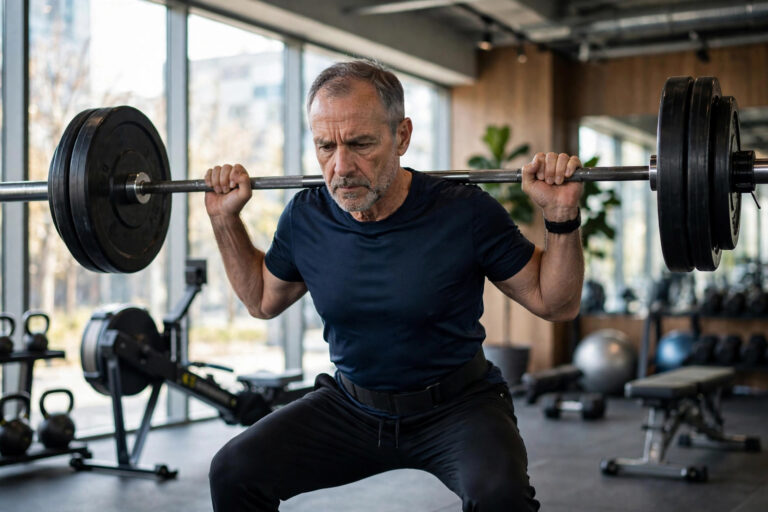
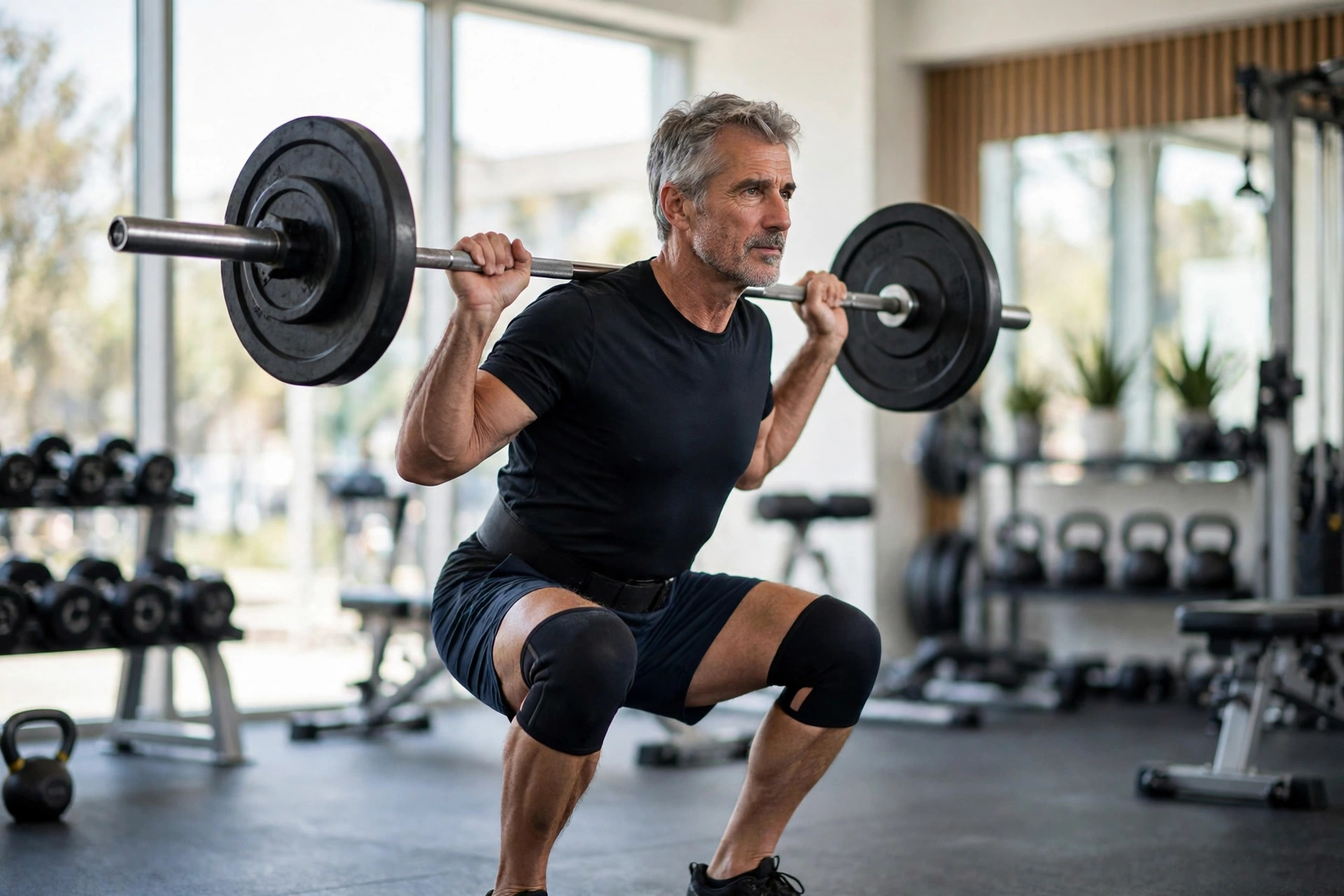
The setup was simple. Researchers recruited 120 adults — 60 men and 60 postmenopausal women, average age just under 58 — all with overweight or obesity, none with type 2 diabetes or heart disease, and all sedentary when they started. Everyone received tirzepatide for 40 weeks. Half were asked to carry on with their usual activities. The other half added three supervised one-hour resistance-training sessions a week in a gym, led by accredited exercise physiologists, progressing through five eight-week phases from light technique work to moderate and vigorous strength training.
The training group actually showed up: average attendance was 91% across the 40 weeks, which is remarkable for any exercise programme, let alone one run alongside a drug that suppresses appetite and can leave people feeling queasy.
The Numbers, Side by Side
Here is what happened after 40 weeks — and the first surprise is how similar the two groups look on the scale.
Both groups lost almost identical amounts of weight: 22.28 kilos in the training group, 22.61 kilos in the group that did not train. Fat loss was the same too — 17.98 kilos with training, 17.19 kilos without. Lifting weights did not slow the weight loss down by a single kilo. If anything, it made the weight loss slightly better quality.
The difference showed up in lean tissue. The group on tirzepatide alone lost 4.67 kilos of lean soft tissue. The group that lifted lost 3.57 kilos. That is a difference of 1.09 kilos — about 25% less lean tissue lost — and the statistics behind it are solid (P < 0.001). Zoom in on the arms and legs, where the muscle actually lives, and the picture is the same: roughly 2.5 kilos of skeletal muscle lost without training, against roughly 2 kilos with it. One kilo does not sound like much on its own. But weight-loss treatment often runs for years, not 40 weeks, and the gap between the two paths would keep widening with every passing month.
The Strength Swing Is the Real Story
The lean-mass numbers are encouraging. The strength numbers are the headline.
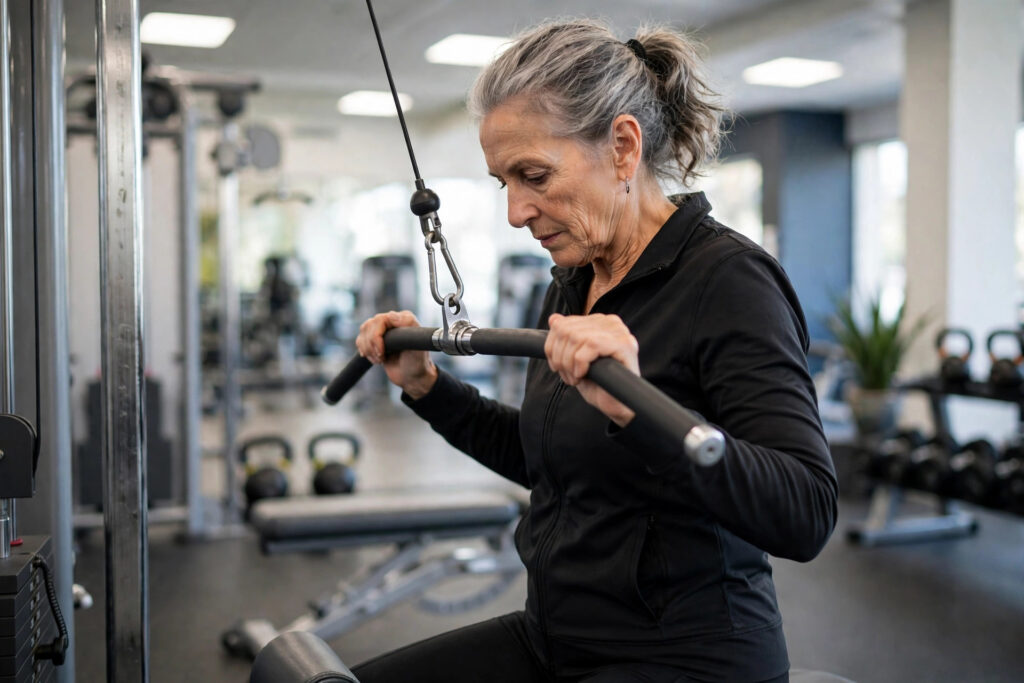
The researchers tested one-rep maximum strength — the heaviest weight a person can lift once — on three moves: bench press, lat pulldown and knee extension. In the group that did not train, upper- and lower-body strength fell by about 10%. In the group that lifted, strength rose by about 10%. That is a 20-point swing between two groups on the exact same drug, losing the exact same weight.
In kilos, the trained group added roughly 5 to 9 kilos to each of their three lifts, while the untrained group lost roughly 4 kilos on each. One person finishes 40 weeks lighter and stronger than they started — better at stairs, shopping bags and getting up off the floor. The other finishes lighter and weaker, even though the bathroom scale tells an identical story.
This is the part the headlines mostly missed. Muscle preservation is not really about the number on a scan. It is about whether you can still do the things that make you independent. On that measure, three hours of lifting a week did not just slow the decline. It reversed it.
How to Borrow the Trial’s Playbook

Nobody should copy a clinical trial’s protocol rep for rep without a conversation with their own doctor — especially on a prescription drug. But the principles behind T-REx translate cleanly into real life.
Three sessions a week, full body. The trial used three supervised one-hour sessions. Each one covered the major movement patterns — a push, a pull, a squat or leg press, a hinge — rather than isolating single muscles. That structure is the foundation of any sensible strength programme, and it is the same approach behind losing fat while keeping muscle generally.
Start supervised, progress slowly. The trial’s five eight-week phases began with light technique work and only built to heavier loads once form was solid. A few sessions with a qualified trainer or physiotherapist at the start — learning to squat, hinge, push and pull safely — is money better spent than any supplement. Machines are a fine starting point; they guide the movement while you build confidence.
Cover the basics. All participants got general advice on hydration, protein and fibre. The trial tested no specific protein target, so there is no magic number to quote — but eating enough protein and drinking enough water is the groundwork every strength programme rests on.
Talk to your doctor first. Tirzepatide can cause nausea, reduced appetite and, rarely, more serious side effects. Training hard while eating very little is a combination that needs medical supervision, not guesswork — particularly for anyone with heart disease, diabetes or joint problems, none of whom were in this trial.
Myth vs. Fact: Muscle, Drugs and the Gym
Myth: “Muscle loss on these drugs is inevitable, so lifting is pointless.”
Fact: The trial shows it is not inevitable — it is reducible. Training cut lean-tissue loss by about a quarter and turned a 10% strength decline into a 10% gain. Not a miracle, but a long way from pointless.
Myth: “Walking is enough to protect your muscle.”
Fact: Walking is excellent for the heart, the waistline and the mood. But walking does not load muscles heavily enough to build strength. The only thing in this trial that moved the strength numbers was resistance training — pushing against real resistance, three times a week.
Myth: “A protein shake will fix it on its own.”
Fact: Everyone in the trial got the same general protein advice, and the difference between the groups still came from training, not diet. Protein supplies the raw material, but the training is the signal that tells the body to keep the muscle. One without the other is half a plan — and the trial never tested a specific protein target, so anyone quoting one from this study is guessing.
Myth: “Lifting will slow down my weight loss.”
Fact: It did not. Both groups lost the same weight and the same fat. The training group simply lost less of the wrong tissue and came out stronger. On a weight-loss drug, lifting is not a brake on progress. It is quality control.
The Honest Limits
A good study is honest about what it cannot say, and this one has real limits worth knowing.
It was a single-centre trial of 120 people, all aged 50 to 70, without diabetes or heart disease, and all sedentary at the start. The results may not carry over to younger adults, to people with diabetes, or to people who already train. Forty weeks is a long trial, but weight-loss treatment can last years — nobody yet knows whether the muscle advantage holds, grows or fades over that longer stretch. And the training was supervised, in a gym, by professionals. Home workouts with bands or bodyweight follow the same principles, but they were not what was tested.
There is also the funding footnote: the manufacturer provided the drug free of charge but did not design or run the study. That is standard practice, and the trial’s independence is stated plainly in the paper, but it is worth knowing all the same.
None of this weakens the core finding on tirzepatide muscle loss. It just defines its edges. Within those edges — older, sedentary adults starting tirzepatide — the evidence is now clear.
Does lifting stop muscle loss on tirzepatide completely?
No — and anyone claiming otherwise is overselling the study. The training group still lost 3.57 kilos of lean tissue over 40 weeks. Training cut the loss by about a quarter and reversed the strength decline, but it did not eliminate the loss. The honest promise is “less loss, more strength”, not “no loss at all”.
How many sessions a week does it take?
The trial tested three supervised one-hour sessions a week, and that is the only frequency with evidence behind it from this study. One or two sessions might help — strength training usually follows a dose-response pattern — but nobody can quote a number for it from T-REx, because it was never tested.
Can I do this at home without a gym?
Possibly, but with a caveat. The trial’s sessions were supervised and gym-based, with machines and free weights. The principles transfer — push, pull, squat, hinge, progress gradually — and resistance bands or adjustable dumbbells can deliver them at home. But form matters more than equipment, and a few supervised sessions first are the safest way to learn it, especially if you have never lifted before.
The Takeaway
For two years, the conversation about weight-loss drugs has been dominated by the scale — how much weight, how fast, how dramatic. The T-REx trial quietly changes the question. It asks not how much weight you lose, but what kind of body you are left with once it is gone.
The answer it found is both simple and demanding: three hours of lifting a week, done consistently for 40 weeks, kept an extra kilo of lean tissue and turned a 10% strength loss into a 10% gain — while the weight loss itself carried on untouched. The drug does the losing. The lifting decides what is left.
If you are starting tirzepatide, or already on it, the most useful thing you can do this week is not another diet tweak. It is to book three hours with a barbell, a machine, or a trainer — and to keep showing up. The scale will take care of itself. Your strength is the part that needs you.
Sources
- Green DJ, Haynes A, Underwood DR, et al. Resistance exercise to attenuate lean mass loss during tirzepatide therapy for obesity: a randomized controlled trial. Nature Medicine, published online 9 November 2026. doi: 10.1038/s41591-026-04752-5. https://www.nature.com/articles/s41591-026-04752-5
- University of Western Australia. “Resistance training key to maintaining muscle function during GLP-1 weight loss, study shows.” 10 November 2026. https://www.uwa.edu.au/news/article/2026/november/resistance-training-key-to-maintaining-muscle-function-during-glp1-weight-loss
- Manchester Metropolitan University. “Resistance training key to maintaining muscle function during GLP-1 weight loss, says research.” 10 November 2026. https://www.mmu.ac.uk/news-and-events/news/story/resistance-training-key-maintaining-muscle-function-during-glp-1-weight
- Jastreboff AM, et al. Tirzepatide Once Weekly for the Treatment of Obesity (SURMOUNT-1). New England Journal of Medicine, 2022;387:205–216. doi: 10.1056/NEJMoa2206038.
This article is for general information only and is not medical advice. Tirzepatide is a prescription medicine — talk to your doctor before starting, stopping, or combining it with any exercise programme, especially if you have diabetes, heart disease, or joint problems.