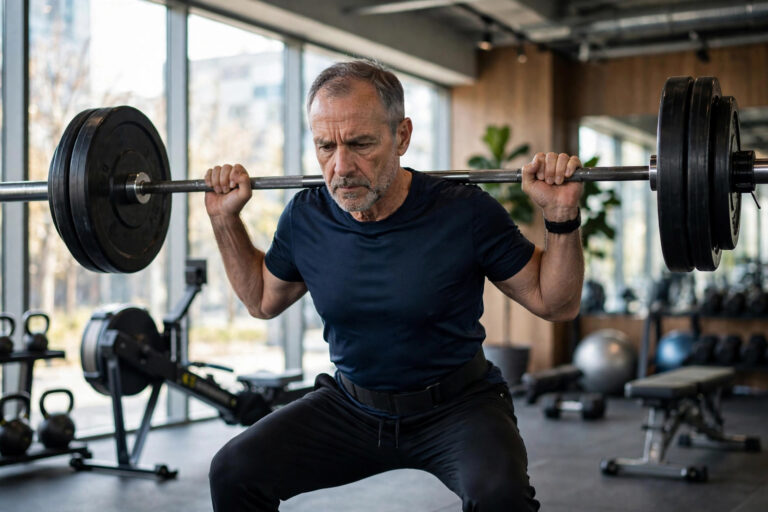


Picture two neighbours in their late fifties. One eats like a nutrition textbook — oats for breakfast, salmon and salads for dinner, barely a biscuit in sight — but spends most of the day sitting at a desk, then on the sofa. The other eats perfectly ordinary food, nothing fancy and nothing forbidden, yet walks everywhere and trains three times a week. If you had to bet on who lives longer, which one would you pick?
A major new review published in Mayo Clinic Proceedings suggests the answer might surprise you — and it has a lot to say about exercise for longevity. The researchers compared decades of evidence on diet, movement and fitness, and in every comparison they ran, physical activity came out ahead.
That does not mean food is irrelevant — it means knowing where the bigger payoff sits is genuinely useful.
What the Researchers Actually Compared
The review, led by exercise physiologist Glenn Gaesser of Arizona State University and sports medicine physician Robert Sallis of Kaiser Permanente, was published online on 11 November 2026. The pair searched PubMed for meta-analyses and large prospective cohort studies, then lined up three things side by side — diet quality, physical activity, and cardiorespiratory fitness, the body’s ability to take in and use oxygen during effort — and asked how strongly each one is tied to the risk of dying from any cause.
That last detail matters. Most studies look at one factor at a time; this review compared them against each other on the same yardstick, all-cause mortality, drawing on millions of people followed over years.
One honest caveat runs through the whole paper: much of the evidence is observational. It shows strong associations between movement and longer life, but it cannot prove that exercise alone causes every extra year.
The Numbers That Turned Heads
Here is the comparison that made headlines. People with the poorest diets — the highest intakes of ultra-processed foods, red and processed meat, sugary drinks and fried food — had an all-cause mortality risk roughly 3% to 20% higher than people who ate better.
Now compare that with sitting still. People who barely exercised and sat almost all day had a mortality risk 46% to more than 163% higher than active people.
Put those two ranges next to each other and the gap is hard to ignore. At the low end, inactivity’s extra risk is more than twice diet’s; at the high end, more than eight times bigger. To make it concrete, imagine a baseline risk of 100 for an average adult. A poor diet might push that to somewhere between 103 and 120. A sedentary life could push it to anywhere from 146 to over 260.
Nobody in the review is saying a bad diet is harmless. The point is about proportion: health messaging spends enormous energy on what goes on the plate, while the evidence says what the body does all day matters at least as much — and probably more.
Exercise for Longevity: What Moving More Actually Buys You
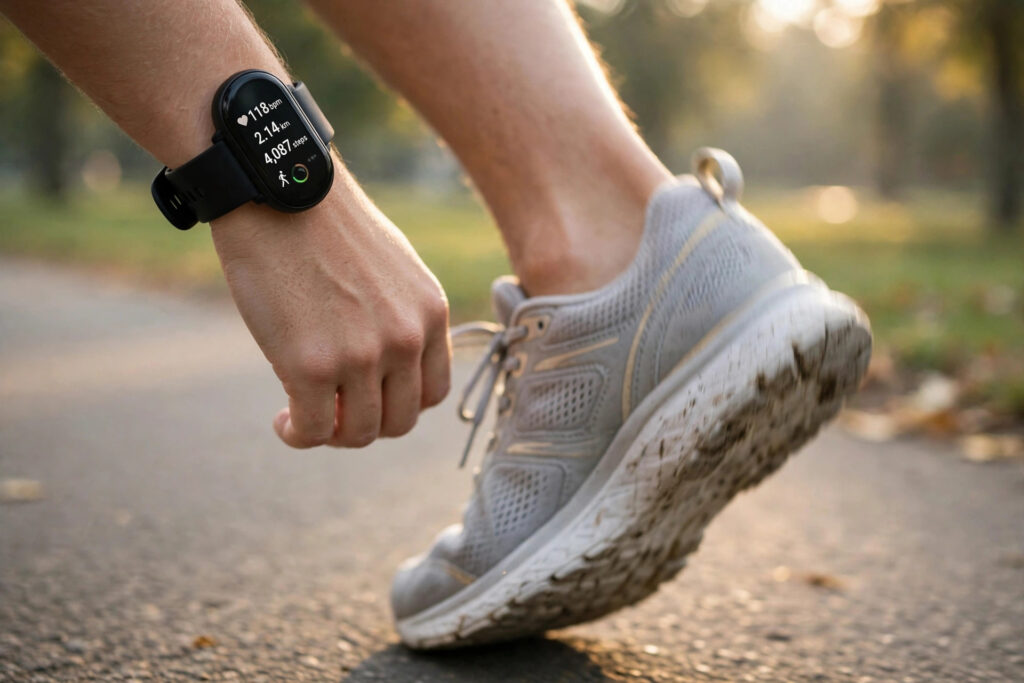
The review’s strongest numbers come from the studies that measured movement directly. People averaging roughly 11,000 to 16,000 steps a day had a 45% to 67% lower risk of dying from any cause than people averaging only 2,000 to 5,000 steps. That is not a small edge. It is close to cutting the risk in half, or better.
The good news for people starting from very little is that the first steps count the most. Among sedentary people, adding just 2,000 steps a day — about a mile, or roughly 20 minutes of walking — was associated with a 25% to 50% lower mortality risk. And among the most inactive people, adding as little as five extra minutes of movement a day was linked to a 30% lower risk, while ten extra minutes was linked to a 42% lower risk.
Fitness itself tells the same story. People with the highest cardiorespiratory fitness had a 41% to 53% lower risk of death than people with the lowest fitness. Fitness responds to regular effort at almost any age — brisk walking, cycling, swimming, or anything that raises the breathing rate for a sustained stretch.
What About Eating Better?
Eating well still helps — just not as much as moving does, at least for lifespan. Across the studies, healthy dietary patterns were linked to a 4% to 23% lower risk of death. Bringing fruit, vegetable, whole grain and fibre intake up to recommended levels was associated with a 6% to 20% lower risk. Doubling the average American’s fruit and vegetable intake, from about two and a half servings a day to five, corresponded to roughly a 13% lower risk.
Those are real benefits, and nobody should read this review as permission to live on takeaways. But stacked against the 45% to 67% lower risk tied to higher step counts, the diet effect is clearly the smaller of the two.
The review also looked at studies that measured diet and activity together. People with both a healthy diet and high activity had the lowest risk of all. But the telling comparison was the cross-over: people who were highly active yet ate a lower-quality diet generally had a lower mortality risk than people who ate healthier diets but barely moved.
Why Movement Outweighs the Menu
There is a physiological reason the numbers lean this way. Regular activity trains the heart, lungs and muscles as a system, improving insulin sensitivity, blood pressure, blood vessel function and the body’s ability to clear fat and sugar from the blood after meals — every single day you move.
The review points to a particularly revealing set of experiments. In short-term studies where volunteers were fed deliberately unhealthy diets, adding exercise prevented or softened the harmful cardiometabolic effects. But when the experiment ran the other way — people stayed inactive while researchers tried to fix the damage with dietary changes alone — the diet interventions largely failed to offset the consequences of not moving.
Myth vs. Fact: Diet, Exercise and a Longer Life
Myth: “You can’t outrun a bad diet.”
Fact: You cannot outrun every consequence of a bad diet — weight, dental health and gut health still answer to food. But for mortality risk specifically, the evidence says activity offsets a poor diet more than a good diet offsets inactivity.
Myth: “Diet is 80% of health and exercise is 20%.”
Fact: That ratio has no basis in the comparative evidence. The review found the mortality benefit of higher activity and fitness was consistently larger than the benefit of better diet quality, in some comparisons several times larger.
Myth: “If I eat clean, I don’t really need to exercise.”
Fact: A good diet plus a sedentary life still leaves most of the risk on the table. In the joint studies, the healthiest eaters with low activity carried a higher mortality risk than active people with average diets.
Putting It Into Practice This Week
The review’s authors offer a refreshingly simple starting point: add 2,000 steps a day. That is about a mile, or twenty minutes of walking, split across the day — a ten-minute walk after lunch, parking further away, taking the stairs for two floors. For someone currently averaging 3,000 steps, that single change takes them to 5,000, and the evidence links that jump to a substantially lower risk. If the famous 10,000-step target has always felt like a pass-or-fail test, the evidence is kinder than the slogan — the benefit curve is steepest at the bottom, and our breakdown of the 10,000-step target explains why.
For people who sit most of the day, even five to ten extra minutes of movement is a meaningful start. A short stroll after eating does double duty, helping both step count and blood sugar — short walking breaks after meals blunt the post-meal spike in a way that label-reading at the same meal cannot match. And twice a week, add some resistance work — bodyweight squats, push-ups, a dumbbell session — because muscle strength supports fitness and independence as the years pass. If you are unsure how often to exercise for the best return, our guide to training frequency breaks down what the evidence actually supports.

None of this requires a gym membership, a tracking watch, or a perfect diet — just a pair of shoes and a decision repeated daily. And the food still counts: keep the vegetables, the whole grains and the home cooking. The review’s message is not “eat whatever you like.” It is “move first, and let the good eating support the moving, not replace it.”
FAQs: Exercise, Diet and Living Longer
Does this mean diet doesn’t matter for longevity?
No. A healthy diet was consistently linked to a lower risk of death — roughly 4% to 23% lower across the studies. The review’s point is comparative, not dismissive: diet helps, but physical activity and fitness help more. The best outcome in the joint studies belonged to people who did both.
How much exercise do I need to live longer?
Less than most people fear. The biggest gains come from moving from very little to some. Around 11,000 to 16,000 steps a day was linked to the largest risk reduction, but adding just 2,000 steps — or five to ten extra minutes of activity — was already associated with a 25% to 50% lower risk among sedentary people.
Is walking enough, or do I need intense workouts?
Walking is enough to start, and for many people it is enough full stop. The step-count studies in the review are mostly built on walking, and the fitness benefit comes from any activity that raises breathing and heart rate for a sustained period. Higher-intensity training and strength work add further benefits, especially for muscle and bone, but they are an upgrade — not a prerequisite.
The Takeaway
For years, the loudest health advice has been about food: what to cut, what to count, what to buy. A careful review of decades of evidence says the quieter advice was the more powerful one all along — move your body, every day, and build the fitness to keep moving for years. Diet still matters, and the healthiest people do both. But if you only have the energy to fix one thing this week, the numbers say lace up your shoes first.
Sources
- Gaesser GA, Sallis RE. Diet Quality Versus Physical Activity and Cardiorespiratory Fitness for Longevity: A Review of Comparative Evidence. Mayo Clinic Proceedings, published online 11 November 2026. doi: 10.1016/j.mayocp.2026.10.010. PubMed: https://pubmed.ncbi.nlm.nih.gov/43014478/
- Arizona State University News. “You aren’t just what you eat.” 12 November 2026. https://news.asu.edu/20261112-health-and-medicine-you-arent-just-what-you-eat
- Kaiser Permanente Department of Research & Evaluation. “Physical activity may matter more than diet for longevity.” 13 November 2026. https://www.kp-scalresearch.org/physical-activity-may-matter-more-than-diet-for-longevity/
This article is for general information only and is not medical advice. Talk to your doctor before starting a new exercise programme, especially if you have a heart condition, diabetes, or another long-term health issue.