
Ozempic’s New Vision Warning: The Eye Risk Nobody Saw Coming
You take a weekly injection to lose weight or control your blood sugar. It works — the scale moves, your A1c drops, your jeans fit again. Then one morning you wake up and half the world has gone dim in one eye. No pain. No warning. Just gone. This is the reality behind the Ozempic vision loss warning.
That scenario is now written into the label of every GLP-1 drug sold in America. On Monday, November 9, 2026, the FDA ordered the makers of these drugs to add a warning. It applies to Ozempic, Wegovy, Mounjaro, Zepbound and every other drug in the class. The warning covers a rare eye condition that can cause permanent vision loss. If you take one of these drugs, this Ozempic vision loss warning is the label change you need to understand. The headlines are doing a terrible job of explaining how big the risk really is.
What the FDA Actually Announced
The FDA issued a Drug Safety Communication. It requires a class-wide labeling change for all glucagon-like peptide-1 receptor agonists — the GLP-1 drugs. The Ozempic vision loss warning goes into the “Warnings and Precautions” section of every label. It covers a condition called non-arteritic anterior ischemic optic neuropathy. NAION, for short.
It covers semaglutide (Ozempic, Wegovy, Rybelsus) and tirzepatide (Mounjaro, Zepbound). It also covers liraglutide (Victoza, Saxenda) and dulaglutide (Trulicity). The combination products Xultophy and Soliqua are included too, along with the new daily pill orforglipron (Foundayo). NAION cases have been reported with every GLP-1 product on the US market — which is why the warning applies to the whole class, not just Ozempic.
Two details matter. First, this sits in Warnings and Precautions — not a boxed warning, the FDA’s strongest kind. Second, the FDA describes a “potential increased risk,” not a proven cause. The underlying cause is “not completely understood,” and animal data revealed no mechanism. That’s a safety signal being taken seriously, not a settled verdict.
What Is NAION, in Plain English?
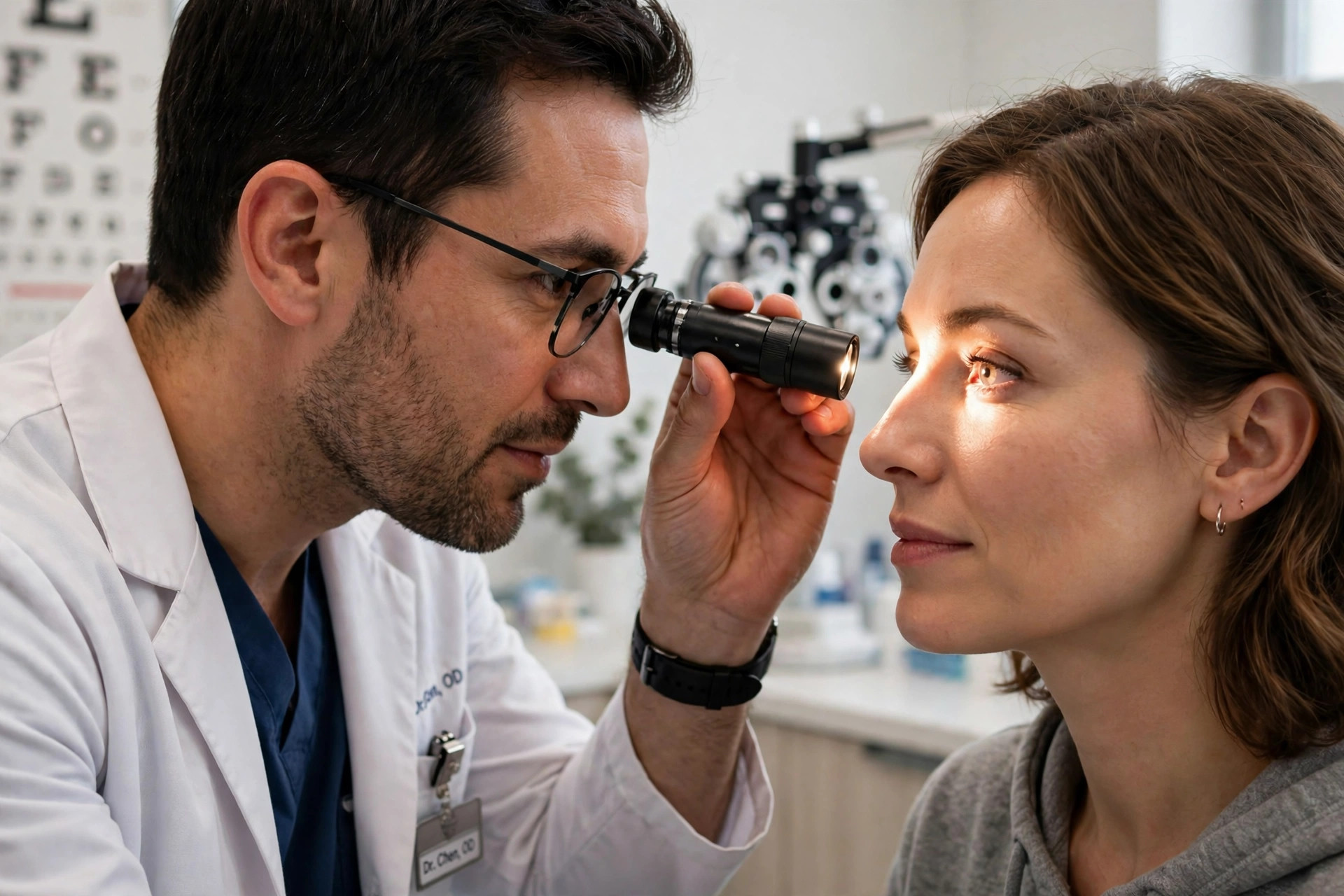
Your optic nerve is the cable carrying everything your eye sees to your brain. NAION happens when blood flow to the front of that cable — the optic disc — suddenly drops. The starved nerve fibres die. Unlike a muscle, the optic nerve doesn’t grow back.
Here’s what it feels like, according to the FDA: sudden, painless vision loss in one eye, often noticed first thing in the morning. People describe a blind spot, tunnel vision or colours looking washed out or wrong. Some see a hazy patch that won’t clear no matter how much they blink. There’s no pain to warn you, and in most cases the lost vision doesn’t come back — it can even get worse after you stop the drug. A pulled hamstring screams at you. NAION just quietly takes a piece of your sight while you sleep.
The Numbers: How Rare Is “Rare”?
This is where most coverage falls apart, so let’s do the actual maths — because the numbers tell a very different story depending on which study you quote.
The FDA pooled 126 randomised trials covering 134,253 patients and nearly 289,000 person-years of exposure. Across all of them, investigators found just 15 probable NAION cases. Ten were in people taking a GLP-1 drug, and five in people on placebo. That works out to 6.4 cases per 100,000 person-years on a GLP-1, versus 3.8 per 100,000 on a comparator.
Put that in real terms. Imagine 100,000 people taking a GLP-1 drug for a year. About six of them would develop NAION, compared with about four out of 100,000 people not taking one. So that is roughly two extra cases per 100,000 users per year. The relative risk sounds big (a hazard ratio of 1.43), but the absolute risk is tiny, and that’s the number that actually describes your odds.
You’ve probably also seen a much scarier number: a hazard ratio of 4.28, or even 7.64. That comes from the July 2024 JAMA Ophthalmology study by Hathaway and colleagues at Massachusetts Eye and Ear. It was the paper that started this investigation. For example, semaglutide was linked to a roughly four-fold higher hazard of NAION in people with type 2 diabetes. In people who were overweight or obese, the hazard was more than seven-fold.
What the Larger Studies Found
But context matters. That study drew its patients from a single specialist neuro-ophthalmology clinic. People go there precisely because something is already wrong with their eyes, so its absolute rates are inflated. The FDA itself noted the study’s limitations. Later, bigger studies landed in between. A Danish-Norwegian registry study of about 61,000 semaglutide users (Simonsen, 2025) found a pooled hazard ratio of 2.81. Europe’s medicines regulator, the EMA, listed NAION in June 2025 as a “very rare” side effect of semaglutide. It affects up to 1 in 10,000 people.
So the honest summary: several independent studies point the same way. The risk is real but small, and nobody has proven the drugs cause it. The FDA decided that was enough to warn people — and frankly, that’s the system working as it should.
Who Should Pay Closest Attention to the Ozempic Vision Loss Warning?
NAION doesn’t strike at random. The FDA lists the known risk factors: diabetes, high blood pressure, sleep apnoea, kidney disease, smoking and anaemia. These are the same conditions that bring many people to GLP-1 drugs in the first place. Diabetes alone damages small blood vessels, and the optic nerve’s blood supply is about as small as vessels get.
Eye doctors also talk about a “disc at risk.” It is a naturally crowded optic disc you’re born with, which only an eye exam would reveal. Add diabetes and a GLP-1 drug, and your baseline risk runs higher than average. But it is still low in absolute terms. If that sounds like you, the Ozempic vision loss warning is for you — not to scare you off a drug that’s helping, but to make sure you know what to watch for.
Myth vs Fact About the Ozempic Vision Loss Warning
The internet has already turned this warning into several things it isn’t:
Myth: “Ozempic makes you go blind.”
Fact: NAION is rare — about 6 cases per 100,000 users per year in the FDA’s trial data. Millions take these drugs; the overwhelming majority will never have an eye problem from them.
Myth: “The FDA proved GLP-1 drugs cause blindness.”
Fact: The FDA found a potential increased risk based on the totality of evidence. The agency explicitly said the cause isn’t fully understood and no mechanism was found in animal studies. A warning is not a verdict.
Myth: “This only affects Ozempic.”
Fact: The warning is class-wide — Mounjaro, Zepbound, Trulicity, Victoza and the rest — because NAION cases have been reported across the whole class.
Myth: “If it happens, stopping the drug fixes your vision.”
Fact: This is the one people get backwards. NAION damage is usually permanent. Vision can keep worsening even after the drug is stopped — which is exactly why recognising the symptoms early matters most.
Myth: “I should stop my GLP-1 immediately.”
Fact: Don’t. Stopping suddenly can send blood sugar climbing and undo months of progress. The FDA’s advice is to talk to your prescriber — and to see an ophthalmologist fast if symptoms appear.
What to Do If You Take a GLP-1 Drug
Here’s the practical part — the bit worth saving.
Know the symptoms. Sudden painless vision loss in one eye, especially on waking. A blind spot, tunnel vision, distorted colours, or a hazy patch. Any of these is a same-day eye emergency, not a “see how it feels tomorrow” situation.
Get a baseline eye exam. If you’re starting a GLP-1 drug, ask your doctor about a dilated eye exam before you begin. This matters most if you have diabetes or high blood pressure. Mention the NAION warning too. An eye doctor can spot a crowded “disc at risk” and tell you where you stand.
Tell your prescriber about eye changes — fast. The FDA tells clinicians to refer suspected NAION promptly to an ophthalmologist. They should also consider stopping the GLP-1 unless the benefits clearly outweigh the risk. That decision happens quicker when your doctor hears about symptoms on day one, not week three.
Don’t stop the drug on your own. Unless an eye doctor tells you to, keep taking it while you get checked. Uncontrolled diabetes is a real, immediate risk. The eye risk is rare and unproven as a cause.
If You Use GLP-1 Drugs Off-Label
Be extra careful if you use these drugs off-label. This one’s for the fitness crowd. GLP-1 drugs have become a shortcut for fast weight cuts, sometimes bought without a prescription or supervision. If you’re using one without a doctor monitoring you, nobody will catch an eye problem early. Newer weight-loss drugs like retatrutide draw the same attention. The logic is the same: powerful drugs deserve real medical oversight, not a group-chat recommendation. For the pattern behind the shortcuts athletes are tempted by, see the risks we covered for peptides marketed to athletes.
And the boring alternative still works. The diet and exercise trial that put type 2 diabetes into remission came with no vision warning on the label.
What the Ozempic Vision Loss Warning Means for Athletes
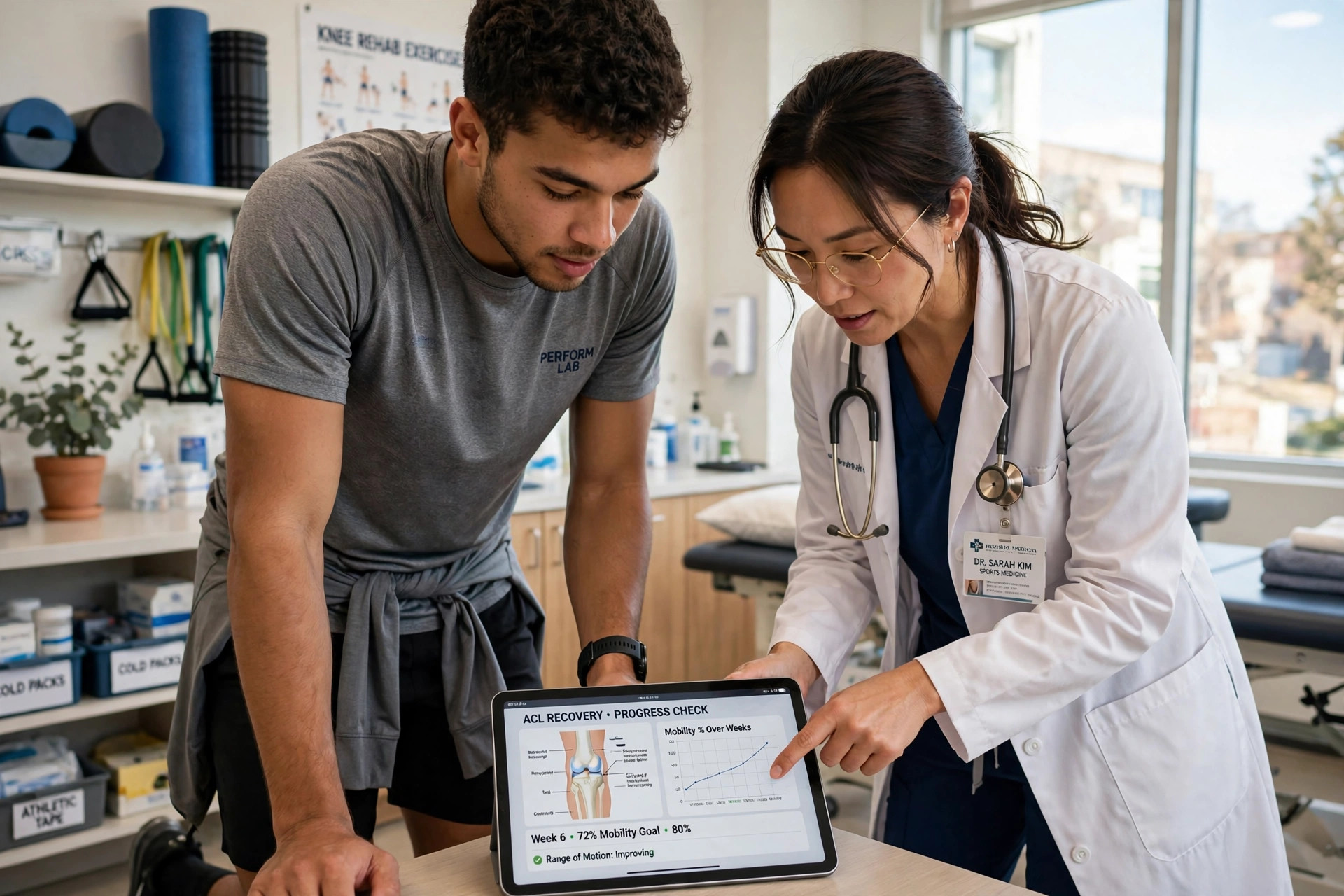
If you compete, your eyesight is equipment. A sprinter reads the track, a tennis player tracks a ball at 130 mph. Losing vision in one eye doesn’t just change your life — it ends a career. That’s not a reason to fear the drug; it’s a reason to respect it. If you’re an athlete using a GLP-1 for weight management, get your eyes checked. This applies especially off-label, for a weight class or a photoshoot. Know the symptoms, and keep a doctor in the loop.
FAQs
Should I stop taking Ozempic because of the vision warning?
No — not on your own, and not in a panic. The Ozempic vision loss warning describes a potential, rare risk: about 6 cases of NAION per 100,000 users per year. Stopping suddenly can spike your blood sugar and reverse months of progress. Talk to the doctor who prescribed it and decide together. If you develop sudden painless vision loss in one eye, seek eye care the same day.
Does the Ozempic Vision Loss Warning Apply to Mounjaro and Zepbound Too?
Yes. The order is class-wide. It covers every GLP-1 drug on the US market, from semaglutide (Ozempic, Wegovy) to tirzepatide (Mounjaro, Zepbound) and beyond. The FDA said NAION cases have been reported with all of them.
Is the vision loss from NAION reversible?
Usually not. NAION damages the optic nerve, which doesn’t regenerate, and vision can keep worsening even after you stop the drug. That’s why early recognition matters. Sudden painless vision loss, a blind spot or distorted colours in one eye means an ophthalmologist immediately. Hours matter more than days.
The Bottom Line
The Ozempic vision loss warning is a good thing, even if the headlines make it sound terrifying. A rare risk is now on the label where doctors and patients can see it. It amounts to roughly 2 extra cases of NAION per 100,000 users per year. The evidence points to a real signal without proving cause, and the damage is permanent, which is exactly why knowing the symptoms matters more than fearing the drug.
If you take a GLP-1, do three things. Learn the symptoms, get your eyes checked, and keep your prescriber in the loop. The drug still does its job for millions of people. It now comes with one more instruction: watch your vision like you watch your blood sugar.
This article is for general information only and isn’t medical advice. If you take a GLP-1 medication, watch for any sudden change in your vision. Contact your doctor or an eye specialist right away.