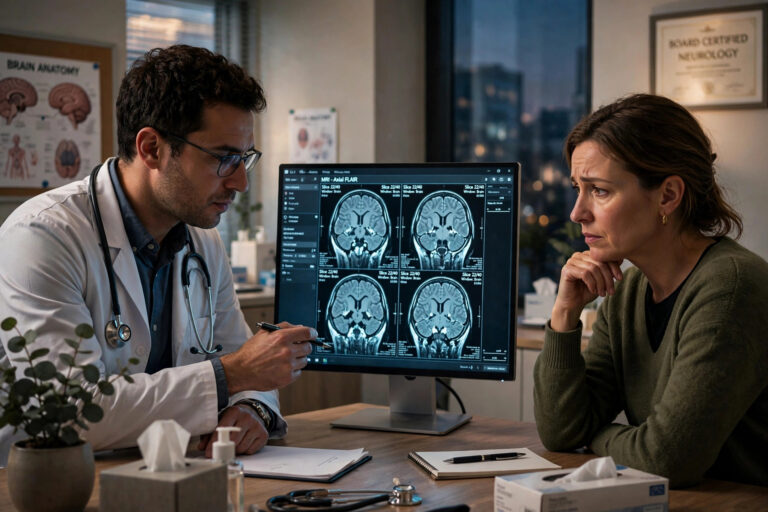

I remember the exact moment I stopped treating mRNA like a buzzword. A friend of mine — marathon runner, never missed a 5 a.m. training session — got a melanoma diagnosis at 34. Surgery removed it, but for two years every follow-up scan felt like holding her breath underwater. “All clear” never really felt clear. If you’ve ever waited on a scan result, you know exactly what I mean.
Now, for the first time ever, there’s something real on the horizon that could change that waiting game entirely. In August 2026, Moderna and Merck announced a milestone for cancer medicine. Their personalized mRNA cancer vaccine — intismeran autogene — had passed its Phase 3 trial for melanoma. That’s not a lab curiosity or an early-stage hint. That’s the biggest, hardest test a treatment faces. And it worked.
This isn’t the COVID vaccine. It’s something far more ambitious: a vaccine built from your own tumor. It’s designed to teach your immune system to hunt down cancer before it can come back. Here’s the full story: what happened, how it works, who it could help, and what still needs figuring out.
What Actually Happened in the Trial
The trial — called INTerpath-001 — enrolled 1,137 people with stage IIB through IV melanoma who’d had their tumors surgically removed. These are patients at genuine risk of the cancer coming back. They’re the ones who leave the hospital relieved but spend years worrying about recurrence.
Patients were split into two groups. One got the personalized mRNA vaccine plus Merck’s immunotherapy drug Keytruda (pembrolizumab) for up to a year. The other got Keytruda alone. To be clear, that’s already the standard of care — and a powerful drug in its own right. Beating that bar is genuinely difficult.
The vaccine combination won. It met its primary endpoint of recurrence-free survival — meaning patients stayed cancer-free longer. It also met a key secondary endpoint: distant metastasis-free survival. That means the cancer was less likely to spread to distant parts of the body. Merck called it the first positive Phase 3 readout ever. It applies both to individualized neoantigen therapy and to mRNA-based cancer therapy. First, researchers will present full details at the ESMO 2026 medical meeting this week. Next, regulatory filings go to the FDA.
How a Personalized mRNA Cancer Vaccine Actually Works
The concept sounds like science fiction, but the mechanics are beautifully logical. Here’s the short version of how doctors build one of these vaccines for a single patient:
Step 1: Read the tumor’s fingerprint
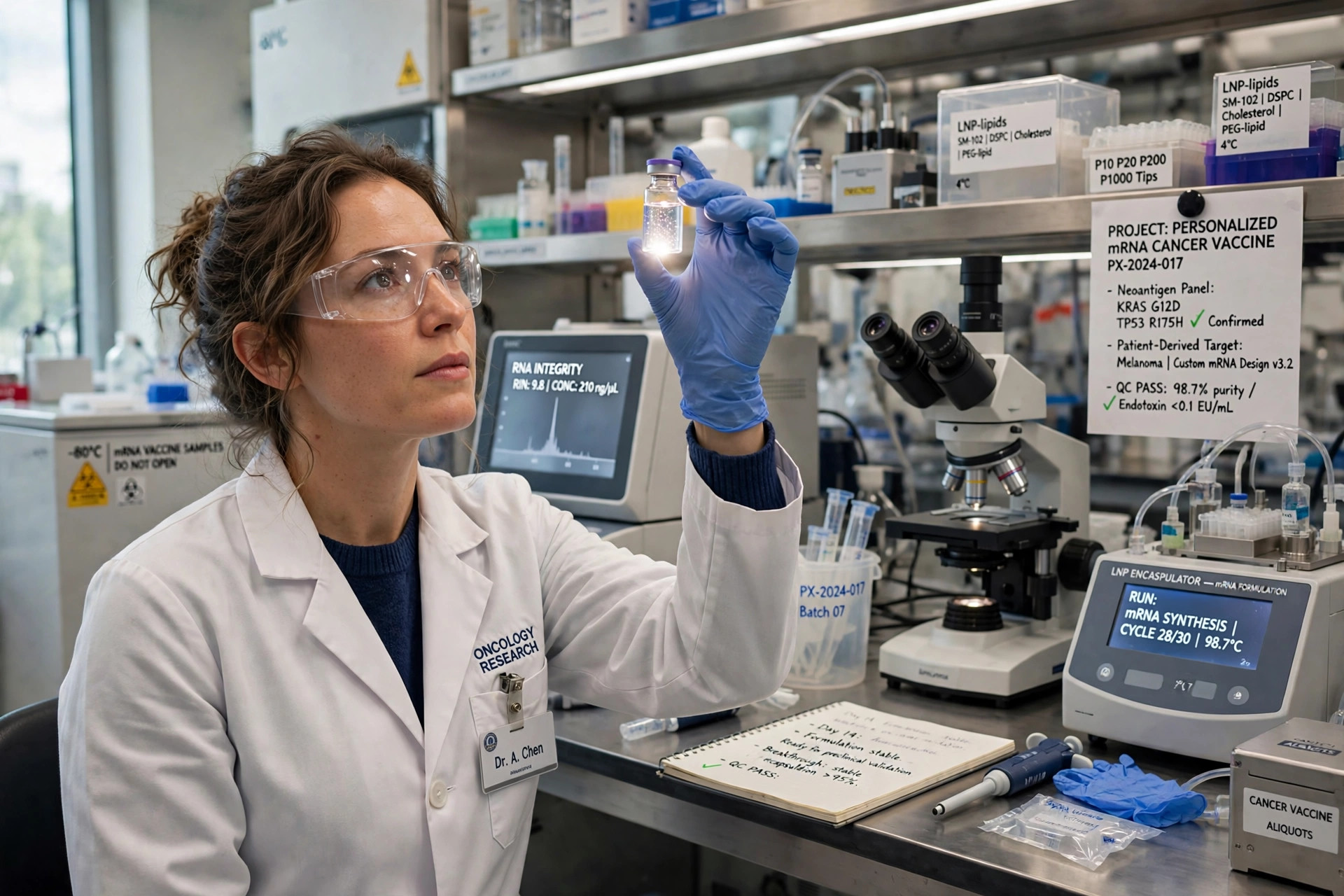
After surgery, the lab sequences the removed tumor. The lab hunts for mutations — the unique glitches in the tumor’s DNA that don’t exist in the patient’s healthy cells. These mutations create abnormal proteins called neoantigens, and each patient’s tumor has its own set. The vaccine encodes roughly 34 of these patient-specific neoantigens.
Step 2: Package the instructions in mRNA
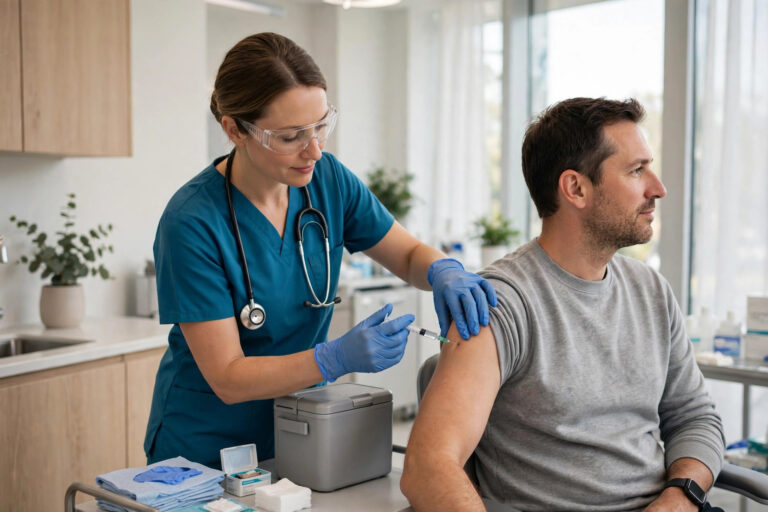
Scientists load those neoantigen blueprints onto messenger RNA. It’s the same delivery technology the COVID vaccines made famous, carrying completely different instructions. No live virus, no tumor cells, nothing that can cause cancer. Just genetic instructions your cells read, use, and then discard.
Step 3: Teach the immune system to hunt
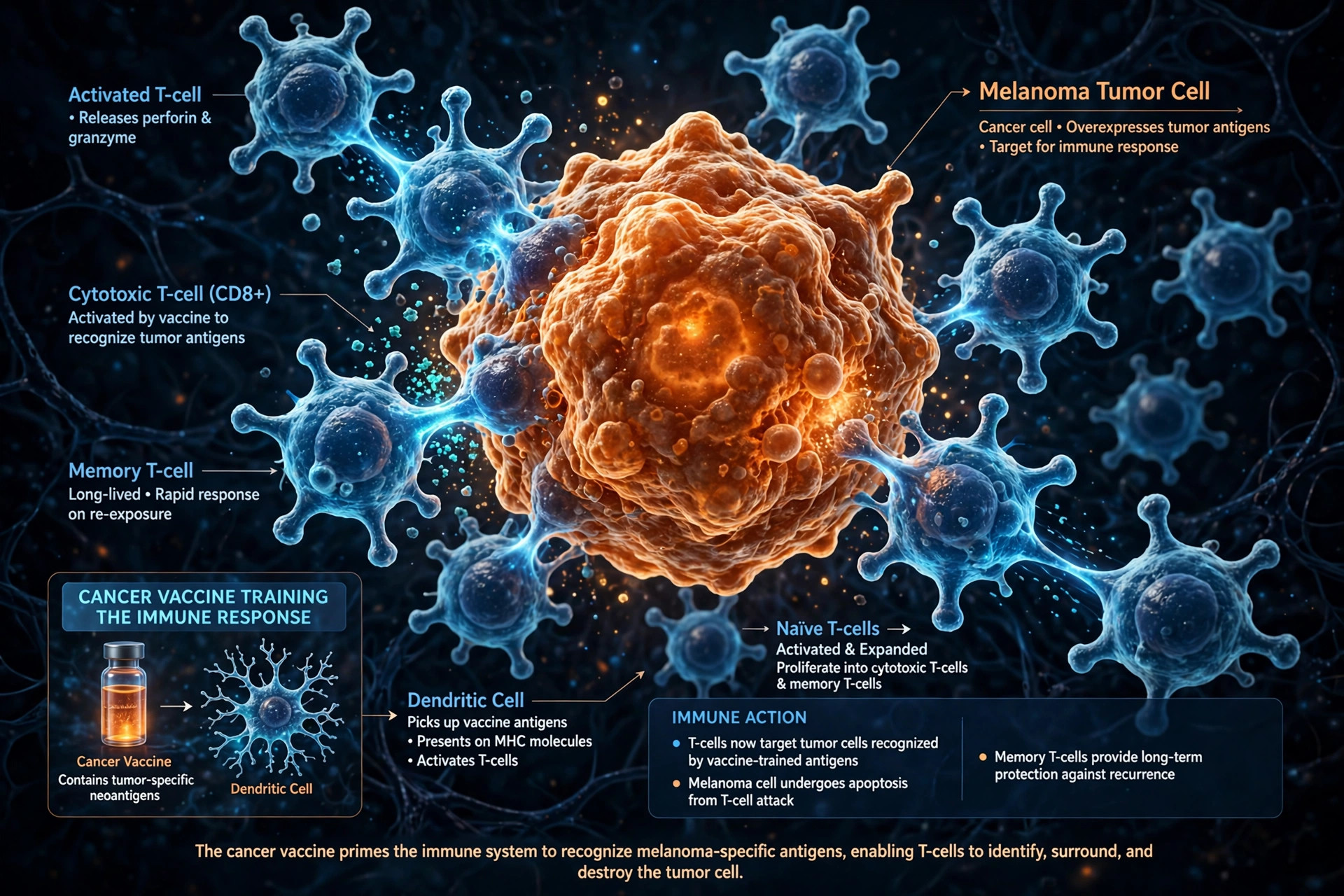
Your immune cells study the neoantigens and learn to recognize them as targets. Meanwhile Keytruda takes the brakes off the immune system. Cancer cells are notoriously good at hiding, and Keytruda helps immune cells see them. As a result, a trained, unleashed immune patrol now hunts the patient’s own cancer profile.
Think of it this way: Keytruda is like removing the blindfold from your immune system. The mRNA vaccine is like handing it a wanted poster with the criminal’s actual face on it.
Why This Is a Genuinely Big Deal
It’s the first mRNA therapy to pass Phase 3 for cancer. mRNA cancer vaccines have been a “decades-old scientific ambition,” as one analyst put it. Dozens of attempts stalled in early trials. Getting through a 1,137-patient randomized trial means the effect was strong enough to survive the strictest statistical scrutiny.
It builds on already-strong earlier data. The Phase 2b trial (KEYNOTE-942) enrolled 157 melanoma patients. The vaccine plus Keytruda cut the risk of death or recurrence by 49% versus Keytruda alone. That benefit held over five-plus years. It also slashed the risk of metastasis or death by 59%. The Phase 3 result validates that this wasn’t a small-trial fluke.
It points beyond melanoma. The same vaccine is already in Phase 3 trials for non-small cell lung cancer alongside Keytruda. Studies in bladder and kidney cancers are also underway. The NIH is also launching a public-private effort in December 2026. It aims to speed personalized cancer vaccines for pancreatic, liver, and colorectal cancers — notoriously hard-to-treat tumors. Ultimately, the goal is widespread availability within seven to ten years.
For athletes specifically, this matters more than you’d think. Cancer doesn’t care about your VO2 max. Melanoma is one of the most common cancers in young, active people. Outdoor training means UV exposure — and I’ve seen too many runners dismiss a changing mole because they “felt fine.” A tool that could stop recurrence after surgery would change the calculus of every scan-anxious athlete I’ve ever known.
The Honest Caveats (Because They Matter)
However, let’s not pretend this is a done deal or a miracle cure. The real story has real complications:
- It’s not approved yet. Regulatory filings are coming, but the FDA hasn’t reviewed the full data. For new cancer therapies, expect timelines of months to years — not weeks.
- Manufacturing is a beast. Teams build every dose for one specific patient. Right now, that’s a six-week turnaround from tumor sequencing to a vaccine arriving at the hospital. Merck’s CEO says that timeline will shrink, but scaling “micro-batch” personalized production is nothing like mass-producing a flu shot.
- It may be expensive. Analysts openly compare the infrastructure challenge to CAR-T therapy. That was incredible science that ran into reimbursement gaps and fragmented hospital processes. We still need to build the system around personalized medicine, not just the drug.
- We don’t have the full numbers yet. The August announcement was a topline readout; detailed efficacy and safety data arrive at ESMO 2026 this week. The scientific community — and regulators — will be reading the fine print carefully.
None of this diminishes the milestone. It just means the right reaction is excitement with patience, not hype.
What Happens Next
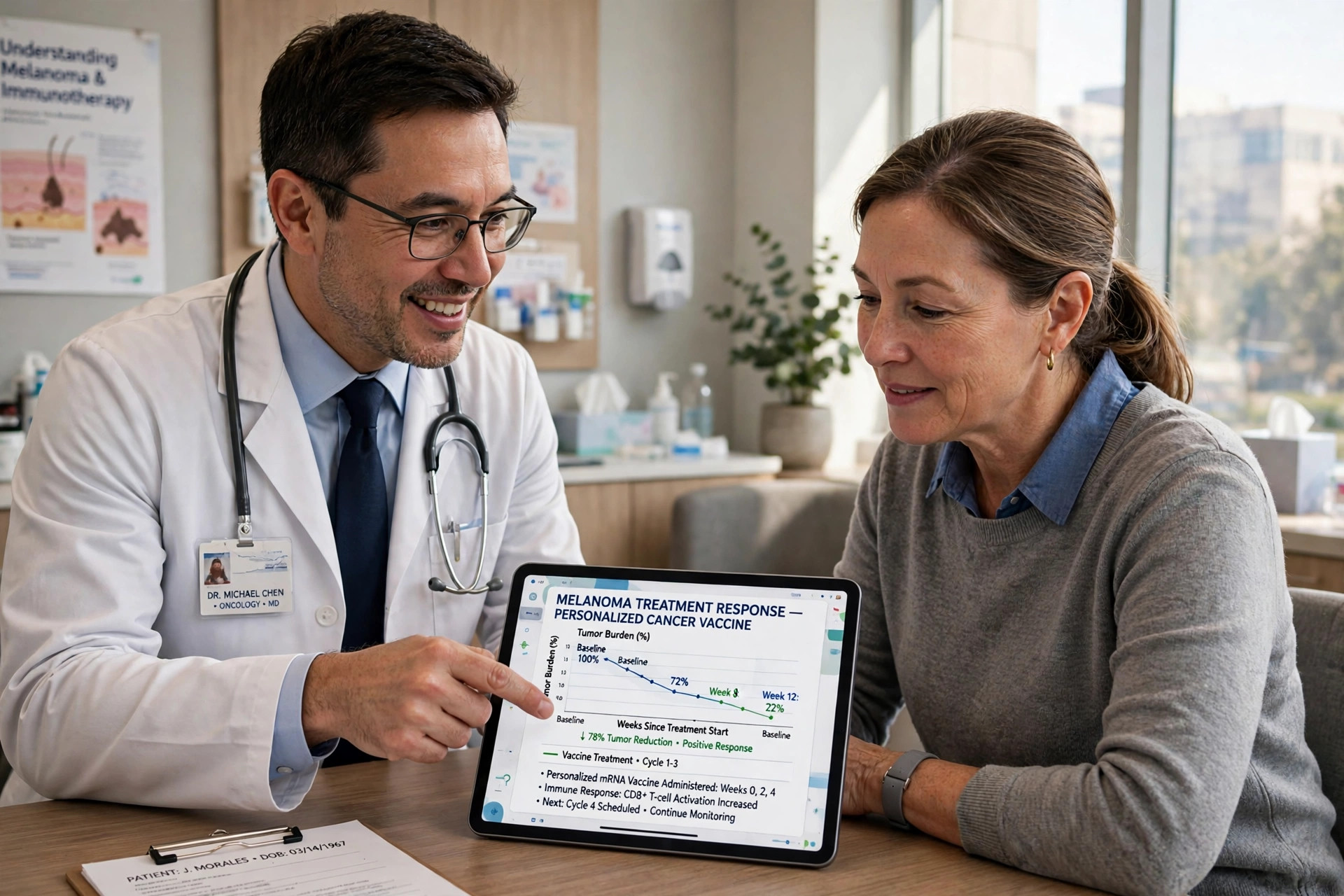
Meanwhile, the near-term timeline is genuinely busy. Detailed trial data lands at ESMO 2026 this week. Regulatory submissions follow. The lung cancer Phase 3 readouts are the next big catalyst. If the vaccine works in a second tumor type, the story shifts. It starts looking less like a melanoma story and more like a platform story.
Longer term, the NIH’s December 2026 initiative could widen the field to pancreatic, liver, and colorectal cancers. And manufacturing improvements could turn a six-week bespoke process into something hospitals can offer routinely. Parallel production lines and faster sequencing-to-delivery will help get it there.
If you take one thing from this story, take this. For the first time, a vaccine trained on your own tumor has cleared the highest bar in medicine. My friend lived with that waiting-room anxiety for two years. For future patients, it might finally have an answer with a name on it.
FAQ
Is the mRNA cancer vaccine available to patients right now?
No. Intismeran autogene is still investigational with no FDA approval yet. It’s only available through clinical trials. Merck and Moderna are preparing regulatory filings, but approval — if it comes — is still months away at the earliest.
Is this the same technology as the COVID mRNA vaccines?
Same delivery platform, completely different payload. The COVID vaccines carried instructions for the coronavirus spike protein. This vaccine carries instructions for about 34 neoantigens unique to the patient’s own tumor. And unlike the COVID shot, it’s personalized — teams manufacture every dose for one person.
Could this work for cancers other than melanoma?
That’s the hope, and trials are already running. Three Phase 3 studies are testing non-small cell lung cancer, plus earlier-stage work in bladder and kidney cancers. The NIH is also planning studies for pancreatic, liver, and colorectal cancers starting December 2026. But results in one cancer type don’t guarantee success in others — each trial has to prove itself.
The Takeaway
Medicine just crossed a line it’s been trying to cross for decades. The first mRNA cancer vaccine has passed a Phase 3 trial. Doctors personalize intismeran autogene to each patient’s tumor and pair it with Keytruda. In a 1,137-person study, it kept melanoma patients cancer-free longer than the current standard of care. The road from trial success to a vaccine in your hospital is still long. Manufacturing, pricing, and regulation all have to catch up — but the science is no longer theoretical. It’s proven. That’s worth paying attention to, whether you train in the sun or have ever waited on a scan.
This article is for informational purposes only and is not medical advice. Cancer treatment decisions should always be made with a qualified oncologist. If you notice a changing mole or unusual skin lesion, see a dermatologist promptly — early detection remains the most powerful tool we have.