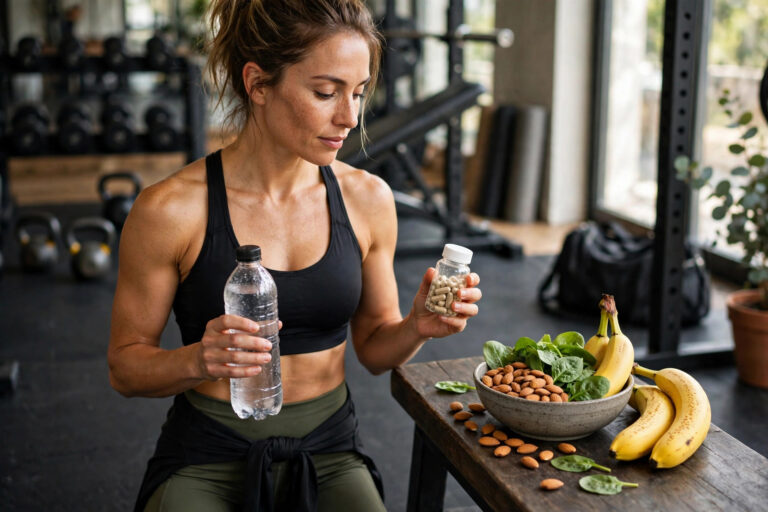
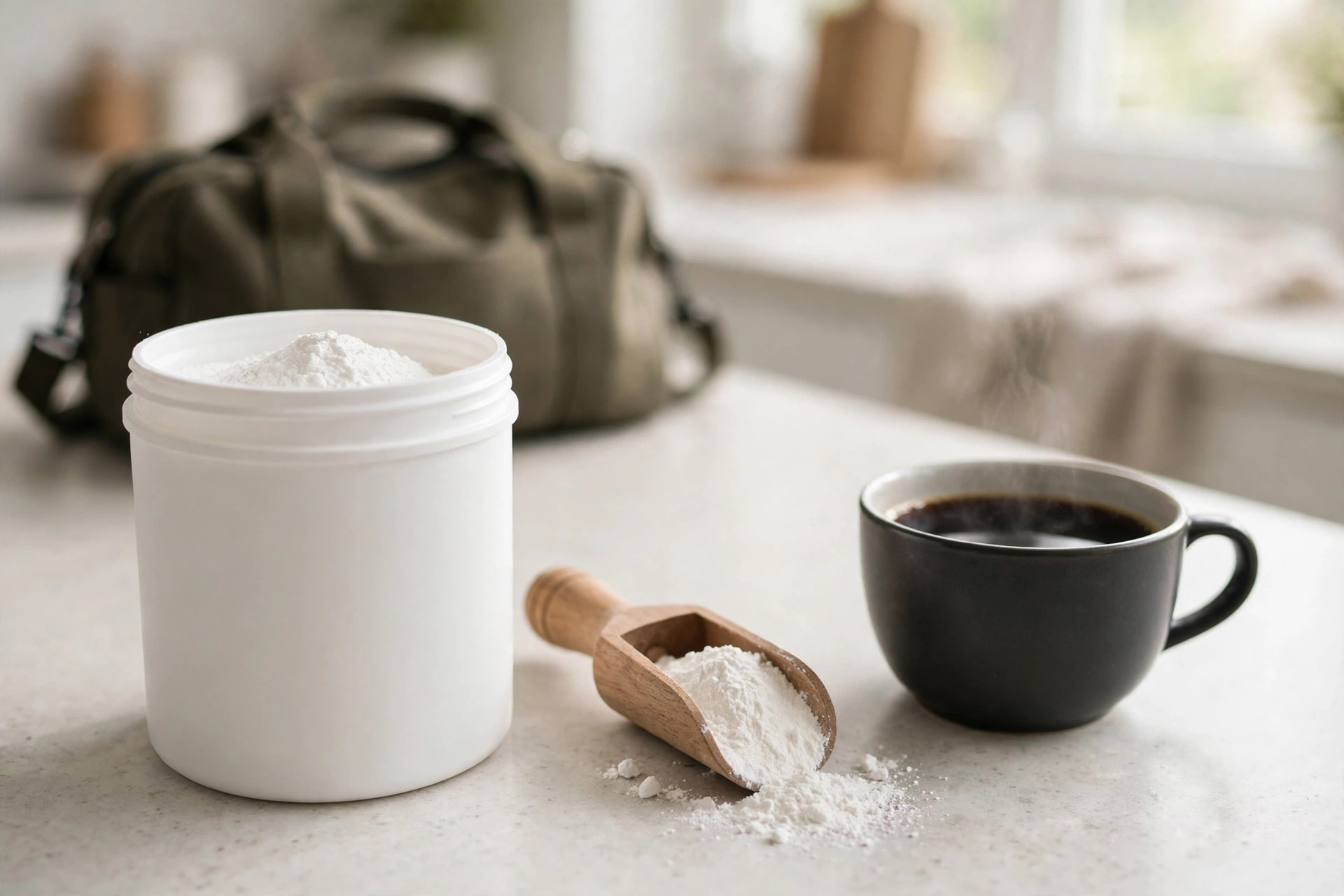

My gym bag has seen a lot of fads come and go. Pre-workout that tasted like battery acid. A greens powder that turned my shaker bottle into a swamp. But the one I keep seeing everywhere right now — in coffee, in smoothies, in my training partner’s oatmeal — is a plain white powder that promises stronger tendons, happier joints, and faster recovery. Collagen peptide powder.
And it’s not just my gym. Searches for peptide powder are up about 150% year over year, according to November 2026 trend data. So I did what I always do when something blows up: I ignored the tub’s marketing claims and went and read the actual studies. Here’s what the science says — the good, the small, and the “don’t waste your money” parts.
What Collagen Peptide Powder Actually Is
Let’s clear up the first confusion, because the word “peptide” does a lot of heavy lifting these days.
Collagen peptides are just collagen — the protein that makes up your tendons, ligaments, skin, and bones — chopped into tiny pieces through a process called hydrolysis. The pieces are small enough to dissolve in hot coffee or cold water without turning into jelly, and your gut can absorb them easily.
That’s it. No needles, no prescriptions, no grey-market vials. This is a food product, sold in tubs next to the protein powder. It is a completely different thing from the injectable peptides like BPC-157 that get talked about on podcasts — those are unapproved drugs, and I’ll explain the difference properly below, because mixing the two up is exactly how people get into trouble.
A scoop of collagen peptides is mostly glycine, proline, and hydroxyproline — the amino acids your body uses to build connective tissue. What it is not is a complete protein. More on that in a minute, because it matters more than most sellers admit.

Why Everyone’s Suddenly Scooping It
Three things happened at once. First, the recovery conversation shifted. A few years ago, athletes talked about protein and creatine. Now they talk about tendons — the Achilles that nags for months, the knee that clicks on stairs, the shoulder that never quite feels right after bench day. Tendons heal slowly and stubbornly, and anything that claims to help them gets attention fast.
Second, collagen peptides are easy. No cooking, no chewing, no weird taste. You stir a scoop into the coffee you’re already drinking. For people who already take supplements, that’s about as low-friction as it gets.
Third — and this is the honest part — the early research genuinely looks interesting. Not miraculous. Interesting. And in a supplement world full of empty promises, “interesting” is enough to start a stampede.
What the Science Actually Says
I graded the evidence the way I’d want someone to grade it for me: what did the studies measure, how many people were in them, and how confident can we be?

Tendons and joints: the strongest case
This is where collagen peptides look best. A 2024 systematic review and meta-analysis pooled 19 studies with 768 participants who combined daily collagen peptides with training over several weeks. The biggest effect it found was on tendon morphology — basically, tendons looking healthier and more robust on scans — with an effect size of 0.67. That’s a solid, noticeable effect by research standards.
A separate 2021 systematic review of 15 controlled trials found the same pattern: people taking collagen peptides (doses ranged from 5 to 40 grams a day) consistently reported less joint discomfort and better joint function. In one often-cited trial, older men doing 12 weeks of resistance training gained 4.2 kg of fat-free mass on 15 grams of collagen peptides a day, versus 2.9 kg in the placebo group.
That 4.2 versus 2.9 is worth pausing on. It’s real, but it’s also a 1.3 kg difference over three months in older men who were losing muscle anyway. It’s not a transformation. It’s a nudge — and a nudge that mostly showed up in people whose connective tissue needed the most help.
Muscle and strength: real, but small
The same 2024 meta-analysis found small improvements in maximal strength (effect size 0.19) and fat-free mass (0.48). Small is the honest word here. Collagen peptides are not a muscle-builder in the way whey or creatine actually works — and the researchers themselves rated the certainty of this evidence as low to moderate. The trials were small, and quite a few were funded by companies that sell collagen.
One more wrinkle: collagen is an incomplete protein. It contains no tryptophan at all and very little leucine — the amino acid that flips the switch on muscle building. A 2024 study that compared whey, pea, and collagen head to head found collagen was clearly inferior to whey at stimulating muscle protein synthesis. So if you’re choosing between a scoop of collagen and a scoop of whey after training, whey wins for muscle. Collagen’s job is different: it’s feeding the connective tissue, not the muscle fibres.
Recovery: a maybe, not a miracle
The meta-analysis found a moderate improvement in reactive strength 48 hours after muscle-damaging exercise. But other reviews found the picture mixed — some trials showed less soreness, others showed nothing. If you buy collagen peptides expecting to wake up magically un-sore after leg day, you’ll be disappointed. If you take them for months and your tendons gradually feel less cranky, that’s the effect the research actually supports.
The Peptides You Should NOT Confuse This With
Here’s the part that matters most, and the reason I wrote this article the way I did.
When people say “peptides” online, they often mean injectable compounds like BPC-157 and TB-500 — substances sold as “research chemicals” with promises of rapid healing. Those are not collagen powder. BPC-157 has never been approved by the FDA for any use in humans; in late 2023 the FDA placed it in a category of substances with safety concerns for pharmacy compounding, citing a lack of human safety data. The World Anti-Doping Agency has banned it since 2022, and only three small human studies have ever been published. A committee vote in July 2026 recommended it for a compounding list — but a recommendation is not approval, and it doesn’t make the stuff safe or legal to buy online.
If you compete in a tested sport, that distinction is your career. Collagen peptide powder is a food. BPC-157 will fail a drug test. Don’t let a supplement shop — or a podcast — blur that line for you.
Myth vs. Fact: Collagen Peptide Powder
Myth: “Collagen peptides build muscle like whey.”
Fact: They don’t. Collagen lacks the amino acids that drive muscle protein synthesis. It supports connective tissue; whey builds muscle. Different jobs.
Myth: “More is better — take 40 grams a day.”
Fact: The studies that showed benefits mostly used 10 to 15 grams a day. Nobody has shown that doubling the dose doubles the result. You’re mostly doubling the cost.
Myth: “It works in a week.”
Fact: The trials ran 8 to 12 weeks minimum. Tendons remodel slowly. If you try it for a fortnight and quit, you’ve tested nothing.
Myth: “All peptide powders are basically the same.”
Fact: Collagen peptides are a regulated food product. Injectable “research peptides” are unapproved drugs. Same word, different universe.
Myth: “It’s just expensive protein.”
Fact: Half true, half not. As a protein source it’s poor value — but as a targeted source of glycine and proline for connective tissue, it does something whey doesn’t.
How to Use It Without Wasting Money
If you’re going to try it, here’s the worked example, with real numbers.
Take 15 grams a day — that’s the dose most of the positive studies used, and it’s one standard scoop. A typical tub holds about 30 servings and costs roughly $25 to $40, so you’re looking at somewhere around a dollar a day. Take it daily, not just on training days, and give it at least 12 weeks before you judge it. Tendons don’t remodel on a weekly schedule.
Take it with something containing vitamin C — an orange, a glass of juice, a vitamin C tablet. Your body needs vitamin C to actually build collagen from those amino acids, and taking the powder with your morning coffee and nothing else is leaving value on the table.
And keep the rest of your nutrition honest. Collagen peptides can’t rescue a diet that’s short on total protein — that’s one of the protein mistakes athletes keep making. Get your main protein from complete sources, and treat collagen as the connective-tissue top-up, not the foundation.
Who should skip it? If you’re allergic to fish, check the label — some collagen comes from fish skin. Vegetarians and vegans should know it’s an animal product, full stop. And if you’re pregnant, breastfeeding, or managing a medical condition, ask your doctor first. That’s not a formality; it’s the right call with any supplement.
Frequently Asked Questions
Is collagen peptide powder safe for athletes?
For most healthy adults, yes — it’s a food-grade hydrolysed protein, not a drug, and it’s not on any banned-substance list. The safety caveats are practical ones: check the source if you have a fish allergy, and buy from a brand that third-party tests its products, because supplement quality varies more than the labels suggest.
How long does collagen peptide powder take to work?
The trials that showed benefits ran for 8 to 12 weeks at 10 to 15 grams a day. Tendons remodel slowly, so anything less than two months of consistent daily use isn’t a fair test. If you feel nothing after a week, that’s normal — not a sign it’s failing.
Can collagen peptide powder replace whey protein?
No. Collagen is an incomplete protein — it has no tryptophan and very little leucine — and studies show it’s inferior to whey for stimulating muscle protein synthesis. Use whey (or another complete protein) for muscle, and collagen as an extra for tendons and joints.
The Bottom Line
Collagen peptide powder is the rare supplement trend with actual research behind it — but the research says something much quieter than the marketing does. It won’t build muscle like whey, it won’t erase soreness overnight, and it won’t fix a bad training programme. What it might do, over two to three months of daily use, is give your tendons and joints a little more of what they’re made of — and for an athlete whose knees or Achilles are the limiting factor, a little is worth a dollar a day.
Just don’t confuse it with the other “peptides” on the internet. One is a scoop in your coffee. The other can end a sporting career. Know which one you’re buying.
This article is for general information only and isn’t medical advice. Supplements affect everyone differently, so talk to a qualified healthcare professional before starting anything new — especially if you’re pregnant, breastfeeding, managing a condition, or competing in drug-tested sport.