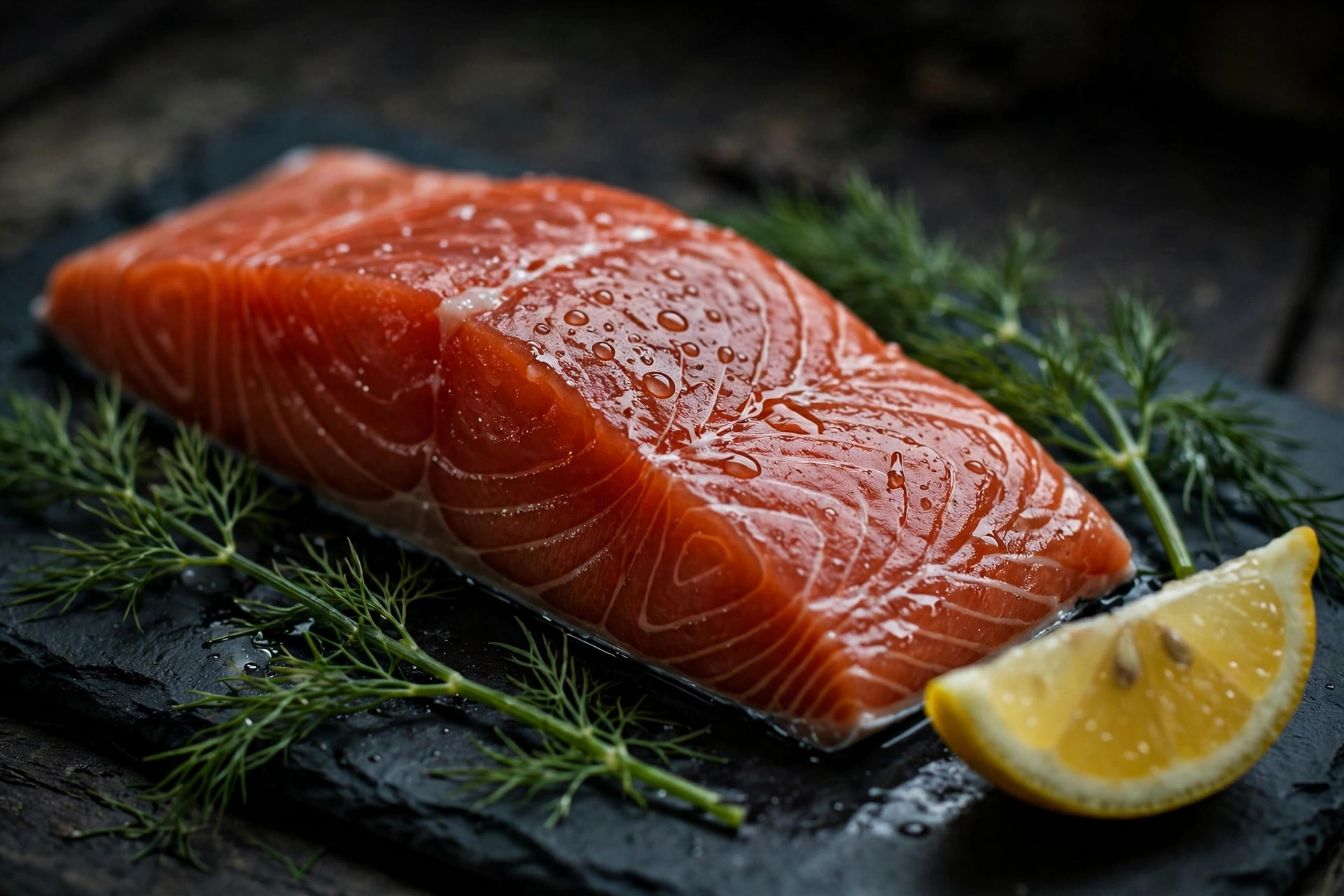

You know that deep, almost unreal red of a wild salmon fillet? That’s astaxanthin. It’s the pigment that turns salmon pink, shrimp orange, and flamingos — yes, flamingos — pink. And right now it’s having a moment: searches for astaxanthin are up 307% year over year, with around 301,000 people a month typing it into Google.
Walk into any supplement shop and you’ll find it in a little red softgel, usually next to the fish oil, usually promising the world. Faster recovery. Less soreness. Better endurance. Some bottles claim it’s 6,000 times stronger than vitamin C, which sounds incredible until you ask what that number actually means.
I spent a week digging through the actual trials — not the bottle labels, not the influencer reels — to find out what this pink stuff does for people who train hard. The honest answer is more interesting than the hype, and less exciting than the marketing. Let’s get into it.
What Is Astaxanthin, Actually?
Astaxanthin is a carotenoid, a cousin of beta-carotene (the stuff that makes carrots orange). In nature it’s made by a tiny algae called Haematococcus pluvialis. Krill eat the algae, salmon eat the krill, and the pigment ends up in the salmon’s muscle — which is why wild sockeye is that deep red colour.
It’s a powerful antioxidant in a test tube, meaning it mops up the free radicals your body produces during hard exercise. That’s the theory, anyway: train hard, produce more oxidative stress, take an antioxidant, recover faster. It sounds neat. The question is whether the theory survives contact with real athletes.
Most supplements on the shelf are made from that same algae, grown in tanks and extracted into an oil. A smaller share is synthetic, made in a lab — chemically similar, but the natural form is the one nearly all the human trials used. If you buy it, the label should say Haematococcus pluvialis. If it doesn’t say where it comes from, that’s your first warning sign.
The Study That Started the Hype
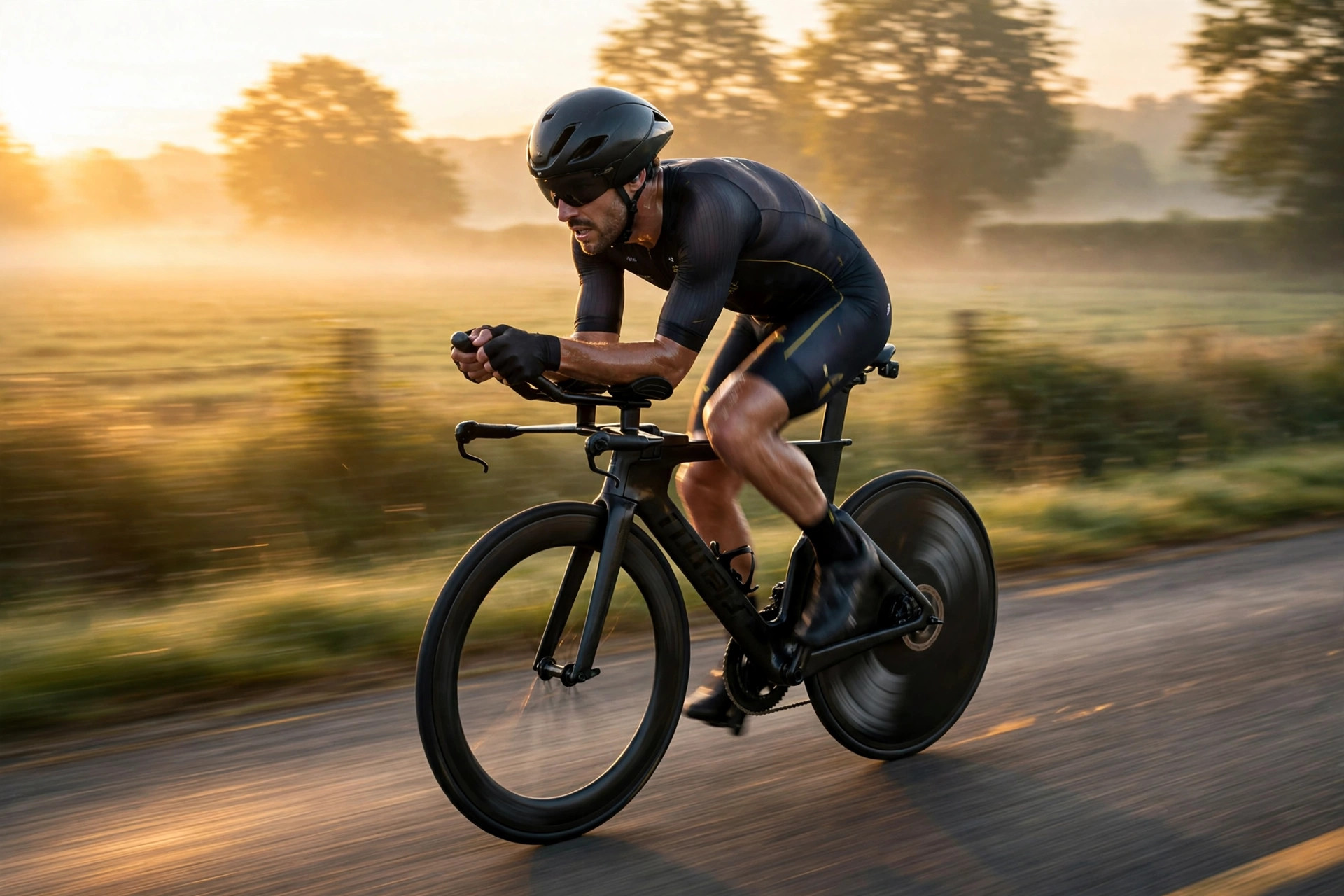
The astaxanthin-for-athletes story really starts with one small, famous study. In 2011, researchers at Texas A&M gave 21 competitive cyclists either 4 mg of astaxanthin a day or a placebo for 28 days. Then they made them ride two hours at a hard steady pace, fasted, before a 20 km time trial.
The astaxanthin group finished the time trial 121 seconds faster than before — about 5% — and pushed out 20 watts more power. The placebo group improved by just 19 seconds. On paper, that’s a big deal. Two minutes in a 20 km time trial is the kind of gap that wins races.
But here’s the part the supplement ads leave out. Only 14 of the 21 cyclists actually finished the study — seven in each group. Seven people is a tiny sample, and the researchers themselves admitted they had no idea why it worked. Nothing changed in the riders’ fuel use, lactate, or blood markers. The mechanism, in their words, “remains obscure.”
A decade later, a second study tried a bigger dose for a shorter time: 12 mg a day for just seven days. Those cyclists finished a 40 km time trial 1.2% faster — roughly 50 seconds — and burned a little more fat doing it. Promising, again small, again short.
And then there’s the study nobody quotes on the bottle. In 2013, Dutch researchers gave trained cyclists 20 mg a day — five times the original dose — for four weeks. Result: no significant difference in time-trial performance at all.
So the performance evidence is three studies, two positive, one flat, all small. If you’re the kind of person who wants a clear yes or no, I’m sorry — the science isn’t giving you one yet.
What 24 Trials Together Actually Say
This is where it gets genuinely useful. In May 2026, a systematic review and meta-analysis in the journal Nutrients pooled every randomised trial on astaxanthin and exercise — 24 studies, covering cyclists, soccer players, runners, resistance-trained lifters, and recreationally active adults.
The headline finding wasn’t about speed. It was about damage markers.
After hard exercise, astaxanthin significantly lowered creatine kinase — the enzyme that leaks into your blood when muscle fibres take a beating — and lactate dehydrogenase, another marker of muscle stress. In plain English: the supplement group showed measurably less muscle damage after the same workout.
But the same analysis found no significant improvement in VO2max, time-trial performance, or maximal power output across the 24 trials. No effect on malondialdehyde (a marker of oxidative stress) or interleukin-6 (an inflammation marker) either.
The authors’ conclusion is the most honest sentence in the whole astaxanthin literature: current evidence suggests astaxanthin “may be more beneficial for post-exercise recovery than for direct performance enhancement.”
Read that again, because it flips the marketing on its head. The pink pill probably won’t make you faster. It might help you feel less wrecked the day after a brutal session — and for an athlete training five or six days a week, that might actually matter more.
The Salmon Math: Food vs. Pill
Here’s my favourite part, because you can check it yourself with a kitchen scale and a fish counter.
A standard supplement capsule gives you 4 to 12 mg of astaxanthin. How much salmon is that?
Wild sockeye salmon — the deep red stuff — carries 26 to 38 mg of astaxanthin per kilogram of flesh. Farmed Atlantic salmon, the pale pink fillets most of us buy, carries just 6 to 8 mg per kilogram. Same fish family, four to five times less pigment.
Do the maths on a 4 mg dose, the amount used in that original cycling study:
- Wild sockeye: about 130 grams — one normal fillet, roughly the size of your palm.
- Farmed Atlantic salmon: about 570 grams — more than half a kilo, or three or four fillets in one sitting.
One study found a single 250-gram portion of salmon delivered around 5 mg of astaxanthin, which lines up neatly with the trial doses. So yes, you can absolutely get a study-level dose from food — if you eat wild sockeye two or three times a week. If your salmon is farmed Atlantic, you’d need to eat it almost every day, in portions nobody actually eats.
That’s the real trade-off, and it’s a cost one too. A month of decent astaxanthin capsules runs roughly £10–15. A month of wild sockeye at two fillets a week costs several times that. The capsule is cheaper; the salmon brings protein, omega-3s, and vitamin D along for the ride. Neither choice is wrong — they’re just different deals.
Dose, Safety and the Fine Print
If you decide to try it, here’s what the evidence actually supports.
Dose: The exercise trials used 4 to 12 mg a day, usually for four weeks or more. There’s no evidence that more is better — remember, the 20 mg study found nothing. The European Food Safety Authority judged 8 mg a day from supplements safe for adults, with an overall acceptable intake of 0.2 mg per kilogram of body weight (about 14 mg a day for a 70 kg athlete). A 2019 review of 87 human studies found no safety concerns at the doses people actually take.
Timing: It’s fat-soluble, so take it with a meal that contains some fat — your salmon dinner, eggs, or even a spoonful of nut butter. On an empty stomach, you absorb far less of it.
Side effects: The safety record is genuinely boring, which is a compliment. The most common complaints are mild stomach discomfort and, at higher doses, a faint orange tint to the skin — the same thing that happens if you eat too many carrots. There’s no human safety data in pregnancy or breastfeeding, and children can exceed the safe intake on an adult dose, so this is an adults-only supplement.
Drug-tested athletes: Astaxanthin itself isn’t on WADA’s Prohibited List — it’s a food pigment, not a drug. But the usual warning applies to every supplement: buy a product that’s third-party tested (look for NSF Certified for Sport or Informed Sport on the label). Contamination, not astaxanthin, is what gets athletes in trouble. And like magnesium, it’s worth a quick word with your doctor first if you take regular medication.
Myth vs. Fact
“It’s 6,000 times stronger than vitamin C.”
Partly true, mostly meaningless. That number comes from a lab test measuring how fast astaxanthin neutralises one specific free radical in a test tube. It says nothing about what happens in your body after a hard training session. Judge it on the human trials, not the test tube.
“It’ll make you faster.”
Not proven. Two small cycling studies say yes, one says no, and the 24-trial meta-analysis found no overall performance effect. What the evidence does support is less muscle-damage signalling after hard sessions.
“More is better — take 24 mg.”
No. The trials that showed anything used 4 to 12 mg, and the biggest dose tested (20 mg) showed no performance benefit at all. More isn’t better; it’s just more expensive, and it pushes you past the 8 mg level European regulators judged safe.
“All salmon is loaded with it.”
No — wild sockeye has four to five times more than farmed Atlantic. If you’re eating salmon for astaxanthin, the type matters more than the portion size.
“It’s basically a drug, so it must be banned.”
No. It’s a carotenoid your body already gets from food, and it isn’t a prohibited substance. The risk for tested athletes is a contaminated product, not the astaxanthin itself.
So Should You Take It?
Here’s where I land, after reading the actual papers instead of the ads.
If you’re an athlete who trains hard most days and your recovery is the bottleneck — the second hard session of the week always feels worse than the first, your legs are heavy for two days after leg day — astaxanthin is one of the more defensible supplements you could try. The evidence for less muscle damage after exercise is real, if modest, and the safety record is clean. Give it four weeks at 4 to 8 mg a day, taken with food, and judge it by how you feel on day three after a hard block, not by your stopwatch.
If you’re buying it because you expect a faster 10K, save your money. The performance evidence is thin, inconsistent, and the biggest review of all the trials found nothing. Creatine has a far stronger evidence base for performance, and — boring as it sounds — sleep will do more for your recovery than any red capsule.
And if you eat wild salmon a couple of times a week already, you may be getting a study-level dose from dinner. That’s the cheapest version of this experiment there is.
The Takeaway
Astaxanthin is a genuine antioxidant with a genuine, if narrow, case for athletes: less muscle-damage signalling after hard training, backed by 24 pooled trials, with a clean safety record at 4 to 8 mg a day. It is not a performance drug, it won’t make you faster, and the flashier claims on the bottle — the 6,000-times number, the guaranteed speed — don’t survive a look at the actual studies. Eat the salmon when you can, supplement sensibly if you want to try it, and judge it on your recovery, not your race times.
Is astaxanthin safe for athletes to take every day?
At the doses used in trials — 4 to 12 mg a day — yes, for healthy adults. European regulators judged 8 mg a day from supplements safe, and a review of 87 human studies found no safety concerns. Take it with a fat-containing meal, stick to a reputable brand, and check with your doctor if you take regular medication or you’re drug-tested — not because astaxanthin is banned (it isn’t), but because third-party testing protects you from contamination.
Can I get enough astaxanthin from salmon alone?
Yes, if it’s the right salmon. About 130 grams of wild sockeye — one normal fillet — provides roughly 4 mg, matching the dose in the original cycling study. Farmed Atlantic salmon has four to five times less, so you’d need over half a kilo for the same amount. Two or three servings of wild sockeye a week is a realistic food-first approach.
How long does astaxanthin take to work?
The exercise trials ran for four weeks or more, and the recovery effects build over time — this isn’t something you take on race morning and feel by lunchtime. If you try it, commit to at least four weeks at 4 to 8 mg a day with food, then judge it on how your body feels in the days after hard training, not on a single workout.
This article is for general information only and isn’t medical advice. Supplements affect everyone differently, and astaxanthin isn’t a substitute for medical care. If you have a health condition, take regular medication, are pregnant or breastfeeding, or compete in drug-tested sport, talk to a doctor or qualified sports dietitian before taking it.