

Scroll through any fitness feed right now and you’ll meet it sooner or later: a before-and-after photo, a caption about a “triple-action” peptide, and a comment section full of people asking where to buy it. Reta peptide is the most-searched weight-loss compound of November 2026 — searches up 924% on last year — and the numbers attached to it sound almost unreal. A quarter of your body weight, gone, in under two years.
Here’s the part the captions leave out. The drug behind those numbers isn’t approved anywhere in the world. You can’t get it from a pharmacy. And the little vials on sale online under the same name aren’t the drug from the trials at all. I spent this week reading the actual trial papers, the FDA’s warnings, and the real-world data on the grey-market stuff. If you’re an athlete — or just someone tempted by the hype — this is what you need to know before a single vial comes near you.
What Is Reta Peptide, Exactly?
“Reta” is short for retatrutide, an investigational drug developed by Eli Lilly under the code name LY3437943. It’s a single molecule that switches on three hormone receptors at once: GLP-1, GIP, and glucagon. That’s the “triple agonist” idea. Semaglutide (Ozempic) hits one receptor. Tirzepatide (Mounjaro/Zepbound) hits two. Retatrutide adds a third — glucagon — which researchers think raises energy expenditure and helps clear fat from the liver.
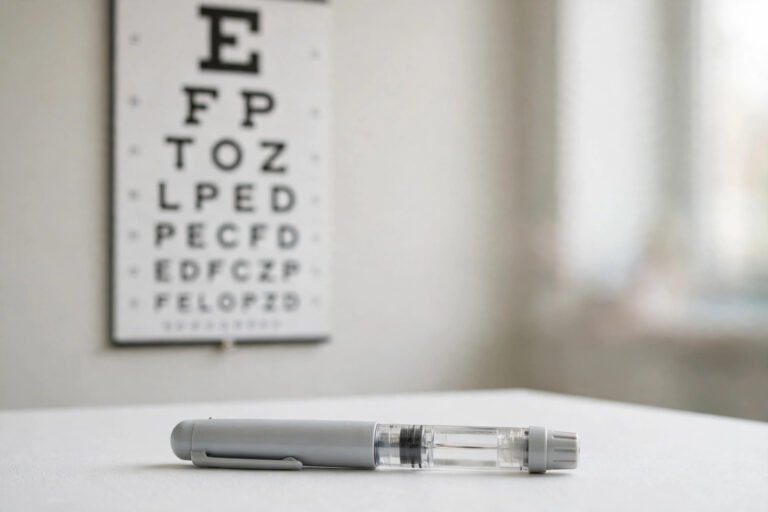
In the trials, doctors give it as a once-weekly injection, with the dose stepped up slowly over weeks — made in Lilly’s facilities, dosed by doctors, monitored by nurses, with every side effect logged.
The version on sale online is a different animal. Peptide websites sell “Research-grade” vials for laboratory use only — a label that fools nobody, since laboratories don’t buy single vials from Instagram ads. The FDA has sent at least 15 warning letters to companies selling retatrutide, between December 2024 and August 2026, and has stated plainly that the compound cannot legally be compounded and “has not been found safe and effective for any condition.”
So when someone says “reta peptide,” they could mean two very different things: a promising drug still in clinical trials, or an unregulated powder in a vial with a sticker on it. Most of the danger lives in that gap.
The Trial Numbers Everyone Quotes — and What They Actually Mean
Let’s be fair to the science first, because the trial results really are extraordinary.
The first landmark study was a Phase 2 trial published in the New England Journal of Medicine in June 2023. It enrolled 338 adults with obesity, who received weekly injections of retatrutide or a placebo for 48 weeks. At the highest dose, 12 mg, participants lost an average of 24.2% of their body weight, compared with 2.1% on placebo — and lower doses produced proportionally smaller losses, a clean dose-response curve.
Then came the big one: TRIUMPH-1. The Phase 3 trial, published in the NEJM on September 29, 2026, enrolled 2,339 adults with obesity but without diabetes. Over 80 weeks, the 12 mg group lost 25.0% of body weight on average, against 3.9% on placebo. The 9 mg group lost 23.7%, the 4 mg group 17.6%. The average participant started at about 113 kg — roughly 249 pounds — so a 25% loss works out to around 28 kg, or 62 pounds.

Those are real numbers from a real, peer-reviewed, double-blind trial. They’re also numbers that come with conditions most social media posts never mention. Doctors medically screened, supervised, and followed everyone in the trial for 80 weeks. Nobody bought their supply from a website.
The side effects were real, too. In TRIUMPH-1, nausea hit 42.4% of people on the 12 mg dose, diarrhoea 32.0%, constipation 26.1%, and vomiting 25.3%. One in eight reported dysesthesia — strange tingling or burning sensations in the skin — compared with fewer than one in a hundred on placebo.
The Vials Online Are Not the Drug in the Trials
This is the part that matters most, and it’s the part almost nobody selling reta peptide wants you to read.
A 2026 analysis comparing real-world retatrutide users with trial participants found a stark gap. People who received the drug through routine clinical care lost 15.5% of their body weight over 6 to 12 months — close to the trial results. People using grey-market vials lost just 7.2%, no better than matched users of tirzepatide. Same molecule, supposedly. Half the result.

Why? Nobody can say for sure, because nobody tests what’s in those vials. You can’t verify purity, sterility, or dose from a label — and an injection bypasses every defence your body has.
The safety reports are starting to catch up. Public Citizen counted 26 adverse-event reports for retatrutide sent to the FDA in the first five months of 2026. Of those, 11 involved hospitalisation, and the reports described three as life-threatening, including a case of acute necrotising pancreatitis. One widely discussed case involved someone self-administering 40 mg, more than three times the highest dose ever tested in a trial.
None of this proves the drug itself is dangerous. It proves that taking an unregulated version, at a self-chosen dose, without medical supervision, is a gamble — and the odds are worse than the sellers admit.
What Athletes Specifically Need to Know
If you compete, the stakes get higher still — and not just for your health.
WADA’s 2026 or 2027 Prohibited List does not name retatrutide, which some sellers quote as if it meant “allowed.” It isn’t. WADA’s S0 category bans all non-approved substances at all times, and retatrutide has no marketing approval anywhere. A tested athlete using it risks a doping violation, full stop.
Then there’s the performance question. Rapid weight loss of 25% doesn’t just remove fat. In GLP-1 trials, a meaningful share of the weight lost is lean tissue — muscle — unless athletes carefully manage training and protein intake. For an athlete, losing muscle to hit a number on the scale is trading performance for appearance. It’s a trade most athletes would regret the first time they try to hit a personal best with less muscle behind it. There’s also a small rise in resting heart rate — a few beats per minute. It is noise in the exact numbers an endurance athlete trains by. And if you’re cutting weight for a weight-class sport, a drug that kills your appetite and makes you nauseous is the worst way to do it — you need to eat to recover.
Reta Peptide: Myth vs Fact
Myth: “It’s basically approved — the trials are done.”
Fact: As of November 2026, retatrutide has no FDA approval for any use. Lilly plans to file its application in the first quarter of 2027, which puts any approval decision in late 2027 at the earliest. Until then, the only legal way to receive it is inside a clinical trial.
Myth: “The online vials are the same thing as the trial drug.”
Fact: Manufacturers make trial drugs to pharmaceutical standards, clinicians dose them, and trial teams monitor them. Online vials are unregulated and untested — and real-world data shows they produce roughly half the weight loss.
Myth: “If it’s not on the WADA list, athletes can use it.”
Fact: WADA’s S0 category covers all non-approved substances, whether or not the list names them. Retatrutide falls squarely in that category.
Myth: “The 25% weight loss proves it works for everyone.”
Fact: 25% is a group average from a supervised trial, not a promise. Grey-market users averaged 7.2%. The average says nothing about what happens to your muscle, your heart rate, or your performance.
FAQs
Is reta peptide legal to buy online?
In the United States, no lawful pathway exists to buy retatrutide for personal use. It is not an approved drug, no one can legally compound it, and the FDA has warned multiple sellers. Sellers offer products labelled “for research only” in a grey area — but using them on yourself is not a loophole, it’s unregulated self-medication with an injectable drug.
How is reta peptide different from Ozempic?
Ozempic (semaglutide) activates one receptor, GLP-1. Retatrutide activates three: GLP-1, GIP, and glucagon. In trials, that produced larger weight loss — about 25% at 80 weeks versus roughly 15% for semaglutide over a similar period in its own trials. But semaglutide is an approved, regulated medicine with years of safety data, and no trial has ever tested the two head-to-head.
When will reta peptide actually be available?
Lilly says it plans to submit its application to the FDA in the first quarter of 2027. If the review goes smoothly, an approval decision could come in late 2027 — but that’s the earliest scenario, not a guarantee. Until then, patience is the only legal option.
The Bottom Line
Reta peptide is a genuinely exciting molecule trapped inside a genuinely messy market. The trial data — 25% average weight loss over 80 weeks in a large, well-run Phase 3 trial — is the strongest result any obesity drug has ever produced. If regulators approve it, it could change treatment for millions of people.
But that future drug and the vials on sale today are not the same thing. The vials are unregulated and already linked to hospitalisations. For athletes, the risks stack up further: a doping violation under WADA’s S0 rule, muscle loss, a distorted heart rate, and under-fuelling at exactly the moment your body needs fuel most.
The smartest move right now is the least exciting one: wait. Follow the TRIUMPH programme results, watch for the FDA filing in early 2027, and if weight is something you want to work on, talk to a doctor about the approved options that already exist. The 25% number will still be there when the real drug arrives. Your health, your career, and your next personal best are worth more than a shortcut in a vial.
This article is for information only and isn’t medical advice. Retatrutide is an investigational drug, not approved for any use. Never start, stop, or change any medication or injectable compound without speaking to a qualified healthcare professional first.