
COVID symptoms 2026: what to watch for, how to test, and when athletes can train again.
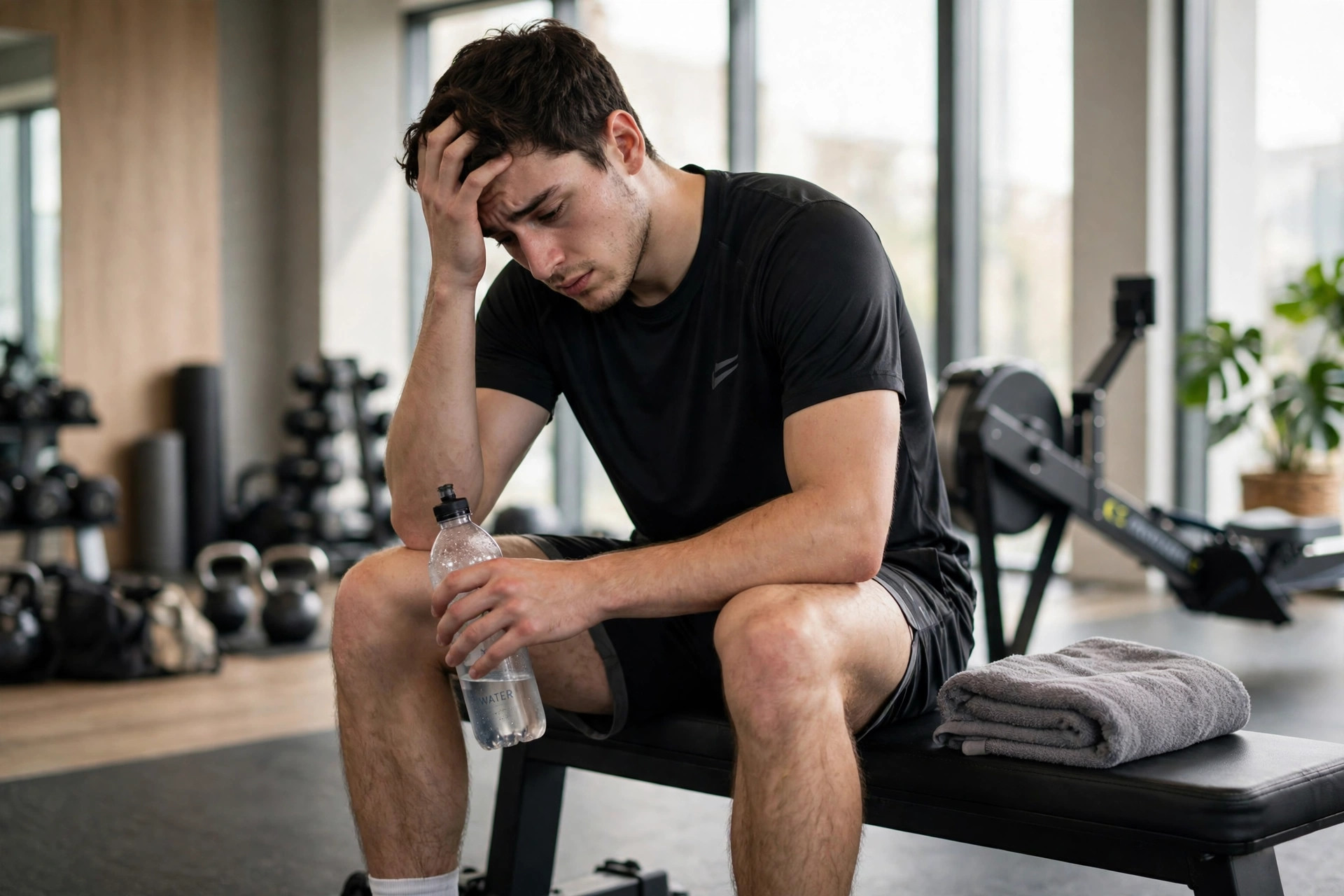
You wake up the morning after a hard session and your throat feels like sandpaper. Your legs are heavy, your head is foggy, and you can’t tell if it’s delayed soreness, a cold, or something else entirely. Sound familiar?
That’s the tricky thing about COVID in 2026. It doesn’t announce itself the way it used to. There’s no dramatic loss of taste, no unmistakable warning sign. Most of the time it just feels like a bad cold — until it doesn’t. And for athletes, that grey area is exactly where bad decisions happen: training through it, spreading it through a team, or coming back too hard and setting yourself back weeks.
So let’s cut through the noise. Here’s what COVID symptoms 2026 actually look like, which variants are circulating, how to tell it apart from the flu, and — the part every athlete really wants — when it’s safe to train again.
What COVID Symptoms 2026 Actually Look Like
The CDC’s symptom list hasn’t changed much, and that’s worth knowing, because the internet invents a new “official” symptom list every few months. According to the CDC, COVID symptoms can appear 2 to 14 days after exposure, and they may start mild and get worse. The possible symptoms include fever or chills, cough, shortness of breath, sore throat, congestion or a runny nose, new loss of taste or smell, fatigue, muscle or body aches, headache, and nausea, vomiting or diarrhea.
But the pattern in 2026 is different from 2020, and doctors seeing patients this autumn describe a fairly consistent picture. It usually starts with a sore or scratchy throat — that raw, irritated feeling that makes swallowing annoying. Then comes the fatigue, and it’s not normal tiredness. People describe it as being wiped out in a way that a bad night’s sleep doesn’t explain. Congestion, headache, cough and muscle aches follow, often with a low-grade fever.
Loss of taste and smell, the symptom everyone used to watch for, is now reported in fewer than 10 percent of confirmed cases. If you’re waiting for that sign before you take it seriously, you’ll miss it. The CDC also notes that symptoms can change with new variants and vary depending on your vaccination status — so your COVID this year might feel nothing like your COVID in 2022.
Here’s my honest take: if you’ve got a sore throat plus unusual fatigue in the same week your training partner is coughing, don’t overthink it. Test. It takes fifteen minutes and it answers the question properly.
The Variants Behind This Year’s Wave
You may have seen the nicknames floating around — “Stratus,” “Nimbus,” “Cicada.” These are informal labels from news coverage, not official scientific names, but the lineages behind them are real.
The strains circulating in autumn 2026 are all descendants of Omicron. In the United States, the CDC’s most recent sequencing estimates put SW.2 — an offshoot of the XFG family, nicknamed “Stratus” — in front at roughly a quarter to a third of sequenced cases, followed by XFG.1.1, RV.1 and PJ.2.1. NB.1.8.1 (“Nimbus”) is widely reported for sore throat as an early symptom, and the more heavily mutated BA.3.2 (“Cicada”) is being monitored by the WHO. As of July 2026, the WHO had not designated any of these as a “variant of concern” — the category reserved for variants with clear evidence of more severe disease.
The good news, such as it is: no authority has described a symptom pattern specific to any of these variants, and none has been shown to cause a fundamentally new set of symptoms or more severe illness. In plain terms, the virus keeps changing its coat, but the illness it causes looks much the same — a respiratory infection that mostly feels like a bad cold or flu. And measles is making a comeback too, which is another reason athletes should keep their vaccinations in order.
The 2026–2027 COVID vaccines are built on the XFG lineage, the same family SW.2 comes from. The FDA chose that formula in May 2026, and CDC guidance updated in September 2026 supports vaccination for adults. If you’re due a booster and you’re heading into winter training, that’s a conversation worth having with your doctor — not a decision to make from a headline.
COVID vs Flu vs a Cold — Can You Tell?
Short answer: not by symptoms alone. The CDC says so directly — you cannot tell the difference between flu and COVID-19 by symptoms alone because some of the symptoms are the same.
That said, a few tendencies help. Flu tends to hit harder and faster: high fever, body aches that make your bones hurt, and exhaustion that arrives in hours, not days. A cold usually stays in your nose and throat and rarely brings a fever. COVID in 2026 sits in the middle — sore throat first, then fatigue and congestion, sometimes a cough that lingers for a week after everything else clears.
With this season’s flu surge also underway, the overlap is real, and it’s the reason testing matters. A PCR test can tell flu and COVID apart at the same time; if that’s not available, many testing locations offer the two tests separately. For athletes sharing gyms, locker rooms and team buses, guessing wrong means either training sick or sitting out for nothing — both cost you.
When to Test — and How to Test Right
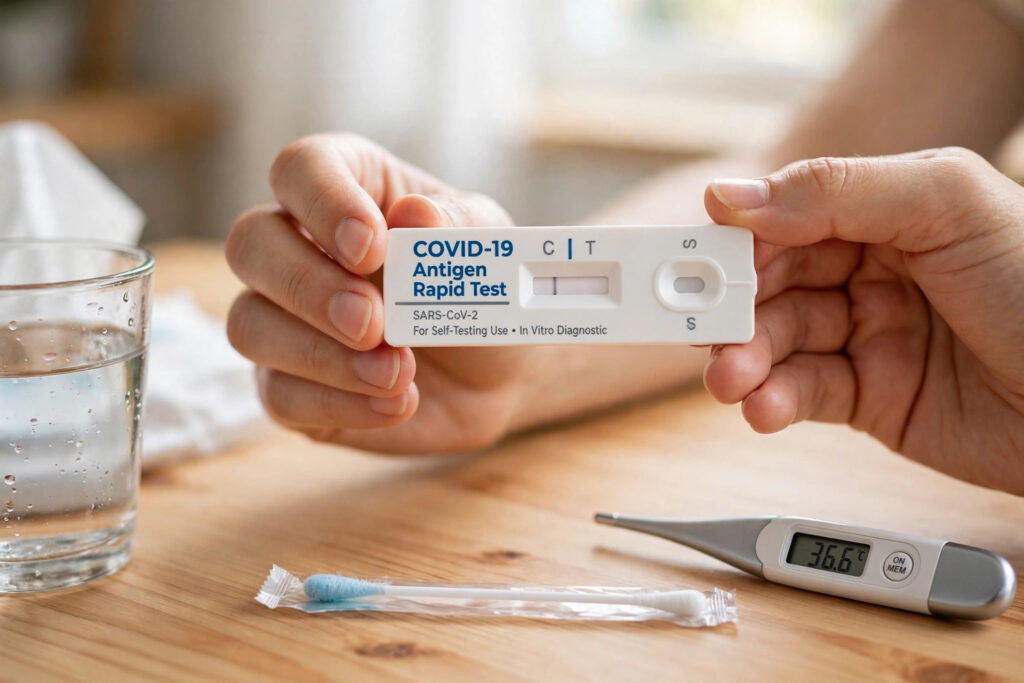
Test as soon as symptoms start, and test properly. A rapid antigen test taken on day one of a scratchy throat can come back negative while the virus is still building. The FDA’s recommendation for people with symptoms is a second antigen test 48 hours after an initial negative result. A single negative test does not rule out COVID.
A few practical points that people get wrong:
- Swab properly. Follow the kit instructions — most misses come from a half-hearted swab, not a bad test.
- Test again if symptoms continue. If you’re still feeling rough two days later and the first test was negative, test again before you decide you’re clear.
- Don’t test to “prove” you’re fine for training. A negative test plus a fever is still a fever. Stay home.
And if you test positive, tell your training partners. Nobody enjoys that conversation, but a whole squad going down because one person stayed quiet is a much worse one.
The Athlete’s Question: When Can I Train Again?
This is where the advice splits into two parts, and confusing them is the most common mistake athletes make.
Part one: when can you be around people again? Under the CDC’s respiratory virus guidance, which has been in effect since March 2024 and still applies in 2026, you can return to normal activities once, for at least 24 hours, your symptoms are improving overall and you have been fever-free without using fever-reducing medication. After that, the CDC recommends extra precautions for the next five days — cleaner air, a well-fitting mask and distancing when around others — because you may still spread the virus.
Read that carefully: bringing your temperature down with paracetamol or ibuprofen does not count as fever-free. If you need medicine to feel well enough to train, you’re not ready. That’s not me being cautious — that’s the guidance, and it’s echoed by doctors who’ve watched gym-goers mask a fever with painkillers and pay for it later.
Part two: when can you train hard again? That’s a different question, and the answer is slower. The Mayo Clinic advises against exercise when someone has a fever, significant fatigue or widespread muscle aches. The American College of Cardiology’s guidance for athletes is that those with mild or moderate COVID symptoms unrelated to the heart or lungs should wait until those symptoms resolve before resuming training, then return gradually. Anyone with chest tightness, unusual breathlessness, palpitations or lightheadedness needs medical assessment first — no exceptions.
One honest warning: long COVID is real, and the CDC notes that some people with long COVID experience worsening symptoms 12 to 48 hours after even minor exertion. If your energy crashes the day after a light session, that’s your body telling you something. Listen to it.
A Sensible 7-Day Comeback Plan
Here’s what a realistic return looks like for an athlete who had a mild case — no chest symptoms, no breathing trouble, fever gone. This is a worked example, not a prescription; your timeline depends on how ill you were.
Day 1–2 (fever-free, symptoms improving): Walking only. Twenty to thirty minutes at a conversational pace. If you can’t walk comfortably for half an hour, you’re not ready for anything else. Sleep is your best recovery tool right now — treat it like training.
Day 3–4: Light bodyweight work or an easy bike ride at 50–60% of your normal effort. Keep it under 30 minutes. Check how you feel the next morning, not just during the session.
Day 5: Moderate training at roughly 70% effort. Still no intervals, no max lifts, no competition.
Day 6–7: Build back toward normal volume. Add one hard element — either intensity or duration, not both at once.
If any step leaves you unusually breathless, dizzy, or more tired the next day than the day before, drop back a step and hold there for two days. A comeback that takes ten days beats a relapse that costs you a month. I’ve seen athletes lose an entire season to the second one.
Myth vs Fact: COVID in 2026
Myth: “COVID is just a cold now, so I can train through it.” Fact: For most healthy people it feels like a cold, but it’s still a virus that can inflame the heart and lungs, and training through a fever is how a week off becomes a month off.
Myth: “If I can’t taste anything, it’s COVID; if I can, it isn’t.” Fact: Loss of taste or smell now happens in fewer than 1 in 10 cases. Its absence means nothing.
Myth: “A negative test means I’m definitely clear.” Fact: One negative antigen test early in symptoms doesn’t rule COVID out. Retest after 48 hours if symptoms persist.
Myth: “Once I’m fever-free, I’m ready for a full session.” Fact: Fever-free is the CDC’s bar for normal daily activities, not for hard training. Your heart and lungs need a slower re-entry.
Red Flags — Stop and Get Help
Most COVID cases in 2026 are mild, but some aren’t, and athletes are not exempt. The CDC lists these emergency warning signs: trouble breathing, persistent pain or pressure in the chest, new confusion, inability to wake or stay awake, and lips, nail beds or skin appearing pale, gray or blue. If you see any of these in yourself or a training partner, seek emergency care immediately.
And get medical advice before returning to exercise if you had COVID with chest pain, palpitations, fainting, unusual shortness of breath, or suspected myocarditis or pneumonia; if your fever keeps coming back; or if fatigue keeps crashing you after light effort. None of that is something to push through.
FAQs
How long do COVID symptoms 2026 last?
For most healthy adults, the worst of it lasts 3 to 5 days, with a lingering cough or tiredness stretching to a week or two. If symptoms are getting worse after day five — especially breathing trouble or a returning fever — get checked. A cough that hangs around for three weeks is also worth a doctor’s visit.
Can I catch COVID twice in one season?
Yes. Immunity after infection fades over months, and new variants can dodge previous protection. That’s why the same athlete can test positive in October and again in February. It doesn’t mean your immune system failed — it means the virus changed.
Is the 2026 COVID vaccine worth it for a healthy athlete?
The 2026–2027 vaccine targets the XFG lineage behind the current wave. For healthy young athletes the benefit is mainly fewer sick days and a lower chance of a bad case — which, in the middle of a season, is not nothing. Discuss it with your doctor, especially if you have asthma, diabetes or another condition that raises your risk.
The Bottom Line
COVID symptoms 2026 look like a bad cold with a sore throat first, heavy fatigue second, and a cough that likes to linger. The variants have new nicknames — Stratus, Nimbus, Cicada — but the illness hasn’t fundamentally changed, and neither has the smart response: test early, rest properly, come back gradually, and don’t let a painkiller convince you you’re ready before you are.
Your fitness will wait a week. Your health might not forgive you for rushing it. Train smart, recover properly, and you’ll be back at full strength sooner than the athlete who tried to hero their way through a fever.
This article is for general information only and is not medical advice. If you have symptoms, a health condition, or concerns about returning to training, speak to a qualified healthcare professional.