
That sharp shock when your coffee is one degree too hot. I lived with it for years, quietly reorganizing my life around it. Lukewarm drinks. Chewing on one side. Most of us just dodge the triggers instead of fixing the problem with a proper sensitive teeth care routine.
A proper sensitive teeth care routine can dial that pain down, often within weeks. Sensitivity usually means exposed dentin, the softer layer beneath your enamel. When enamel wears thin or gums recede, tiny tubules let hot, cold, sweet, or acidic stuff reach the nerve. You can’t regrow enamel. But you can protect what’s left and stop making it worse.
Step 1: Toothpaste for Your Sensitive Teeth Care Routine
This is the single highest-impact change you can make. The best toothpaste for sensitive teeth contains one of these active ingredients:
- Potassium nitrate: calms the nerve inside the tooth, reducing pain signals
- Stannous fluoride: forms a protective layer over exposed dentin tubules
- Arginine with calcium carbonate: plugs the tubules to block stimuli
Pick one with any of these on the label and give it two weeks of twice-daily use. It works cumulatively, so don’t judge it after three days. Spit instead of rinsing, so the ingredients keep working.
Whitening toothpastes are often the enemy of sensitive teeth. Many contain abrasives or peroxide that aggravate exposed dentin. I used a whitening formula for years while complaining about sensitivity. Shelve the whitening stuff until things are under control.
Step 2: Gentle Brushing Technique for Sensitive Teeth Care Routine
Confession: I used to brush like I was scrubbing grout. Hard bristles, death grip, sawing back and forth. That motion is one of the main ways people recede their own gums.
- Use a soft-bristled brush. Always. Medium or hard bristles have no place in a sensitive mouth.
- Hold the brush like a pen, not a fist. This naturally limits pressure.
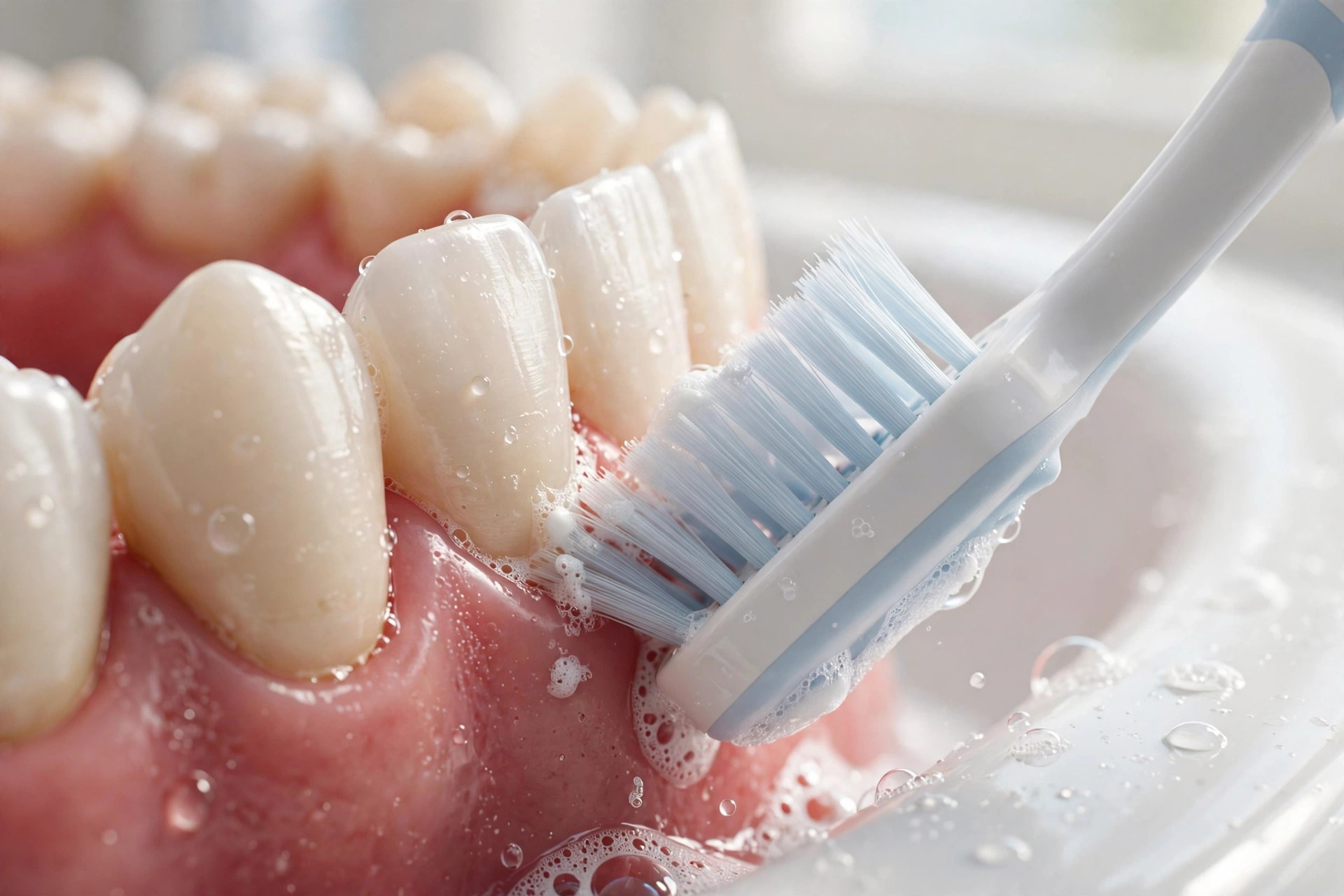
- Angle at 45 degrees to the gumline with small, gentle circles.
- Brush for two full minutes, twice a day. Most people brush for under a minute.
- Never scrub back and forth. Gentle circles. Your gums will thank you.
If you keep bearing down, get an electric toothbrush with a pressure sensor. Mine buzzes when I overdo it.
Step 3: Floss, But Gently
People with sensitive teeth often skip flossing because it hurts. But skipping it lets plaque irritate gums, which recede, which means more sensitivity. Vicious cycle.
The fix is technique. Curve the floss in a C-shape around each tooth and slide gently under the gumline instead of snapping it down. If string floss hurts, try a water flosser on low.
Step 4: Rinse Smart
A fluoride mouthwash used once daily adds extra enamel protection. Use it at a different time than brushing, like after lunch. Choose alcohol-free. Alcohol-based rinses sting sensitive mouths.
Step 5: Build Sensitivity Relief Into Your Day
Small daily habits make a real difference in how to relieve sensitive teeth at home:
- Don’t brush right after acidic foods or drinks. Wait 30 to 60 minutes. Acid softens enamel temporarily, and brushing too soon wears it away. For tooth-friendly pre-workout fuel, see <a href=”https://slashhealth.com/what-to-eat-before-a-workout-beginners-guide/”>what to eat before a workout</a>.
- Chew sugar-free gum with xylitol after meals. It stimulates saliva, which naturally remineralizes enamel.
- Avoid extreme temperature swings in one sitting. Ice water right after hot soup is a stress test for your teeth.
- Address teeth grinding. If you wake up with a sore jaw, a night guard stops grinding from thinning your enamel while you sleep. Grinding is linked to poor <a href=”https://slashhealth.com/sleep-most-underrated-performance-enhancer-athletes/”>sleep</a>, so prioritize rest.
The grinding one deserves a second. I ground my teeth for years, blaming my morning jaw aches on my pillow, until my dentist spotted the wear in ten seconds. A night guard felt weird for three nights, then I forgot it existed.
Step 6: Know When Home Care Isn’t Enough
An at-home routine handles most mild-to-moderate sensitivity. See your dentist promptly if:
- Sensitivity appears suddenly in one specific tooth. Could be a crack or cavity.
- Pain lingers more than 30 seconds after the trigger is gone.
- You spot a visible chip, crack, or dark spot.
- Your gums bleed regularly or are visibly receding.
- Home measures haven’t helped after three to four weeks.
These can signal decay, a cracked tooth, gum disease, or an abscess. No toothpaste fixes those. A dentist can apply professional treatments that work faster than anything over the counter. For more on what causes sensitivity, the ADA’s guide to sensitive teeth is a solid overview.
Your Daily Sensitive Teeth Care Routine at a Glance
Morning: Brush two minutes with desensitizing toothpaste. Soft brush, gentle technique, spit, don’t rinse.
Midday: Alcohol-free fluoride rinse, separate from brushing. Sugar-free xylitol gum after lunch.
Evening: Floss gently or water-floss, then brush two minutes with desensitizing toothpaste.
Ongoing: Straw for acidic drinks, wait 30 minutes before brushing after acids, night guard if you grind, checkup every six months.

Sensitive Teeth Care Routine FAQs
How long does it take for sensitive toothpaste to work?
Most people notice improvement within two to four weeks of twice-daily use. If nothing changes after a month, try a different active ingredient, or see your dentist.
Is it bad to brush sensitive teeth with cold water?
Cold water won’t damage your teeth, but if cold triggers your sensitivity, lukewarm water makes brushing far more comfortable. Comfortable brushing means you’re more likely to do the full two minutes.
Should I avoid all cold foods if my teeth are sensitive?
No. Avoidance alone fixes nothing. Follow the desensitizing routine, moderate the extremes meanwhile, and as sensitivity improves, most people return to normal eating without bracing for the zing.
Sensitive Teeth Care Routine: Final Thoughts
A consistent sensitive teeth care routine isn’t complicated. It’s just specific. The right toothpaste, a gentle brushing technique, daily flossing, smart rinsing, and a few habit tweaks resolve most sensitivity within weeks. Start tonight: swap the toothpaste, soften your touch, give it time. And if the pain persists, let your dentist take a look.
This article is for informational purposes only and is not medical or dental advice. Consult your dentist for diagnosis and treatment of tooth sensitivity or any oral health concern.