
A brilliant, healthy smile doesn’t happen by accident; it is the result of a consistent daily dental care routine.
The best part? You don’t need industrial-grade equipment or luxury oral products. By establishing a structured morning and night oral hygiene regimen, you can protect your enamel and keep your gums pristine for decades.
Here is a practical, step-by-step blueprint to optimize your daily dental care routine starting today.
The Core Medical Benefits of Your Daily Dental Care Routine
Every day, your mouth is exposed to food particles, sugars, and millions of bacteria. Without proper intervention, these bacteria form a sticky film called plaque.
If left untreated, plaque reacts with food debris to produce acids that destroy your enamel, irritate the gingival tissue, and eventually calcify into tartar (which can only be removed by a dentist).
Implementing a scientifically backed home routine offers immediate rewards:
- Enamel Preservation: Prevents acid erosion and micro-cavities.
- Periodontal Protection: Keeps gums firm, pink, and free from inflammation (gingivitis).
- Systemic Health Support: Reduces oral bacteria, which medical science links to lower risks of heart disease and diabetes.
Phase 1: The Ultimate Morning Oral Care Ritual
Waking up with “morning breath” is natural due to reduced saliva production overnight. Your morning routine should focus on neutralizing acids and refreshing your oral environment.
- The 2-Minute Brushing Rule: Brushing is the foundation of oral health, but technique matters more than force.
- The Right Tool: Always choose a soft-bristled toothbrush. Medium or hard bristles scratch enamel and cause receding gums.
- The Technique: Hold the brush at a 45-degree angle toward your gum line. Use gentle, circular motions instead of aggressive sawing actions.
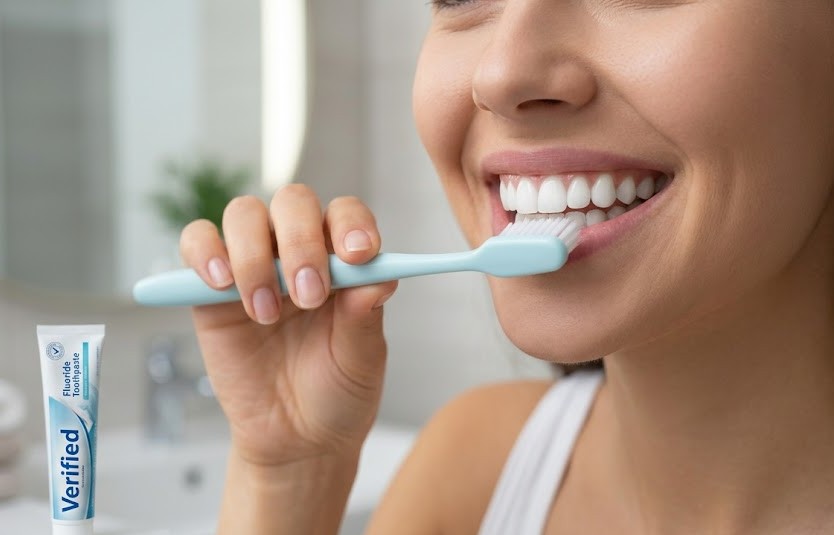
- The Paste: Use a verified fluoride toothpaste to remineralize weak spots in your enamel.
- Don’t Forget the Tongue: The tongue harbors up to 50% of oral bacteria. Use a tongue scraper or your brush to clean it gently
- Rinse with an Antibacterial Mouthwash: To wrap up your morning routine, rinse with a therapeutic mouthwash. Look for alcohol-free formulas that offer fluoride protection without drying out your oral tissues.
If you have sensitive teeth, consider switching to a desensitizing toothpaste and following a dedicated sensitive teeth care routine.
Phase 2: Midday Maintenance (On-the-Go Habits)
Brushing your teeth after lunch isn’t always practical, especially at work. However, you can still prevent plaque buildup during the day with these simple hacks:

- Rinse with Water: After eating lunch or drinking coffee, vigorously swish water around your mouth to remove loose debris and balance your pH levels.
- Chew Sugar-Free Gum: Chewing stimulates saliva production, which is nature’s natural defense mechanism to wash away acids.
- Avoid Constant Snacking: Grazing on sugary or starchy snacks keeps your teeth under a constant state of acid attack.
Phase 3: The Crucial Nighttime Deep Clean
Your nighttime routine is actually the most critical step of the day. When you sleep, your salivary flow drops significantly. Since saliva naturally fights bacteria, a dry mouth allows plaque bacteria to multiply rapidly overnight.
- Floss Before You Brush (Every Single Night): A toothbrush can only clean about 60% of a tooth’s surface. The remaining 40% lies in tight spaces between teeth where bristles cannot reach.
- Why it’s non-negotiable: Flossing removes interdental plaque before it hardens into tartar.
- Pro-Tip: If traditional string floss feels clumsy, use a water flosser or dental picks to get the job done.
- Thorough Bedtime Brushing: Brush for a full two minutes right before hitting the pillow. Once finished, spit out the excess toothpaste foam, but do not rinse your mouth excessively with water. Leaving a thin layer of fluoride on your teeth overnight provides prolonged structural protection.
- Dietary Blueprint for Stronger Teeth and Gums: Your diet directly impacts your oral microbiome. To maintain a cavity-free smile, restructure your pantry around these dental-friendly choices:
| Foods to Include (Teeth Builders) | Foods to Limit (Enamel Destroyers) |
| Dairy Products (Milk, Cheese): Rich in calcium and phosphates that rebuild enamel. | Sticky Candies & Gummies: Glue themselves to fissures, causing prolonged exposure to sugar. |
| Leafy Greens (Spinach, Kale): High in vitamins that strengthen gum tissue. | Carbonated Sodas & Energy Drinks: Loaded with highly corrosive citric and phosphoric acids. |
| Crunchy Vegetables (Apples, Carrots): Act as natural toothbrushes, scraping away plaque. | Frequent Alcoholic Beverages: Dries out salivary glands, increasing bacterial growth. |
Critical Dental Mistakes You Might Be Making
Even if you think your routine is perfect, subtle procedural mistakes can cause long-term damage:
- Brushing Too Aggressively: Scrubbing your teeth like a dirty kitchen counter destroys enamel and causes painful gum recession.
- Ignoring Bleeding Gums: Healthy gums never bleed. Bleeding during brushing or flossing is an early warning sign of gingivitis.
- Using an Expired Toothbrush: Frayed, bent bristles lose their cleaning efficiency and accumulate fungal bacteria. Change your brush every 3 months.
- Using Hard-Bristled Brushes: These are highly abrasive and do more harm than good to human teeth.
- Skipping the Night Routine: Going to bed without cleaning means letting bacteria feast on oral sugars for 8 straight hours.
Frequently Asked Questions (FAQs)
How many times a day should I ideally brush my teeth?
You should brush your teeth exactly twice a day—once in the morning to refresh your mouth and neutralize nighttime bacterial buildup, and once right before bed to ensure food particles do not rot on your enamel while you sleep.
Is flossing every day actually necessary?
Yes, absolutely. Skipping flossing is the equivalent of washing only one side of your body. If you do not floss daily, plaque remains trapped between your teeth, leading to interdental cavities and chronic gum disease, regardless of how well you brush.
When should I replace my toothbrush?
You must replace your toothbrush (or electric brush head) every 3 months, or sooner if the bristles look frayed and flared out. Using an old brush fails to clean plaque effectively and redistributes old bacteria back into your mouth.
For more expert-backed guidance, explore the ADA’s MouthHealthy daily routine guide.