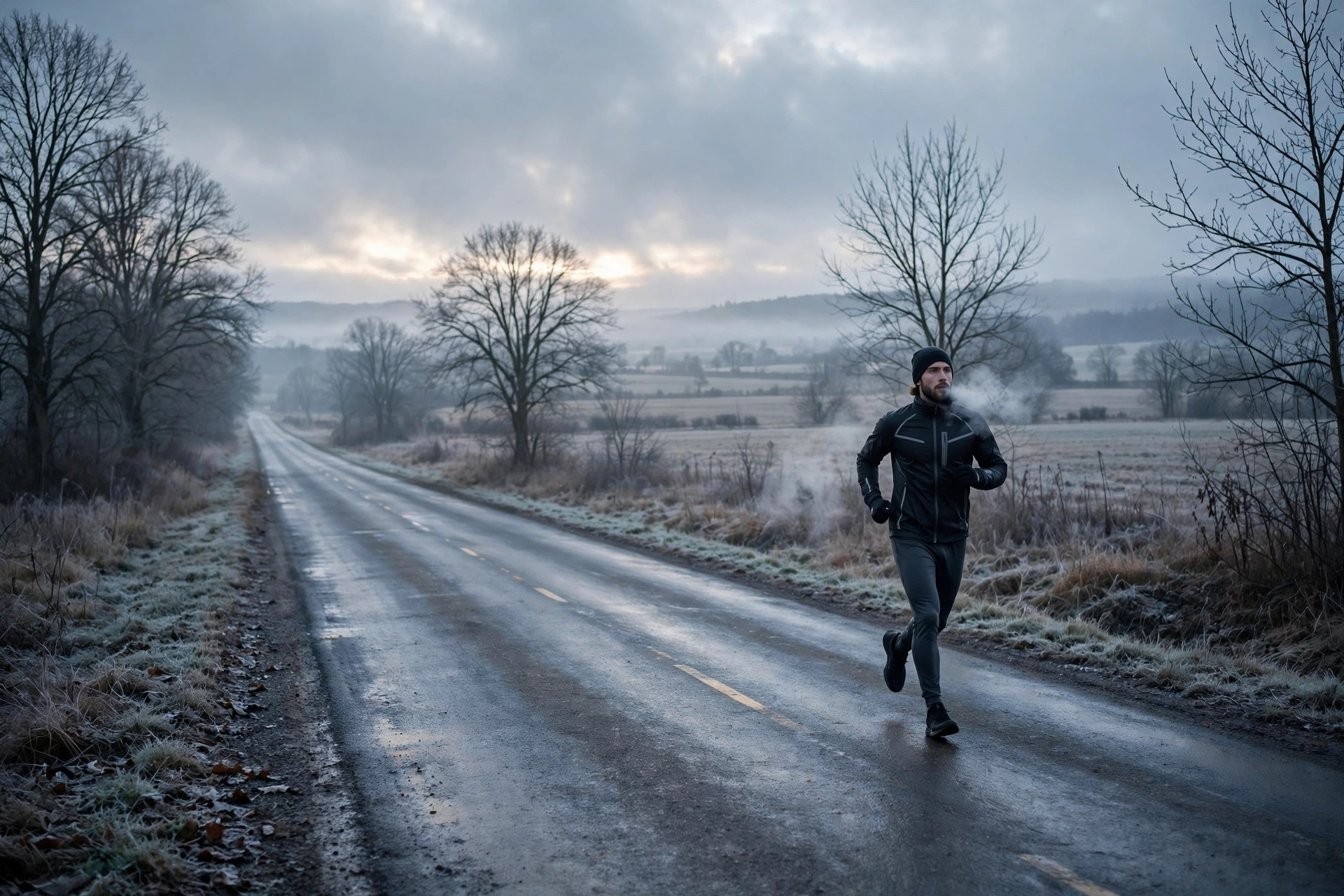

You know the feeling. October ends, the clocks go back, and suddenly your 6am run feels like a punishment instead of a habit. You’re not lazy. You’re not losing your edge. And you’re definitely not alone — because for millions of people, winter doesn’t just get colder. It gets heavier.
That’s seasonal depression. And if you’ve ever watched your training fall apart between November and March without knowing why, this one matters.
What seasonal depression actually is (and what it isn’t)
Seasonal depression — clinically called seasonal affective disorder, or SAD — is a type of depression that follows the calendar. It shows up in late fall or early winter, hangs around for four to five months, and lifts in spring and summer. The National Institute of Mental Health is blunt about the difference: the “winter blues” is feeling a bit down when the days get short. SAD is a diagnosable depressive disorder with the same weight as any other depression, just on a seasonal schedule.
The winter pattern has a very specific fingerprint. It’s not just low mood. You oversleep and still wake up exhausted. Then come the carb cravings — bread, pasta, anything starchy — and weight gain without changing much else. You start withdrawing from friends, skipping the group run, and feeling like hibernating is a reasonable life plan. Concentration goes. Motivation goes. And for athletes, the first thing to go is usually training consistency, which makes everything worse.
To be diagnosed, the pattern has to repeat. Depressive episodes must occur in the same season for at least two consecutive years, and more often in that season than at other times of year. That’s the clinical bar. But you don’t need a diagnosis to notice the pattern in yourself. If every winter your training collapses and every spring you bounce back, your body is already telling you something.
How common is it? More common than you think
Here’s a number that surprised me. A 2025 meta-analysis in the Journal of Affective Disorders pooled 24 studies covering 32,866 people worldwide. It put the prevalence of seasonal depression at 5.01%. That’s roughly 1 in 20 adults. There’s also a milder form, subsyndromal SAD. The symptoms are real but fall short of a full diagnosis. It came in at 9.37%, nearly twice as common.
Add those together and about 1 in 7 people walks into winter with some version of this. And the numbers climb the further north you live. The same analysis found a clear link with latitude. SAD sits around 1.4% in Florida and close to 10% in Alaska and New Hampshire. If you train in the UK, Canada, or the northern US, you’re squarely in the high-risk zone.
It also skews young and female. SAD usually starts in young adulthood. The average age of onset in one large study was 27, and 75 to 80% of sufferers are women. On average, people with SAD have already been through more than 13 winter episodes by the time they’re studied. That means spending roughly 40% of every year struggling. That’s not a bad month. That’s a season of your life, every year.
Why winter hits athletes harder than everyone else
Athletes get a double dose of this, and it’s not just the mood. Your body clock is reset every day by light hitting your retina. That clock — the circadian system — times your sleep, hormones, and energy. In winter, you get less of it, and often at the wrong times. The result is a clock that drifts. Melatonin stays high in the morning, so you feel groggy. Serotonin dips, so mood and motivation sag. And your sleep gets messy even when you protect your hours.
Then training itself becomes the trap. You skip the morning session because it’s dark and you’re exhausted. That means missing the one thing — outdoor daylight exercise — that would have helped most. You lose fitness, which dents your confidence, which makes the next session even easier to skip. I’ve watched this loop swallow entire winters for runners and lifters who were flying in September.
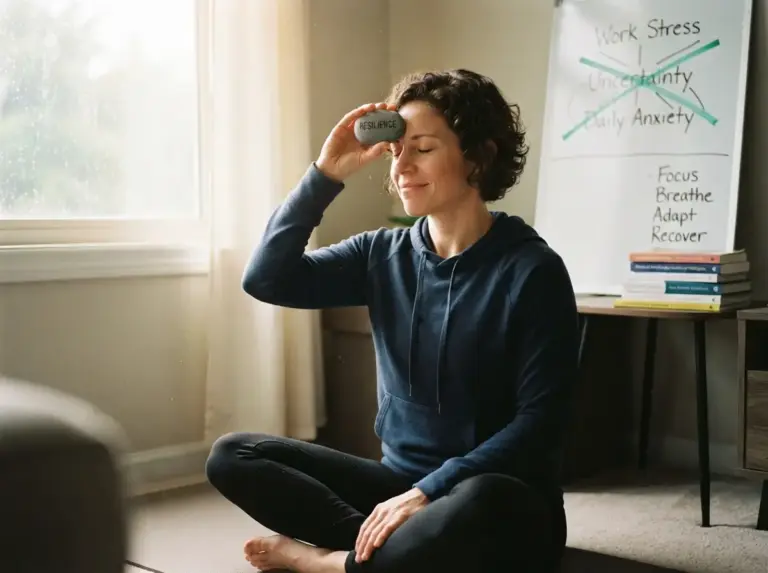
Cold doesn’t help either. Winter training already feels harder. The air is heavier, muscles are stiffer, warm-ups take longer. And when your mood is low, that extra friction is often the excuse your brain needs. Our guide to cold-weather training breaks down the physiology. The short version: it’s not in your head, and it’s not just the temperature. And for many athletes there’s an identity sting too: when the season strips away the thing that makes you feel like yourself, the mood hit lands harder. That’s why building mental resilience matters as much as any workout plan — it’s the skill that keeps you going when motivation evaporates.
What actually works: the evidence, ranked honestly
Let’s be straight: there is no single cure, and anyone selling you one is selling something. But the research does rank the options, and the ranking is clearer than most people realise.
Light therapy
Light therapy is the first-line treatment, and the dose is specific. The NIMH describes sitting in front of a 10,000-lux light box for 30 to 45 minutes a day, usually first thing in the morning, from fall through spring. That box is about 20 times brighter than ordinary indoor light. A 2020 meta-analysis of 19 randomised trials found bright light therapy beat placebo with a moderate effect — though the studies were small. And here’s the number that matters: in a pooled analysis of light-therapy trials, 53% of people with SAD met remission criteria by the end of treatment. Roughly half. That’s real, but it also means half didn’t fully remit, which is why light is a foundation, not a finish line.

The lux math
A quick lux worked example, because the numbers make it click. Your living room in the evening sits around 100 to 300 lux. A bright office might hit 500. A light box delivers 10,000 lux at arm’s length for 30 minutes — that’s the clinical dose. Now compare that with simply stepping outside: even an overcast winter day delivers 5,000 to 10,000 lux. A 30-minute morning walk on a grey December day can give your eyes a light dose in the same ballpark as the box. You don’t need perfect sunshine. You need to get outside before noon.
Exercise
Exercise helps — but be honest about what it can and can’t do. The biggest recent summary is a 2024 BMJ network meta-analysis. It pooled 218 trials with 14,170 participants. Walking or jogging, yoga, and strength training all produced moderate reductions in depressive symptoms. Walking and jogging landed in the same range as cognitive behavioural therapy. A separate 2022 meta-analysis found that even half the recommended weekly activity was linked to an 18% lower risk of depression. Meeting the full guideline was linked to a 25% lower risk.
But — and this is the honest part — the trials testing exercise specifically for SAD are few and small. A 2024 review found only six randomised trials of lifestyle changes for SAD and rated the evidence very low certainty. Exercise is a powerful support, not a proven standalone treatment for diagnosed SAD. What makes it special in winter is the double hit. One Finnish trial put 120 indoor workers on supervised exercise under bright light (2,500–4,000 lux) for eight weeks. They improved more than people exercising under ordinary room light. Move outdoors in daylight and you’re treating two problems with one session.
Talk therapy
Talk therapy works, and its effects may last longer. CBT adapted for SAD (CBT-SAD) typically means two group sessions a week for six weeks. It matched light therapy head-to-head in trials. And in a two-winter follow-up, its benefits seemed to last longer. If light therapy is a daily dose, CBT-SAD is closer to learning the skill.
Vitamin D and medication
Vitamin D is a maybe, medication is a real option. The NIMH notes that vitamin D trials for SAD have produced mixed results. Some show benefit, some show none. So get your level checked before supplementing blindly. Antidepressants, particularly SSRIs, are effective for SAD. The FDA has also approved extended-release bupropion specifically to prevent seasonal episodes when taken from fall through early spring. These are conversations for a clinician, not a blog post. But knowing they exist matters. Too many people white-knuckle through winter believing their only options are willpower and waiting.
Your 4-week winter training plan
Here’s how I’d put it together if I were coaching someone through their first dark winter. The goal isn’t peak fitness. It’s keeping the habit alive until spring.

Week 1 — Anchor the light. Get outside within an hour of waking, every day, for at least 20 to 30 minutes. Walk, jog, or just drink your coffee by a bright window. Move your hardest session to the middle of the day if you can. This week is about the light habit, not the training load.
Week 2 — Shrink the session, keep the streak. Cut your sessions to 20–30 minutes and lower the intensity. Three easy sessions beat one heroic one you dread. If you use a light box, start it now — 30 minutes each morning while you eat breakfast or answer emails.
Week 3 — Add one social session. Train with someone, join a class, or run with a club. Social withdrawal is ne of SAD’s signature symptoms, and a fixed appointment with another human is the simplest countermeasure. Keep sleep regular — same bedtime, same wake time, even at weekends — because sleep is a performance enhancer in its own right, and winter is when it slips first.
Week 4 — Review and adjust. Ask yourself honestly: is this the winter blues, or is it heavier? If low mood has lasted two weeks or more, or it’s interfering with work, relationships, or daily life, that’s the point to talk to a healthcare provider. It is not a failure. It’s what the treatment exists for.
Myth vs fact
Myth: “It’s just the winter blues, everyone feels it.”
Fact: About 5% of adults have diagnosable SAD and another 9% have the milder form. Feeling a bit flat in January is common. Sleeping 10 hours, craving carbs, withdrawing from friends, and losing interest in everything for months is a medical condition — and a treatable one.
Myth: “A light box is a gimmick.”
Fact: Light therapy is the first-line treatment in clinical guidelines, backed by randomised trials, with about half of patients reaching remission. It’s not a mood lamp from a gift shop; it’s a 10,000-lux medical device used for a specific dose at a specific time of day.
Myth: “Just push through it — exercise alone will fix it.”
Fact: Exercise genuinely helps mood, and the evidence for depression in general is strong. But SAD-specific exercise trials are small and thin, and for diagnosed SAD, exercise is a support alongside light therapy, therapy, or medication — not a replacement for them.
Myth: “It only affects people in the far north.”
Fact: Latitude matters, but SAD exists everywhere winter shortens the days. It affects about 1 in 20 adults globally — and if you live in the UK or northern US, your risk is already above average.
When to get help
This is the part I won’t soften. If you’ve felt persistently sad, empty, or hopeless most days for two weeks or more, stop reading training plans and talk to a healthcare provider now. The same goes if you’ve lost interest in things you used to enjoy, or if you’re having thoughts of harming yourself. In the US, you can call or text 988. Seasonal depression is a form of depression, and depression is treatable — but only if you ask.
FAQs
Can seasonal depression affect athletic performance?
Yes — and it usually does it quietly. The main routes are disrupted sleep, low motivation, skipped sessions, and heavier perceived effort. Studies show SAD symptoms last four to five months a year on average, which is long enough to undo a whole training block. The fix starts with light exposure and consistent, lighter training rather than forcing peak intensity through the darkest months.
Is a light therapy lamp worth buying for seasonal depression?
For diagnosed winter-pattern SAD, yes — it’s the best-evidenced treatment, with about half of patients reaching remission in trials. Look for a 10,000-lux box. Use it for 30 to 45 minutes each morning from fall to spring. And check with a clinician first if you have an eye condition, bipolar disorder, or take medication that increases light sensitivity.
Does vitamin D help with seasonal depression?
The evidence is mixed. Many people with winter-pattern SAD are vitamin D deficient, and some trials found supplements as effective as light therapy, while others found no effect. Get your level tested and talk to a clinician before supplementing — and don’t treat vitamin D as a substitute for light, movement, or professional care.
The takeaway
Winter doesn’t have to steal your training — but ignoring seasonal depression is the one strategy guaranteed to fail. The science is refreshingly practical. Get outside in morning light. Keep moving even when the sessions get shorter and easier. Use a light box if your symptoms are real. And get professional help if two weeks go by without lifting. Roughly 1 in 7 of us deals with some version of this every winter. You are not soft, and you are not lazy. And you are not the only one staring at a dark 6am alarm wondering why it feels so hard this year. The days get longer again. Make sure you’re still moving when they do.
This article is for general information only and is not medical advice. If you are experiencing persistent low mood or symptoms of depression, please speak to a qualified healthcare professional.