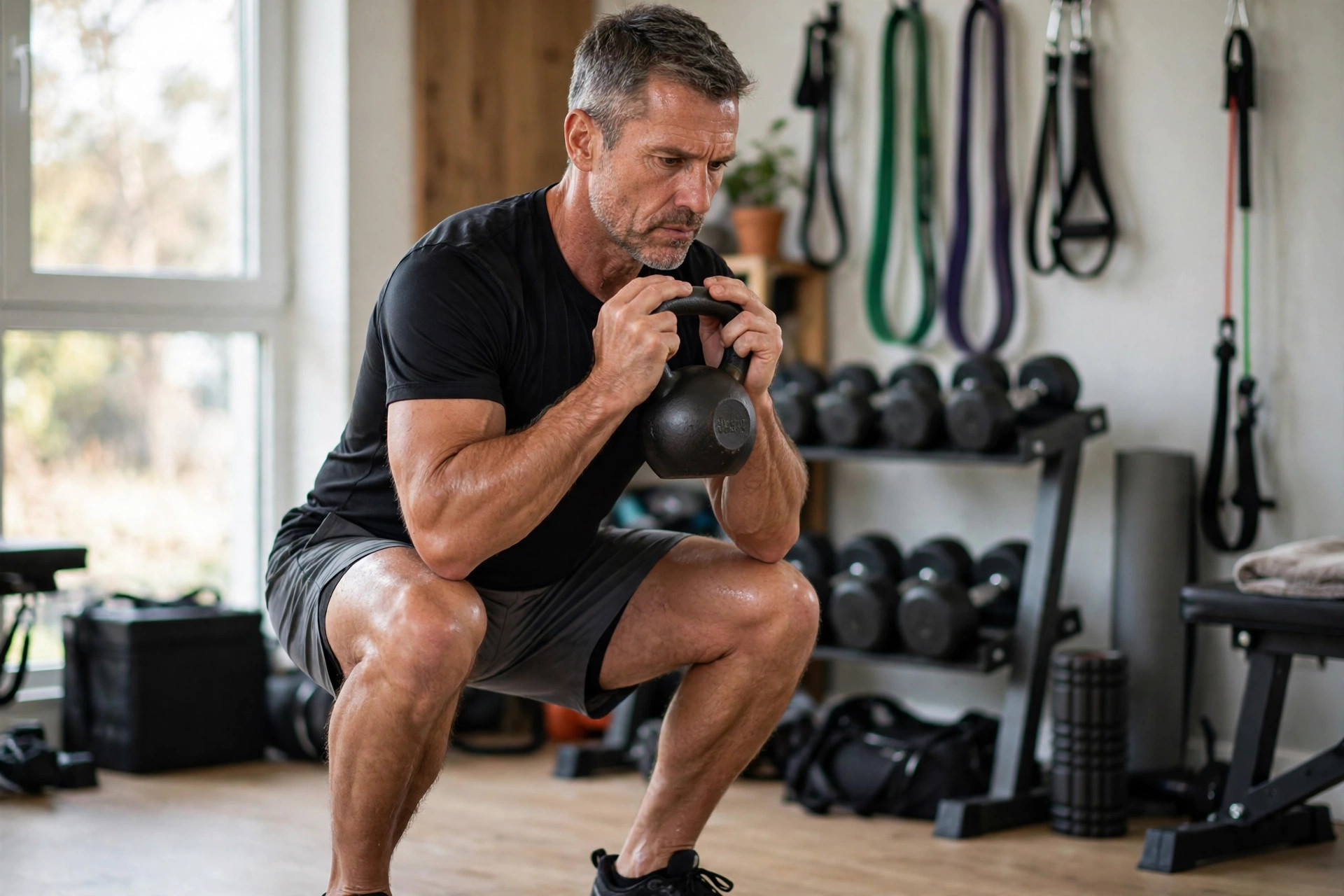

Indeed, after 40, your body starts sending memos. The stairs feel steeper. Hoisting the suitcase into the overhead bin takes real effort. Getting up off the floor involves a sound you didn’t authorize. I turned 43 and realized I’d been treating my body like a rental car. As a result, something had to change. That’s when I discovered functional fitness for beginners over 40.
In other words, this isn’t a sign that exercise is behind you. It’s a sign the right kind matters more than ever. Functional fitness for beginners over 40 means training the movements real life demands: squatting to pick up a grandchild, carrying groceries, getting up off the floor. This guide shows you how to build that strength.
Functional Fitness for Beginners Over 40: Why Strength Training Is Non-Negotiable
However, after 30, adults lose roughly 3 to 8 percent of muscle mass per decade, accelerating after 60. Your body quietly downsizes its strength every year unless you give it a reason not to. Nobody tells you this at 35. They should.
Fortunately, strength training after 40 reverses the slide. Even light weights signal your body to preserve and rebuild muscle, while strengthening bones and improving balance. I started because I was tired of asking for help with heavy things. In fact, pride is a valid fitness motivation. For more on staying active as you age, the National Institute on Aging’s exercise guide has detailed recommendations.
Functional Fitness for Beginners Over 40 Rules: Train Smart, Not Just Hard
- Warm up every time. Five minutes of marching in place, arm circles, and leg swings.
- Form beats weight. Start with bodyweight or very light resistance. Add load only when reps are clean.
- Respect recovery. Train strength two to three times per week with at least one rest day between sessions.
- Pain is information. Muscle burn and next-day soreness are normal. Sharp joint pain is not. Stop and reassess.
- Breathe. Exhale on the effort, inhale on the release.
Joint-Friendly Exercises: The Foundational Six
For example, these six joint-friendly exercises cover every major movement pattern without punishing knees, shoulders, or backs.
1. Sit-to-Stand (Squat Pattern)
To begin, stand in front of a sturdy chair. Lower until you touch the seat, then stand back up, no hands if you can. This builds the strength you need for stairs and getting off the couch with dignity.
Alternatively, for an easier version, use the chair arms. For a harder version, hold a dumbbell at your chest.
2. Wall Push-Up to Counter Push-Up (Push Pattern)
Next, face a wall, hands at shoulder height, and push up against it. When 15 reps feel easy, move to a kitchen counter. This builds chest, shoulder, and arm strength without the wrist strain of floor push-ups.
For instance, I started at the wall feeling ridiculous. Three weeks later I was doing counter push-ups. Therefore, start where you are.
3. Bent-Over Dumbbell Row (Pull Pattern)
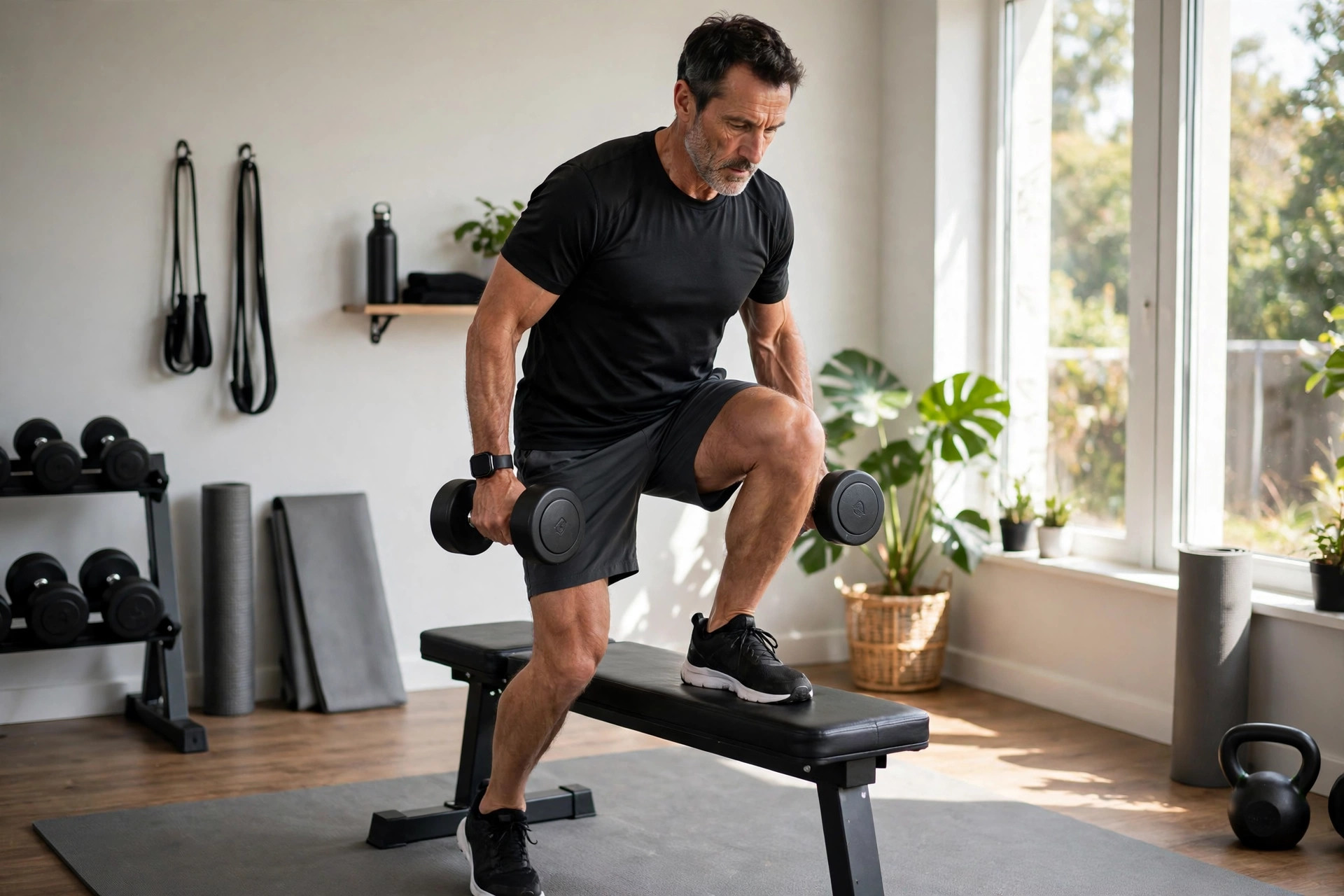
Then, hinge forward at the hips, flat back, a light dumbbell in each hand. Pull the weights toward your ribs, squeezing your shoulder blades together. This counteracts desk posture and protects your shoulders. Thus, start embarrassingly light.
4. Glute Bridge (Hip Hinge Pattern)
Similarly, lie on your back, knees bent, feet flat. Press through your heels to lift your hips until your body forms a straight line, shoulders to knees. This wakes up glutes weakened by years of sitting, and strong glutes protect your lower back.
5. Standing March (Single-Leg Stability)
In addition, hold a countertop and march in place, knees toward hip height. Single-leg work builds balance and coordination, the stuff that prevents falls, while strengthening each leg independently. Boring? A little. Useful? Extremely.
6. Dead Bug (Core Stability)
Finally, lie on your back, arms pointing at the ceiling, knees bent at 90 degrees. Slowly lower your right arm overhead while extending your left leg, lower back pressed down. Then switch sides.
In contrast to crunches, the dead bug trains your core to stabilize, which is what it actually does in real life.
Functional Fitness for Beginners Over 40: Your Home Workout Routine
Specifically, light dumbbells, a sturdy chair, about 25 minutes.
Schedule: two non-consecutive days per week.
- Warm-up, 5 minutes: march in place, arm circles, leg swings
- Circuit, resting 30 to 60 seconds between exercises:
- Sit-to-stand: 10 to 12 reps
- Wall or counter push-up: 10 to 15 reps
- Dumbbell row: 10 reps per side
- Glute bridge: 12 to 15 reps
- Standing march: 20 total, 10 per leg
- Dead bug: 8 per side
- Rest 2 minutes, repeat the circuit once.
- Cool-down, 5 minutes: gentle full-body stretching
Subsequently, after three to four weeks, add a third day or increase reps. One extra rep per exercise per week is plenty. Slow progress is still progress.
Nutrition and Recovery Notes
First, aim for 1.2 to 1.6 grams of protein per kilogram daily, spread across meals. Protect seven to eight hours of sleep. Most muscle repair happens overnight. And hydrate: thirst signals dull with age. Drink before you’re thirsty. For a complete post-training protocol, see our post-workout recovery routine.
Functional Fitness for Beginners Over 40 FAQs
Is it safe to start strength training after 40 with no experience?
Certainly, yes, with the right approach. Start with bodyweight and light resistance, prioritize form, and progress slowly. If you have heart disease, uncontrolled blood pressure, or joint replacements, get clearance from your doctor first. A session or two with a qualified trainer is money well spent.
Will lifting weights hurt my joints?
Indeed, done correctly, strength training protects joints by strengthening the muscles and ligaments around them. The key is joint-friendly exercise selection, proper form, and sensible loads. Sharp joint pain means something needs adjusting.
How fast will I see results?
Typically, most beginners notice improved strength and daily function within four to six weeks. Stairs feel easier, posture improves. Visible muscle changes take eight to twelve weeks. The functional improvements come first, and honestly, those matter most.
Functional Fitness for Beginners Over 40: Final Thoughts
Ultimately, functional fitness for beginners over 40 isn’t about chasing your 25-year-old self. It’s about building a body that handles real life at 45, 55, and beyond. Start with the six movements and progress patiently. The best time to start was at 40. The second-best is today.
This article is for informational purposes only and is not medical advice. Consult your doctor before beginning a new exercise program, especially if you have cardiovascular disease, joint issues, or other health conditions.