
You can buy the most expensive whey on the shelf, measure it down to the gram, and drink it within thirty seconds of your last rep — and still leave half the post-workout protein absorption benefit in the locker room.
I watched this happen to my friend Dan last summer. Dan’s the kind of guy who tracks everything: macros, sleep, resting heart rate. After every run he’d chug his 45-gram whey shake like it was a sacrament. And after every run, he also complained that his recovery felt flat. I asked him one day, mid-rant, a question he’d somehow never asked himself: “Dan, how much water do you drink during the run?” He laughed. “I hate carrying a bottle, so I just drink after.” A brand-new study out of Beijing suggests Dan’s habit has been quietly sabotaging his shakes for years.
The Study That Changes the Shaker Game
Researchers at Beijing Sport University — Xin, Gao, Wu and colleagues — ran a deceptively simple experiment, published in the journal Nutrients in 2026 and covered this week by Men’s Fitness. Thirteen healthy young men completed three treadmill running sessions, each at least a week apart. The only thing that changed between sessions was drinking strategy: one session with no water at all, one replacing about half of the sweat lost, and one replacing all of it.
Within five minutes of each run, every man drank the exact same thing — 45 grams of whey protein isolate dissolved in 450 milliliters of water. Then researchers drew blood before exercise, right after, and at 60 and 120 minutes after the shake, tracking how many amino acids actually showed up in the bloodstream.
The results were hard to ignore. One hour after the shake, the dehydrated group had noticeably lower levels of total amino acids, branched-chain amino acids, leucine, isoleucine, and glutamine than both hydrated groups — every difference statistically significant. Across the full two-hour window, the dehydrated group’s overall amino acid response stayed lower. In plain English: the same shake, absorbed worse, because the body was short on water.
How Dehydrated Were They, Exactly?
Not collapsed-on-the-track dehydrated. The no-water group lost about 2.2% of body mass — the classic “mild dehydration” zone that most athletes train through without thinking twice. For a 75-kilo runner, that’s roughly 1.65 liters of sweat. The half-replacement group lost about 1.2%, and the full-replacement group stayed near baseline.
Here’s the part I love: replacing just half the fluid produced amino acid responses comparable to replacing all of it. You don’t need to drink like a fire hose. You just need to not let the tank hit empty. This is the kind of nuance that makes your hydration strategy for athletes genuinely personal rather than one-size-fits-all.
Why Water Makes or Breaks Post-Workout Protein Absorption
The researchers didn’t measure the mechanism directly — honest science rarely jumps ahead of its data — but they proposed the likeliest suspects: slower gastric emptying, reduced blood flow to the gut during and after dehydrated exercise, and altered amino acid processing in the liver and muscle.
Think of it like a delivery truck in a traffic jam. Your whey isolate can be the purest, fastest-digesting protein on the market, but if the highways of your bloodstream are constricted and your gut is running on low power, the delivery slows to a crawl. Hydration is the road network. Without it, the premium cargo just sits there.
Interestingly, gut complaints stayed low across all conditions — nobody’s stomach revolted. So the penalty of dehydration here is silent. You won’t feel your post-workout protein absorption dropping. You’ll just recover a little worse, week after week, and blame your training split instead of your water bottle.
What This Means for Post-Workout Protein Absorption
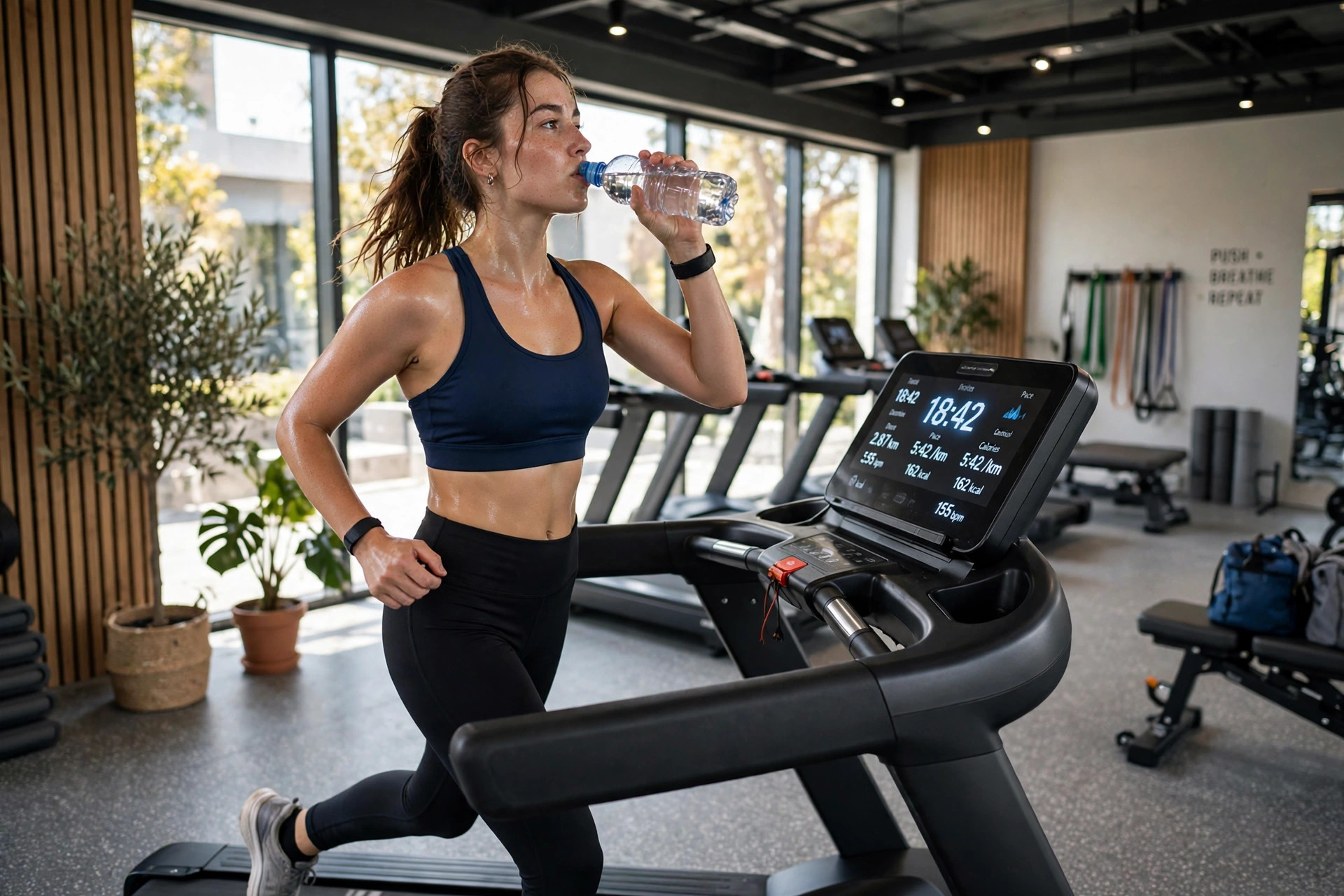
Forget overhauling your supplement stack. The actionable fix is almost embarrassingly simple: hydrate during your session, not just after it, to protect post-workout protein absorption.
During the workout: replace at least half your losses
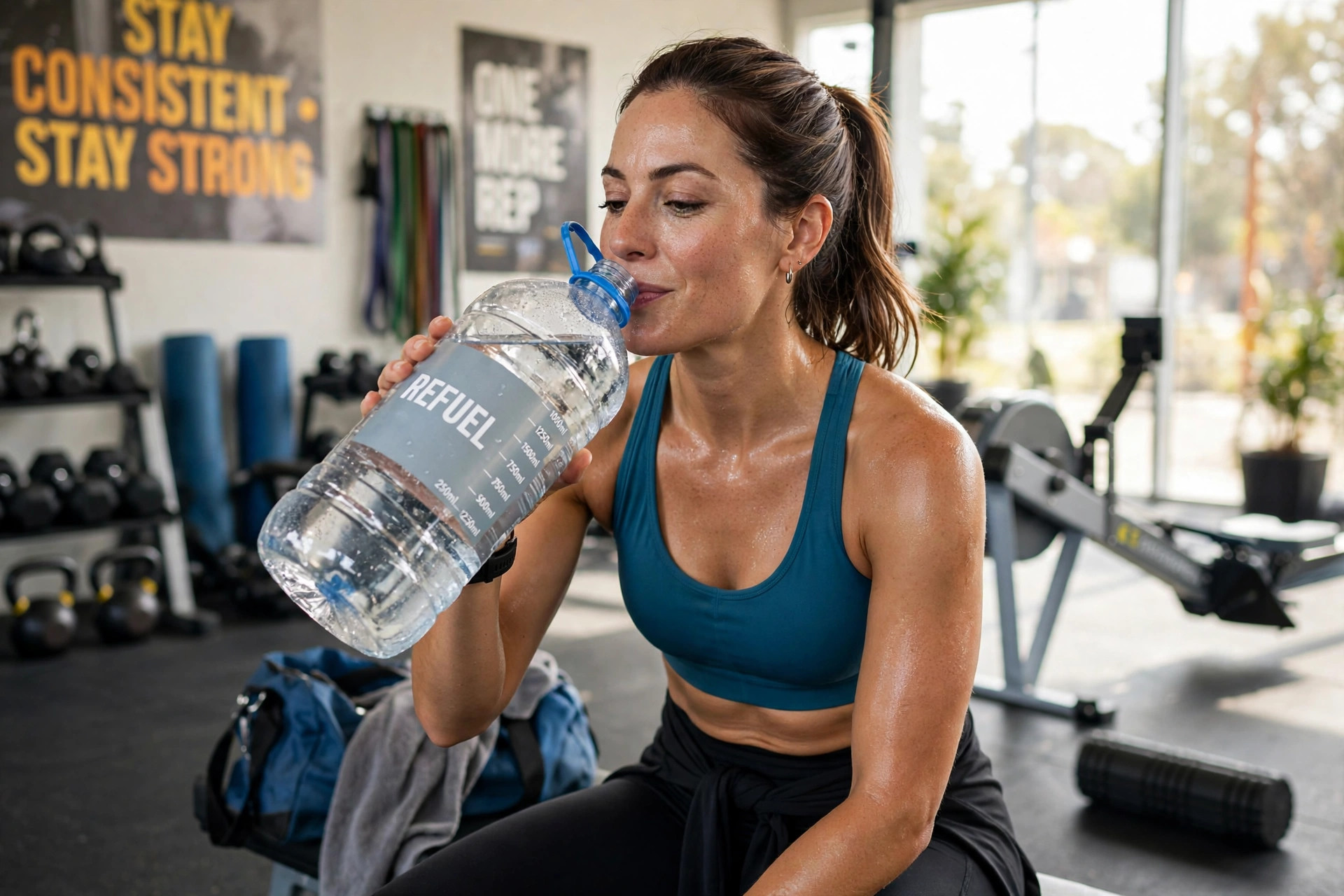
If you’re training for more than 45–60 minutes and sweating, sip water steadily rather than waiting until the session ends. The study’s sweet spot was anything at or above 50% fluid replacement. You don’t need precision — if you finish a session and your urine looks like apple juice instead of lemonade, you under-drank.
Right after: drink water first, then the shake
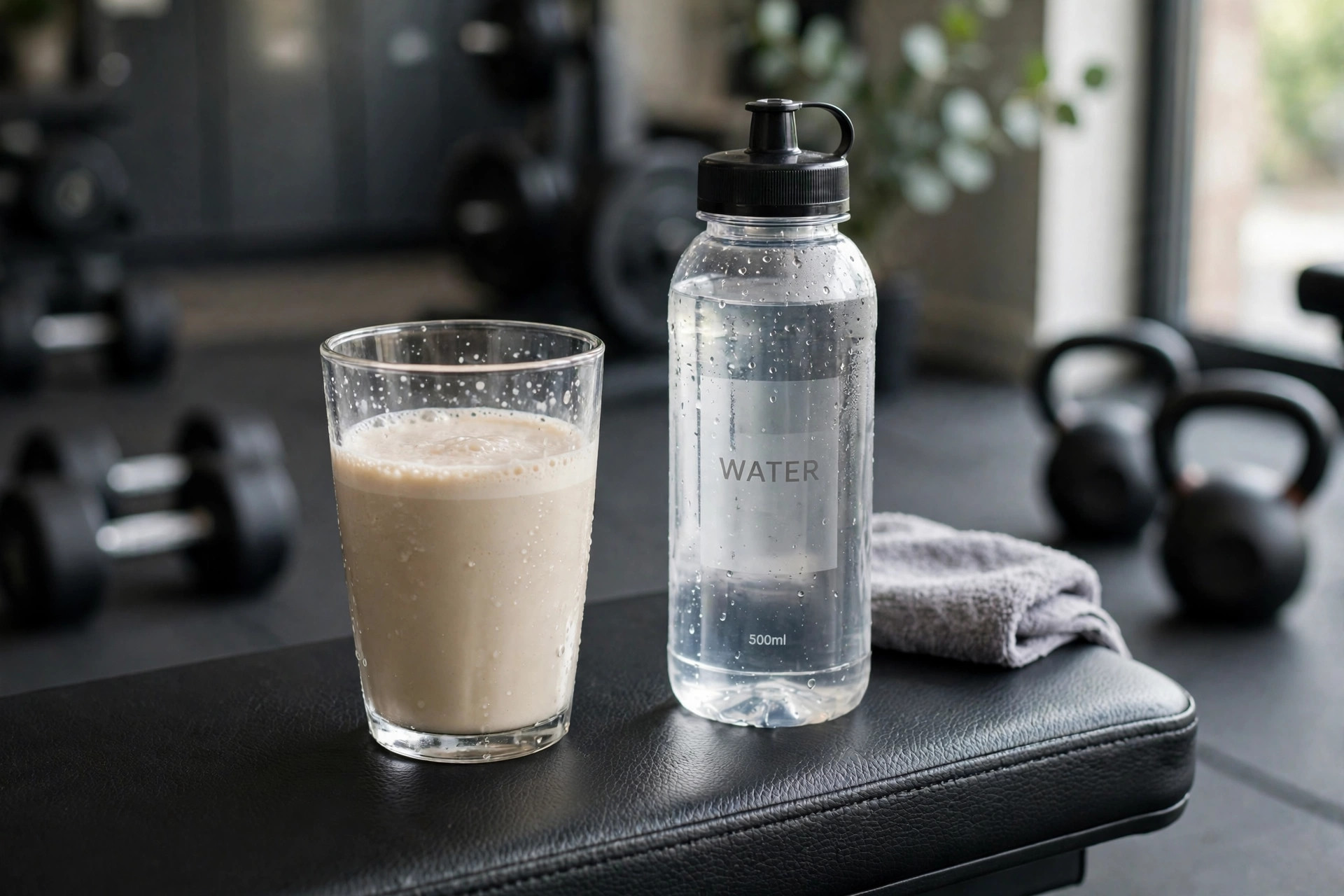
The study gave everyone the shake within five minutes of stopping, and absorption still suffered in the dehydrated group. So the shake timing wasn’t the problem — the water deficit was. If you’ve trained thirsty, rehydrate for 10–15 minutes before the shake rather than racing to mix it.
Do the two-weigh-in trick
Weigh yourself before and after a workout (in the same kit, ideally). Every kilo lost is roughly a liter of sweat. Knowing your real number takes the guesswork out — most athletes are shocked by theirs. A runner in summer can easily drop two kilos in an hour without drinking a drop.
Three Mistakes That Hurt Post-Workout Protein Absorption
The protein-only mindset. Plenty of lifters have their protein dialed in — 2 grams per kilo, leucine thresholds, casein before bed — while treating water as an afterthought. This study shows that’s a blind spot. Fixing common high-protein diet mistakes includes fixing the glass of water nobody posts on Instagram.
Carrying water feels uncool. Dan’s objection was the bottle itself. Fair — nobody wants to juggle a bottle during intervals. Solutions: plan a water stop on your route, stash a bottle at the pitch, use a running belt or vest. Remove the friction and the excuse dies.
Waiting for thirst. Thirst lags behind actual dehydration by a lot. By the time you’re properly thirsty mid-session, you’re likely already past the 1–2% loss range where this study shows absorption starts to slip. Drink on a schedule, not on a feeling. This is why a proper post-workout recovery routine starts during the workout, not after it.
Frequently Asked Questions
Does this apply to women too?
The study only tested young men, so strictly speaking, we can’t say for sure. But the underlying physiology — blood volume, gut blood flow, gastric emptying — isn’t sex-specific in any way that would make dehydration help absorption. Until someone runs the female trial, assume it applies to you.
Do I need to drink during short gym sessions?
Probably not urgently. The dehydrated group trained long enough to lose 2.2% of body mass. A 40-minute lifting session in air conditioning won’t get you there. The risk rises with duration, heat, and sweat rate — exactly the sessions where recovery matters most.
Will electrolytes help more than plain water?
The study used plain water and found that replacing fluid was what mattered. Electrolytes can help with retention and palatability, especially on long, sweaty sessions, but they weren’t tested here. Don’t use the absence of evidence as an excuse to skip water entirely.
The Takeaway
Nobody’s asking you to double your supplement budget or fear your shaker. The takeaway is simpler and cheaper: water is part of your post-workout protein absorption strategy, not separate from it. The athletes who recover best aren’t just the ones drinking 45 grams of whey — they’re the ones who keep their hydration intact while earning that shake. Next time you train, take the bottle. Your muscles will cash the check your protein shake is writing.
This article is for informational purposes only and is not medical advice. If you have a health condition or train at a high intensity, talk to a qualified healthcare professional or sports nutritionist before changing your routine.