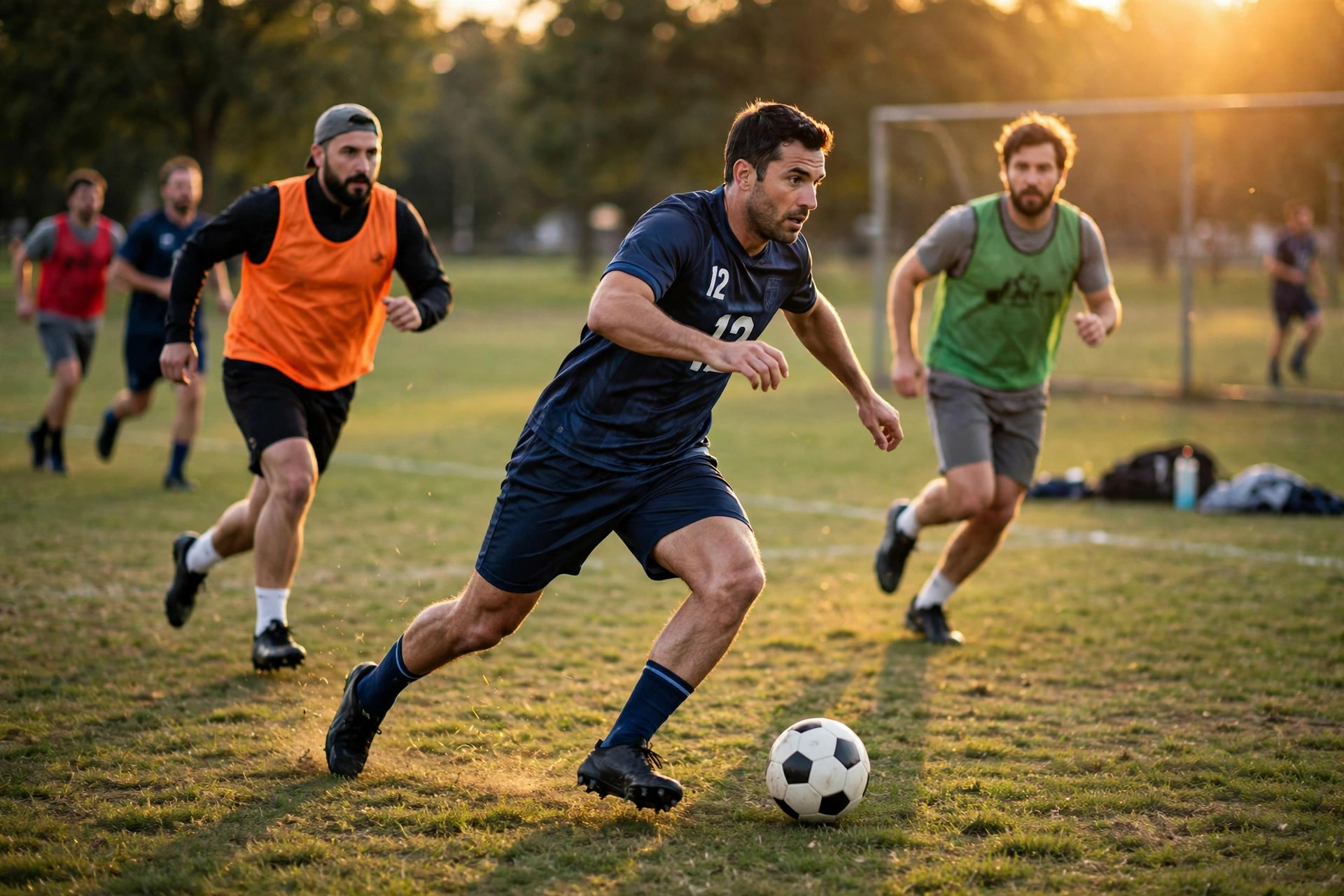

I used to feel pretty smug about my bones. I walked every day, I lifted twice a week, I took my vitamin D. Job done, right? Then a study landed this month that made me rethink the whole routine — because according to 24 clinical trials, the exercises I was counting on most barely moved the needle. And the thing that worked best? A casual game of football.
If you’ve been doing everything “right” for your bones and wondering whether it’s actually working, this one’s for you.
The study that flipped the script
Researchers at Semmelweis University in Hungary wanted to answer a simple question: which type of exercise actually triggers your body to build new bone? They pulled together 24 randomized controlled trials covering 1,238 healthy adults and published the results in Sports Medicine – Open in 2026. Instead of waiting years to measure bone density changes, they tracked osteocalcin — a protein in your blood that shows your body is actively building bone.
Here’s what they found. High-intensity training was the only approach that significantly raised osteocalcin levels. Endurance training — your steady jogs and long walks — showed no significant effect. Power training, the classic gym weights work, didn’t move it either. And mixed training didn’t help.
The headline number came from the university’s own summary of the findings: recreational football and handball were linked to increases of 45 to 46 percent in bone-formation markers. Walking, step aerobics, and standard gym resistance sessions produced far smaller responses.
Before you cancel your gym membership, note the fine print — I’ll get to it below. But the core message is hard to ignore: intensity, not just exercise type, seems to be what wakes your bones up.
Why your bones only listen to hard efforts
Your bones aren’t static scaffolding. They’re living tissue, constantly being broken down and rebuilt. And they rebuild in response to force — a principle scientists call Wolff’s law. When you load a bone hard enough, it gets the message: “we need to be stronger here.” When the load is gentle and familiar, your bones basically shrug and carry on.
That’s why a brisk walk, wonderful as it is for your heart, your mood, and your step count, doesn’t send a very loud signal. Your skeleton is already used to it. It’s the sudden stuff that gets its attention — the sprint to catch a pass, the sharp cut to change direction, the landing from a jump. Those explosive, unpredictable forces are exactly what football and handball are full of.
The study’s own key point says it plainly: intensity, rather than the type of exercise, plays the critical role in influencing bone remodeling. It’s not that football is magic. It’s that football is intense, varied, and full of the stop-start chaos your bones respond to.
So what actually counts as a bone-building workout?
Let’s translate the research into a real training week, because “do high-intensity exercise” is useless advice without specifics.
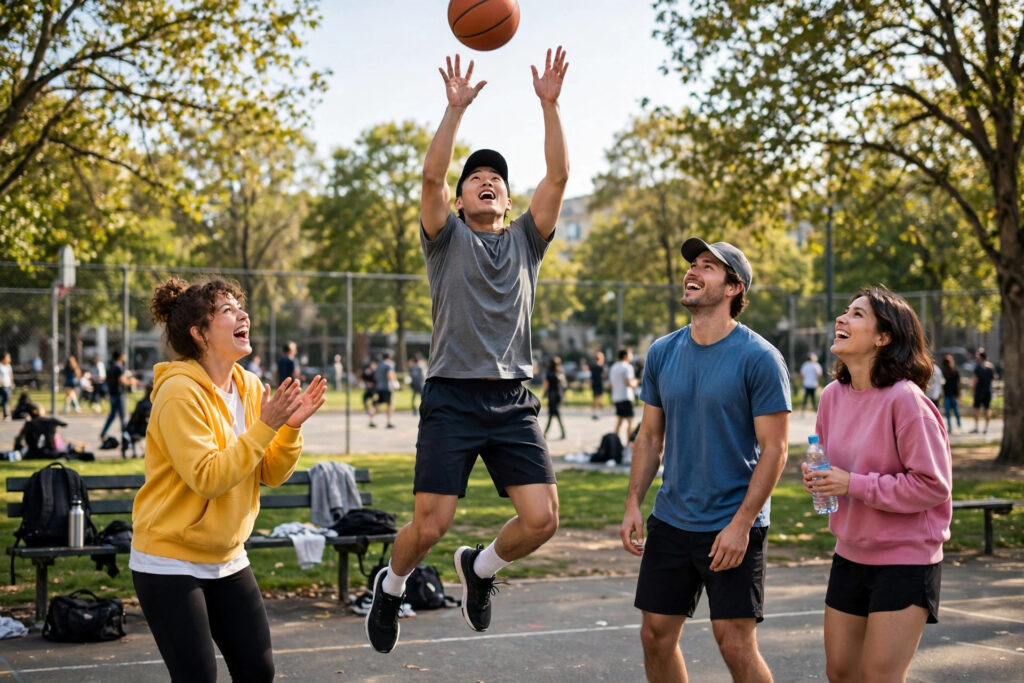
The winners — explosive, multidirectional sports. Recreational football (soccer), handball, basketball, and racket sports like squash, padel, or tennis all fit the pattern: short sprints, sudden stops, jumps, and changes of direction. You don’t need to be good at them. A weekly 5-a-side kickabout with friends counts. The study looked at recreational players, not professionals.
The strong supporting cast — plyometrics and sprint intervals. If team sports aren’t your thing, jumping and sprinting deliver the same kind of loading. Box jumps, jump squats, skipping, and short 20–30 second sprints with full recovery between them all create the sharp forces bones respond to. Even 10 minutes of this kind of work, two or three times a week, is a meaningful dose.
The honest middle — running and jumping rope. Running is weight-bearing and higher impact than walking, so it sits above a stroll in the bone-loading pecking order. It’s just that in the trials, steady endurance work alone didn’t significantly shift the bone markers. Think of running as a solid base, not the whole answer.
Don’t ditch the weights. Here’s where the “weights don’t work” headlines mislead. In this analysis, power training alone didn’t significantly raise osteocalcin — but the researchers measured blood markers, not bone density or fracture risk. Resistance training still builds the muscle that protects your joints, keeps you steady, and prevents the falls that actually break bones. The National Institute of Arthritis and Musculoskeletal and Skin Diseases (NIAMS) still recommends combining weight-bearing exercise, resistance training, and balance work. The new study adds a missing piece; it doesn’t erase the old advice.

A sample week that covers all of it
Here’s what a bone-friendly week looks like for a regular adult with a job, a family, and about four hours a week to train:
- Monday: 45-minute recreational football or basketball game with friends (your high-intensity bone session)
- Tuesday: 40-minute strength session — squats, deadlifts, overhead press, rows (muscle and joint protection)
- Wednesday: rest, or an easy 30-minute walk (recovery still counts)
- Thursday: 25 minutes of intervals — six 30-second sprints with 90 seconds of easy jogging between them, plus 3 sets of 10 jump squats
- Friday: 40-minute strength session, different movements — lunges, hip thrusts, pull-ups or lat pulldowns
- Saturday: 60 minutes of padel, tennis, or a weekend hike with some hills
- Sunday: walk, stretch, and 10 minutes of balance work — single-leg stands, heel-to-toe walking
That adds up to two genuinely intense sessions, two strength sessions, and everyday movement in between. Nothing extreme. No 6 a.m. boot camp, no marathon training. Just variety with some real effort mixed in.
And the stakes are worth the effort. Roughly one in three women and one in five men over 50 will break a bone because of osteoporosis, according to the International Osteoporosis Foundation. You build most of your bone density before your early 20s, and you hit peak bone mass around age 30. After that, it’s a maintenance game — and maintenance means giving your bones a reason to stay strong.
Myth vs. fact: bone health edition
Myth: “Walking is enough for your bones.”
Fact: Walking is excellent for your heart, blood sugar, and mood. But as a bone-building stimulus it’s gentle — the meta-analysis found endurance training had no significant effect on bone-formation markers. Keep walking; just don’t count it as your bone workout.
Myth: “Lifting weights is the best thing you can do for your bones.”
Fact: Strength training is still essential — for muscle, balance, and fall prevention. But in this analysis it didn’t significantly move osteocalcin on its own. The honest answer is that weights plus something explosive beats weights alone.
Myth: “Bone loss is only a problem after 60.”
Fact: You reach peak bone mass around 30, and the bone you bank in your teens and 20s shapes your risk for the rest of your life. For women, bone loss speeds up around menopause — and perimenopause symptoms at 40 often arrive right as that shift begins. A 40-year-old who starts playing football twice a week is investing in the skeleton they’ll have at 70.
Myth: “Calcium pills alone will fix it.”
Fact: Calcium and vitamin D matter — the NIH recommends about 1,000 to 1,200 mg of calcium and 600 to 800 IU of vitamin D a day for most adults. But supplements supply the raw materials. Without the mechanical signal from hard exercise, your body has little reason to use them to build bone.
The fine print (because honesty matters)
A good study deserves a fair reading, so here are the caveats the researchers themselves flag:
- Markers aren’t fractures. The study measured osteocalcin in the blood, not bone density scans or broken bones. A rising marker is a promising early signal, not proof of fewer fractures — and the trials that measured bone mineral density found no significant changes.
- The evidence certainty was moderate to low. The researchers rated their confidence in the osteocalcin finding as moderate to low on the GRADE scale. Real, but not rock-solid.
- Healthy adults only. All 1,238 participants were healthy adults. If you already have osteoporosis, a heart condition, or joint problems, don’t suddenly start playing full-contact football — talk to your doctor first.
- The 45–46% figure needs context. That number comes from the university’s summary highlighting football and handball; the paper’s pooled result was a mean osteocalcin increase of 6.88 (95% CI 0.37 to 13.38). Impressive — but an average across studies, not a guarantee for any one person.
None of that makes the study useless. It makes it what it is: the first meta-analysis of its kind, pointing in a clear direction, with more work still to do.
FAQs
Can walking alone keep my bones strong?
Walking helps — it’s weight-bearing and better than sitting, and NIAMS lists brisk walking among useful bone exercises. But on its own it’s probably not enough to maximize bone formation. Add two short sessions a week of something harder: hill sprints, jumping, or a racket sport. Your bones need a reason to adapt, and a comfortable walk doesn’t give them one.
How often do I need high-intensity exercise for bone health?
The trials ran for more than two weeks, and programs were grouped by whether they lasted under or over 16 weeks. There’s no magic number, but two intense sessions a week — a football game, a sprint session, a plyometric circuit — is a sensible target. Pair that with two strength sessions and daily walking, and you’re covering every base the guidelines mention.
Is it safe to start football or jumping workouts in my 40s or 50s?
For most healthy adults, yes — with a sensible ramp-up. Start with low-impact versions: brisk walking with short jog intervals, soft-landing bodyweight jump squats, a casual game rather than a competitive league. Build up over four to six weeks. If you have osteoporosis, a previous fracture, a heart condition, or joint pain, check with your doctor first. And warm up properly — cold muscles and sudden sprints are a recipe for a pulled hamstring.
The takeaway
Your bones are listening to how hard you move, not just how often. A daily walk and a couple of gym sessions are a good foundation — keep them. But if you want to actually signal your skeleton to build, add something fast, explosive, and a little chaotic to your week. A kickabout with friends. A sprint session. A game of padel where you’re lunging for every ball.
It’s a funny thing: the exercise that might do the most for your bones is also the one that feels most like play. Maybe that’s the point. The best bone-building workout might be the one you actually look forward to.
This article is for general information only and is not medical advice. Talk to your doctor before starting a new exercise program, especially if you have osteoporosis, a heart condition, or any existing health concern.