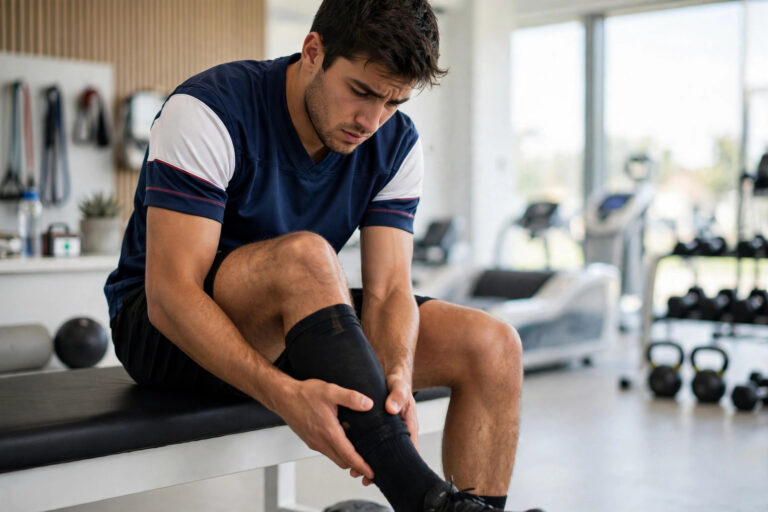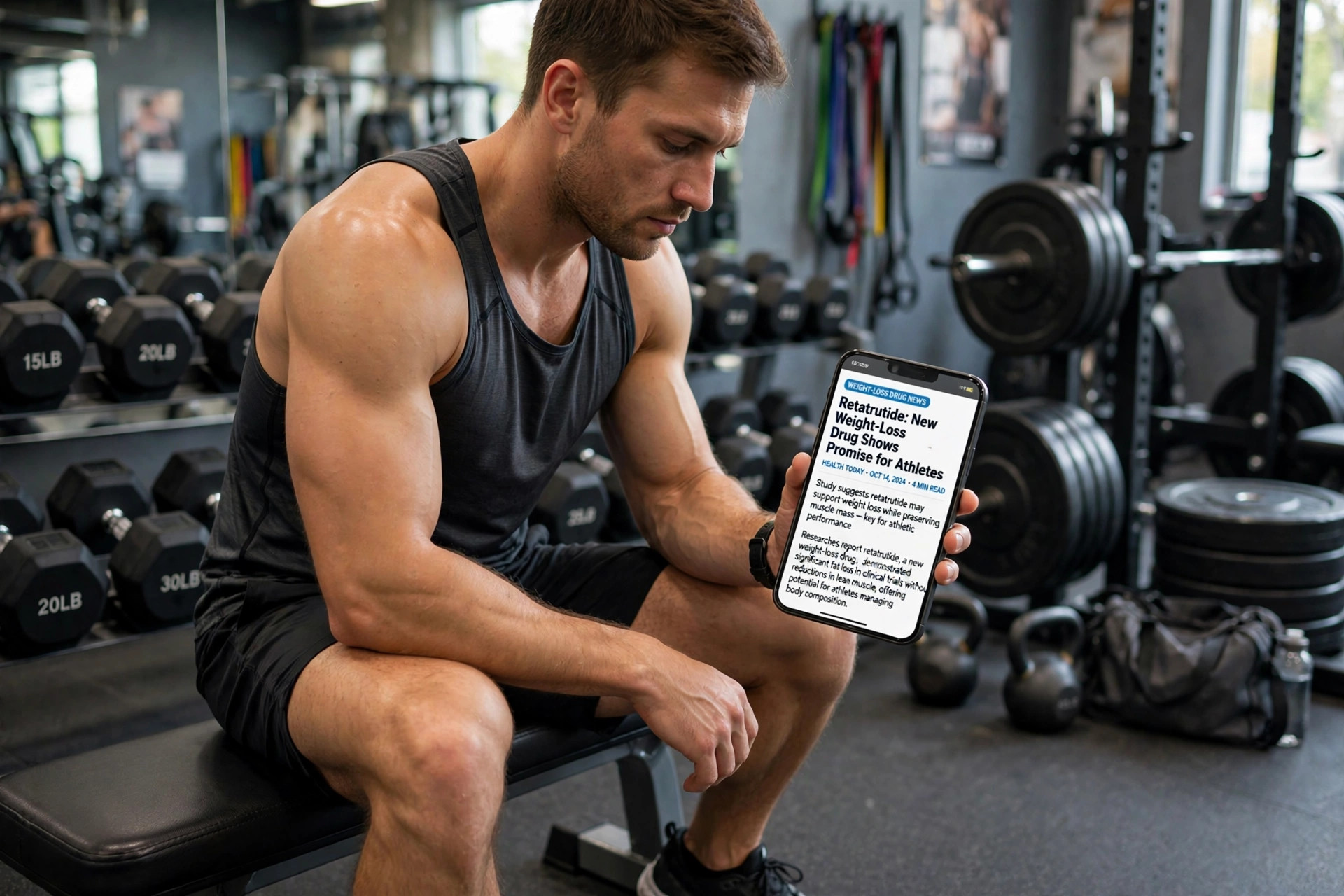

My group chat blew up last week — not about a race or a shoe drop, but about retatrutide weight loss. A buddy’s cousin had dropped 40 pounds in five months on “something new —” not Ozempic, the next one.”
That next one is retatrutide: Eli Lilly’s once-a-week injection with trial numbers that made the medical world do a double-take this fall. It’s now one of the most-searched health terms in the US and UK — and if you train, it matters to you.
What Is Retatrutide, Actually?
You’ve heard of GLP-1 drugs — Ozempic, Wegovy, Mounjaro. They mimic one gut hormone to kill your appetite. Tirzepatide (Mounjaro/Zepbound) mimics two. Retatrutide mimics three: GIP, GLP-1, and glucagon. Think of it as a triple lock on your metabolism.
GLP-1 slows digestion and kills hunger. GIP helps insulin and fat-tissue signaling. And glucagon — the new piece — nudges your body to burn more energy and break down fat. So retatrutide doesn’t just make you eat less; it’s designed to make you burn more, too.
One crucial fact: retatrutide is not approved anywhere yet. It’s still investigational — no pharmacy sells it, and anything sold under that name online isn’t the real drug. You can read about the ongoing phase III retatrutide trials to see how the research is actually progressing.
Retatrutide Weight Loss: The Trial Numbers Behind the Buzz
The hype didn’t come from marketing. It came from data.
TRIUMPH-1 (adults with obesity, no diabetes): up to 28.3% of body weight lost over 80 weeks on the highest dose — numbers that start approaching bariatric surgery territory, without the surgery.
TRIUMPH-2 (adults with type 2 diabetes and obesity): up to 20.8% at 80 weeks — detailed results landed in The Lancet on September 29, 2026. A third of top-dose patients lost at least 25% of their weight, and up to 40% reached normal blood sugar.
TRIUMPH-3 (severe obesity plus heart disease): up to 22.6%.
Lilly now has five positive phase III trials and plans to file for US approval in early 2027. US search interest spiked to its weekly peak on October 13; the UK has been searching it actively for days. For context, the old heavyweight tirzepatide topped out around 22.5%. These retatrutide weight loss results are a genuine step-change.
Why Athletes Should Pay Attention
Most coverage frames this as an obesity story. But athletes live at the intersection of weight, muscle, and performance — and powerful weight-loss drugs don’t stay in doctors’ offices. GLP-1s showed up in locker rooms, cutting phases, and off-season transformations. Retatrutide will be no different, with sharper tradeoffs.
When someone loses 28% of their body weight in under two years, a real chunk of that is muscle. Rapid weight loss doesn’t discriminate between fat and lean tissue — and for an athlete, that’s your engine being quietly dismantled.
A friend of mine, a regional-level powerlifter, tried a GLP-1 during a cut last year. Twenty-two pounds down in three months — and his deadlift fell by 60 pounds. He hadn’t lost 22 pounds of fat; he’d lost muscle, because he never ate enough protein to protect it and trained through a chronic calorie deficit with no appetite to fuel recovery.
Retatrutide’s appetite suppression is expected to be stronger, not weaker. Multiply his story and you see the problem.
The Muscle Problem Nobody’s Discussing
Every percentage point of rapid weight loss carries a quiet tax on lean mass — and the faster the drop, the heavier the tax. Research on GLP-1 weight loss has found that a substantial share of what’s lost can be muscle, especially without resistance training and high protein intake. There are proven strategies for losing fat while keeping muscle — but they only work if you actually eat and train.
That matters for three groups of athletes in particular.
Lifters cutting weight classes. Dropping into a lower class on an appetite-killing drug sounds easy — until your total collapses. Severe appetite suppression makes eating 180+ grams of protein a day genuinely hard.
Endurance athletes. Your power-to-weight ratio might improve on paper, but chronic under-fueling raises injury risk, tanks recovery, and can trigger hormonal disruption and bone stress injuries.
Masters athletes. Muscle gets harder to build and easier to lose with age. Losing lean mass at 45 or 55 can take years to rebuild.
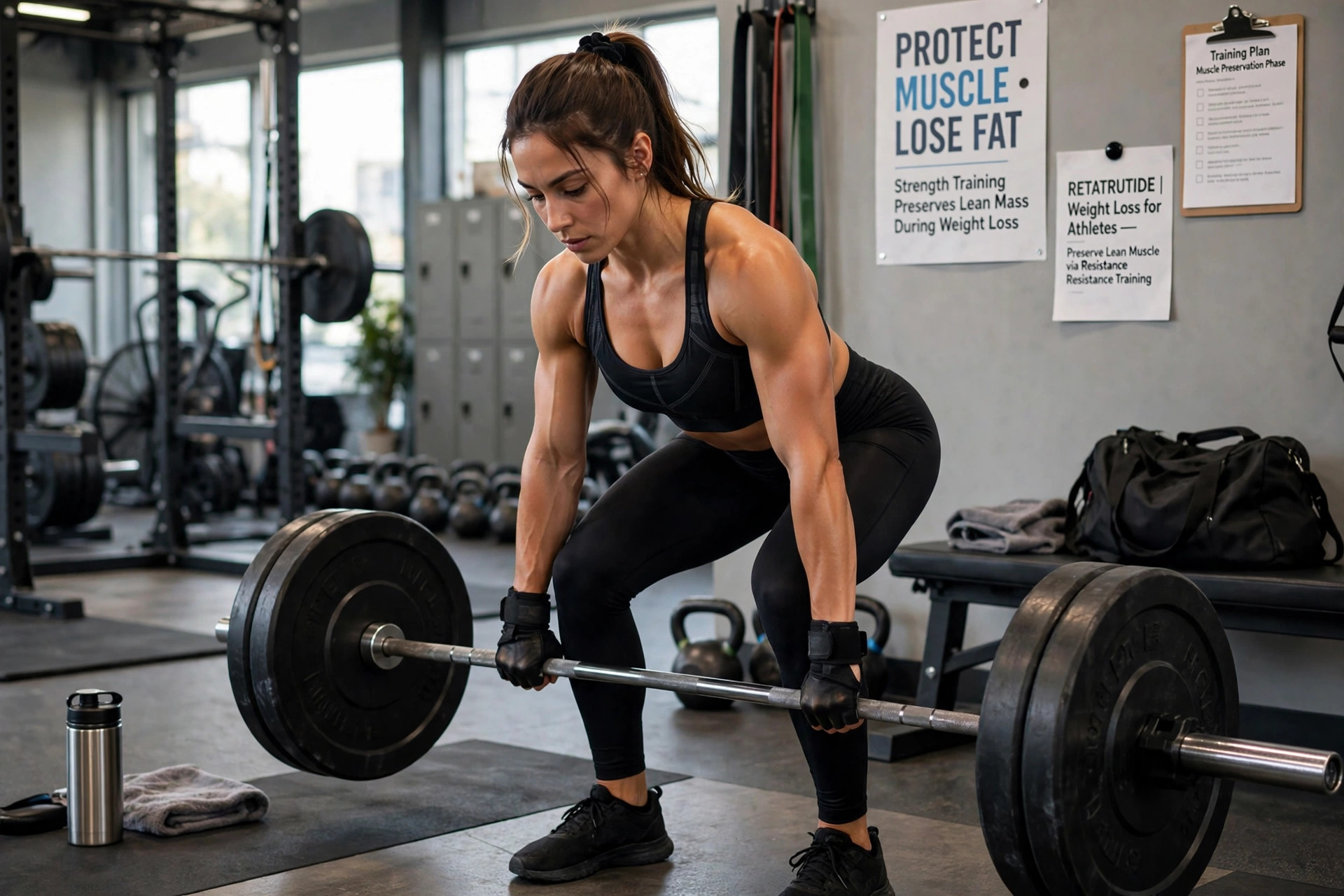
None of this means the drug is “bad.” It means the drug is powerful — and power without a plan is how athletes get hurt.
Training While Appetite-Suppressed: Five Practical Rules
Whether it’s retatrutide, a GLP-1, or any aggressive cut, these rules protect performance when food stops being appealing.
1. Protein is non-negotiable. Anchor every day around 1.6–2.2 grams of protein per kilogram of body weight. When you’re barely hungry, protein shakes, Greek yogurt, and eggs become strategic tools, not accessories. Eat the protein first.
2. Keep lifting heavy. Resistance training is the single strongest signal your body gets to keep muscle during weight loss. Two to three full-body sessions a week, compounds over isolation, weights that challenge you.
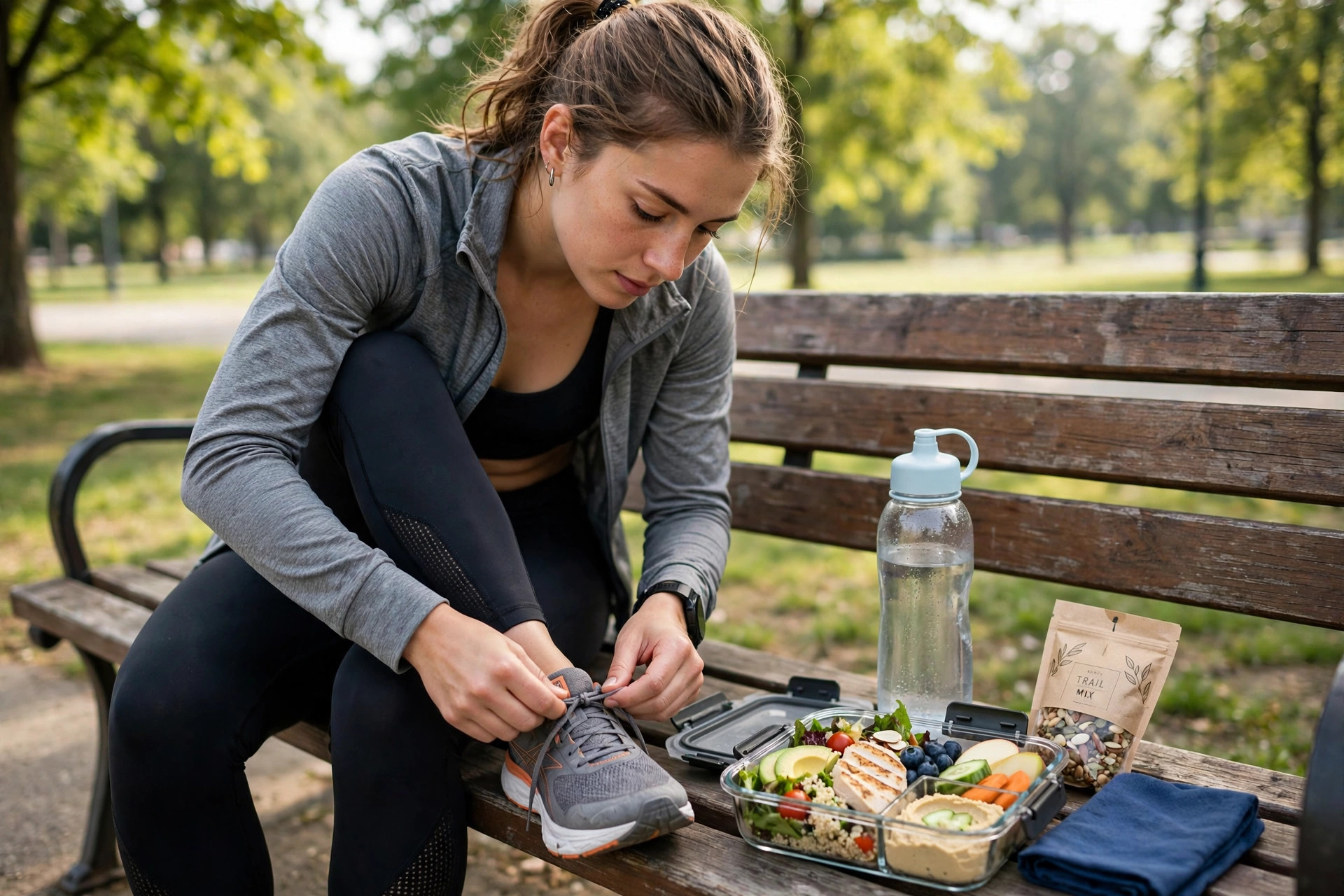
3. Shrink portions, not training fuel. Time your biggest meal around your hardest session. Learn how to fuel your workouts properly, and remember that sleep is the most underrated performance enhancer when you’re training in a calorie deficit.
4. Track what the scale won’t tell you. Measure your waist, take progress photos, and — most importantly — track your lifts. If strength is holding while weight falls, you’re losing the right tissue. If your numbers crater, the cut is eating your muscle.
5. Watch the side effects. The trials show mostly GI issues — nausea, diarrhea, vomiting — plus a dose-related skin-sensation quirk in about 7% at the top dose versus under 1% on placebo.
Retatrutide FAQs
Is retatrutide FDA-approved?
No. It’s investigational — five positive phase III trials, with Eli Lilly planning its US approval filing in early 2027. Anything sold online as retatrutide right now isn’t the real drug, and grey-market peptides are a gamble with your health.
How does retatrutide weight loss compare to Ozempic?
In trial numbers, it wins by a lot. Ozempic’s semaglutide averaged around 15–16% weight loss; retatrutide’s top-dose trial hit 28.3%. But “better” depends on the person — stronger appetite suppression tends to mean stronger side effects, and long-term safety data are still being collected.
Can athletes use it to cut weight?
Medically, these drugs are being developed for obesity and related conditions — not for athletes trying to make weight or get lean. Any off-label use needs an honest conversation with a doctor who understands both the drug and your sport. The muscle-preservation rules above apply either way.
The Bottom Line: Respect the Power, Keep the Muscle
Retatrutide is the most potent weight-loss medication ever tested in trials — and it may be on pharmacy shelves by 2027. That timeline means the retatrutide weight loss conversation is happening now, in group chats and gyms, long before your doctor brings it up.
For athletes, the takeaway is simple: the drug changes the math of weight loss, but it doesn’t change the math of performance. Muscle still has to be earned and protected — with protein, heavy training, and honest tracking. A smaller number on the scale is worthless if it costs you the engine that got you there.
The hype will keep growing. Your training plan should get smarter, not smaller.
This article is for informational purposes only and is not medical advice. Retatrutide is an investigational drug and has not been approved by any regulator. Talk to a qualified healthcare professional before considering any weight-loss medication or making changes to your training or diet.