
You’ve finished your workout. So why does your body still feel like it’s mid-sprint at 10 p.m.?
I know that wired-but-exhausted feeling well. Legs are done, brain is done, but your heart is still tapping out a rhythm like it hasn’t gotten the memo. You lie in bed scrolling, mind replaying every rep, and the next morning you wake up like you barely recovered at all. It’s not just in your head — well, actually, it kind of is. In your nervous system, to be exact.
That’s where the “vagus nerve reset” comes in. It’s one of the fastest-rising search topics in wellness right now — up 123% in just three months — and athletes are the ones driving it. The idea is simple: after you demand everything from your body, you can give your nervous system a nudge back toward calm, and that calm-down might be the missing piece in your recovery routine. Let’s separate the genuinely useful stuff from the hype.
What the Vagus Nerve Actually Does (and Why Athletes Care)
The vagus nerve is the longest cranial nerve in your body, running from your brainstem all the way down to your gut. Think of it as the brake pedal of your nervous system. While your sympathetic system hits the gas during hard training — heart pounding, adrenaline surging — the vagus nerve runs the parasympathetic “rest, digest, and recover” shift.
Why should an athlete care about a nerve they can’t feel or flex? Because recovery is not just muscles and protein shakes. After a hard session, your sympathetic drive stays elevated for hours. That means a heart rate that won’t settle, digestion that stays sluggish, and sleep that never quite goes deep. Coaches call the flip back “parasympathetic reactivation,” and the faster it happens, the sooner real recovery begins.
Here’s the honest part most viral videos skip: you can’t “reset” the vagus nerve like rebooting a phone. There’s no on-off switch. But there are simple, free techniques that temporarily boost vagal activity — and for athletes, that short-term shift might be genuinely useful.
Why Everyone’s Talking About the Vagus Nerve Reset Right Now
A few things collided to make this trend explode. First, wearables. Millions of athletes now wake up to an HRV (heart rate variability) number on their wrist — and HRV is roughly a stand-in for vagal activity. When people can see a number, they want to move it.
Second, the routines are dead simple. A two-minute breathing drill or a cold face splash costs nothing and fits anywhere. Named techniques beat vague advice every time — “vagus nerve reset” searches are growing while generic “stress relief” searches fade.
Third, there’s the competitive angle. Recovery is where modern sport is won. You can’t train harder than the next athlete, but you might recover faster. Anything that promises an edge in that department gets attention fast.
But — and this matters — the science is ahead of some claims and behind others. Slow breathing has modest, real evidence for calming the stress response. The idea that a 60-second trick “resets” your whole nervous system long-term? Unproven. Let’s look at what’s actually supported.
What the Science Actually Says (No Fluff)
Here’s the evidence, straight:
Post-exercise vagus activation speeds heart rate recovery. Research shows targeted breathing and downshift techniques after training help heart rate drop faster and lift vagally-mediated HRV. The effect depends on the method and the workout, but the short-term direction is real — which is exactly what an athlete needs after a brutal session.
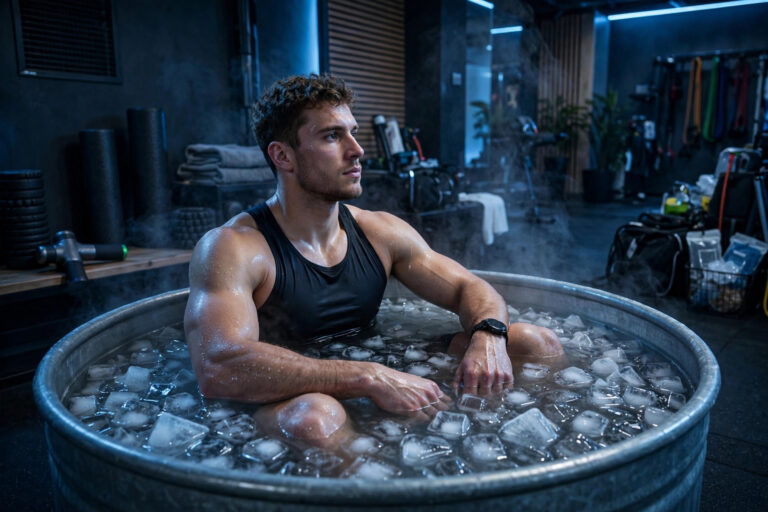
Cold exposure is emerging, not proven. Cold water on the face or a cold shower finish triggers a strong vagal reflex — that gasp-and-slow-down response. Athletes report feeling calmer afterward, and there’s plausible physiology behind it. But nobody has shown that a cold shower fixes your anxiety or permanently upgrades your nervous system. Treat it as a tool, not a miracle.
HRV is a rough gauge, not a grade. Higher resting HRV tracks with cardiovascular fitness — one reason trained athletes have low resting heart rates. But HRV varies hugely between healthy people due to age and genetics. Don’t chase a number; watch your own trend over weeks.
The most reliable vagal “toner” is boring. Regular aerobic exercise itself is among the best-documented ways to strengthen vagal tone over time. Sleep, consistent training, and simple stress management beat any gadget. The flashy stuff is seasoning, not the meal.
5 Vagus Nerve Reset Techniques You Can Try Today
1. The 4-6 Exhale Breath
Breathe in through your nose for 4 counts, then out through pursed lips for 6. The longer exhale is the active ingredient — it directly stimulates vagal activity. Do 6–8 rounds. I do this in my car before walking into the house after evening sessions, and the difference between “still wired” and “actually home” is noticeable.

2. The Cold Finish
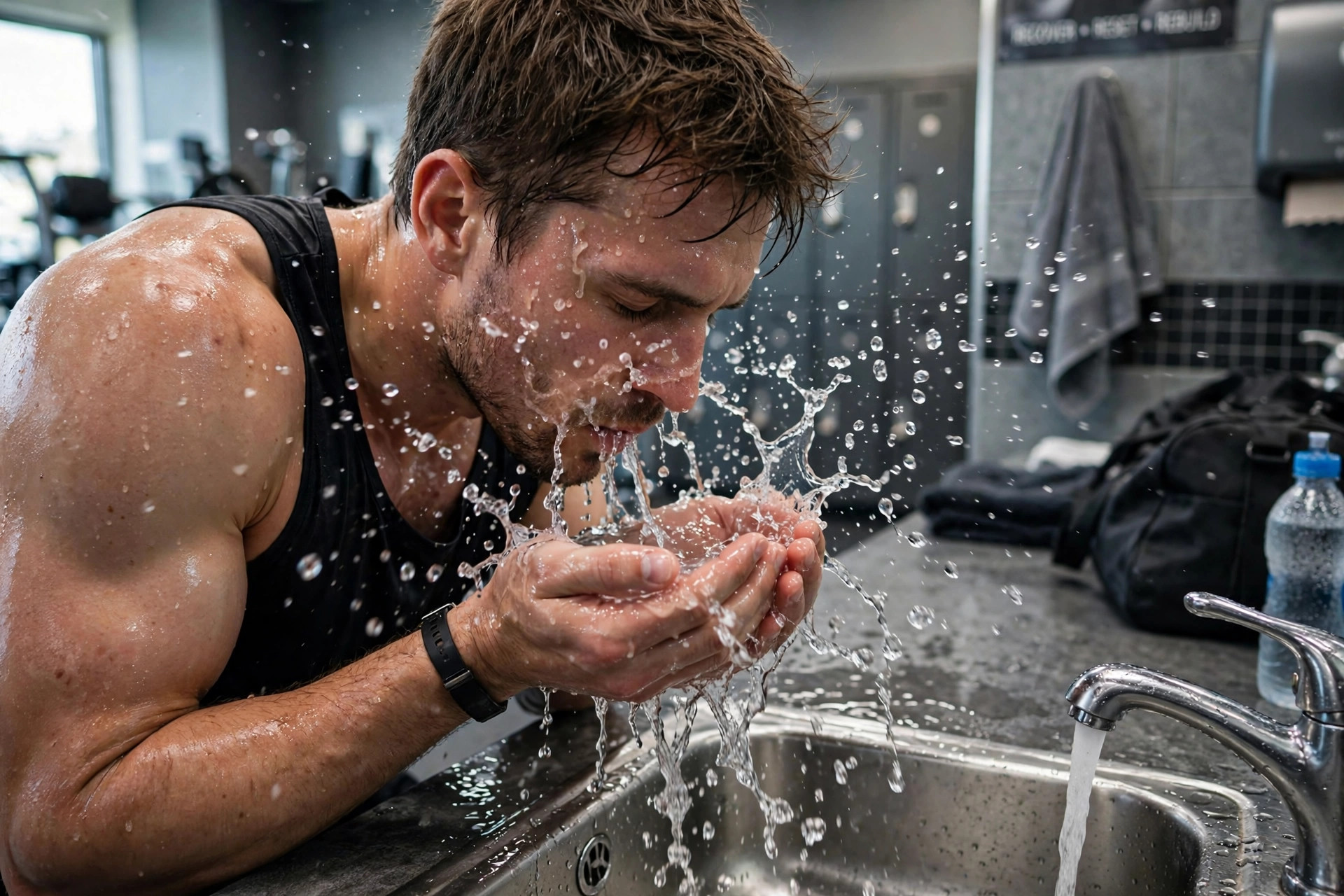
End your shower with 30–60 seconds of cold water, or splash cold water on your face after training. The dive reflex kicks in: heart rate drops, breathing steadies. Start lukewarm-cold, not ice — especially if you have any heart condition (check with your doctor first).
3. Hum, Sing, or Gargle
This sounds ridiculous and works anyway. The vagus nerve runs right past your vocal cords, and vibration stimulates it. Hum your favorite song for a minute or gargle water vigorously for 30 seconds. Nobody at the gym needs to know.
4. The 5-Minute Post-Workout Downshift
Instead of finishing a session and sprinting into your day, take five minutes: walk slowly for two, do the 4-6 breathing for two, then stand still for one with your eyes closed. Think of it as the cool-down for your nervous system, not your muscles. Most athletes never do this — they finish training and go straight into work, screens, and errands, which is basically a second workout for their nerves.
5. Legs Up the Wall Before Bed
Lie on your back with your legs up against a wall for 5–10 minutes before sleep, breathing slowly. This gentle inversion plus slow breathing is one of the simplest pre-sleep vagus-friendly routines there is. Athletes who struggle with post-training insomnia often find this is the one that finally helps.
How to Fit It Into a Training Week
Don’t overcomplicate it. Use the downshift routine (technique 4) after your hardest sessions — intervals, heavy legs, long runs. Use the breathing drill before bed on high-stress days. Save cold exposure for 2–3 times a week, ideally not immediately after max-effort strength work if muscle growth is your priority (cold can blunt some training adaptations — timing matters).
On rest days, a 10-minute walk plus a few rounds of long-exhale breathing keeps the habit alive without adding fatigue. And on competition days? Two minutes of 4-6 breathing in the warm-up area is one of the simplest ways to keep pre-race nerves in the usable zone instead of the panic zone.
When to Skip the Hype and Talk to a Doctor
A quick reality check before you go all in. Skip DIY vagus experiments and get medical advice if you have a heart condition, fainting episodes, or unexplained dizziness — vagal stimulation affects heart rhythm, and that’s not something to freelance. Cold water immersion is genuinely risky for some people, especially with cardiovascular issues. And be skeptical of any product promising a full nervous system reset “in seconds” — if it sounds like a shortcut, it usually is.
FAQs
Can you really reset your vagus nerve in 60 seconds?
No — not in the way viral videos claim. You can’t reboot the nerve like a device. What you can do is temporarily increase vagal activity with slow breathing or cold exposure, which can help you feel calmer and recover faster in the short term. Think “nudge,” not “reset.”
Does stimulating the vagus nerve really raise HRV?
Short-term, yes — slow breathing and post-exercise downshift routines have been shown to improve vagally-mediated HRV measures. Long-term, regular aerobic training is the most reliable way to raise resting HRV. One session won’t transform your baseline, but a consistent habit might move your trend.
Is cold exposure after training safe for everyone?
No. For most healthy people a brief cold finish is fine, but if you have a heart condition, high blood pressure, or a history of fainting, check with your doctor first — the initial cold shock stresses the cardiovascular system. Also, very cold immersion right after strength training may blunt muscle-building signals, so time it carefully.
The Bottom Line
The vagus nerve reset isn’t magic — but it might be the most useful five minutes you’re not spending on recovery. The science supports a modest, honest version of the claim: simple breathing and downshift techniques can help your nervous system switch from “go” to “recover” faster after training, and that switch matters for sleep, readiness, and how you feel the next day.
Start small. Pick one technique — the 4-6 breath is the easiest win — and use it after your three hardest sessions this week. Watch how you sleep. Watch how you feel on day two. The trend will fade; the habit is what actually pays off.
This article is for general information only and is not a substitute for professional medical advice. If you have a heart condition or other health concerns, consult a qualified doctor before trying vagus nerve or cold-exposure techniques.