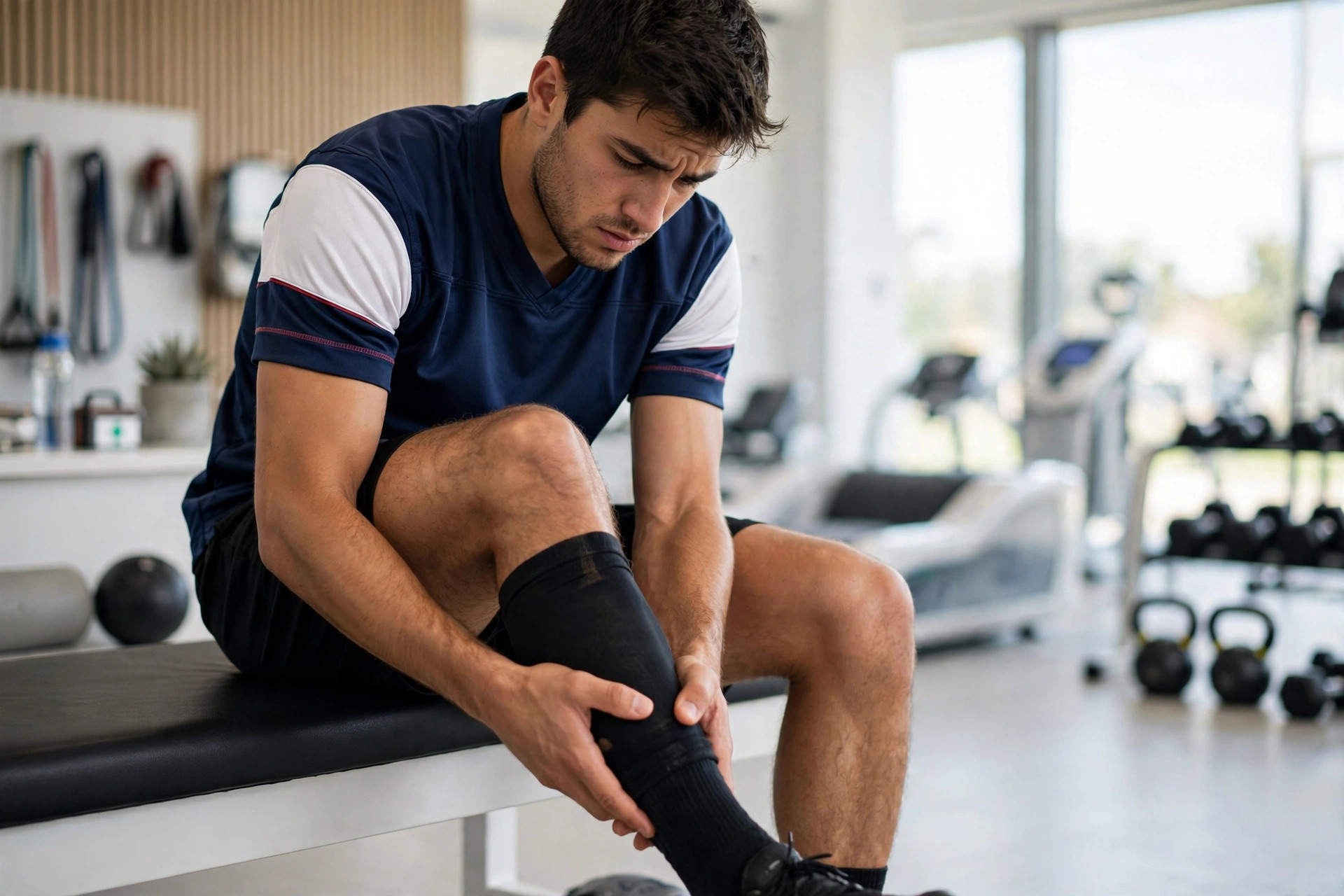

On Thursday, October 15, 2026, the Philadelphia Eagles ruled out star QB Jalen Hurts for Sunday’s game. Not for a twisted ankle. Not for a head injury. For a superficial blood clot in his calf.
Within hours, searches for “superficial blood clot” exploded past 200,000 in the United States alone. Most people typing it had never heard the phrase before that morning.
Here’s the thing: if you’ve got a sore, warm, tender spot on your leg right now and you’re wondering whether to worry, you’re asking exactly the right question. A superficial blood clot is usually far less risky than the deep kind — but “usually” is doing a lot of heavy lifting in that sentence. Let’s walk through what it really is, what it feels like, and when it’s time to stop Googling and call a doctor.
So What Is a Superficial Blood Clot, Exactly?
A superficial blood clot — what doctors call superficial thrombophlebitis — is a clot that forms in a vein sitting just under the surface of your skin. Think of it like a traffic jam on a quiet side street instead of the main highway.
The vein gets inflamed, and the area turns red, warm, and sore to the touch. You can often feel a firm lump right under the skin where the clot sits. It looks alarming, and honestly, it should get your attention. But unlike a deep clot, it sits in a vessel that’s close to the surface and far from the big highways that carry blood back to your heart and lungs.
That doesn’t make it harmless. It’s something you can handle — as long as you know what you’re dealing with.
How It Differs From a Deep Vein Clot (DVT)
This point matters more than anything else in this article, so let’s make it simple.
A superficial clot lives in a vein near the skin. You’ll see redness and feel soreness right at the spot. It announces itself.
A deep vein clot (DVT) hides. It forms in the deep veins of the leg, where you can’t see it. The leg swells, feels heavy or achy, and — here’s the risky part — a piece of a deep clot can break off, travel to the lungs, and cause a lung clot. That’s a medical emergency.
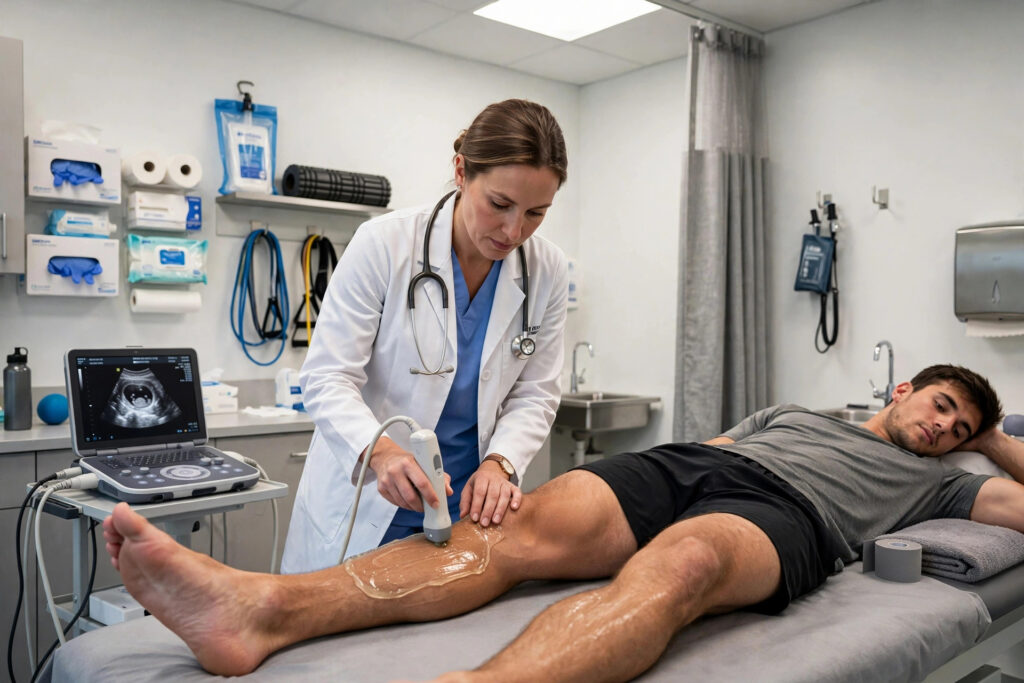
The only reliable way to tell them apart is a scan. That’s exactly what happened with Hurts: he sought care for calf soreness, the team ordered a scan out of caution, and the scan revealed the clot. Never try to diagnose this one yourself.
The Signs People Usually Brush Off
Here’s where most people go wrong. The signs of a superficial blood clot look an awful lot like things athletes deal with every week.
Watch for:
- A warm, red, tender streak along a vein on your leg or arm
- A firm lump you can feel just under the skin
- Swelling around the area, usually mild at first
- An aching pain that feels like a bruise that won’t quit
A marathon runner I know once spent three days foam-rolling what she assumed was a tight calf before she noticed the red streak. It wasn’t a muscle knot. It was a superficial clot, and she was lucky it stayed superficial. Pain that changes character — or comes with visible redness and warmth — deserves a proper look, not another ice pack.
Why Athletes Are More Vulnerable Than You’d Think
You’d assume peak physical condition protects you. It doesn’t, not against this. A few reasons athletes really sit in the risk zone:
Direct trauma. Hurts was cleated in the calf during a game. A hard knock, a ball strike, a bad tackle — any blunt trauma to a vein can cause clotting at the injury site.
Dehydration. When you’re low on fluids, your blood gets thicker and flows more sluggishly. Thicker blood clots more easily. That’s one more reason consistent hydration habits matter beyond just performance.
Long travel. Athletes fly constantly. Sitting still for hours in a cramped seat slows blood flow in the legs — the classic setup for clot formation.
Forced rest. An ankle in a boot, a knee in a brace, a week on the couch after surgery — anything that keeps a limb still for days raises the risk.
Skipped recovery. Pushing through pain signals instead of backing off is practically an athlete’s default setting. A smart post-workout recovery routine includes actually listening when your body flags something unusual.
None of this means training is dangerous. It means the line between “tough it out” and “get it checked” is thinner than most athletes admit — and learning to read the warning signs your body sends is a genuine performance skill.
What Treatment Actually Looks Like
The good news: most superficial blood clots resolve on their own within a few weeks. But “on their own” still involves a doctor’s guidance. Typical treatment includes:
- Scan to confirm the depth. This is step one, always. It rules out a deep clot and maps how far the superficial one extends.
- Pain pills. NSAIDs like Advil reduce both pain and the vein swelling.
- Warm packs. Applied to the area a few times a day, warmth eases discomfort and supports blood flow.
- Support. A tight stocking can reduce swelling and help blood move properly.
- Staying mobile. This surprises people. Gentle motion is usually encouraged — the Eagles’ medical staff specifically concluded that “activity and mobility were important” for Hurts. Sitting still is the enemy; controlled motion is the friend.
Blood thinners are rarely needed for a purely superficial clot, but doctors often schedule a follow-up scan to make sure the clot isn’t extending toward deeper veins. Hurts’ case shows why: his follow-up scan revealed movement in the clot, and that single finding is what benched him. Follow-up matters.
The Red Flags That Mean “Go to the ER”
A superficial clot can extend into the deep system, and a deep clot can travel to the lungs. Memorize these warning signs:
- Rapid swelling of the entire leg, not just one spot
- Major calf pain and swelling after a long flight or long period of sitting still
- Sudden shortness of breath or trouble breathing
- Chest pain, especially when breathing deeply
- Coughing up blood
Any of these after — or alongside — a suspected clot is an emergency. Don’t finish the workout. Don’t sleep on it. Athletes are wired to tough things out, but this is the one category where being tough can cost you.
Prevention Habits That Actually Work
You can’t eliminate the risk, but you can shrink it dramatically with habits that cost you almost nothing:
- Hydrate like it’s your job. Dry blood is slow blood. Keep fluids up before, during, and after training — and on travel days.
- Move on long trips. On flights or road trips, get up every one to two hours. Do ankle circles and calf pumps in your seat between walks.
- Don’t ignore impact injuries. Got cleated, kicked, or knocked hard on the calf or thigh? If the spot stays sore, warm, or changed color beyond a couple of days, get it scanned.
- Respect your recovery days. Training too much doesn’t just wreck performance — the ongoing swelling and fluid loss that come with it quietly raise clot risk.
- Use support wisely after travel. Support socks on long-haul flights are cheap insurance for blood flow.

FAQs
Is a superficial blood clot risky?
Usually, no — it’s rarely fatal on its own. But it needs medical evaluation because it can extend into deeper veins in some cases, which is when the real danger begins. A scan is the only way to be sure which kind you’re dealing with.
How long does a superficial blood clot take to heal?
Most resolve within two to six weeks with basic care — NSAIDs, warm packs, compression, and motion. Your doctor may order a follow-up scan to confirm the clot is shrinking and not extending.
Can I exercise with a superficial blood clot?
Gentle motion is typically encouraged, but intense training is off the table until a doctor clears you. The clot needs to be confirmed as purely superficial first, and follow-up imaging may be required. When in doubt, rest and get checked.
The Bottom Line
A superficial blood clot sounds minor — the word “superficial” does it no favors. But as this week’s headlines proved, it can sideline even the toughest athletes in professional sports.
The takeaway is simple: respect calf and leg pain that comes with warmth, redness, or a firm lump. Get the scan. Follow up. And build the small prevention habits — hydration, motion on travel days, and honest recovery — into your routine before you ever need them.
This article is for informational purposes only and is not medical advice. If you suspect a blood clot or experience any of the emergency warning signs described above, seek prompt medical care or call your local emergency number.