
I ate a bowl of instant noodles for lunch yesterday. Four minutes to make, four minutes to eat — and, according to research published this week on ultra processed foods, it may have quietly left a mark on my brain.
We’ve all heard the lectures about ultra processed foods. Bad for your waistline, bad for your heart, bad for your blood sugar. You know the drill. But here’s the part nobody warned us about: it might be your brain paying the steepest price — and you’d never feel a thing.
A large Canadian study published October 15, 2026, scanned the brains of nearly 9,000 healthy middle-aged adults. The people eating the most ultra processed foods were 40% more likely to show tiny areas of brain damage — silent damage with no symptoms, but an early warning sign for stroke and memory problems years down the road. Among women, those with the highest intake were nearly twice as likely to show these changes.
Here’s the kicker: these weren’t sick people. They were healthy Canadians aged 35 to 69 with no history of heart disease. Lead researcher Russell de Souza of McMaster University said this is the kind of damage doctors usually expect to find in much older patients — not in active, middle-aged adults going about their lives.
So what counts as ultra processed, why does it reach your brain, and what can you actually do about it? Let’s get into it.
What the McMaster Study Actually Found
The research team, based at McMaster University’s Population Health Research Institute, enrolled nearly 9,000 Canadians between 35 and 69 — all with no heart problems and no reported health concerns. Everyone completed detailed dietary questionnaires and had an MRI brain scan. Crucially, the neurologists reading the scans had no idea what anyone ate, so there was no bias in the results. You can read the full paper as the McMaster study in JAMA Network Open.
The headline finding: participants whose diets were heaviest in ultra processed foods — about 45% of their daily servings — were 40% more likely to show tiny spots of damage to the brain’s blood vessels than those who ate the least (about 16%). These spots, sometimes called silent strokes, produce no obvious symptoms. You don’t feel them. But they’re considered early warning signs that can surface years before a clinical stroke or memory problems begin.
For context, the average participant got about a quarter of their daily food from ultra processed sources. For the heaviest consumers, it was nearly half.
And the result that surprised even the researchers: women in the highest-intake group were nearly twice as likely to show the brain changes as women in the lowest group. De Souza admitted he hadn’t expected this — finding damage patterns usually seen at much older ages in healthy, middle-aged people.
Still, one honest caveat: this is an observational study. It shows a strong association, not iron-clad proof that the noodles caused the damage. But the size of the study, the MRI evidence, and the blinded scans make it hard to wave away — and it lines up with a growing pile of research linking ultra processed diets to inflammation, weight gain, cardiovascular disease, and possibly some cancers.
So the brain, it turns out, is not exempt.
What Actually Counts as Ultra Processed Foods
First, this is where most people get confused, so let’s clear it up with the actual list from the research.
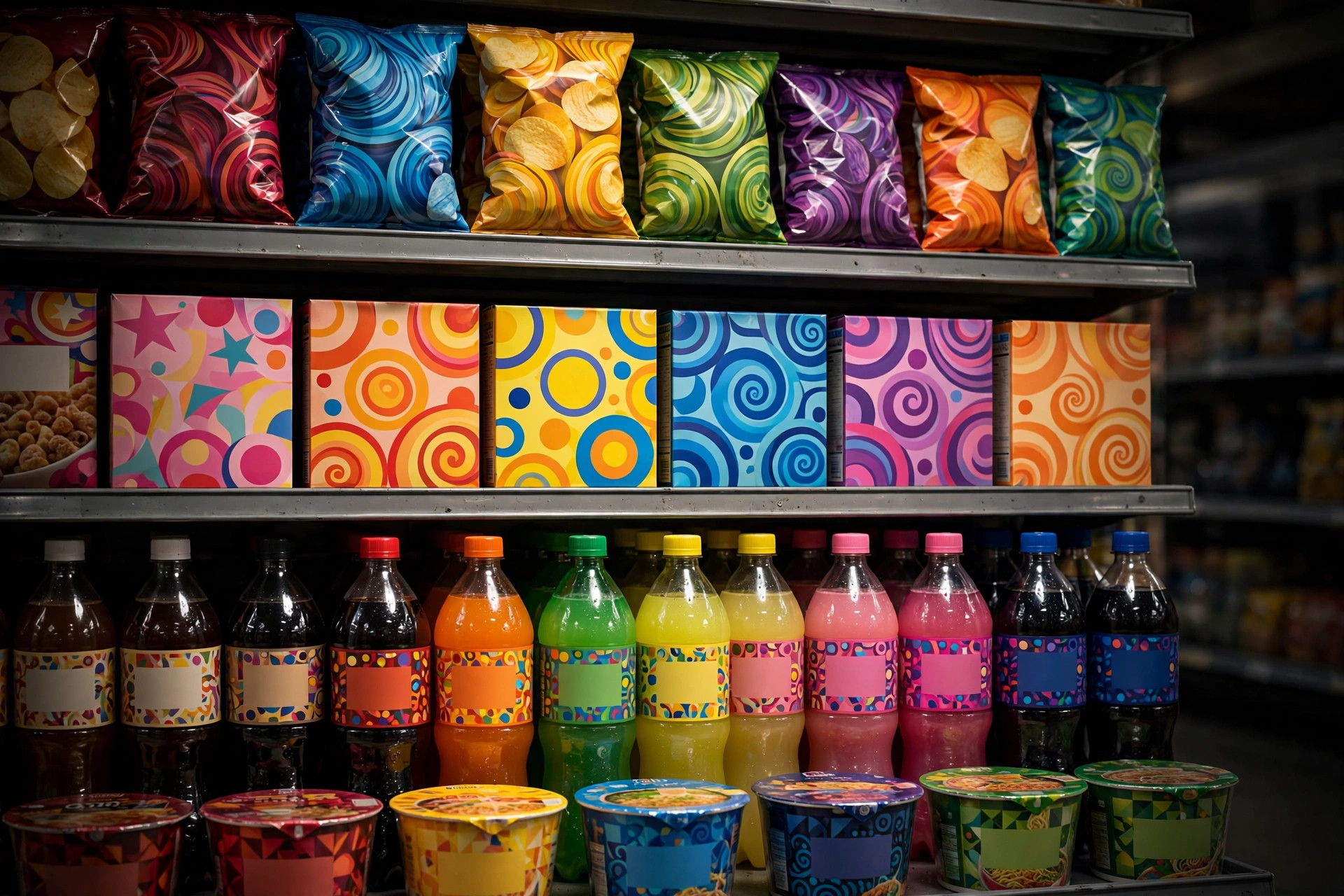
Ultra processed foods aren’t just “junk food.” They’re factory-made products with ingredients you’d never find in a home kitchen: emulsifiers, flavor enhancers, hydrogenated oils, high-fructose corn syrup, artificial colors, and preservatives. If the ingredient list reads like a chemistry exam, that’s your clue.
The foods the McMaster team flagged include:
- Packaged snack foods and chips
- Sugary breakfast cereals
- Soft drinks and sweetened beverages
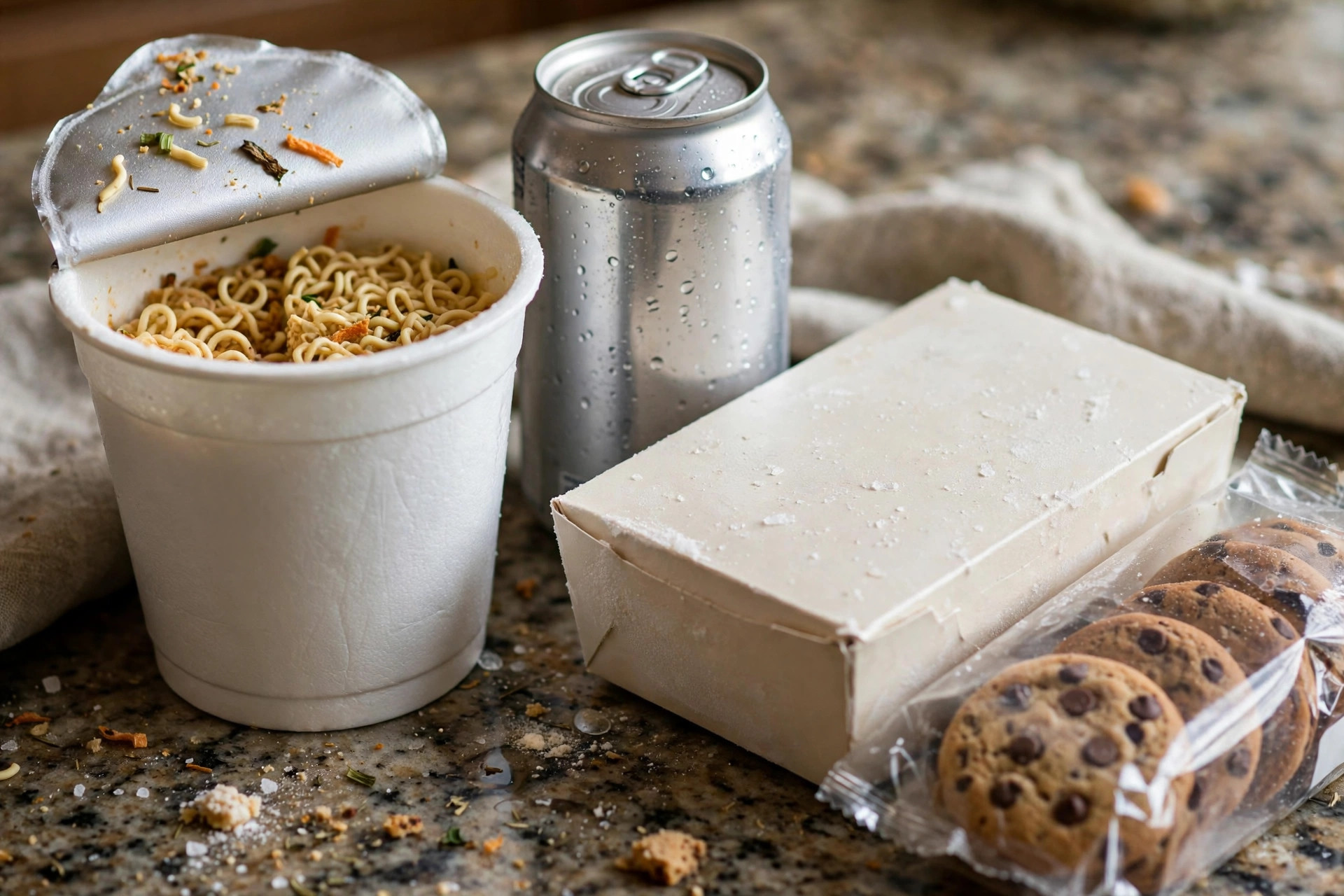
- Instant noodles
- Ready-to-eat frozen meals
- Processed sweet yogurts
- Packaged cookies, cakes, and pastries
For example, here’s the practical test I use at the grocery store: if your grandmother wouldn’t recognize it as food, or the label lists 20 ingredients and half of them need a pronunciation guide, it’s probably ultra processed.
However, one important distinction: not everything processed is a problem. Frozen vegetables, canned beans, plain yogurt, and whole-grain bread are processed — but they aren’t ultra processed. The enemy isn’t the factory; it’s the recipe.
This matters because searches for a “list of ultra processed foods to avoid” are surging — up 90% in the US this week alone. People are waking up to this, and they want specifics, not lectures.
Why Athletes Should Pay Extra Attention
Now, you might be thinking: I’m active, I train, I burn it off — does this really apply to me?
Honestly? It might apply to you more.
After all, your brain is your highest-performance organ. Reaction time, split-second decisions, focus under fatigue, learning new skills — all of it runs through the same blood vessels this study examined. Silent damage doesn’t care about your mile time.
Then there’s the displacement problem. Every ultra processed meal is a meal that isn’t delivering the vitamins and minerals your body needs to recover and adapt. If your goal is to lose fat and build muscle at the same time, whole foods give you the protein, vitamins, and minerals to do it without the inflammatory baggage. You can’t out-train a diet that’s working against your blood vessels.
And here’s a trap I see constantly in locker rooms: the “healthy-looking” ultra processed product. Some protein bars, flavored yogurts, and sports drinks are every bit as ultra processed as a bag of chips. A shiny label with the word “protein” doesn’t change the ingredient list. If you’re serious about what you eat before you train, read the label, not the marketing.
Swapping out sugary drinks is one of the highest-impact changes you can make. Pair that with real hydration habits, and you’re already ahead of most people.
5 Swaps That Take Almost No Effort
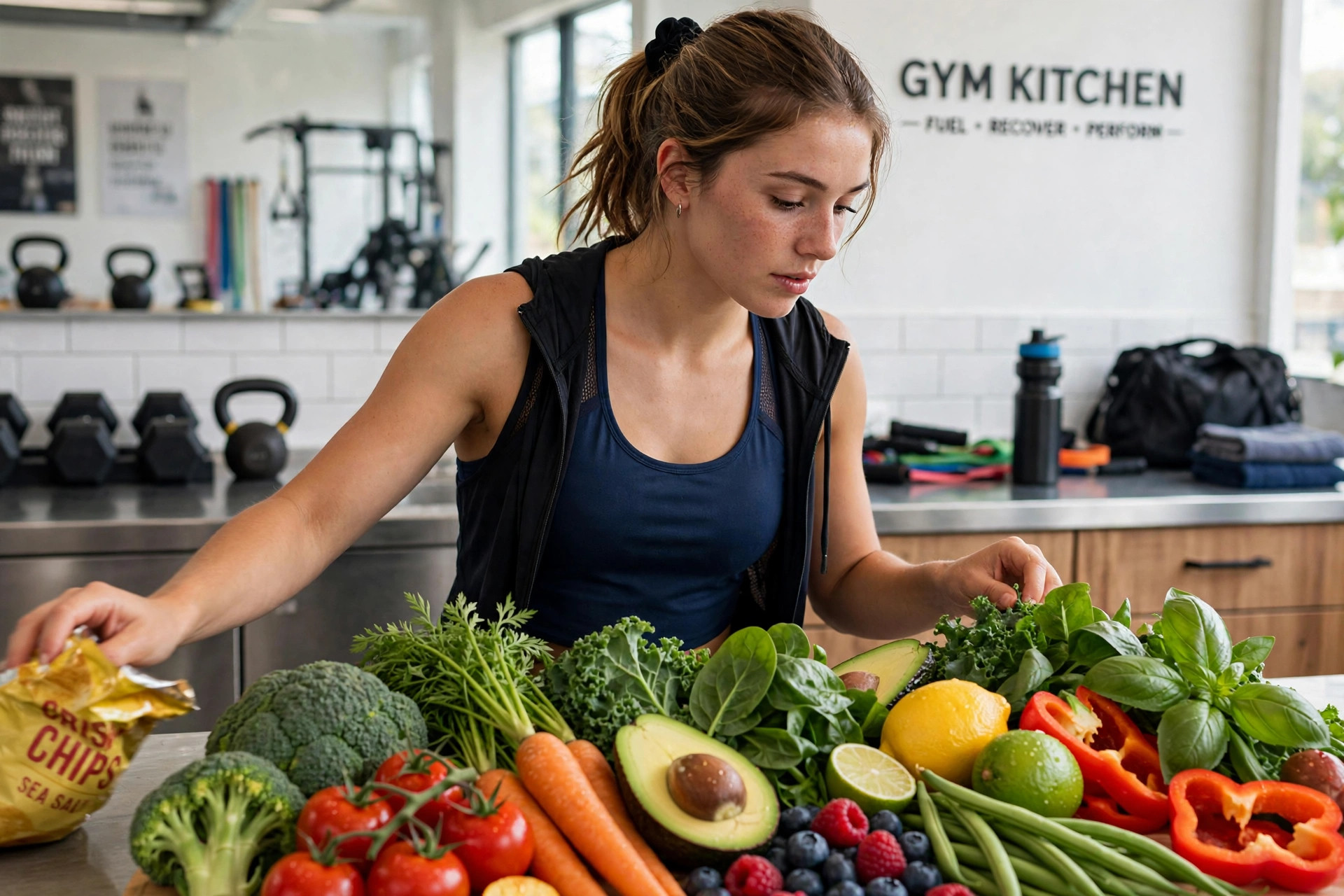
Nobody’s asking you to become a different person overnight. The goal isn’t perfection — it’s shrinking your ultra processed share from 45% toward 16%. These five swaps do most of the work:
- Instant noodles → quick whole-grain pasta. Ten minutes, olive oil, garlic, and a handful of frozen vegetables. Tastes better and keeps you full twice as long.
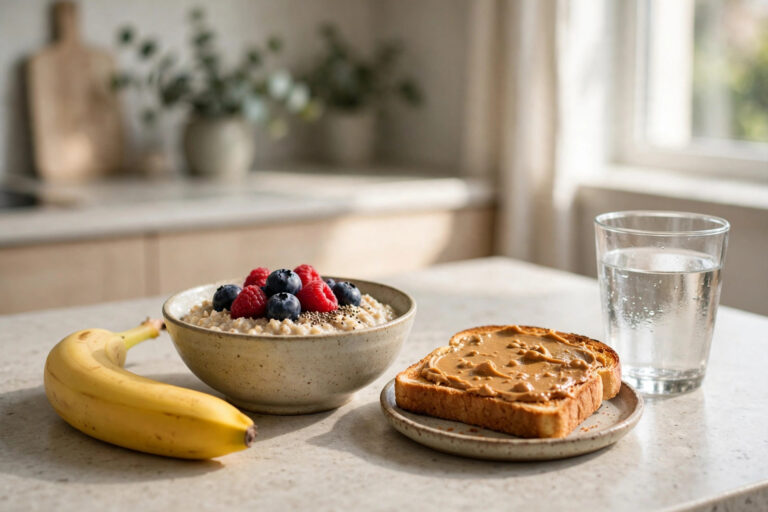
- Sugary cereal → oats with fruit and nuts. Same two minutes in the morning. The fiber difference is enormous, and your blood sugar will thank you by 10 AM.
- Soft drinks → sparkling water with lemon. If you need the fizz, keep the fizz. Drop the sugar and the phosphoric acid.
- Packaged snacks → nuts, fruit, or cheese. Keep a stash in your gym bag. Hunger drives most vending-machine decisions, and being prepared kills the temptation.
- Frozen ready meals → the Sunday batch cook. One hour on the weekend: a tray of chicken, a pot of rice, roasted frozen vegetables. Five weekday dinners, zero mystery ingredients.
So the 80/20 rule applies beautifully here. You don’t need to hit zero ultra processed foods — the people in the study’s lowest group still ate some. Just start moving the number in the right direction, one swap at a time.
Frequently Asked Questions
Are ultra processed foods really worse than regular junk food?
Yes — and that’s the uncomfortable part. A homemade burger and fries isn’t health food, but it doesn’t contain emulsifiers and preservatives engineered to make you eat more. Ultra processed products are designed for hyper-palatability: they override your fullness signals, so you eat faster and consume more. The processing itself, not just the calories, appears to be part of the problem.
How much ultra processed food is too much?
There’s no magic safe number, but the study gives a useful frame. The lowest-intake group averaged about 16% of daily servings from ultra processed foods, while the highest averaged 45% — and the brain-damage signal climbed with intake. If ultra processed foods are currently half your diet, halving that share is a massive win.
Can cutting back actually reverse the damage?
Honest answer: we don’t know yet. This was an observational study — it can show the association, but it can’t prove that changing your diet reverses existing brain changes. That said, blood-vessel health responds to diet changes fast: blood pressure, inflammation markers, and blood sugar control can all improve within weeks. Your brain’s blood vessels are part of that same system. It’s never too late to give them better raw materials.
The Bottom Line
So here’s the takeaway that stuck with me: the people in this study were healthy. No heart disease, no symptoms, no reason to suspect anything was wrong — and the scans told a different story. Your brain is quietly keeping score of what you eat, years before you’d ever notice.
That’s scary. Still, it’s also empowering, because unlike your genetics or your age, your grocery cart is something you control completely. You don’t need a perfect diet, and there’s no reason to fear food. Just start shrinking that ultra processed share — one swap, one meal, one better choice at a time.
Your future brain is counting on the choices you make this week. Make one count today.
This article is for informational purposes only and is not medical advice. Talk to your doctor or a registered dietitian before making significant changes to your diet, especially if you have an existing health condition.