
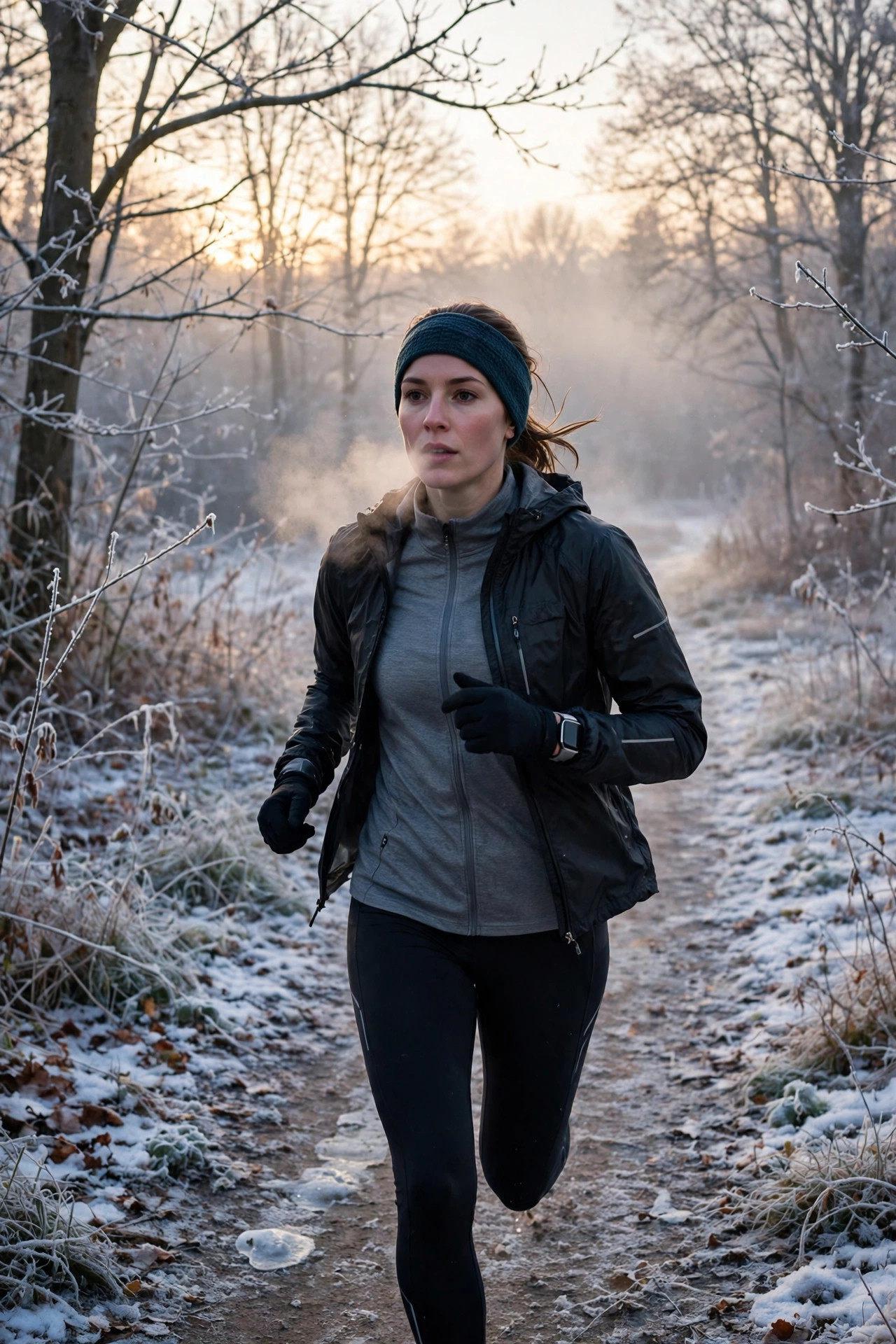

The first genuinely cold run of the year always humbles me. My legs feel like they’ve been borrowed from someone else, my breathing sounds ragged by the second kilometre, and a pace that felt easy in October suddenly feels like hard work. For years I assumed I was just out of shape every November. Turns out, winter really does change the rules — and once you understand them, cold weather training stops feeling like punishment and starts feeling like an advantage.
What’s actually happening to your body in the cold
Cold isn’t just uncomfortable. It changes how your body works, starting with your blood vessels. When temperatures drop, the vessels near your skin constrict to protect your core temperature. That means less warm, oxygen-rich blood reaching your working muscles, especially in your hands, feet, and calves. Your muscles also get stiffer and less elastic in the cold, which is why that first kilometre always feels clunky.
Your heart has to work harder, too. It pumps against constricted vessels while also trying to keep you warm, so the same effort can push your heart rate a few beats higher than it would on a mild day. That doesn’t mean you’re less fit. It means your body is doing two jobs at once: exercising and heating itself.
Fuel use shifts as well. Research from Canadian exercise physiologist Dominique Gagnon, going back to 2013, found that cold-weather exercise relies on a different fuel mix than the same workout in warm conditions — burning proportionally more fat and less carbohydrate. More recently, Gagnon presented preliminary data at the Canadian Society for Exercise Physiology conference suggesting that training in cool air (around 0°C) produced greater increases in markers of mitochondrial content than the same training in warm air. That work is still preliminary and not yet peer-reviewed, so don’t rewrite your whole programme around it — but it hints that winter training may carry a genuine adaptation bonus.
One more quiet change: your thirst reflex goes dull in the cold. You sweat less obviously, you don’t feel parched, and it’s easy to finish a winter session dehydrated without noticing. Cold air is also dry air, and every breath you exhale carries moisture out with it.
The warm-up is non-negotiable in winter
In summer, you can get away with a lazy warm-up. In winter, you really can’t. Cold muscles are less flexible, slower to fire, and more vulnerable to strains — particularly hamstrings, calves, and groins. The fix is simple, but it has to happen indoors, before you step outside.
Here’s a 12-minute indoor warm-up that actually works for a winter run or gym session:
Start with three minutes of easy movement — marching in place, gentle jogging on the spot, or a slow spin on a bike. Then spend five minutes on dynamic mobility: leg swings front-to-back and side-to-side, walking lunges with a twist, hip circles, and arm circles. Finish with four minutes of activation: bodyweight squats, glute bridges, and calf raises, moving briskly enough that you feel warm but not tired. You should step out the door already lightly sweating under your layers. If you’re still cold when you start, your warm-up was too short.

Dress like an onion, not a snowman
The classic winter mistake is one big heavy jacket. You overheat within ten minutes, sweat soaks through, and then that sweat chills you for the rest of the session. Layers are the answer, and each one has a job.
Your base layer should wick moisture away from your skin. Choose thin synthetic fabric, not cotton, which holds sweat and turns cold against your body. The middle layer insulates: fleece or a light insulated top that traps warm air. Your outer layer blocks wind and wet weather. On your extremities, the rules are simple. Wear a hat or headband for your ears and gloves or mittens for your hands. Choose shoes with grip for icy patches.
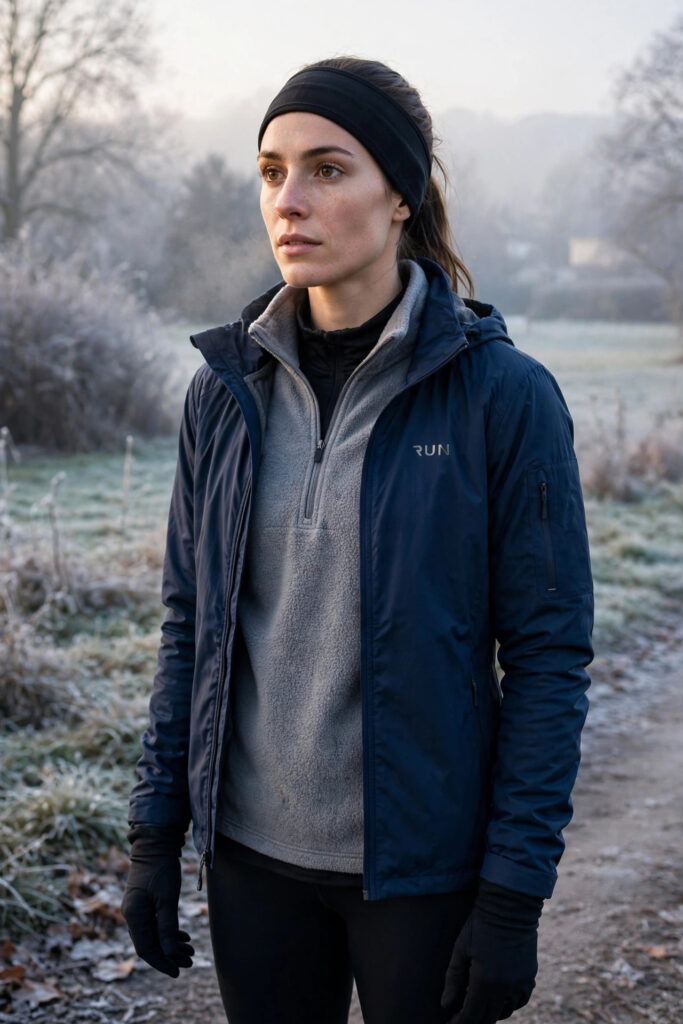
A useful rule of thumb: dress as if it’s about 10 degrees warmer than it actually is once you’re moving. You should feel slightly cool for the first five minutes. If you’re perfectly comfortable standing still at the start, you’re overdressed and you’ll be swimming in sweat by kilometre three.
Wind chill matters more than the thermometer number. A calm −5°C day can feel pleasant once you’re moving, but the same temperature with a biting wind strips heat fast. Check wind chill, not just temperature, before deciding what to wear — or whether to train outside at all.
Myth vs. fact: what winter training folklore gets wrong
Myth: “You burn far more calories in the cold, so winter training is a fat-loss shortcut.”
Fact: you do burn somewhat more energy keeping warm, and Gagnon’s work shows a shift toward fat as fuel, but the difference is modest for a typical session — nowhere near enough to justify eating back a feast or skipping the rest of your nutrition plan. Treat any extra burn as a small bonus, not a strategy.
Myth: “You don’t need to drink in winter because you barely sweat.”
Fact: you still lose fluid through sweat and through breathing dry air, and your thirst signal is muted precisely when you need it most. Drink on a schedule, not on thirst — a few sips every 15 to 20 minutes on longer sessions. Our guide to hydration for athletes covers how to judge your own sweat losses.
Myth: “Cold air will damage a healthy athlete’s lungs.”
Fact: for most healthy athletes, cold-air breathing is uncomfortable but not damaging — and a study published in BMC Research Notes in October 2026 found that heat-and-moisture-exchange breathing masks made little measurable difference to airway inflammation markers in healthy endurance athletes exercising at −15°C. If you have asthma or exercise-induced bronchoconstriction, that’s a different story: cold air is a genuine trigger, so talk to your clinician about a plan and consider a scarf or mask as a comfort measure.
Myth: “A longer static stretch before you go out will protect you.”
Fact: dynamic, moving warm-ups prepare cold muscles far better than holding stretches. Stretch after, when you’re warm.
A winter session that actually works
Theory is nice; here’s what it looks like in practice. Take a 40-minute winter run on a −2°C morning with light wind. Warm up indoors for 12 minutes as above. Dress in a wicking base layer, a fleece, and a windproof jacket, plus gloves and a headband. Head out and run the first ten minutes deliberately easy — about a minute per kilometre slower than your normal easy pace — because cold muscles need time to catch up even after a warm-up.
For the middle 20 minutes, run your planned effort, sipping water every 15 minutes whether you feel thirsty or not. In the final ten minutes, ease off again and finish near home, not a 15-minute walk away in wet clothes. Get inside promptly, change out of anything damp, and stretch while you’re still warm. That’s the whole formula: warm up indoors, start easy, layer properly, drink on schedule, and don’t linger in wet kit afterwards.
It also helps to rethink recovery in winter. Your post-workout routine matters even more when your body is cold and stiff — our post-workout recovery routine for athletes pairs well with a winter programme, and if you’re curious about cold exposure after training, read our comparison of ice baths vs cold showers before adding either to your week.
When to move it indoors
Winter training builds toughness, but knowing when to stay inside builds wisdom. Move your session indoors when wind chill drops below about −18°C, when ice makes footing genuinely unsafe, or during active storms and heavy freezing rain. Those aren’t soft choices — they’re the conditions where frostbite risk climbs sharply and a simple twisted ankle becomes a serious problem because you’re far from warmth.
Learn the warning signs, too. Shivering, exhaustion, confusion, fumbling hands, and slurred speech can signal hypothermia — a medical emergency, not something to push through. Redness or pain in exposed skin can be the first sign of frostbite; numbness, white or waxy-looking skin, and loss of feeling are later signs. The CDC’s frostbite prevention guidance explains exactly what to watch for and what to do. If you or a training partner shows these signs, get inside, get warm and dry, and get medical help promptly.
One last practical rule: never train alone in extreme cold if you can avoid it. A minor injury in mild weather is an inconvenience. The same injury when you’re cold, wet, and miles from shelter can become dangerous fast.
Can I run in freezing temperatures?
Yes, if you’re healthy, dressed in layers, and paying attention to wind chill and footing. Most recreational athletes handle temperatures down to around −10°C comfortably with the right kit. Below that, shorten the session, stay close to shelter, and be honest about the conditions.
Do I need to eat more in winter?
Slightly, on long outdoor sessions — your body spends extra energy on heat production, and cold-weather exercise shifts fuel use a little. But for a typical 30- to 60-minute workout, your normal meals are plenty. Don’t use winter as a licence to overeat; the extra burn is real but small.
Why do I cough after a cold run?
Cold, dry air irritates the airways, and the harder you breathe, the more air you move. A mild cough that settles within 20 to 30 minutes is common and usually harmless. If coughing is severe, comes with wheeze or chest tightness, or lingers for hours, get it checked — it could be exercise-induced bronchoconstriction, which is manageable once diagnosed.
The takeaway
Cold weather training feels harder because it is harder — your body is working against constricted blood vessels, stiffer muscles, and heat loss while it trains. But that’s also why it’s worth doing well. Warm up indoors, layer smart, drink on schedule, start easy, and know your cut-off conditions. Do those five things and winter stops being the season your fitness goes to hibernate — it becomes the season you quietly get stronger while everyone else waits for spring.
This article is for general information only and isn’t medical advice. If you have asthma, a heart condition, poor circulation, or any condition affected by cold, talk to a qualified healthcare professional before training in cold weather, and seek urgent care for signs of hypothermia or frostbite.