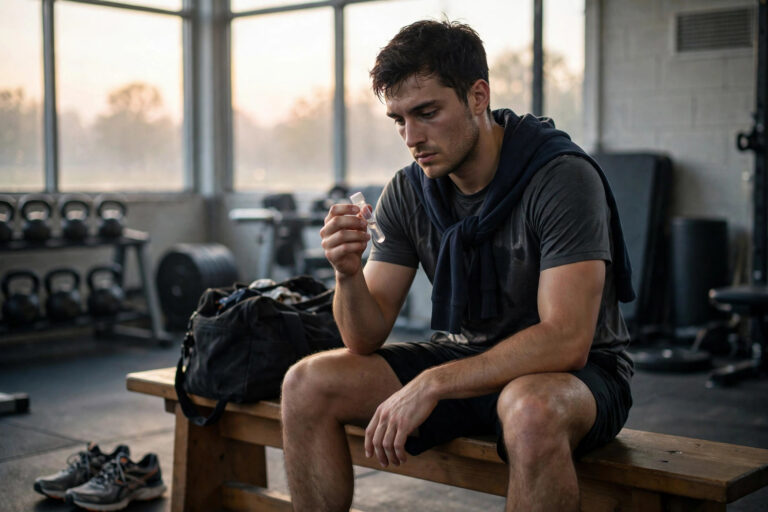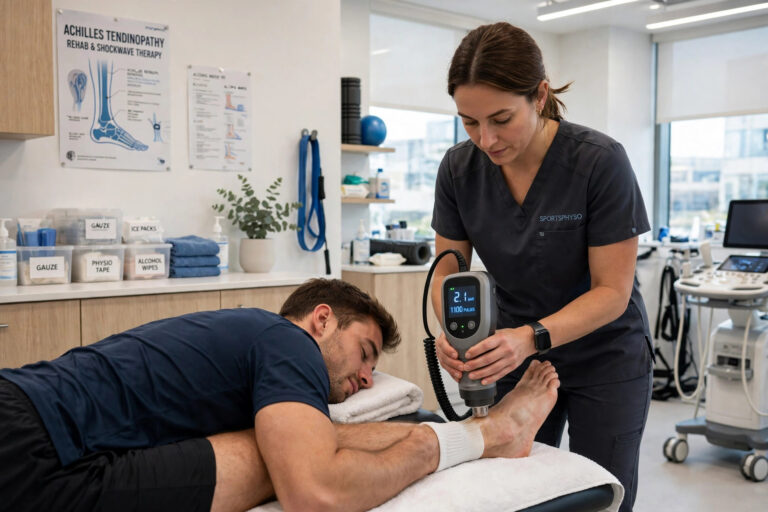
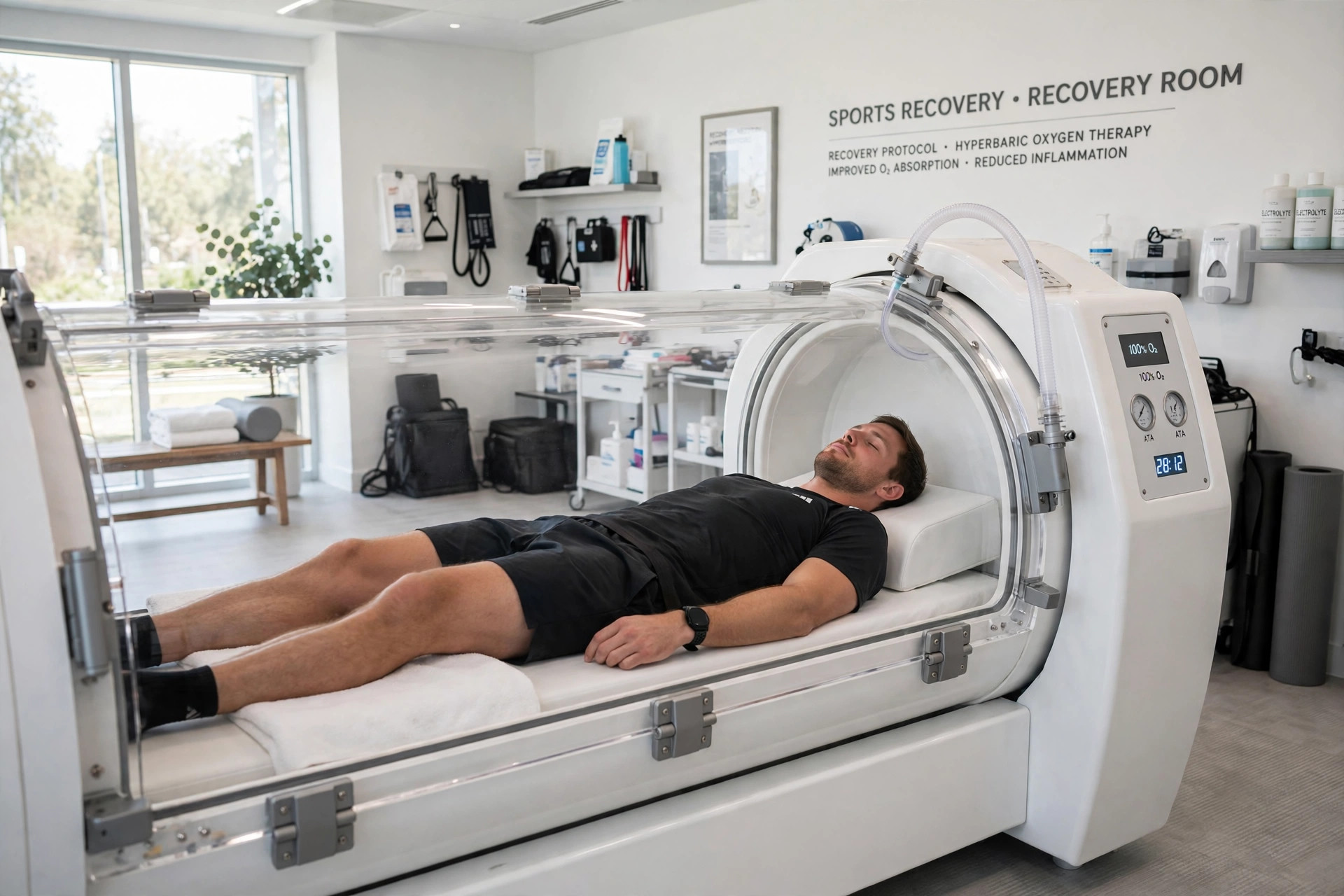

You know that feeling after a brutal leg day, when the stairs home look like a mountain. Your quads are filing a formal complaint? Now imagine someone telling you the fix is to lie in a pressurised tube. Breathe pure oxygen for an hour, and walk out feeling brand new. That is the pitch behind hyperbaric oxygen therapy, and right now athletes everywhere are buying it — literally. Searches for HBOT have exploded to around 90,500 a month, roughly 99 times what they were a year ago.
I get the appeal. Recovery is the part of training nobody enjoys. A chamber that does the work while you nap sounds a lot nicer than another ice bath. But before you hand over your money, you deserve the honest answer. What does the science actually say, and what is just good marketing?
What Hyperbaric Oxygen Therapy Actually Is
Hyperbaric oxygen therapy, or HBOT, means breathing 100% oxygen inside a chamber. That chamber is pressurised to two or three times normal air pressure. At sea level, you live at 1 atmosphere absolute, or 1 ATA. A clinical HBOT session usually runs at 2.0 to 2.5 ATA. Under that pressure, far more oxygen dissolves directly into your blood plasma. That is how it reaches tissues that are swollen, injured, or starved of blood flow.
Doctors have used this for decades, and for good reason. The US Food and Drug Administration has cleared hyperbaric chambers for 13 specific conditions. They include decompression sickness, carbon monoxide poisoning, certain non-healing diabetic wounds, severe burns, and crush injuries. Every single one is a genuine medical emergency or a wound that will not heal on its own.
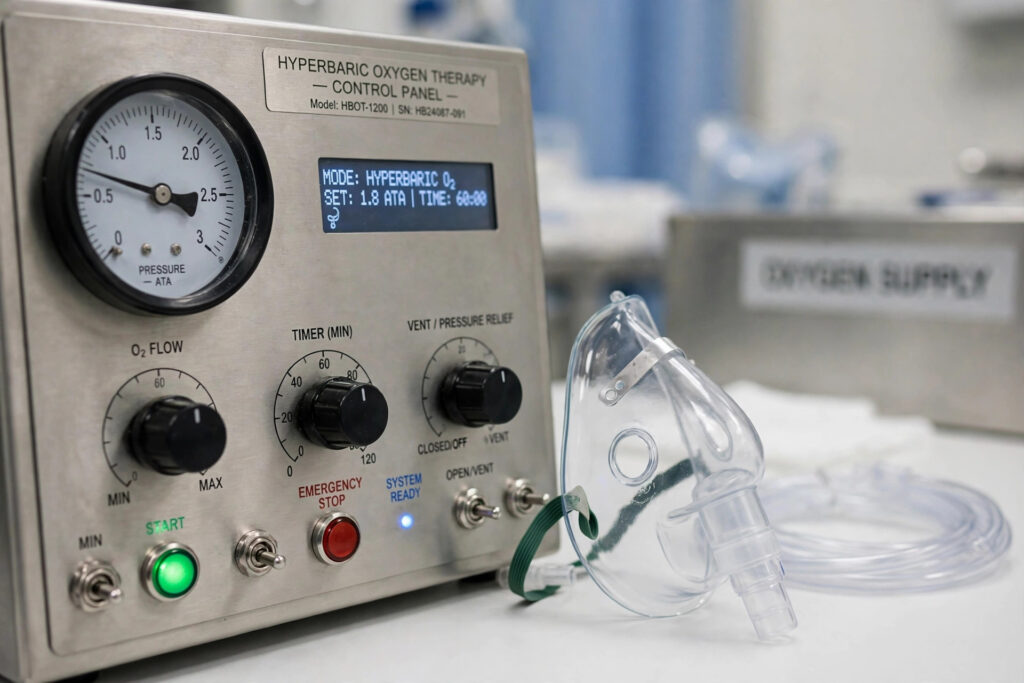
Here is the part the wellness clinics rarely put in big letters: athletic recovery is not on that list. Not for soreness, not for performance, not for “optimisation.” The FDA has publicly warned consumers about centres promoting chambers for uses it has not cleared. In August 2025, it wrote to healthcare providers about serious injuries and even deaths linked to HBOT devices, including fires. That does not make the therapy a scam. It does mean the athlete version of HBOT is an off-label experiment, not an approved treatment.
Why Athletes Are Climbing Into the Chamber
Walk into any high-end recovery studio and the story sounds convincing. More oxygen means faster healing. Faster healing means less soreness, quicker return to training, and maybe even a performance edge. Professional teams have chambers. Fighters post photos from inside them. Your favourite influencer swears her legs have never felt fresher.
There is a real mechanism underneath the hype, too. Oxygen drives the repair process — collagen formation, new blood vessel growth, and fighting infection all need it. When tissue is damaged, blood flow drops, oxygen drops, and healing slows. Flooding the area with oxygen should, in theory, speed things back up.
The question is whether that theory survives contact with actual athletes in actual trials. And that is where the story gets complicated.
What the Science Really Says
The best summary we have right now is a 2025 meta-analysis in Archives of Physical Medicine and Rehabilitation. It pooled 10 randomised trials with 299 athletes. Its finding was a split decision. On one side, HBOT significantly sped up the recovery of muscle-damage markers in the blood — things like creatine kinase and myoglobin. The statistical signal was strong (p less than 0.0001). On the other side, it did nothing measurable for muscle soreness, and it did not improve strength or endurance performance at all.
Read that again, because it matters. Your blood markers can look better while your legs still feel exactly as wrecked as before. The numbers in the lab and the feeling in your body are not the same thing.
The older evidence is even less flattering. A 2005 Cochrane review pooled nine trials with 219 people. It found that soreness was actually slightly worse 48 hours after HBOT. That was about 0.88 points higher on a 10-point pain scale. And a 2024 double-blind trial in 20 elite youth footballers tested a single one-hour session at 2.2 ATA after a match. It used a placebo chamber for comparison. It found no difference in creatine kinase, lactate dehydrogenase, myoglobin, jump height, or sprint times. The only thing that moved was a wellness questionnaire, one hour later.
Not everything is negative, though. A 2019 randomised trial gave 41 athletes with real exercise-related muscle injuries 10 HBOT sessions. It found lower muscle-damage markers and less pain, with the benefits still there two weeks later. A 2022 review of 27 studies in the Journal of Strength and Conditioning Research called the overall picture “contradictory.” Some studies were positive, and some were flat. And a 2025 narrative review of high-performance athletes looked at HBOT in musculoskeletal injury and mild brain injury. It concluded there is limited evidence for it.
So the honest summary is this: HBOT looks promising for a genuine muscle injury, the kind with real tissue damage. For everyday post-training soreness, the evidence is thin to non-existent. And for making you faster or stronger, there is no reliable evidence at all.
The Hard Chamber vs Soft Chamber Problem
Here is a detail that changes everything, and almost nobody mentions it. Nearly every positive study used a hard clinical chamber at 2.0 to 2.5 ATA with 100% oxygen. The soft, inflatable chambers you find in recovery studios and home setups typically reach about 1.3 ATA. That is barely above normal pressure, and there is no trial of a 1.3 ATA chamber for athletic recovery at all.
That means the study results people quote to sell you a session came from a different machine. It was far more powerful than the one you are actually lying in. It is like citing Formula 1 lap times to sell a family hatchback. Before you book, ask the clinic one question: what pressure does your chamber reach? If they cannot answer, or the answer is 1.3 ATA, the evidence you have just read does not apply to what they are selling.
Myth vs Fact: Hyperbaric Oxygen Therapy for Athletes
Myth: HBOT is FDA-approved for athletic recovery.
Fact: It is not. The FDA has cleared chambers for 13 medical conditions, and sports recovery is not one of them. Clinics can legally offer it off-label, but “FDA-cleared device” and “FDA-approved for recovery” are very different claims.
Myth: If your blood markers improve, you must be recovering faster.
Fact: The 2025 meta-analysis found exactly this split — muscle-damage markers recovered faster, but soreness, strength, and endurance did not budge. Markers are a proxy, not the finish line.
Myth: One session after a big game will fix your legs.
Fact: The only trial that tested exactly that — one session after a football match — found no meaningful difference in any objective measure. The trials that did show benefits used multiple sessions, typically around 10.
Myth: More oxygen is always better.
Fact: Oxygen at high pressure is a drug with a dose, and too much of it is toxic. Seizures from oxygen toxicity are rare but real, which is why proper sessions are medically supervised.
What It Costs — A Real-Numbers Worked Example
Let us do the maths, because this is where the hype meets your wallet. A survey of 22 wellness venues in October 2026 found a median price of $150 per session. The range was $50 to $300. Remember, the trials that showed any benefit used around 10 sessions. At the median price, that is $1,500 for a course.
Now compare that with what $1,500 buys elsewhere in recovery. A solid post-workout recovery routine costs nothing. An ice bath setup runs under $100. A year of genuinely good sleep — the single most powerful recovery tool we have — costs nothing but discipline. None of those have a marketing budget, which is exactly why nobody is selling them to you in a shiny tube.
For a professional athlete with a real muscle injury, a team doctor, and someone else paying, the calculation is different. For the rest of us, spending $1,500 on a therapy is a hard sell. Its main proven effect is improving a blood marker you cannot feel. That is especially true when the free stuff works better.
The Risks Nobody Mentions on Instagram
HBOT is generally safe when done properly, but “generally” is doing a lot of work in that sentence. The most common problem is middle-ear barotrauma. It is the same ear-squeeze feeling you get on a plane, except worse, because the pressure change is bigger. Some people cannot equalise at all and have to stop the session.
Other risks include sinus squeeze, temporary short-sightedness that usually clears within weeks, claustrophobia inside a sealed tube, and, rarely, oxygen toxicity seizures. The scariest risk is fire. A chamber full of pure oxygen is a fire hazard. That is why you cannot take anything flammable inside, and why the FDA’s 2025 letter specifically mentioned fire-related deaths.
None of this means you should be afraid of HBOT. It means you should treat it like a medical procedure, not a spa treatment. A reputable facility will screen you first. It will ask about lung conditions, ear problems, and medications, and have trained staff in the room. If a studio waves you in with no questions at all, walk out.
How to Try It Sensibly (If You Still Want To)
If you have read all of this and still want to try it, fair enough. Just do it with your eyes open. First, talk to your doctor. Do this especially if you have asthma, COPD, a history of ear surgery, or a lung condition like a pneumothorax. Second, pick a facility that uses a hard chamber at 2.0 ATA or above, with medical supervision. That is the only version the research actually studied. Third, treat it as an add-on to the basics, not a replacement. Sleep, food, and a sensible training plan still do the heavy lifting. And finally, judge it by how you perform and feel over a few weeks. Do not judge it by how relaxed you feel for an hour after one session. That floaty post-session glow is real, and it is also not evidence.
Frequently Asked Questions
Is hyperbaric oxygen therapy safe for athletes?
For healthy athletes, HBOT in a proper facility is generally low-risk, but it is not risk-free. Ear barotrauma is the most common issue, and oxygen toxicity and fire are rare but serious risks. It should be done under medical supervision at an accredited facility. Anyone with lung disease, ear problems, or a history of pneumothorax needs a doctor’s clearance first.
How many HBOT sessions do athletes need?
The trials that showed benefits typically used around 10 sessions, not one. A single session after a match showed no objective benefit in a 2024 randomised trial. Any clinic selling you a single “recovery session” as a proven fix is selling you something the research does not support.
Is hyperbaric oxygen therapy banned by WADA?
No. HBOT is not on the World Anti-Doping Agency prohibited list. So athletes will not fail a drug test for using it. But “not banned” and “proven to work” are two very different things — plenty of legal things do nothing for performance.
The Bottom Line
Hyperbaric oxygen therapy is a genuine medical treatment. It has been borrowed by the sports world before the evidence caught up. The science says it can help blood markers of muscle damage recover faster, and it may help a real muscle injury heal. But it does not reliably reduce soreness, and it does not make you stronger or faster. The soft chambers most people actually use have never been tested for recovery at all.
My honest take? If you have $1,500 and a real injury, talk to a sports doctor. Ask whether a proper clinical course makes sense. If you just want to recover better from training, spend it on the boring stuff instead: sleep, food, and a post-workout recovery routine you actually stick to. The chamber looks like the future. The evidence says the future is still waiting for proof.
This article is for general information only and isn’t medical advice. Hyperbaric oxygen therapy is a medical procedure with real risks. Talk to your doctor before booking a session, especially if you have a lung or ear condition.