
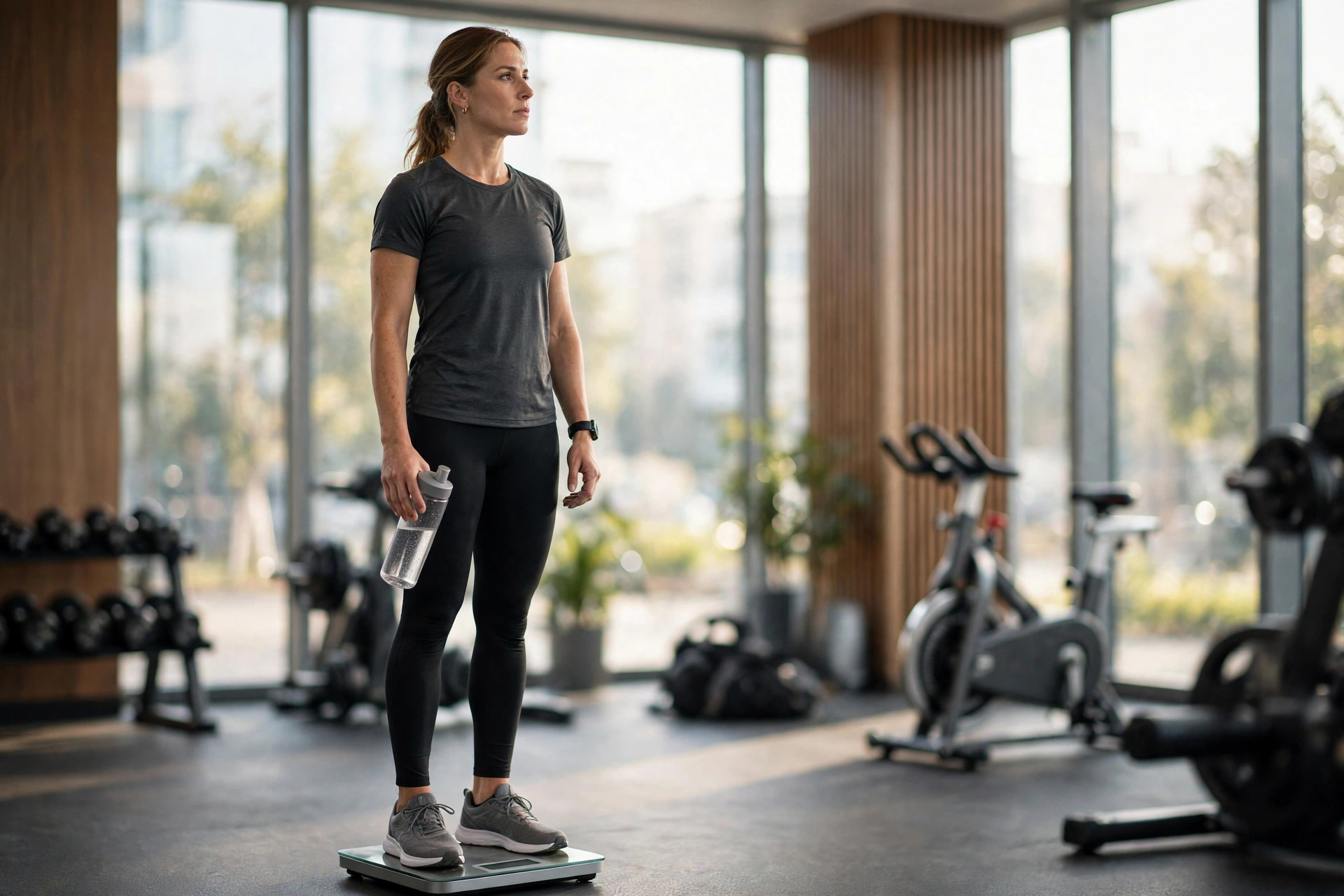

Serena Williams came back to professional tennis in June 2026 and won her first doubles match after 1,375 days away. A few months earlier, she’d told the world she’d used Zepbound — tirzepatide — to lose weight after her second pregnancy. Suddenly a drug most athletes had only heard about in diabetes and weight-loss headlines was a locker-room conversation.
And the numbers explain why everyone’s talking. Tirzepatide is now the most-searched health term on the internet, with around 1.5 million searches a month. Your training partners are Googling it. Some of them are already on it. So let’s cut through the hype and look at what the actual science says — because for an athlete, this drug is a very different proposition than it is for everyone else.
What Tirzepatide Actually Is
Tirzepatide is sold as Mounjaro for type 2 diabetes and Zepbound for weight management. It’s a once-weekly injection that mimics two gut hormones at once — GLP-1 and GIP — which is what makes it different from the older semaglutide drugs like Ozempic and Wegovy that only hit one. The practical effect: it slows how fast your stomach empties, quiets the constant food noise in your head, and makes small portions feel like enough.
The FDA approved Mounjaro in May 2022 for type 2 diabetes, then Zepbound in November 2023 for chronic weight management in adults with obesity, or overweight plus a weight-related condition. It is a prescription medicine, not a supplement — and that distinction matters more than most social media posts about it admit. It’s part of a wider family of weight-loss drugs athletes are asking about — we’ve covered retatrutide separately.
The Numbers That Made Headlines
Here’s the trial that changed everything. SURMOUNT-1, published in the New England Journal of Medicine in 2022, followed 2,539 adults with obesity for 72 weeks. The results were unlike anything weight-loss medicine had produced before: people on the highest dose, 15 mg a week, lost an average of 20.9% of their body weight. The 10 mg group lost 19.5%. Even the lowest dose, 5 mg, delivered 15%. The placebo group lost 3.1%.
Let me put that in athlete terms. A 100 kg lifter or rugby player on the top dose would, on average, drop about 21 kg in a year and a half. That’s not a diet tweak. That’s a different body.
But here’s the number that should make every athlete pause before celebrating. In a body-composition substudy of that same trial, researchers scanned 160 participants with DXA — the gold-standard body scan — and found that about 25% of the weight lost was lean mass. Three quarters was fat, one quarter was lean tissue. In absolute terms, the tirzepatide group lost 33.9% of their fat mass but also 10.9% of their lean mass over 72 weeks. These are the figures from the SURMOUNT-1 body-composition study.
Now, lean mass isn’t the same thing as muscle. DXA’s “lean mass” includes water and organs — and when you eat much less, your glycogen stores shrink and the water stored with them goes too, which DXA counts as lean loss. Actual skeletal muscle is probably only about half of that lean-mass figure. Still, the honest reading is this: roughly one in every four kilos you lose on tirzepatide isn’t fat. For a sedentary person, that’s an acceptable trade. For an athlete whose job is producing force, it’s the whole ballgame.
The Athlete’s Dilemma: Lighter Isn’t Automatically Faster
Endurance athletes live and die by watts per kilogram. A cyclist who produces 280 watts at 80 kg is riding at 3.5 W/kg. Drop 8 kg of pure fat while holding the same power and suddenly you’re at 3.89 W/kg — that’s the kind of jump people train for years to earn. On paper, tirzepatide looks like a shortcut to that number.
The catch is the word “pure.” If two of those eight kilos come from lean tissue and your power drops even 5% — from 280 to 266 watts — your new number is 3.69 W/kg. Still better, but the margin is shrinking fast. Then there’s fuelling: the drug’s most common side effects are nausea and early fullness, so forcing down 90 grams of carbs an hour on a four-hour ride gets hard. You can’t train hard on an empty tank, and the drug makes the tank feel full when it isn’t.
Strength and power athletes face a sharper version of the same trade-off. A weight-class fighter cutting to make weight might love the appetite suppression. A sprinter or a thrower whose performance depends on absolute force production has far more to lose from any muscle loss — and far less to gain from being lighter.
One Triathlete’s Public Experiment
Numbers from trials tell you what happens on average to people who mostly don’t train. What about an actual athlete? One of the most detailed public cases comes from Thomas Prommer, a competitive Ironman triathlete who has documented his tirzepatide use openly since February 2026. On a low dose of 2.5 mg a week — half the standard starting dose — plus targeted resistance training, he went from 94.5 kg to 89 kg in five weeks. His FTP climbed from 261 to 281 watts in the same window, pushing his watts per kilogram from 2.76 to 3.16, and his strength numbers held steady.
That’s one person, not a clinical trial, and it proves nothing on its own. But it shows the shape of what athletes are actually trying: low doses, deliberate muscle protection, and constant measurement. The drug did the weight-loss part; the training did the muscle-protection part.

Myth vs. Fact: Tirzepatide for Athletes
Myth: Tirzepatide melts fat and leaves muscle alone.
Fact: About a quarter of the weight lost in the trials was lean mass. Fat dominates the loss, but muscle is absolutely on the table — especially if you stop lifting and stop eating protein.
Myth: It’s a performance-enhancing drug, so it’s basically doping.
Fact: There’s no good evidence it directly improves VO2max, power, or endurance in humans. Any benefit is indirect, through body composition. And legally, it’s not banned.
Myth: If you stop taking it, you’ll just go back to normal.
Fact: Weight regain after stopping GLP-1 drugs is well documented — the appetite comes back, and without new eating and training habits built during treatment, most of the weight returns. This isn’t a one-time fix.
Myth: It’s only for people with obesity, so athletes shouldn’t even think about it.
Fact: Plenty of athletes carry excess weight that genuinely hurts their performance, and some have medical reasons to use it. The question isn’t whether athletes “should” use it — it’s whether each individual understands the trade-offs and has a doctor involved.
Is It Legal in Sport?
This is the question every competitive athlete asks first, and the answer is clear for now. GLP-1 receptor agonists are not on the World Anti-Doping Agency’s 2026 Prohibited List. Tirzepatide is not a banned substance, and no major sports federation prohibits it.
But there’s a nuance: WADA has put semaglutide and other GLP-1 analogues on its 2026 monitoring program, meaning labs track how often these drugs show up in samples — surveillance, not punishment. A monitored substance isn’t a violation, but the status could change if evidence of misuse builds up. If you compete in a tested sport, keep your prescription documented and check your federation’s list before every season.
The Pill Is Coming — and That Changes Everything
Until now, every drug in this class has been a weekly injection. That’s about to change. In September 2025, the ATTAIN-1 trial published in the New England Journal of Medicine showed that orforglipron — a once-daily GLP-1 pill — produced 11.2% average weight loss at 72 weeks on its highest dose, or 12.4% among people who stayed on treatment, against 2.1% for placebo. On 1 April 2026, the FDA approved it as Foundayo.
A daily pill with no injection and no needle is a fundamentally different product than a weekly shot. The weight loss is smaller than injectable tirzepatide’s 20.9%, but the barrier to trying it is far lower. Expect this conversation to get louder, not quieter.
If You’re Considering It: The Muscle-Protection Playbook
I’m not your doctor, and this isn’t medical advice — but if you and your doctor decide this path makes sense, the science is clear about what protects muscle while the kilos come off.
First, lift. In a 2017 trial published in the New England Journal of Medicine, older adults who dieted and did resistance training lost far less lean mass than those who dieted and did aerobic exercise alone. Two to three hard strength sessions a week is the single most effective muscle insurance you can buy.

Second, eat protein like it’s your job. Sports-nutrition guidance typically puts athlete protein at 1.6 to 2.2 grams per kilogram of body weight a day — for an 80 kg athlete, that’s roughly 130 to 175 grams daily. On a drug that kills your appetite, hitting that number takes deliberate planning, not grazing. Avoid the common protein mistakes athletes make when they chase a number without a plan.
Third, go slow. The triathlete who kept his strength used half the standard starting dose. Rapid weight loss is where muscle loss accelerates, so a slower rate of loss with training held steady beats a crash cut every time.
And finally, do it with a doctor, not a Telegram group. Compounded or grey-market versions of these drugs are a genuine safety risk, doses matter enormously, and anyone with a history of certain thyroid or pancreatic conditions needs proper screening first. The risks of unregulated products are real — see our guide to peptides for athletes.
FAQs
Does tirzepatide make you faster?
Not directly. No trial has shown it improves VO2max, power output, or endurance in humans. It can improve your power-to-weight ratio if you lose mostly fat and keep your muscle and your training quality — but that’s a big “if,” and it’s the training and the protein that protect the “if,” not the drug.
Will I lose muscle on tirzepatide?
Probably some, yes. In the SURMOUNT-1 body scans, about 25% of the weight lost was lean mass. How much of that is actual muscle depends on how you train and eat while you’re on it. Resistance training and high protein intake are the two levers with real evidence behind them.
Is tirzepatide banned in sport?
No — not on WADA’s 2026 Prohibited List and not banned by major federations. But GLP-1 drugs are on WADA’s monitoring program, so keep your prescription documented and check your federation’s current list each season.
The Takeaway
Tirzepatide is the most effective weight-loss drug ever tested, and for athletes that’s both the opportunity and the trap. Twenty-one percent of your body weight, gone in 72 weeks — but a quarter of it lean mass, and your fuelling, your strength, and your power all caught in the crossfire. The athletes who’ll do well on it aren’t the ones chasing the biggest number on the scale. They’re the ones treating it as a tool with a cost: lift heavy, eat protein deliberately, titrate slowly, and keep a doctor in the loop.
The drug can make you lighter. Only training can make you better. Don’t confuse the two.
This article is for general information only and isn’t medical advice. Tirzepatide is a prescription medicine — talk to your doctor before considering it, especially if you compete in a tested sport.