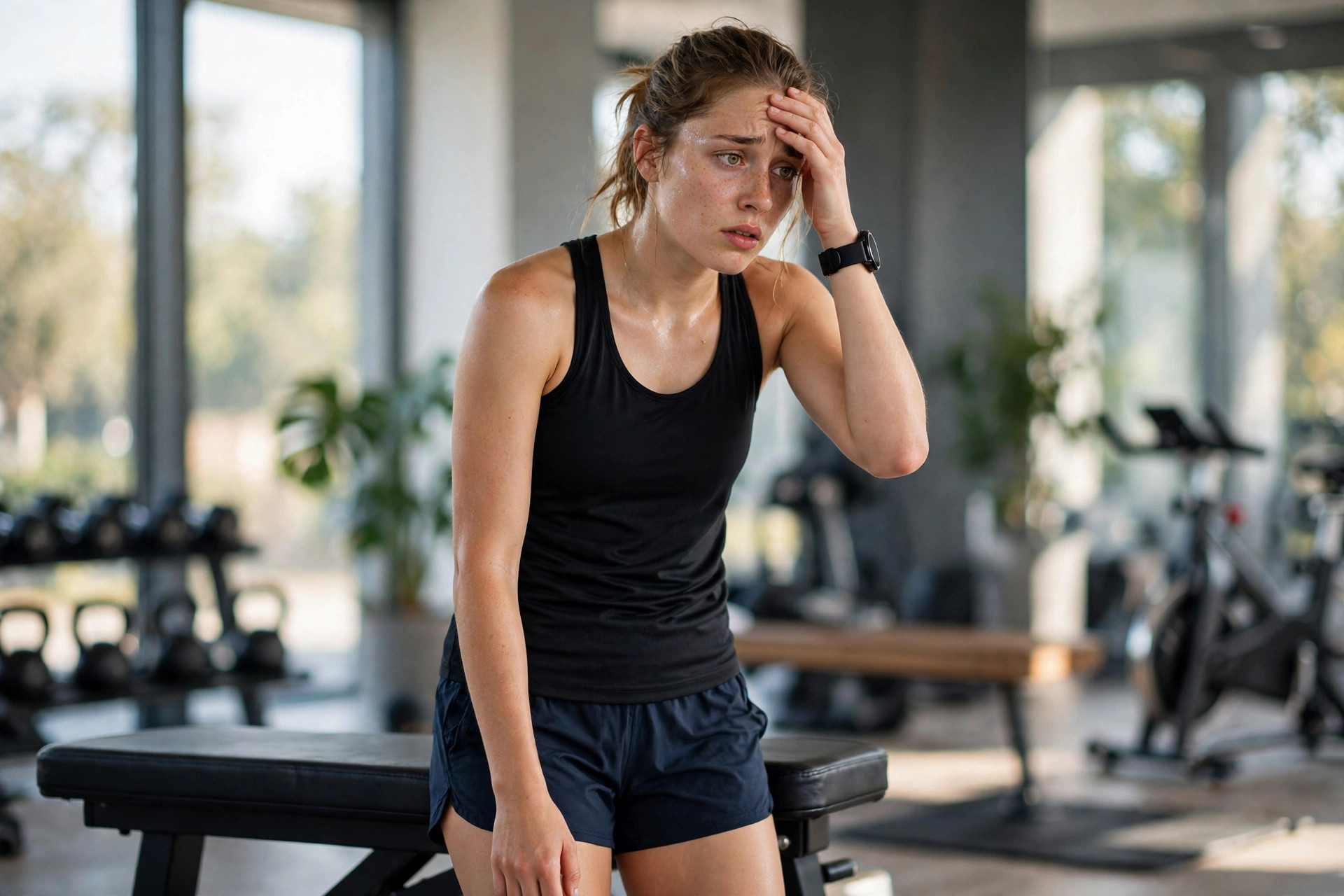

You know that dizzy, heart-pounding feeling when you stand up too fast after a hard session? For most of us it passes in a few seconds. But imagine it never passing — imagine every single time you stand up, your heart jumps 40 beats a minute, your vision narrows, and your legs feel like they’re filled with wet sand. Now imagine trying to train through that.
That’s life with POTS syndrome, and if you’re an athlete, it’s one of the most confusing conditions you’ll ever meet. Because here’s the twist nobody warns you about: exercise is both the thing that exposes POTS and the best treatment we have for it.
Searches for POTS have surged this year — more than 800,000 a month now — as more people finally put a name to symptoms they’d been dismissing for years. If your body has been sending you signals that don’t add up, this is the guide I wish someone had handed me.
What POTS Syndrome Actually Is
POTS stands for postural orthostatic tachycardia syndrome. The name is a mouthful, so let’s break it down in plain language: when you stand up, gravity pulls blood down into your legs. In a healthy body, your nervous system tightens your blood vessels and nudges your heart rate up a little to compensate. In POTS, that system misfires. Your heart overcompensates — racing far faster than it should — while blood still pools in your lower body.
Doctors diagnose it with a simple rule, published in the Cleveland Clinic Journal of Medicine: your heart rate rises by at least 30 beats per minute within 10 minutes of standing (40 if you’re 12 to 19), without a significant drop in blood pressure, and the symptoms have been going on for at least three months. It affects roughly 0.2 to 1% of people in developed countries, and it shows up most often in young women — exactly the age group that’s also deep into competitive sport.
The symptoms read like a list of things athletes usually blame on something else. Dizziness and lightheadedness on standing. A heart that hammers for no obvious reason. Crushing fatigue that sleep doesn’t fix. Brain fog mid-conversation. Nausea after meals. And the one that matters most for this article: exercise intolerance — the feeling that your body simply cannot do what it used to do.
Why Athletes Notice It First
Here’s the cruel part. POTS often follows a viral illness — and it shows up more often after COVID-19 — or a period of bed rest, or sometimes for no clear reason at all. Many athletes don’t notice anything is wrong until training gets serious, because easy days don’t stress the system enough to reveal the fault. It’s the tempo run, the hot race, the heavy leg day that pulls the curtain back.
I spoke to a club runner last year who’d spent six months convinced she was just unfit. Her easy pace had slipped by over a minute per mile, she felt sick after every speed session, and her watch kept flashing heart rate alerts on warm-ups. She’d already checked the obvious boxes — iron, thyroid, sleep — and everything came back normal. It wasn’t until a cardiologist did a simple stand test that anyone said the letters P-O-T-S out loud. She wasn’t unfit at all. Her nervous system was fighting her every time she stood upright.
That story is painfully common, and it overlaps with things athletes already worry about. If your recovery feels off, check the overtraining warning signs first — but if the pattern is specifically about standing, heat, and your heart rate doing strange things, POTS belongs on the list too.
The 10-Minute Stand Test: A Worked Example
You can’t diagnose POTS at home — that takes a doctor, and usually a tilt-table test. But the basic numbers behind the diagnosis are simple enough to understand, and they explain why the condition feels so dramatic.
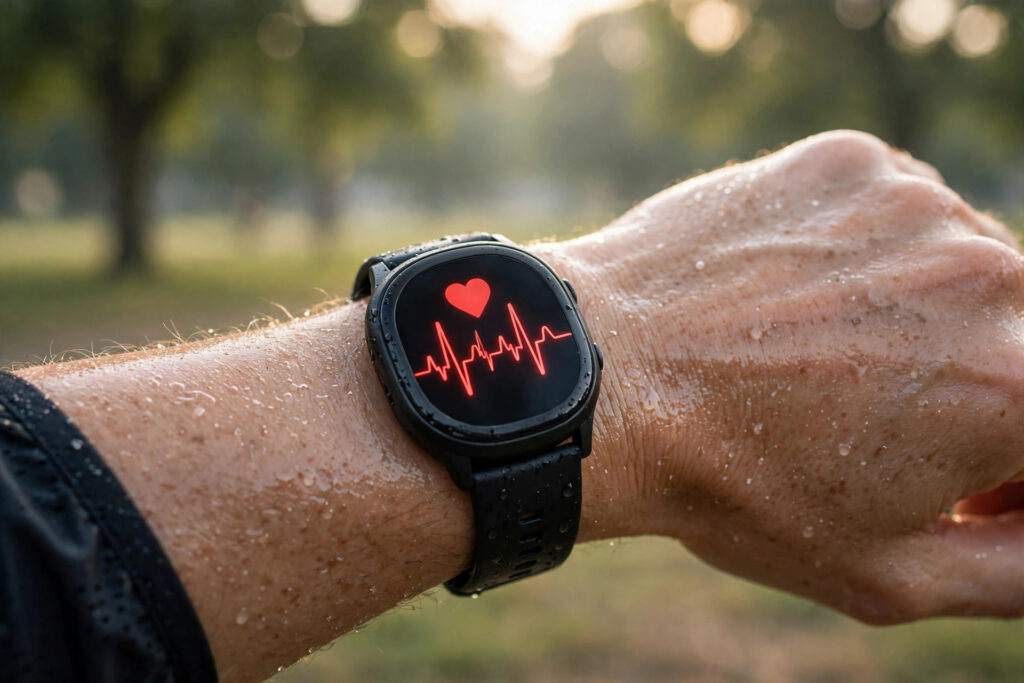
Picture this: you lie flat for five minutes, calm and still. Your heart rate settles at 64 beats per minute. You stand up, stay still, and check your watch at intervals. At one minute, you’re at 96 — At five minutes, 104 — At ten minutes, 112 — and it stays there. That’s a rise of 48 beats per minute, well past the 30-beat threshold, with your blood pressure holding steady. A healthy person’s heart rate might climb 10 to 15 beats on standing and then settle. Yours climbed by nearly 50 and never came back down.
That’s not a diagnosis — it’s an example of what doctors look for. But if your numbers look anything like that pattern, it’s a conversation worth having with your doctor, not something to train through and hope it fades.
The Paradox: Exercise Hurts — and Exercise Heals
This is the part that makes POTS so maddening for athletes. The very activity you love triggers your worst symptoms. Standing in a gym, running in the heat, even warming up — all of it can set off the racing heart and the dizziness. So the instinct is to stop. Rest. Wait it out.
But the research says the opposite. According to Cleveland Clinic, exercise and nutrition changes are the main forms of treatment, and “some of the best data for treating POTS comes from cardiac rehab.” The Heart Rhythm Society’s expert statement agrees, calling a regular, structured, progressive exercise programme effective — with one crucial detail: you start lying down.
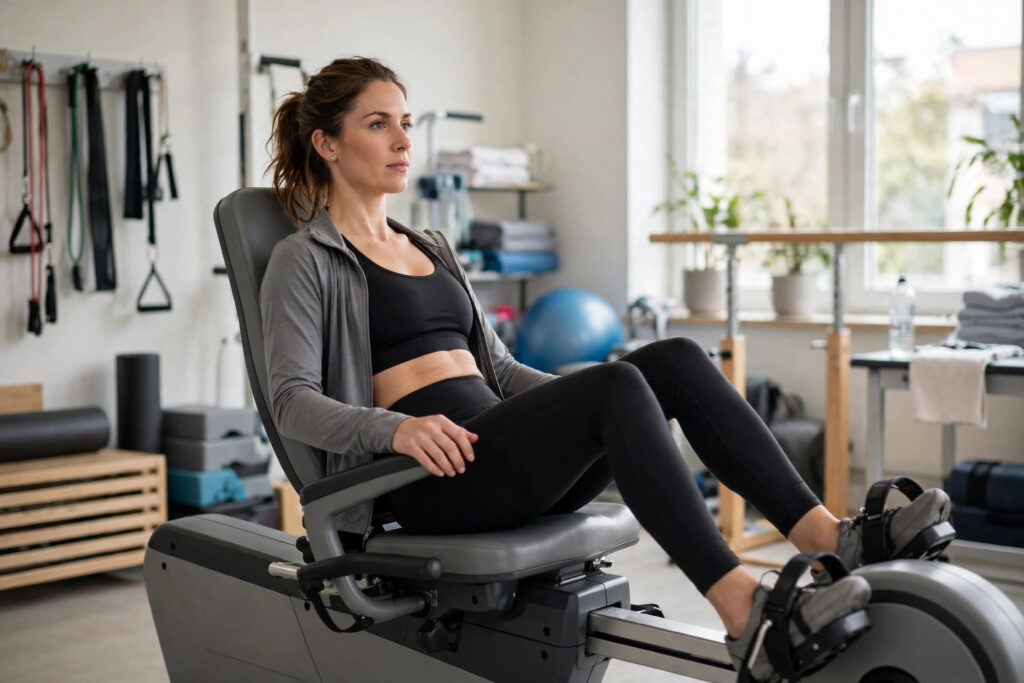
That detail is the whole secret. The best-studied approach is the Levine protocol, developed by Dr Benjamin Levine’s group in Dallas. It’s a three-month programme built on a simple idea: train horizontally first. Recumbent bike, rowing machine, swimming — exercise where gravity isn’t fighting you. Add leg and core strength work, because your leg muscles are the pump that pushes blood back to your heart. Then, only in the second or third month, start adding upright exercise.
The numbers behind it are genuinely encouraging. In the original 2011 study published in Hypertension, 19 patients finished the three months. Their hearts grew by about 12%, their blood volume rose by about 7%, and their standing heart rate fell by 9 beats a minute. Ten of the nineteen — 53% — no longer met the heart-rate criteria for POTS at all. A later community registry of 251 patients found that 71% of those who finished no longer met the criteria, and their heart-rate jump on standing had halved, from 46 beats to 23.
Now the honest caveats, because they matter: these studies were small, there was no untreated comparison group, and a lot of people didn’t finish — 59% dropped out of the registry. Exercise helps many people with POTS enormously, but it’s not a guaranteed fix, and it takes months of patience. Anyone selling you a quick cure is selling you something else.
How to Start Training Again (Safely)
If you have POTS — or you suspect you do — don’t just jump back into your old programme. The approach that works is slow, horizontal, and boring in the best possible way.
Start lying down. For the first month, your cardio should be recumbent cycling, rowing, or swimming. These are the modes the Cleveland Clinic specifically calls the most beneficial. Upright running and standing gym work come later, gradually, and only if your symptoms allow it.
Build your leg pump. Squats, calf raises, glute work — the muscles in your legs and core literally squeeze blood back upward. Two strength sessions a week, focused on legs, is the standard recommendation in the Levine programme.
Use the tricks before you stand. Squeeze your muscles hard for a few seconds before getting up — isometric contractions push blood back toward your heart. Move slowly between positions: lie to sit, sit for a few minutes, then stand. And keep a modest walking programme going from whatever baseline doesn’t trigger symptoms, adding steps a little at a time.
Sort your fluids and salt — with your doctor. Hydration for athletes matters more than ever here, but POTS changes the rules. Cleveland Clinic’s guidance for the low-blood-volume form of POTS is 2 to 2.5 litres of fluid a day and salt intake of 3,000 to 10,000 mg a day — far above normal advice. That’s a medical recommendation, not a DIY experiment, so it needs your doctor’s sign-off. Small, frequent meals help too, since a big meal diverts blood to digestion and can worsen symptoms.
Fix the sleep side. POTS can wreck your sleep, and bad sleep makes every symptom worse. If you’re waking up exhausted despite a full night, our guide to sleep efficiency explains how to read the number that actually matters. One practical tip from Cleveland Clinic: raise the head of your bed by six to ten inches, the whole bed at an angle, which can help you wake up more easily.
Myth vs Fact: What People Get Wrong About POTS
Myth: “It’s just anxiety.” Fact: anxiety can raise your heart rate, but it doesn’t produce a sustained 30-plus beat jump every single time you stand, day after day, for months. POTS is a measurable, physical dysfunction of the autonomic nervous system. The stand test numbers don’t lie.
Myth: “Fit people can’t get POTS.” Fact: plenty of high-performance athletes and Olympians live with POTS. Fitness doesn’t protect you — in fact, athletic training is often what reveals it, because athletes push their cardiovascular systems harder than anyone else.
Myth: “You’re just deconditioned — train harder.” Fact: deconditioning and POTS can look alike, and deconditioning does make POTS worse. But telling someone with POTS to simply push through upright training is like telling someone with a broken leg to run it off. The fix is graded, horizontal training — not more intensity.
Myth: “You should stop exercising completely.” Fact: this is the most damaging one. Rest feels safer, but prolonged inactivity shrinks blood volume and heart size further — the exact problems exercise training reverses. The answer isn’t stopping. It’s starting over, lying down.
When to See a Doctor (Don’t Skip This)
See a doctor promptly if you faint, have chest pain, or get breathless in a way that feels new or scary. Those symptoms need ruling out for heart problems before anything else. And if the stand-test pattern above looks familiar — a big, sustained heart-rate jump on standing, week after week — bring your numbers to your GP or a cardiologist and ask specifically about POTS. Many people wait years for a diagnosis simply because nobody thought to check. You can shorten that wait by naming it.
FAQs
Can athletes with POTS keep training and competing?
Many can, yes — but usually not on the same programme they had before. The evidence supports a graded return starting with recumbent exercise, building over three to six months. Some athletes return to full competition; others find their ceiling is lower and adapt their goals. A sports cardiologist or a cardiac rehab programme is the right guide for that journey, not a generic training plan.
Is POTS curable?
There’s no cure, according to Cleveland Clinic — but it can be managed, and for many people it improves substantially. In the Levine protocol studies, more than half of the people who finished the programme no longer met the diagnostic criteria. Symptoms often ease over time, especially with consistent exercise, fluids, and salt under medical guidance.
How long does the exercise programme take to work?
Think months, not weeks. The Levine protocol runs for three months before upright exercise is even introduced, and the children’s hospital version stretches to seven or eight months. Most people notice small improvements first — a lower standing heart rate, less dizziness — before the bigger changes arrive. Patience isn’t just a virtue here; it’s the treatment.
The Takeaway
POTS syndrome turns the simplest athletic act — standing up — into a full-body effort, and it hides behind symptoms that look like a dozen other things. But it has a name, it has a test, and most importantly, it has a treatment that athletes are uniquely good at: structured, progressive exercise, started lying down and built up over months.
If your heart races every time you stand, if training has started feeling inexplicably harder, don’t just assume you’re unfit or overtrained. Get checked. The fix might not be less exercise — it might be a different kind of exercise, done patiently, in the right position, for the right reasons. And that is a genuinely hopeful message for a condition that, for too long, left athletes thinking the problem was them.
This article is for general information only and isn’t medical advice. POTS is a medical condition that needs proper diagnosis and a treatment plan from a qualified healthcare professional — especially before changing your salt intake, fluids, or training. If you have symptoms like fainting, chest pain, or severe breathlessness, seek medical care promptly.