
I’ll be honest: when I saw “measles” in a 2026 headline, I figured someone had their dates mixed up. That was supposed to be the disease our grandparents worried about — wiped out, filed away in history books, done. But it isn’t. This week, the CDC confirmed the third measles-related death in the US this year, and the country is now fighting the largest measles outbreak in decades. If you train hard, travel for competitions, and spend hours around other people in gyms and locker rooms — this one’s for you.
How Bad Is the Measles Outbreak, Really?
The numbers landed on October 20 and they’re hard to shrug off. As of October 15, the United States had 4,410 confirmed measles cases — the biggest count in decades. Health officials reported two earlier deaths in September; this third one pushed the federal toll up again, and state officials say the real picture may be worse. Pennsylvania alone has logged 1,286 cases, with local health authorities linking at least five deaths to the disease this year.
The CDC took it seriously enough to deploy extra support to Pennsylvania under its Epi-Aid emergency response program. That’s not routine. That’s the CDC treating a “beaten” disease like a live emergency — because it is one.
Why Athletes Can’t Afford to Ignore the Measles Outbreak
Think about how you live. A packed gym five days a week. Travel to meets, tournaments, and races. Shared equipment, water bottles, air. Measles counts as one of the most contagious viruses in the world — it spreads through the air, and it can linger in a room for up to two hours after an infected person leaves. (Our flu season survival guide for athletes covers similar airborne-transmission basics for winter viruses.) You don’t even have to touch anyone. You just have to breathe the same air.
And it’s not a minor inconvenience. Measles knocks you flat for weeks, and complications like pneumonia and brain swelling (encephalitis) can sideline you for months — or worse. For anyone whose performance depends on their lungs and their recovery capacity, one infection can erase an entire season.
Know the Symptoms Before They Know You
Measles doesn’t announce itself right away. There’s an incubation period of 7 to 12 days, and the first signs look like a bad cold — which is exactly why people keep showing up to practice while they’re contagious.
The classic progression
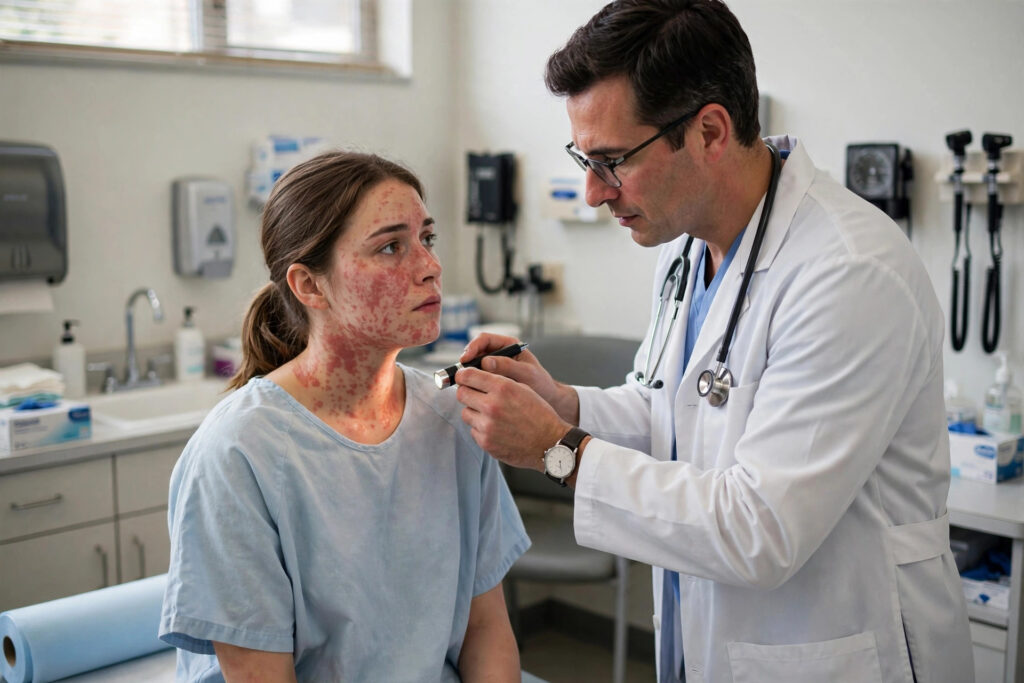
It usually goes like this: high fever (often above 104°F), a harsh cough, a runny nose, and red, watery eyes. Then, about 3–5 days in, the telltale rash appears — flat red spots that start at the hairline and face, then spread downward. Tiny white spots inside the cheeks (called Koplik spots) can show up even before the rash; they’re one of the most distinctive early clues.
When to get checked during a measles outbreak
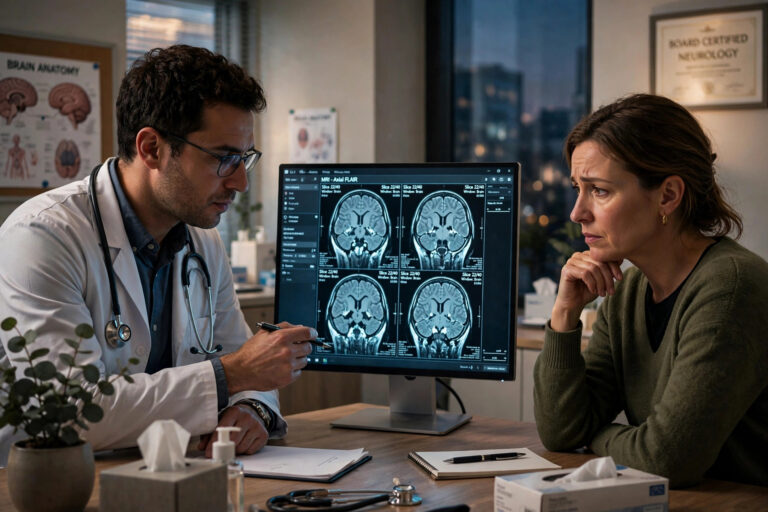
If you develop a high fever with cough, runny nose, and red eyes — especially after traveling through an outbreak area or being around a confirmed case — don’t walk into a crowded clinic waiting room. Call ahead, tell them you might have measles, and follow their guidance. Early symptoms mimic plenty of other bugs, and when diagnoses get it wrong, the virus gets a head start — so get checked properly.
The Vaccine Situation (No Lectures, Just Facts)
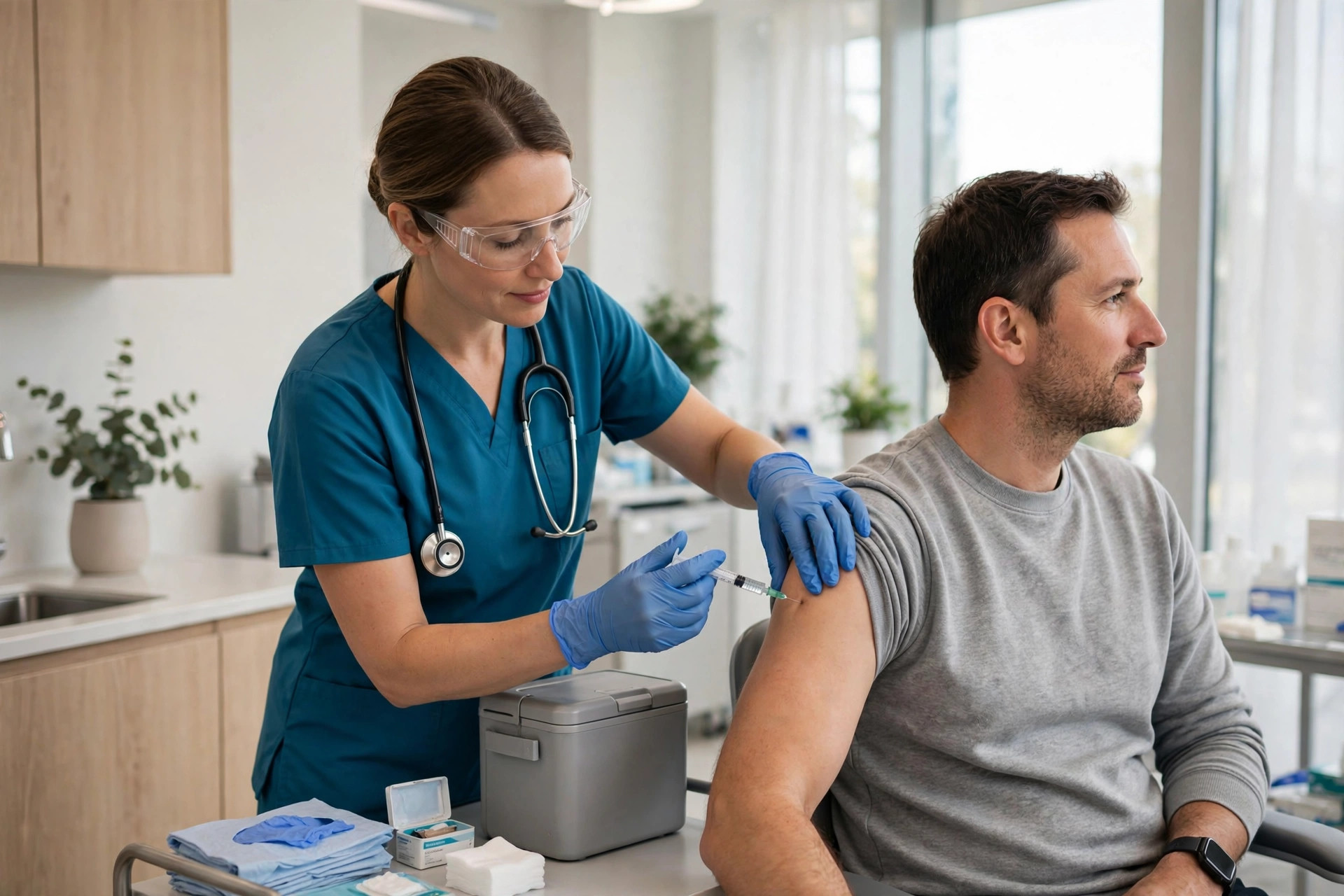
The MMR vaccine — measles, mumps, rubella — is about 97% effective after two doses. That’s one of the best-performing vaccines ever made. Two shots, and you’re nearly bulletproof against it. The CDC’s measles hub keeps the latest guidance on doses, eligibility, and what to do after a possible exposure.
So why the outbreak? Mostly, it’s gaps. Some people never got vaccinated. Others got one dose but never the second. A few have medical conditions that make vaccination impossible, and they depend on everyone around them being protected — that’s herd immunity, and it’s exactly what breaks down when vaccination rates dip. When enough unvaccinated people cluster together — at a school, a team camp, a tournament — the virus finds its opening.
If you’re unsure of your vaccination status, it’s worth checking. Doctors generally recommend vaccination for adults who never had the disease or the full two-dose series. A quick call to your doctor or a check of your records is all it takes. For athletes who compete internationally, where the measles outbreak risk runs higher, it’s genuinely part of travel health prep.
What To Do During a Measles Outbreak
You don’t need to panic about the measles outbreak, and you definitely don’t need to stop training. You just need to train smart.
First, know your status. If your vaccinations are current, you’re in excellent shape — keep doing what you’re doing.
Second, be honest about symptoms. That “push through” instinct that serves you in workouts backfires badly with an infectious disease. A fever plus cough means you sit out, no debate. Train alone at home if you must move, but stay out of shared spaces. And when the fever finally breaks, don’t sprint back to full sessions — coming back after being sick the patient way keeps you from relapsing into another lost week.
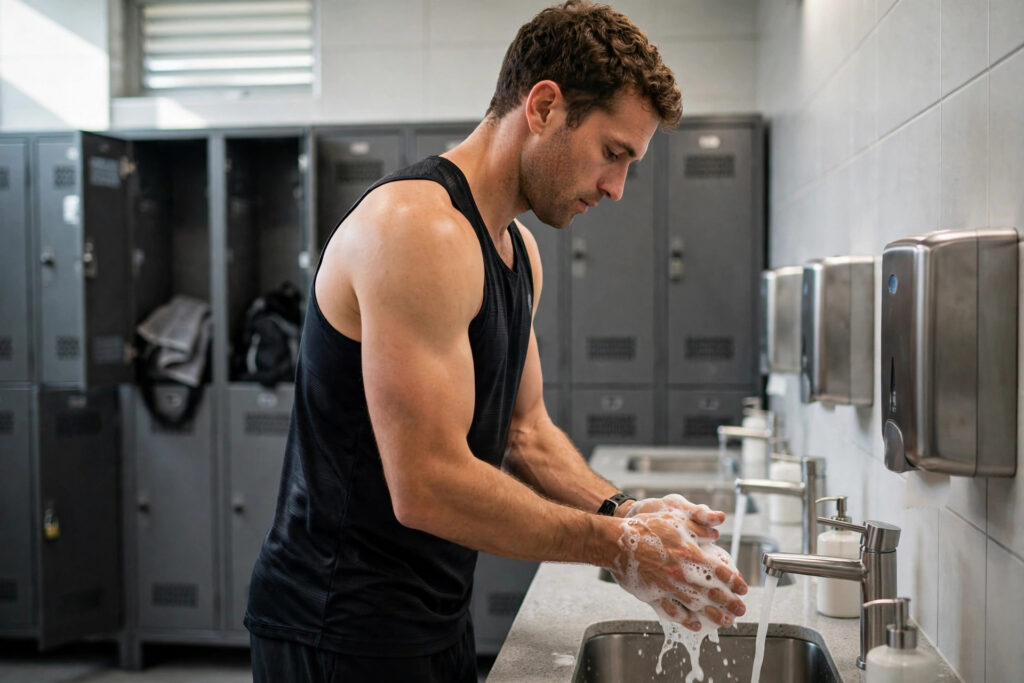
Third, keep the basics sharp. Wash your hands. Don’t share bottles. Wipe down equipment before and after use. None of this replaces vaccination, but good hygiene cuts transmission chains for all kinds of respiratory bugs — which is how the flu keeps stealing training weeks from people every single year.
Can you get the MMR vaccine right now if you never had it?
Yes. Adults who never got vaccinated or never had measles can get the MMR vaccine at any age — typically two doses at least 28 days apart. Check with your doctor or local pharmacy; many walk-in clinics offer it. There’s no need to test for immunity first unless your provider recommends it.
Does having had measles once protect you for life?
Almost always. A natural measles infection typically gives lifelong immunity, and the same is true of the full two-dose vaccine series — no routine boosters needed. That said, if you’re genuinely unsure whether you had it, vaccination is the safe answer.
Should you skip training if there’s a measles case at your gym?
Not automatically — but check your vaccination status and watch for symptoms for up to 21 days after exposure. If you’re unvaccinated and had a known exposure, talk to your doctor immediately; a vaccine given within 72 hours of exposure can still prevent the disease. Either way, skip shared training spaces if you feel even slightly feverish.
The Bottom Line
Measles came back because we stopped respecting it — not out of fear, but out of simple logistics: missed shots, missed boosters, missed check-ups. The 2026 measles outbreak is a reminder that “eliminated” and “gone” are two different things. For athletes, the stakes are practical: weeks of lost training, real complications, and an entirely preventable derailment of your season.
The fix is almost comically simple. Know your vaccination status. Keep your hands clean. Stay home when you’re sick, and come back gradually when you’re better. Do those four things and you’re not just protecting yourself — you’re keeping your whole training community in the game.
This article is for general information only and is not medical advice. If you have symptoms, have been exposed to measles, or are unsure of your vaccination status, speak to a qualified healthcare professional.