
Nobody touched him — which is exactly why the Terry McLaurin knee injury has every athlete rattled.
That’s what made a whole stadium go quiet on Monday night. Commanders star Terry McLaurin ran a routine out route against the 49ers, planted his left leg — and his knee simply buckled. Air cast. Cart. Afterward, coach Dan Quinn said the five words every athlete dreads: it “could be significant.”
However, as of Tuesday morning, the official diagnosis is still pending. But NFL Media’s Ian Rapoport reports the team is bracing for a season-ending knee injury for their 31-year-old receiver.
If you play anything with cutting and pivoting, the Terry McLaurin knee injury is the version living rent-free in your head. And here’s what most people get wrong: it usually isn’t the big hit that tears your knee apart. It’s the plant.
What Happened on Monday Night
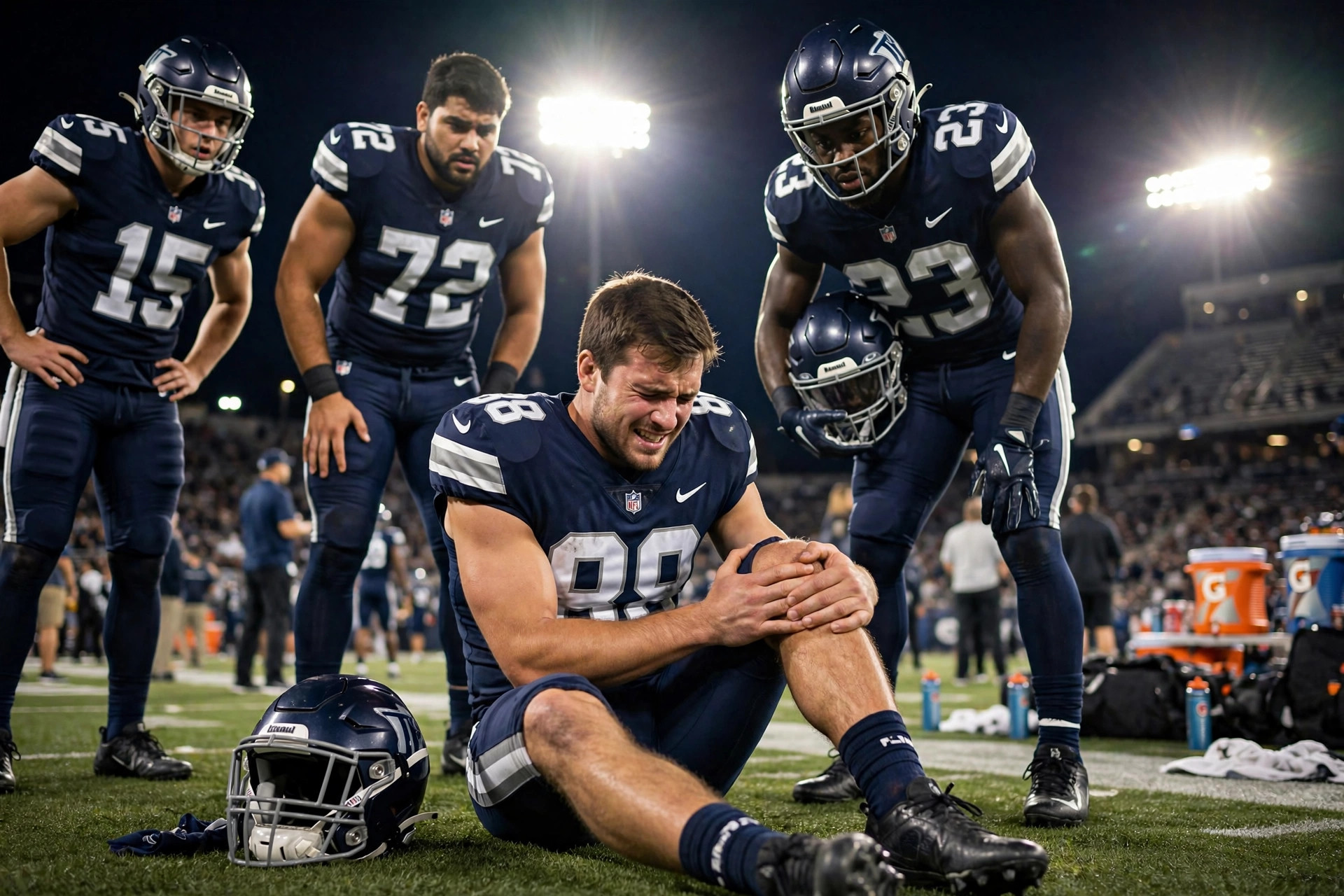
Late in the first quarter, McLaurin broke toward the sideline with a defender in tight coverage. His left leg gave out — some contact on the play, nothing that hit the knee directly. Down he went, grabbing at it. The staff fitted a vacuum splint, loaded him onto the cart, and ruled him out. One catch, 27 yards, night over.
Worse context: he’d already missed Week 4 with a hamstring injury and was working back on limited snaps. Year one of a three-year, $96 million deal, age 31, eighth season. Every lost month matters more now.
Why “Non-Contact” Is the Scary Part
In fact, most ACL tears don’t come from a helmet to the knee. Instead, they come from your own movement — planting to cut, landing stiff-legged, twisting while your foot stays stuck. The knee caves inward and the ligament loads past its breaking point. The AAOS OrthoInfo page on ACL injuries explains the mechanism plainly.
Moreover, about 70% of people who tear an ACL hear or feel a pop, per the American Academy of Orthopaedic Surgeons, with swelling following within a day or two. Similarly, McLaurin’s play fits the pattern textbook-perfectly: plant, twist, buckle, grab the knee.
I’ve seen it without cameras. For instance, a friend tore his ACL in Sunday pickup basketball going up for a rebound — zero contact. He said the sound was the worst part. He knew instantly. That’s the thing about knees: your body usually tells you.
Warning Signs Your Knee Injury Is Serious
You heard or felt a pop — the most classic ACL red flag there is.
It swells fast — a knee ballooning within hours is bleeding inside the joint.
It feels unstable — buckling when you stand or pivot means the ligaments aren’t doing their job.
You can’t bear weight — hopping to walk is your body voting no.
You lose range of motion — can’t fully straighten or bend it.
In fact, McLaurin checked several of these on live TV. That’s why the fear is real even before the MRI.
How Doctors Figure Out What’s Torn
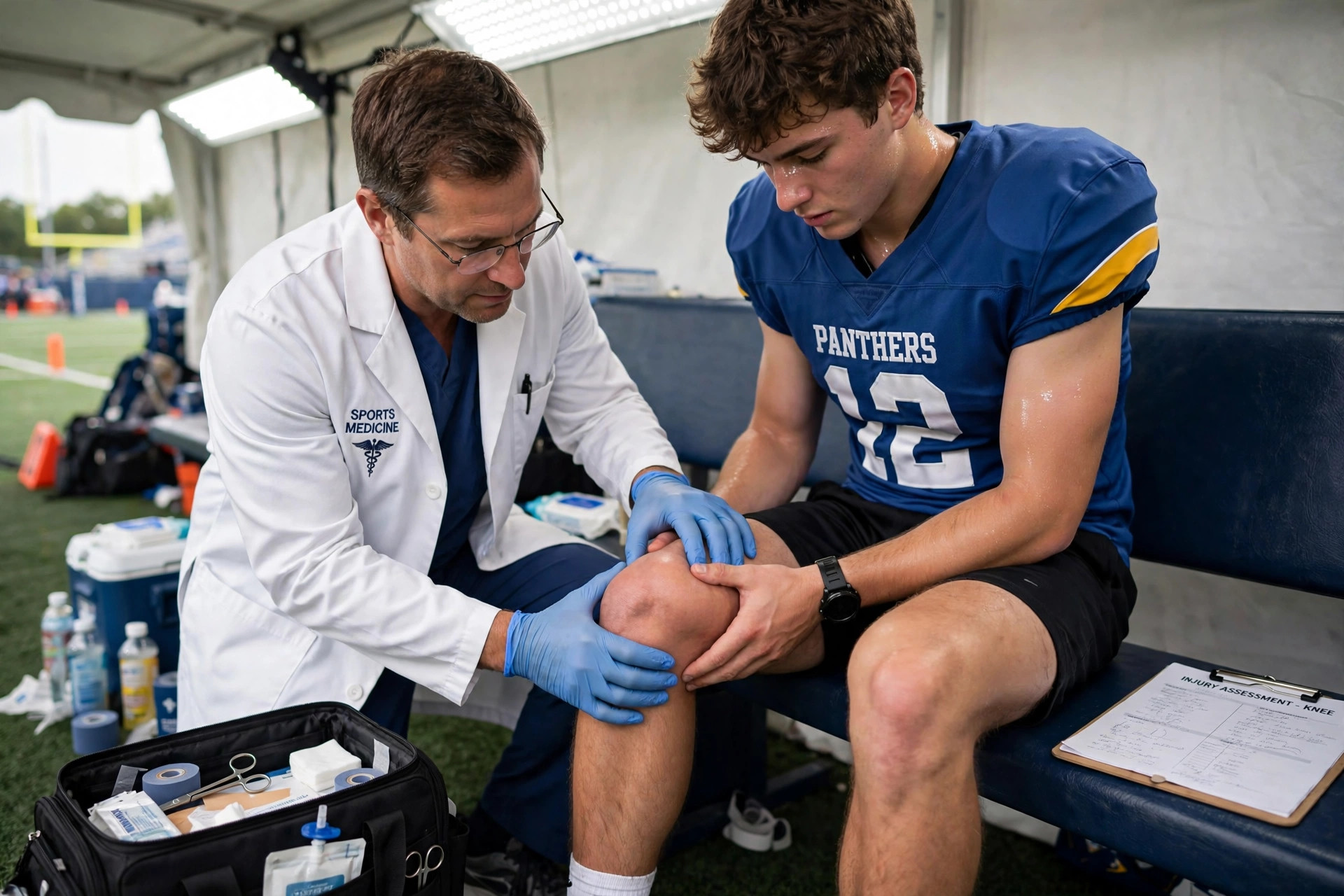
A sideline guess is just a guess. The real diagnosis runs in order: a hands-on stability exam (the Lachman test is the famous ACL check), X-rays to rule out fractures, then the MRI — the moment of truth showing ligaments, meniscus, and cartilage.
That’s what McLaurin’s Tuesday tests are about. The MRI decides whether this is weeks or a year. Remember it for your own injuries: never plan your life around a “torn ACL” that came without imaging.
What Recovery Really Looks Like
Mild ligament sprain — a few weeks in a brace plus physio. Annoying, not career-altering.
Torn meniscus — varies; arthroscopic trim or repair, back in weeks to a couple of months.
Torn ACL, athlete who wants to keep playing — almost always reconstruction: the torn ligament replaced with a graft from your own patellar tendon, hamstring, or quadriceps. Then six months minimum before returning to sport, often nine to twelve for full competition. Meanwhile, surgery waits until swelling settles — operating on an angry knee risks permanent stiffness.
In addition, one sobering stat: in a large 2026 AAOS study, 61% of ACL reconstruction patients also had a meniscus injury. In other words, knees rarely break in just one place.
The First 48 Hours: If It’s Your Knee
Stop immediately. Don’t “test it” with one more rep — the second injury is often worse than the first.
Ice, compress, elevate. Twenty minutes of ice, a wrap, leg above heart level.
Stay off it. Crutches for a day or two beat a month of limping-induced compensation injuries.
Don’t self-diagnose. Therefore, see a sports-medicine doctor and ask directly about an MRI if the warning signs fit.
Watch for blood clots. Indeed, days of limping or sitting immobilized raises clot risk in the leg — calf pain, swelling, or warmth deserves prompt attention.
Cutting Your Own Knee-Injury Risk
Train how you land. Landing softly with bent knees — and keeping knees from caving inward on cuts — has slashed ACL rates in studies. In fact, ten minutes of landing drills in warm-ups is the highest-ROI injury prevention in sports.
Build the muscles that protect the ligament. Strong hamstrings and glutes are dynamic seatbelts for the ACL. Conversely, all quads and no posterior chain is the imbalance that tears ligaments.
Respect fatigue. Consequently, tired athletes land worse and cut sloppier — which is why a smart post-workout recovery routine matters more than most athletes think.
Don’t play through a “tweaked” knee. When one link in the chain is compromised — an unrehabbed hamstring injury is the classic setup — the others absorb forces they weren’t built for.

Frequently Asked Questions
Did Terry McLaurin tear his ACL?
However, no official diagnosis has been announced as of Tuesday morning — the team awaited further tests, expected to include an MRI. We know: non-contact left knee injury, air cast, cart, immediately ruled out. Additionally, Quinn called it potentially “significant”; Rapoport reports the team fears a season-ender. Nevertheless, the pattern fits a serious ligament injury — but honestly: wait for the MRI.
How long is an NFL player out with a torn ACL?
Typically nine to twelve months from surgery to full return. In fact, surgery is just the start — months of progressive rehab decide whether a player comes back the same athlete. Rushing it is how re-tears happen.
Can you walk on a torn ACL?
Sometimes, yes — which is why “but I can walk on it” proves nothing. Many complete tears can walk straight within days. Instability shows up on pivoting and decelerating — precisely what sports demand.
The Takeaway From the Terry McLaurin Knee Injury
The scariest knee injuries don’t need a collision. One planted foot, one twist, one moment — and a season ends before the crowd finishes gasping.
In conclusion, whatever the MRI shows about the Terry McLaurin knee injury, the lesson is the same: respect the plant. Train your landings, strengthen what’s behind the knee, and when your knee pops, swells, or gives way — stop, get it imaged, don’t be a hero. Heroes with torn ACLs just tear them worse.
This article is for general information only and isn’t medical advice. Knee injuries need a proper in-person examination — if your knee gives way, swells rapidly, or you can’t bear weight on it, see a doctor or sports-medicine specialist promptly.