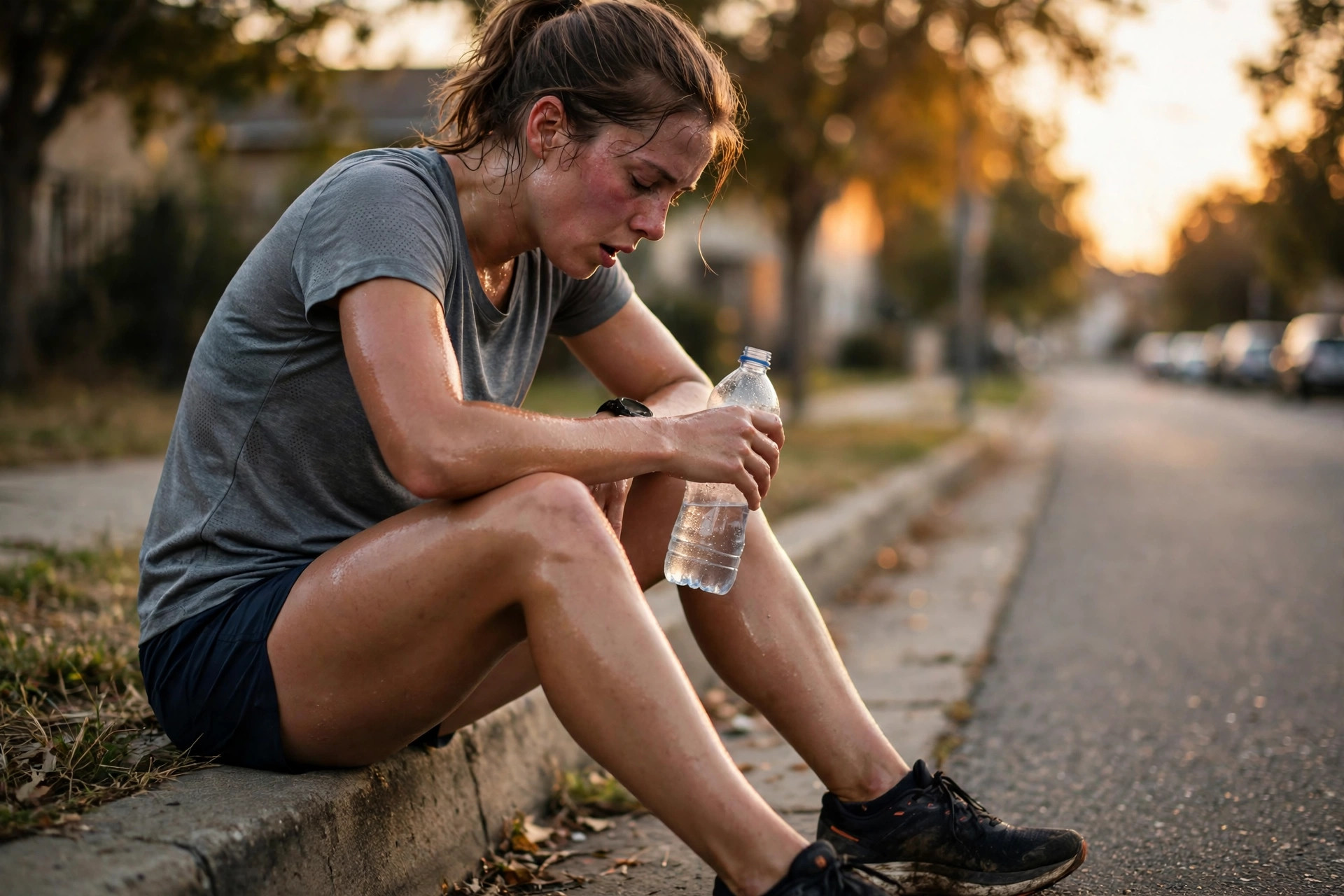

You know that feeling after a brutal session — legs like jelly, stairs suddenly looking like a mountain, and a quiet pride because you really pushed it. Most of the time, that’s just soreness, and it fades in a day or two. But sometimes it isn’t soreness at all. Sometimes your muscles are actually breaking down from the inside, and your body is waving a red flag you’re trained to ignore.
That condition has a name: rhabdomyolysis. Athletes usually just call it “rhabdo.” And here’s the uncomfortable part — it doesn’t only happen to elite competitors or people doing something reckless. It can happen to a regular gym-goer who goes too hard, too fast, after too long away.
What Rhabdomyolysis Actually Is
Strip away the scary medical word and the idea is simple. When muscle fibers are damaged badly enough, they break open and spill their contents into your bloodstream. That includes a protein called myoglobin, plus enzymes like creatine phosphokinase (CPK) and various electrolytes that are supposed to stay inside the muscle cell.
Your kidneys then have to filter all of that debris out. Myoglobin in particular is hard on them. In serious cases, this can lead to acute kidney injury, dangerous electrolyte shifts, and other complications that no amount of foam rolling will fix. Around 26,000 cases of rhabdomyolysis are reported in the United States each year, and strenuous exercise is one of the recognized causes.
That number matters because it punctures the idea that this is some freak one-in-a-million event. It’s uncommon, yes. But it’s common enough that coaches, trainers, and athletes should know what it looks like.
Why Athletes Are Especially at Risk
Rhabdo doesn’t care how fit you think you are. In fact, some of the classic setups will sound familiar to anyone who trains hard:
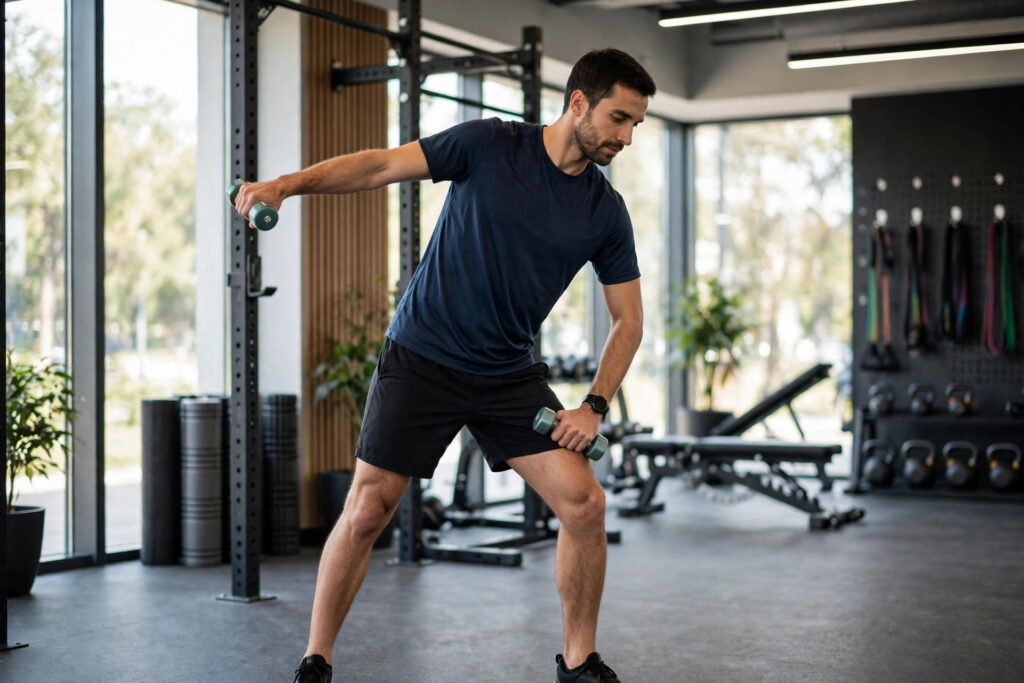
- The comeback workout. You took three weeks off — holiday, illness, a busy stretch at work — and you jump straight back to your old weights or your old mileage. Your muscles aren’t ready for that load yet.
- The first-time shock. A brand-new movement pattern, like hundreds of squats or a first high-intensity class, loads muscles in a way they’ve never experienced.
- The marathon or endurance push. Marathon running is specifically listed among the causes, and long efforts in the heat make everything worse.
- The “no pain, no gain” session. Prolonged overuse, heavy lifting to total failure, and high-intensity workouts done back-to-back without recovery all raise the risk.
Heat deserves its own mention. Exercising hard in hot conditions, without being acclimatized to the heat, is a well-known risk factor. Add dehydration to the mix and your muscles — and your kidneys — are under even more strain.
The Warning Signs Most People Brush Off
This is where rhabdo gets dangerous, because its early signs look a lot like the aftermath of a hard workout. The difference is in the details, and in how long things last.
Watch for this combination:
- Muscle pain that’s out of proportion. Normal soreness is dull and tender. Rhabdo pain tends to be severe, and it doesn’t ease up after a day or two — it can actually get worse.
- Weakness, not just tiredness. Struggling to lift your arms to wash your hair, or finding your legs give way on stairs, is different from feeling stiff.
- Dark, tea- or cola-colored urine. This is the classic red flag. It happens because myoglobin from broken-down muscle is being passed in your urine. If you see this after a hard session, don’t wait it out.
- Swelling, stiffness, or cramps in the affected muscles. Local swelling alongside severe pain is another sign that something more than soreness is going on.
Here’s a quick way to think about it. Normal muscle soreness (DOMS) peaks around 24 to 72 hours and then improves. Rhabdo symptoms tend to stick around, intensify, or come with that dark urine and real weakness. If your “soreness” doesn’t follow the usual improving pattern, that’s your cue to stop guessing and get checked.
Doctors confirm rhabdomyolysis largely through a blood test for CPK. Normal CPK sits roughly between 20 and 200 U/L; in rhabdomyolysis it’s typically at least five times the upper limit of normal, and levels above 5,000 IU/L generally indicate significant muscle injury. That’s not a number you can check at home — which is exactly why the symptoms above mean a trip to a doctor, not another rest day on the couch.
Myth vs. Fact: What People Get Wrong About Rhabdo
Myth: Only CrossFit athletes or professionals get rhabdo. Fact: Anyone can develop it. The risk comes from the mismatch between the effort and what your body is prepared for — and that mismatch happens in ordinary gyms every week.
Myth: If you can still walk, it’s just soreness. Fact: Many people with rhabdo can still move around. Weakness and dark urine are more telling than whether you managed to finish the workout.
Myth: Drinking a ton of water after the fact fixes it. Fact: Hydration matters enormously for prevention and is part of care, but once muscle breakdown is underway, you need medical assessment. Water alone doesn’t undo kidney strain.
Myth: Pushing through the pain makes you tougher. Fact: Pushing through rhabdo symptoms is how a bad situation becomes a medical emergency. The complications — kidney injury, electrolyte abnormalities, arrhythmias, compartment syndrome — are genuinely serious.
How to Protect Yourself (Without Giving Up Hard Training)
The good news is that rhabdomyolysis in athletes is largely preventable, and none of the prevention steps require you to train soft. They’re mostly about respecting the ramp-up:

- Build gradually. Increase your conditioning step by step rather than jumping to a previous peak after a break. Your ego recovers faster than your muscles do.
- Get used to the heat first. If you’re training or competing in hot weather, acclimatize before the big effort — don’t let race day be your first hot session.
- Take real rest breaks and cool down. Frequent breaks and cooling during prolonged exertion in the heat aren’t weakness; they’re how you stay in the session.
- Hydrate properly. Drink enough fluids, and favor caffeine-free, low-sugar options during long efforts in the heat. Skip alcohol when you’re training in hot conditions.
- Stay home when you’re sick. Illness raises your risk, so a fever is a reason to rest, not to “sweat it out.”
- Respect the comeback rule. Coming back at roughly your old volume after weeks off is a gamble. Halve it, see how your body responds, then build.
None of this is complicated. It’s just the boring, unglamorous stuff that keeps you training for years instead of sidelined for weeks.
What to Do If You Suspect Rhabdo
If the warning signs show up — especially dark urine, severe pain, or real weakness after a hard session — stop training immediately. Cool down, keep drinking fluids, and seek medical attention promptly. Don’t try to “test” the muscle with another workout, and don’t assume it will clear up on its own.
In hospital, care centers on protecting the kidneys, which generally means intravenous fluids and close monitoring. The earlier that starts, the better the odds of avoiding lasting damage. This is one of those situations where going in and being told “it’s just soreness” is a great outcome — far better than the alternative of waiting too long.
How is rhabdo different from normal muscle soreness?
Normal soreness (DOMS) is a dull ache that peaks within a day or three and steadily improves. Rhabdomyolysis brings severe pain, genuine weakness, swelling, and often dark tea-colored urine, and it doesn’t follow that neat improving pattern. When symptoms are out of proportion or come with dark urine, get checked rather than assuming it’s DOMS.
Can you get rhabdo from a single workout?
Yes. A single session can trigger it, especially if it’s much harder than what your body is used to — a first high-intensity class, a huge volume of squats, a marathon, or a hard comeback workout after time off. It’s the sudden overload that matters, not a long history of overtraining.
Can rhabdomyolysis be fully prevented?
Not with absolute certainty, but the risk can be cut dramatically. Gradual progression, heat acclimatization, proper hydration, rest breaks, and skipping hard training when you’re ill cover most of the preventable risk. The remaining risk is exactly why knowing the warning signs matters — prevention and early recognition work as a pair.
The Takeaway: Hard Training Is Fine. Ignoring Your Body Isn’t.
Nobody’s saying you should stop training hard. Hard training is the whole point for most of us. But there’s a line between productive discomfort and a medical problem, and rhabdo sits right on the other side of it. Learn the signs — severe pain, real weakness, swelling, and especially that dark, tea-colored urine — and act on them fast if they ever show up.
Your muscles will forgive a missed session. Your kidneys might not forgive a missed warning sign.
This article is for general information only and isn’t medical advice. If you notice symptoms like dark urine, severe muscle pain, or weakness after exercise, seek medical attention promptly.