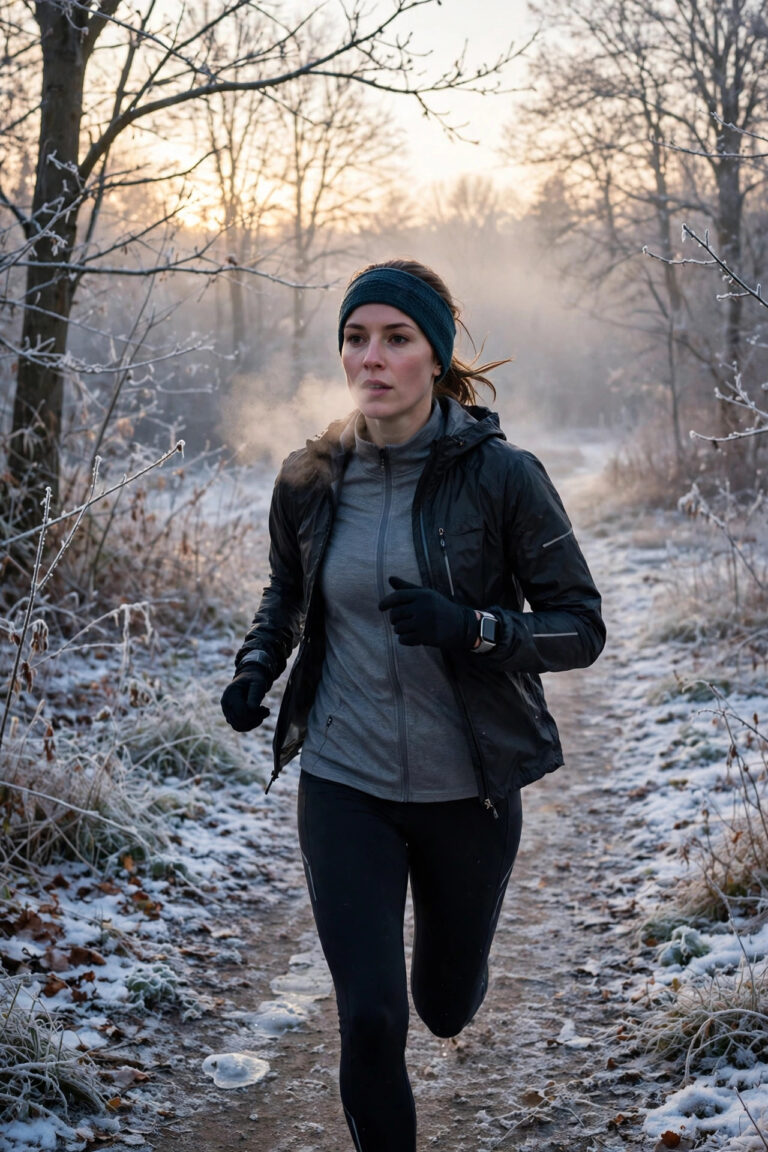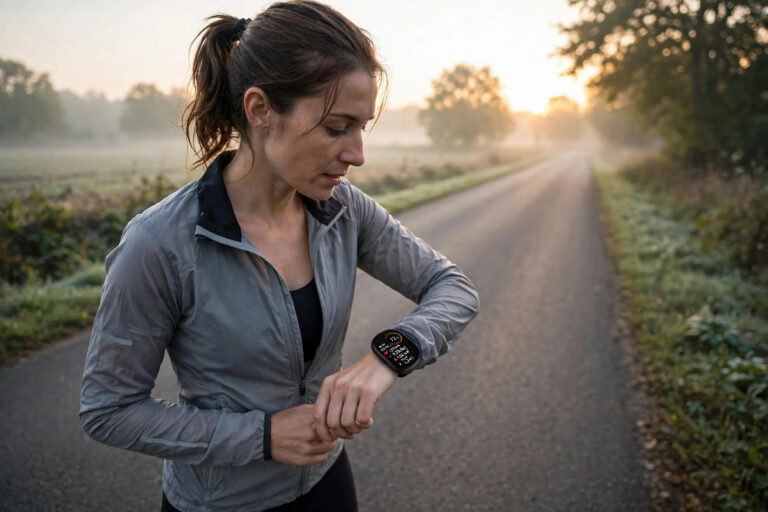

You did everything right. You trained hard, ate well, and got your eight hours. Yet you still woke up feeling like you’d been hit by a truck. Easy runs feel hard. Your temper is shorter than usual. Your coach says you’re not recovering, and honestly, you agree with them.
Here’s the possibility almost nobody checks first: you might not have a training problem at all. You might have a breathing problem — while you’re asleep.
It’s called sleep apnea, and it’s the most underrated performance killer in sport. It doesn’t care how fit you are. In fact, in some sports, being big and strong actually raises your risk. And because it happens while you’re unconscious, you can have it for years without ever knowing.
What sleep apnea actually does to an athlete
In obstructive sleep apnea — the common type — the muscles at the back of your throat relax during sleep. Your airway narrows or closes. Breathing stops, or nearly stops, for ten seconds or longer. Your oxygen level drops. Your brain, sensing trouble, jolts you partly awake just enough to reopen the airway, often with a snort or gasp. Then it happens again. And again. Sometimes hundreds of times a night.
You won’t remember any of it. You’ll just wake up unrefreshed, wondering why eight hours in bed felt like four.
That matters for athletes more than for most people. Sleep isn’t downtime — it’s when the actual adapting happens. Deep sleep is when growth hormone does much of its work. It is also when muscles repair and your brain consolidates the motor skills you drilled that day. Fragmented sleep guts that window. As I’ve written before, sleep is your best recovery tool — and sleep apnea quietly breaks the tool while leaving the hours on the clock untouched.
What the research shows
The research backs up the worry. A 2026 review of sleep apnea in athletes, covering eleven studies from 2015 to 2025, concluded that obstructive sleep apnea is underdiagnosed in athletes. It is linked to poorer sleep quality, hormonal disruption, excessive daytime sleepiness, and slower reaction times. That combination can impair recovery, raise injury susceptibility, and drag down aerobic capacity and sport-specific performance. The review was blunt about who is most at risk. Athletes in collision sports such as rugby and American football showed a substantial prevalence of the condition. Higher body mass index and larger neck circumference are common in those sports.
Those aren’t just review-level generalities, either. In one collegiate football study, 35% of the 58 athletes tested at home had mild-to-moderate sleep apnea. Another study of 40 Division I football players found sleep-disordered breathing in 55% of them. Small samples, football-specific — but they should kill the idea that this is a condition for other people. A frequently cited 2009 Mayo Clinic study of NFL players put the figure at 46% of players and 60% of linemen. That study is old and football-specific, and I wouldn’t quote it as a current rate for all athletes. But as a warning flag, it’s hard to ignore.
The signs athletes keep misreading
This is the cruel part: almost every symptom of sleep apnea looks like something else in an athlete’s life.
Loud, frequent snoring that your partner or roommate complains about. Pauses in breathing that someone else notices while you sleep. Waking up with a dry mouth or a morning headache. Daytime sleepiness even after a full night in bed. Trouble concentrating, irritability, a short fuse in training. Getting up to urinate several times a night. Night sweats. A plateau that no amount of extra training seems to fix.
Sound familiar? Of course it does. Every one of those could also be blamed on hard training, poor sleep efficiency, stress, or overtraining. That’s exactly why sleep apnea hides so well in athletic populations. It is worth ruling it out before you overhaul your whole programme. If you’ve already checked the usual overtraining warning signs and your recovery still isn’t adding up, a sleep-breathing problem deserves a place on the list.
And here’s the trap: “I’m fit, so it can’t be me.” Lean athletes get sleep apnea too. Airway anatomy matters as much as body weight — jaw position, tongue size, and the shape of the upper airway all play a role. Neck circumference and body mass raise the odds, they don’t define them. Rugby players and linemen are at higher risk partly because their sport rewards size. But a lean endurance athlete with a narrow airway and a family history can absolutely have it too.
Try this: a 2-minute self-check (not a diagnosis)
Doctors often start with a short questionnaire called STOP-Bang. It stands for Snoring, Tiredness, Observed pauses, blood Pressure, BMI, Age, Neck size, and Gender. Each “yes” scores a point, and a higher score means a higher likelihood worth investigating — it is a screening tool, not a diagnosis.
Here’s a worked example, so you can see how it plays out. Take a fictional 32-year-old rugby forward: he snores loudly (1), feels tired during the day despite eight hours in bed (1), his partner has seen him stop breathing at night (1), his blood pressure is high (1), his BMI is over 35 (1), and his neck measures over 17 inches (1). That’s 6 out of 8 — firmly in the “get this checked properly” range.
Now take a 24-year-old female distance runner: she doesn’t snore loudly, but she wakes unrefreshed (1), her roommate has noticed pauses in her breathing (1), and she’s under 50, her BMI is low, her neck is slim, her blood pressure is normal. She scores just 2. Lower risk, but not zero — and those observed pauses alone are reason enough to mention it to a doctor. The point of the exercise is simple: you don’t need a dramatic score to justify a conversation, and a high score doesn’t mean you’re doomed. It means you need a real test.
How testing actually works (it’s easier than you think)
If your doctor suspects sleep apnea, the diagnosis comes from a sleep study. There are two kinds, and the difference matters.
A home sleep apnea test is now common for adults with a high likelihood of moderate-to-severe obstructive sleep apnea and no major heart or lung disease. You wear a small device overnight in your own bed — typically a finger sensor for oxygen, a belt around your chest, and a nasal cannula for airflow. It’s less information than a lab study (no brain-wave or muscle sensors, so it can’t stage your sleep), but it’s convenient, cheaper, and often enough for straightforward cases.
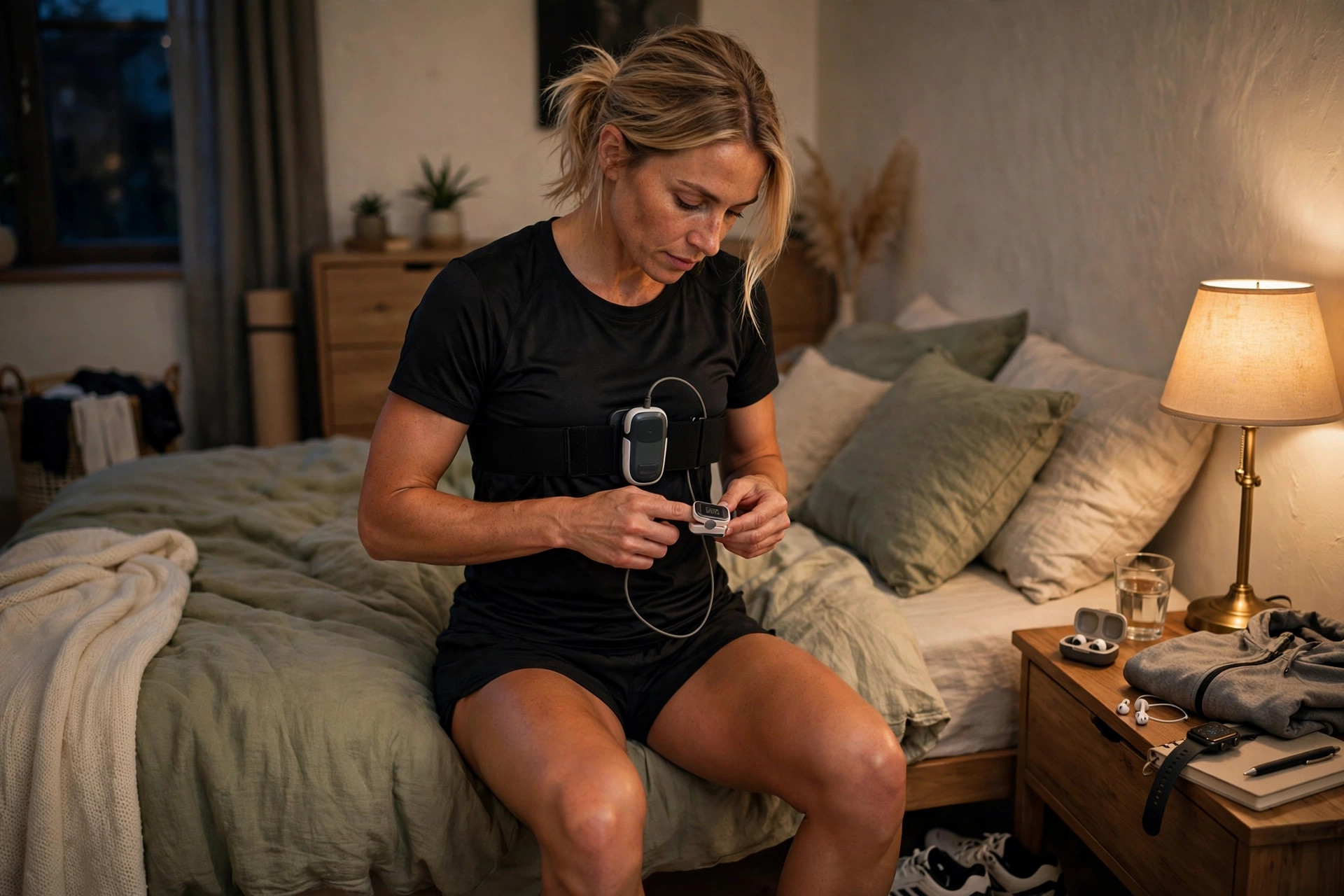
An in-lab polysomnography is the detailed overnight study in a sleep centre, with sensors tracking brain activity, eye movement, muscle activity, heart rate, breathing, and oxygen. It’s the gold standard, and it’s what you need when home results are unclear, when other sleep disorders are suspected, or when you have significant heart or lung conditions.
Either way, results come back as the apnea-hypopnea index, or AHI: the average number of breathing pauses or reductions per hour of sleep. Under 5 is considered normal, 5 to 14 is mild, 15 to 29 is moderate, and 30 or more is severe. That number, plus your symptoms, is what drives treatment — not a single night of snoring.
What treatment looks like (and what it does to performance)
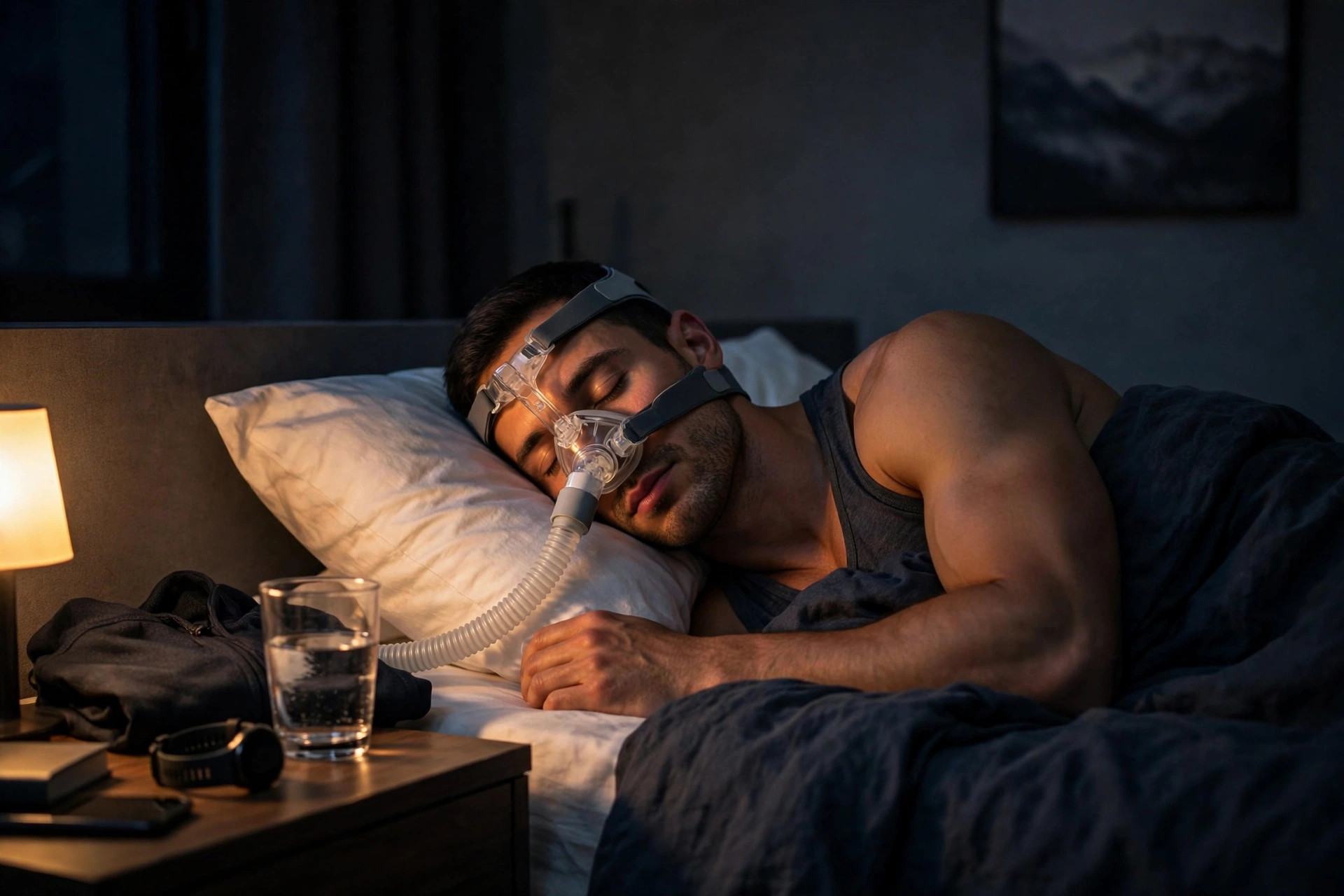
For moderate to severe sleep apnea, the most effective treatment is CPAP — continuous positive airway pressure. A small machine blows gentle air through a mask, keeping your airway open all night. I know: a mask sounds like the opposite of athletic. But talk to athletes who’ve actually stuck with it and the story flips fast. One former NFL centre has publicly credited his sleep apnea diagnosis and CPAP treatment with saving his career after years of exhaustion, irritability, and poor performance he couldn’t explain.
Other options exist depending on severity and anatomy: custom oral appliances that hold the jaw forward, positional therapy if your apnea is much worse on your back, and weight management where excess weight is a contributor. In December 2024, the FDA also approved tirzepatide (Zepbound) for moderate-to-severe obstructive sleep apnea in adults with obesity — the first medicine approved for the condition. None of these are do-it-yourself fixes, and none of them replace a proper diagnosis. But the broader point stands: this is a treatable problem, and treating it restores the recovery window your training depends on.
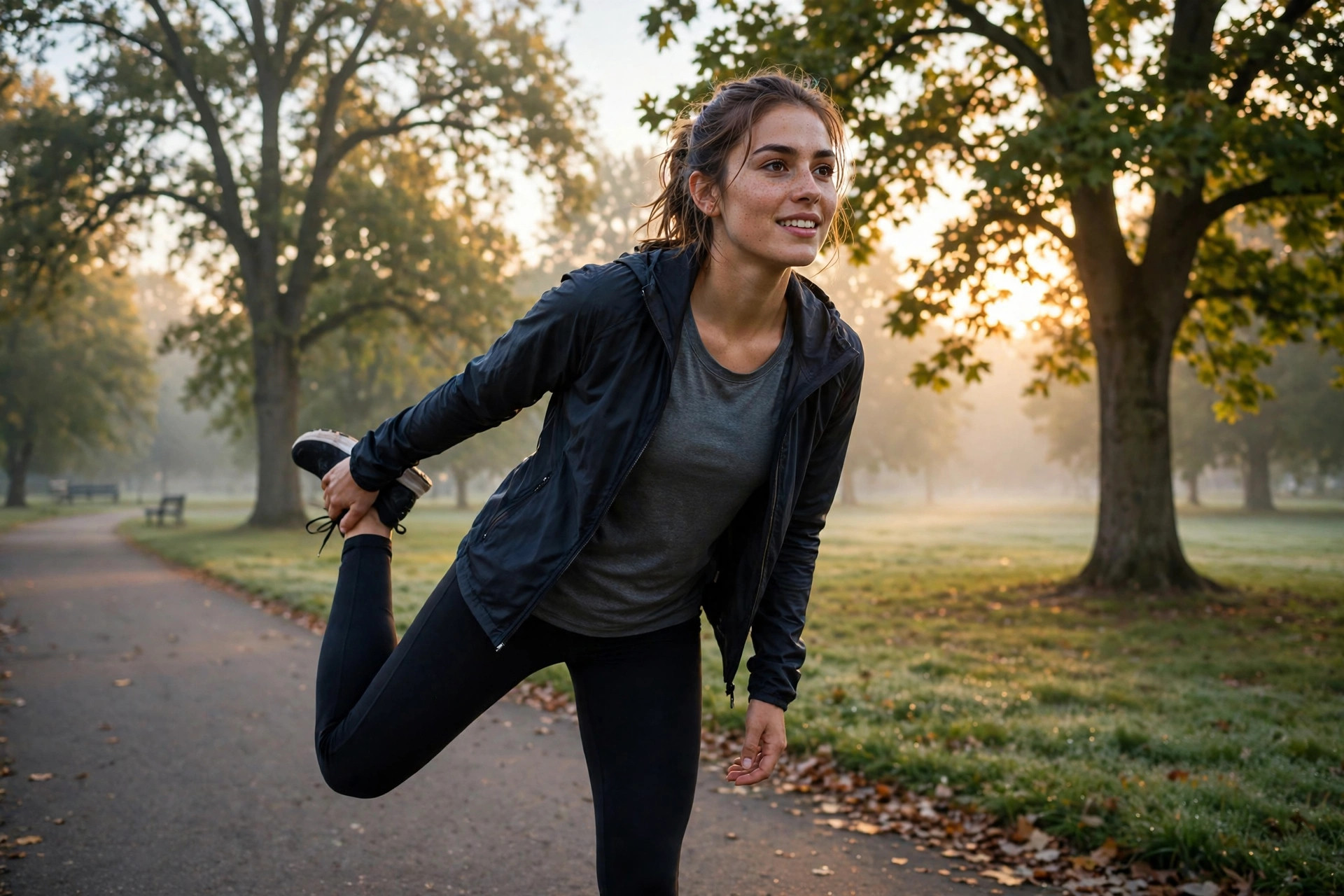
Will fixing it make you faster? Nobody honest can promise that. What the evidence supports is more modest and more important: better sleep quality, less daytime sleepiness, sharper reaction times, and a recovery process that finally gets to do its job. For an athlete who has been training through a broken night for months, that alone can feel like a performance breakthrough.
Myth vs fact: sleep apnea in athletes
Myth: Only overweight, older people get sleep apnea. Fact: Higher weight raises the risk, but airway anatomy, neck circumference, and family history matter too — and athletes in size-rewarded sports are among the most affected groups in the research.
Eight hours in bed is not the same as eight hours of recovery. Myth: If you sleep eight hours, your sleep is fine. Fact: Eight hours of fragmented sleep, interrupted hundreds of times by breathing pauses, is not eight hours of recovery. Hours in bed and sleep quality are different things.
Myth: Snoring is just annoying, not a health issue. Fact: Loud, frequent snoring — especially with witnessed pauses in breathing — is the single most common early warning sign. On its own it isn’t a diagnosis, but it is a reason to get checked.
A sleep test does not have to mean a night wired up in a strange lab. Myth: A sleep test means a night wired up in a strange lab. Fact: For many straightforward cases, the first step is a small device you wear in your own bed for one night.
Myth: CPAP means your athletic career is over. Fact: Plenty of athletes use CPAP and perform at a high level. The career risk runs the other way: untreated sleep apnea is what quietly wrecks performance.
When to stop reading and book an appointment
Get checked promptly — not someday — if someone has seen you stop breathing during sleep, if you regularly wake up gasping or choking, if you fall asleep unintentionally during the day (especially while driving), or if you have morning headaches plus loud snoring. Those are red flags, not quirks.
Otherwise, make it a simple rule: if you’ve had two or more of the warning signs for more than a few weeks, and your recovery isn’t responding to the usual fixes — better sleep hygiene, lighter training weeks, proper fuelling — bring sleep apnea up with your doctor specifically, by name. Don’t just say “I’m tired.” Say “I snore, my partner has seen pauses in my breathing, and I’m exhausted despite eight hours in bed.” Specific symptoms get specific tests.
FAQs
Can you have sleep apnea without snoring?
Yes. Snoring is the most common sign, but not everyone with sleep apnea snores loudly — and some people, especially those with central sleep apnea or milder cases, may show mainly daytime symptoms like exhaustion, poor concentration, and morning headaches. Absence of snoring doesn’t rule it out, which is why witnessed breathing pauses and daytime sleepiness matter just as much.
Is a home sleep test as good as a lab study?
For straightforward suspected moderate-to-severe obstructive sleep apnea, a home test is often enough to confirm the diagnosis. But it measures fewer things — no brain waves, no sleep staging — so it can miss other sleep disorders and can underestimate severity. If home results are negative but symptoms persist, or if you have heart or lung conditions, an in-lab study is the right next step.
Does treating sleep apnea actually improve athletic performance?
Direct evidence in athletes is still growing, and no honest source promises faster times from treatment alone. What is well supported is that treatment improves sleep quality, reduces daytime sleepiness, and restores normal overnight oxygen levels — and those are the foundations recovery and reaction time are built on. Think of it as removing a handbrake, not adding an engine.
The bottom line
You can’t out-train a breathing problem you have every night. If you’re doing the work, sleeping the hours, and still waking up wrecked, stop assuming the answer is more training, more discipline, or a new supplement. Ask the question nobody in your training group is asking: is something interrupting my breathing while I sleep?
One conversation with your doctor, one night with a small home device, and you might find that the performance breakthrough you’ve been chasing in the gym was waiting in your bedroom all along.
This article is for general information only and isn’t medical advice. If you think you may have sleep apnea, talk to a qualified healthcare professional — especially before starting or changing any treatment.