
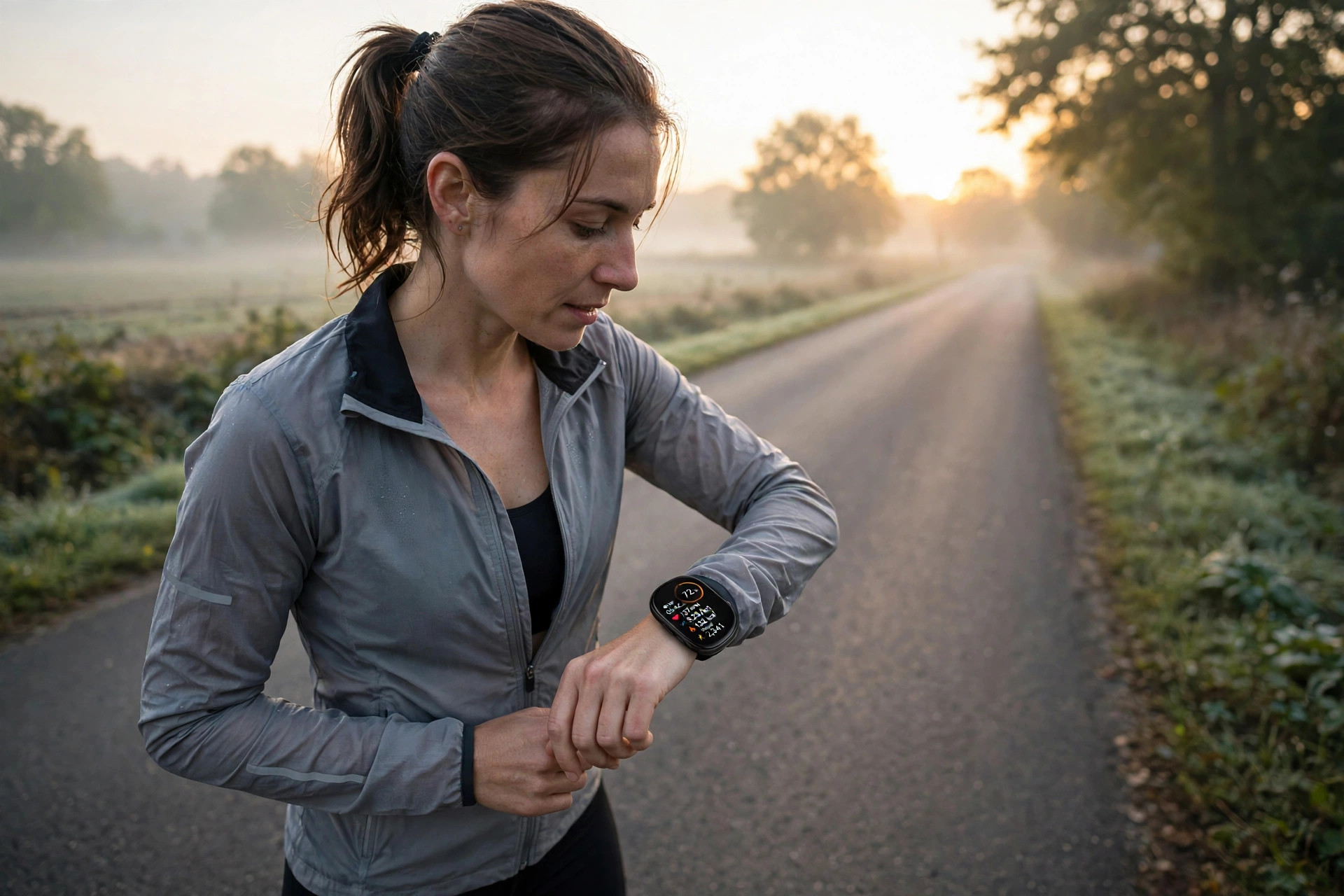

My watch once congratulated me on a “great recovery” on a morning I could barely get out of bed. My legs felt like concrete, my head was foggy, and yet there it was — a cheerful green score telling me I was ready to train hard. I ignored it, did an easy session instead, and felt fine the next day. That morning taught me the single most useful lesson about fitness trackers for athletes: the device is a brilliant assistant and a terrible boss.
That’s a timely lesson, too. Wearable technology has just topped the American College of Sports Medicine’s fitness trends list for 2027 — the tenth time it has claimed the number one spot since it entered the survey in 2016. More than 1,400 fitness professionals rated 50 trends on how widely they see them in the industry, and wearables were the only trend in the top three across every job role, work setting, and experience level. But here’s the catch ACSM itself is careful to make: a high ranking reflects visibility and adoption, not proof that something works. Popularity is not evidence. So let’s separate the two — what the trials actually show, where trackers mislead, and how to use one without letting it run your training.
Why Everyone’s Wrist Is Suddenly a Coach
A decade ago, a tracker mostly counted steps. Today’s devices estimate heart rate, sleep, training load, and recovery — all without you logging a thing. Over weeks, that background data sketches a picture of your life that no single workout ever could.
For athletes, that picture matters because training is rarely ruined by one bad session. It’s ruined by the slow pile-up: a few short nights, a resting heart rate creeping upward, easy days that quietly stopped being easy. A tracker is good at catching that drift early — if you know which numbers to trust.
What the Evidence Actually Says: Trackers Do Get People Moving
This is the strongest part of the case, and it’s not marketing. In 2022, researchers at the University of South Australia pulled together 39 systematic reviews and meta-analyses — covering nearly 400 studies and around 164,000 people — into one umbrella review in The Lancet Digital Health. Their headline finding was refreshingly concrete: people using wearable activity trackers walked roughly 1,800 extra steps a day, about 40 more minutes of walking, and lost on average around 1 kilogram over five months.
Now, 1,800 steps doesn’t sound life-changing until you run the numbers on your own life. Say you currently average 6,200 steps a day — a normal figure for someone who trains but sits at a desk. Add 1,800 and you’re at 8,000, without adding a single workout. Over a week, that’s 12,600 extra steps. The benefit isn’t a dramatic transformation — it’s a quiet daily nudge, repeated hundreds of times.
The same review found improvements in body composition and fitness, though effects on other health outcomes were small and often not statistically significant. One honest caveat: most trials ran for weeks or a few months, not years, and many paired the device with goals, coaching, or feedback. The tracker rarely worked alone.
That also explains why the 10,000-step target deserves a second look. A round number is a fine starting point, but the real win in the research is moving more than you did yesterday, consistently, not hitting an arbitrary daily badge.
Where Your Tracker Misleads You
Here’s where I get blunt, because this is where athletes get hurt — not physically, usually, but by bad decisions dressed up as data.
First, sleep stages. Trackers are reasonably good at total sleep time, but the neat pie chart of light, deep, and REM sleep is far shakier. Reviews comparing consumer devices against laboratory polysomnography find they tend to overestimate deep sleep and underestimate REM and wakefulness. So trust the total hours; treat the stage breakdown as entertainment, not diagnosis. If your sleep efficiency is sliding, that’s a real signal — but don’t lose sleep over a single night’s REM percentage.
Second, wrist heart rate during hard efforts. Optical sensors shine light into your skin and measure blood-volume changes, which works beautifully when your wrist is still and your heart rate is steady. During intervals, heavy lifting, or anything with a lot of arm movement, the signal degrades, and errors of 10 to 15 beats per minute are common. That’s why a chest strap still earns its place: it measures the heart’s electrical signal directly, and it stays accurate when your wrist sensor starts guessing. If you’re doing precise interval work, pair the strap. If you’re doing steady Zone 2 running, your wrist is close enough.
Third — and this is the big one — composite “readiness” or “recovery” scores. These are the numbers behind my green-score morning. The algorithms are mostly secret, poorly validated, and they blend sleep, heart rate variability, and training load into a single verdict that feels far more certain than it is. A score can’t know about a stressful day or a restless night with a toddler. Use it as one input, never as permission or a prohibition.
Myth vs. Fact: The Tracker Edition
Myth: A higher daily step count means you’re fitter.
Fact: Steps measure movement volume, not fitness. You can walk 15,000 steps and still have poor aerobic capacity if none of it is brisk. Steps are a floor, not a ceiling.
Myth: Your watch’s calorie burn is accurate.
Fact: Calorie estimates are the weakest numbers on most devices, especially for strength training and mixed sessions. Use them for rough trends, never for precise fuelling decisions.
Myth: One bad HRV reading means you’re overtrained.
Fact: Heart rate variability jumps around day to day. A single low reading means almost nothing; a seven-day rolling average trending down for a week means something. Track the line, not the dot.
Myth: More data automatically means better training.
Fact: More data means better training only when it changes a decision. If you collect six metrics and act on none of them, you own an expensive bracelet.
How to Use a Fitness Tracker Like an Athlete
So here’s the system I’d actually recommend — the one I wish I’d followed on that green-score morning.
One: pick three numbers and ignore the rest for a month. Resting heart rate, total sleep time, and daily steps (or training load, if you train seriously) cover almost everything that matters. Everything else is garnish.
Two: judge trends over seven to fourteen days, never a single morning. A resting heart rate that drifts from 54 to 62 over ten days, with nothing else changed in your life, is a real warning. One night at 62 is just a night.
Three: attach every metric to a decision before you look at it. If sleep is under seven hours for three nights, the hard session becomes easy — that’s a rule, not a feeling. If your post-workout recovery routine is slipping because you’re chasing a streak, the streak loses. The tracker serves the plan; the plan never serves the tracker.
Four: use the right tool for the job. Wrist for daily life and steady cardio, chest strap for intervals and races, and your own body for the final call. On the morning my watch said “ready” and my legs said “no,” my legs were right — and they usually are.

Do You Actually Need One?
Honestly? Not everyone does. If you already train consistently, sleep well, and know your body, a tracker may only confirm what you know. Where it earns its money is for three groups: people trying to build a movement habit from scratch, athletes returning from injury or illness who need objective guardrails, and anyone whose training load has quietly crept up without them noticing.
If you do buy one, don’t buy the most expensive model first. Buy for the sensors you’ll use: heart rate and sleep tracking for daily habits, GPS if you run or cycle outdoors, chest-strap compatibility if you train hard. Battery life matters more than most features — a tracker you must charge nightly is one you’ll stop wearing. In one large workplace trial, around 40 percent of participants had stopped wearing their device within six months.
The Bottom Line
Wearables topped the 2027 trends list for a reason: they’re genuinely useful, and the best evidence says they help ordinary people move more. But a trend ranking is a popularity contest, honestly labelled, and popularity doesn’t turn a sleep-stage estimate into a diagnosis or a readiness score into a coach. The athletes who get the most from fitness trackers for athletes are the ones who treat them the way a good coach treats data — as evidence to weigh, not orders to obey.
So wear the watch. Check the trends. Then go for a walk, do the session your body actually needs, and let the numbers catch up with you — not the other way round.
FAQ: Can a fitness tracker tell if I’m overtrained?
Not on its own. It can flag warning signs — rising resting heart rate, falling sleep, a declining HRV trend — but overtraining also involves mood, performance, illness, and life stress. A tracker sees numbers; only you (and ideally a coach or clinician) see the whole picture.
FAQ: Is a chest strap really better than a wrist sensor?
For hard, stop-start, or grip-heavy training, yes — chest straps measure the heart’s electrical signal and stay accurate when wrist optics struggle. For resting measures and steady cardio, a modern wrist sensor is close enough.
FAQ: How long should I wear a tracker before trusting its data?
Give it two to four weeks to establish your personal baseline. After a month of consistent wear, the trends — resting heart rate, sleep, steps — start to mean something, because they’re yours, not a population average.
Conclusion: Let the Watch Inform You, Not Rule You
The best thing a tracker can do is make the invisible visible: the slow drift in your sleep, the week your movement quietly collapsed. The worst thing it can do is replace your judgment with a coloured score. Keep the first, refuse the second.
This article is for general information only and is not medical advice. If you have a heart condition, a sleep disorder, or symptoms that concern you, talk to a qualified healthcare professional before changing your training.