
Here’s a sentence I never thought I’d write: getting the all-clear at your checkup might be exactly why nobody’s spotting the real problem.
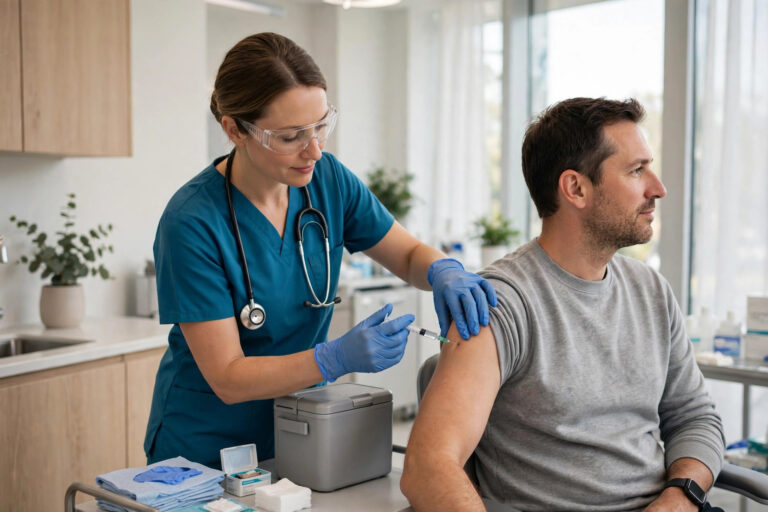
Picture this. You go in for your annual visit, the nurse wraps the cuff around your arm, and a minute later the doctor says those magic words: “Your blood pressure is perfect.” You float out of there feeling great. And why wouldn’t you? That little number feels like a report card on your whole cardiovascular system.
Now imagine someone who’s had that exact experience — and then took a nasty fall in her own kitchen six months later. New research says those two things might be connected. Not in the way you’d expect, either.
What researchers found at the AHA’s big 2026 meeting
Earlier this month, at the American Heart Association’s Hypertension Scientific Sessions in Arlington, Virginia, a team led by Frances Wang, PhD, of Beth Israel Deaconess Medical Center in Boston dropped a finding that’s got doctors rethinking the humble blood pressure check.
They looked at 758 adults between the ages of 78 and 98 — median age 83 — drawn from the Atherosclerosis Risk in Communities study, a research project that’s been tracking people’s heart health since 1985. More than four out of five participants were already taking blood pressure medication.
Here’s where it gets interesting. The researchers didn’t just measure blood pressure at the doctor’s office. They compared office readings (three readings, one minute apart, after five minutes of seated rest) with home readings taken morning and evening over eight non-consecutive days.
That comparison revealed four very different groups. And one of them had a problem nobody could see from the office chair.
So what is masked hypertension, exactly?
You’ve probably heard of “white coat hypertension” — your blood pressure spikes at the doctor’s office because you’re nervous, but it’s normal at home. Masked hypertension is the mirror image: your readings look perfectly normal in the office, but they’re high at home, where you spend most of your life.
In this study, the breakdown went like this: 34.5% had sustained hypertension (high in both places), 17% had white coat hypertension, 15.4% had masked hypertension — and 33.2% were genuinely normal everywhere. So roughly one in six of these older adults had high blood pressure that their doctor’s office readings completely missed.
My neighbor Rosa — 81, sharp as a tack, walks her dog twice a day — is the kind of person this applies to. Her doctor raves about her numbers every spring. Meanwhile her home readings, the ones she casually mentioned to me over the fence last summer, tell a different story. Rosa doesn’t have a diagnosis of anything. She just hasn’t been asked to look.
The part that should make us all pay attention
Over a follow-up of about a year, nearly one in four participants (23.4%) reported falling at least once. And the masked hypertension group fell more — a lot more. Their fall rate was 70% higher than people with sustained hypertension.
Read that again, because it’s weird. The people whose blood pressure was high everywhere fell less often than the people whose office readings looked fine. Meanwhile, the white coat group — high at the office, normal at home — actually had a lower fall risk than the sustained group.
This flips the usual script. We’re used to thinking of low blood pressure as the fall culprit, and fair enough — dizziness when you stand up is a real thing. But this study suggests that blood pressure swings between settings, or blood pressure that’s high where it isn’t being monitored, may mess with the body’s stability in ways we don’t fully understand yet. Researchers suspect things like blood vessel stiffness and blood pressure variability could affect balance regulation, but honestly, the “why” is still an open question.
One more reason to take this seriously: according to the CDC, falls are the leading cause of disability and functional decline in adults 65 and older. This isn’t a minor stat.
A quick reality check before we go further
This study is a conference abstract, which means it hasn’t been through full peer review yet. The findings are considered preliminary. And because it’s observational, it shows a link — not proof that masked hypertension causes falls. Frances Wang herself put it carefully: “Preventing falls in elderly adults should be a top priority. These findings highlight that, in addition to office blood pressure measurement, home blood pressure readings can be an important way to identify hidden home high blood pressure and risk of falls in older adults.”
Still, the AHA’s own 2025 blood pressure guideline already recommends home monitoring to confirm an office diagnosis. This research just adds a pretty compelling reason to follow that advice.
How to check your own numbers the way the researchers did
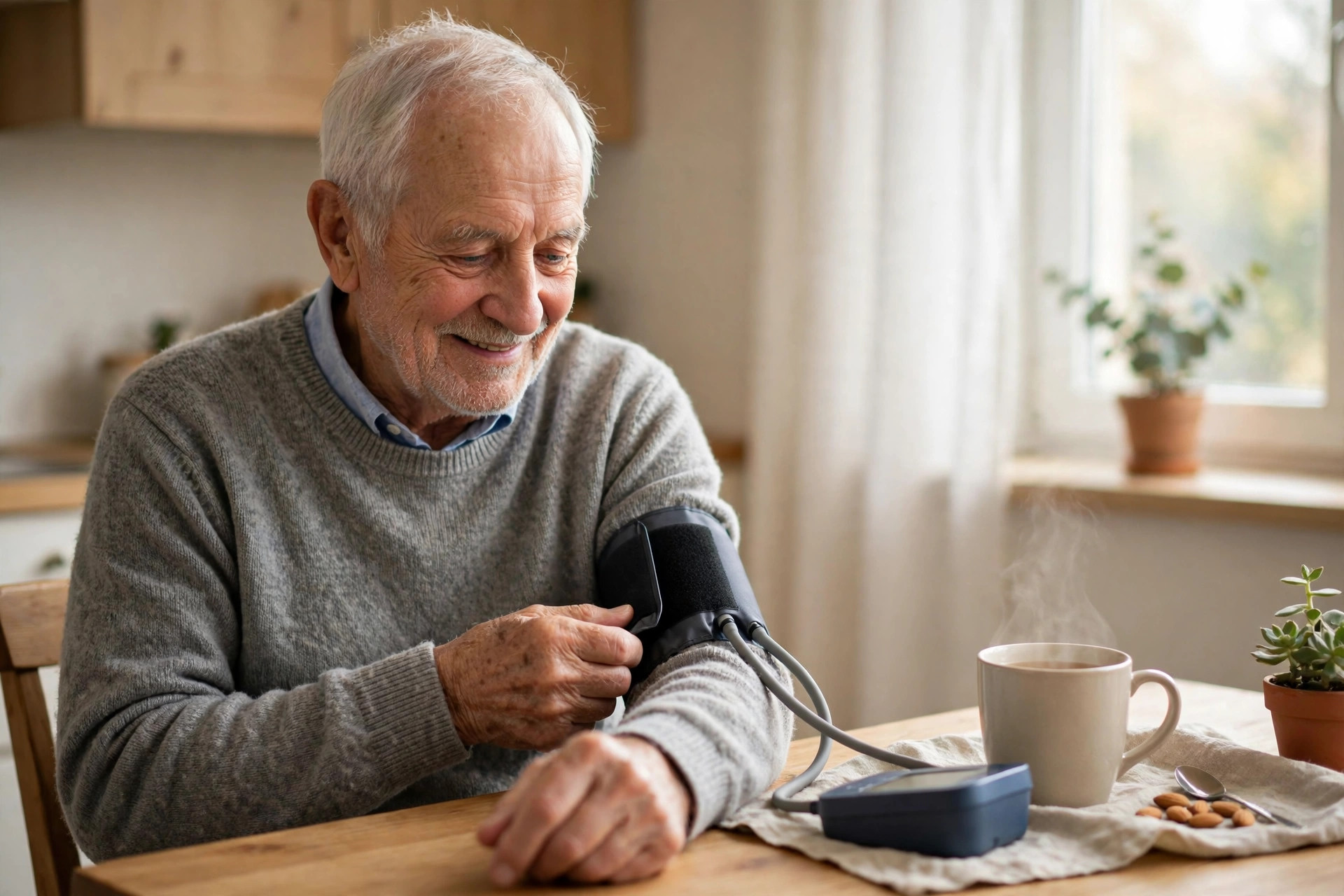
You don’t need a lab coat for this. A validated upper-arm home blood pressure monitor costs less than a month of most streaming subscriptions. Here’s the routine that actually produces trustworthy numbers:
- Sit properly. Back supported, feet flat on the floor, arm resting at heart level. Wait five full minutes before the first reading.
- Take two readings, one minute apart, and write both down. Do this in the morning before your medication and again in the evening.
- Repeat for about a week. The researchers used eight non-consecutive days; a consistent seven-day run gives you a solid picture.
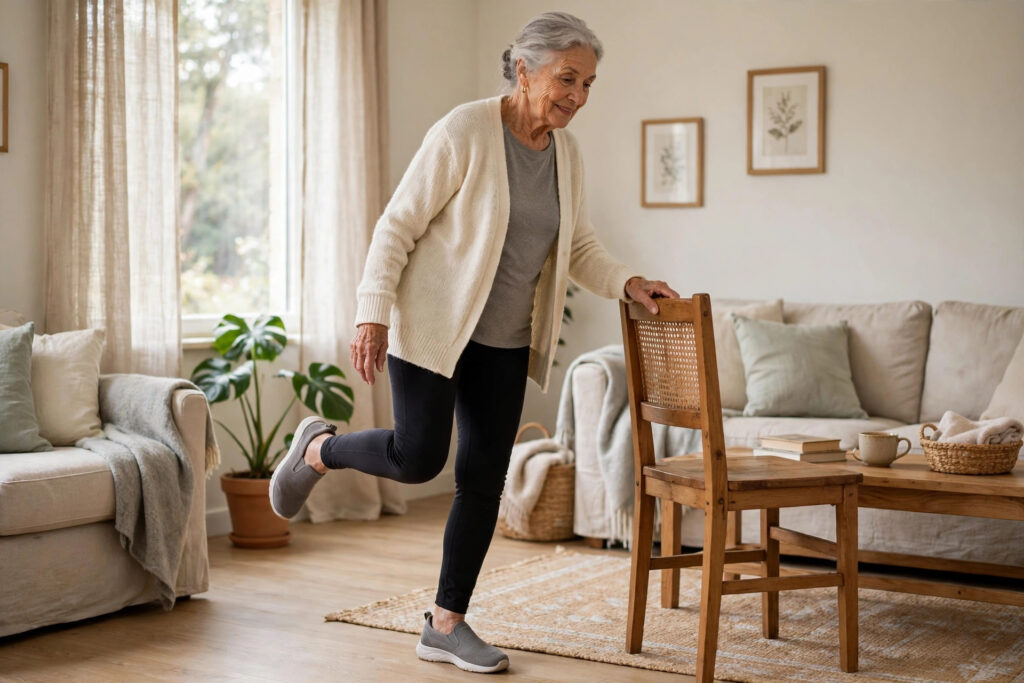
- Log everything — date, time, and both readings. A notebook works. Your phone’s notes app works better.
- Bring the log to your doctor and let them interpret it. Never adjust, stop, or start blood pressure medication based on home readings alone. That’s your doctor’s call, full stop.
Pair monitoring with the thing that prevents falls anyway
Here’s the good news: while you sort out your blood pressure picture, you can work on the other half of the equation right now. Falls have plenty of preventable causes — weak legs, shaky balance, a cluttered hallway — and each one responds to simple, boring, effective training.
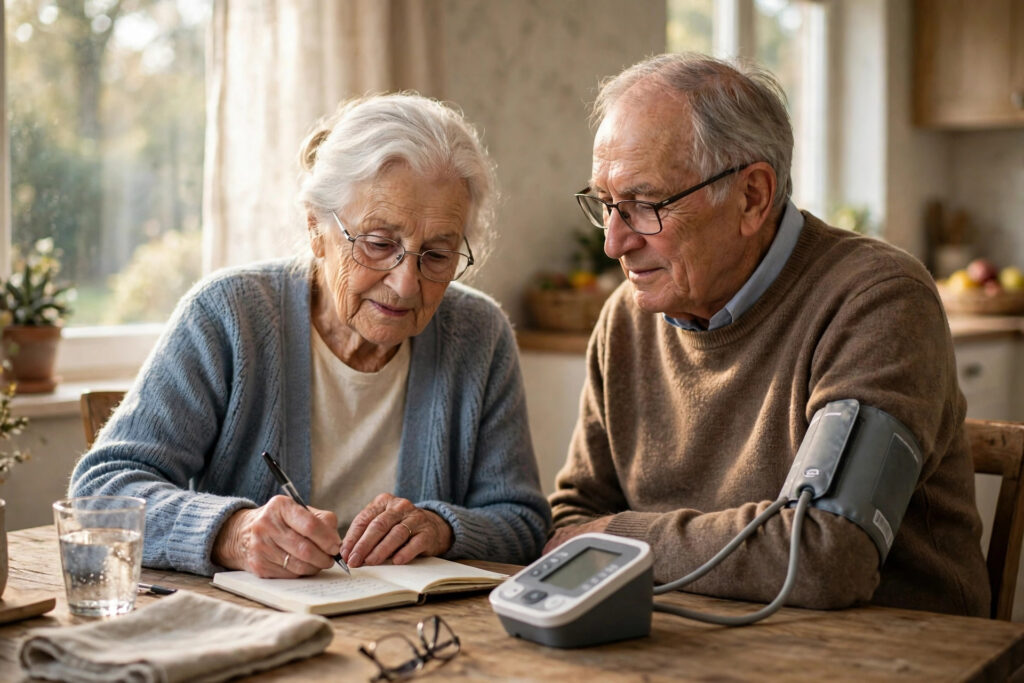
Stand behind a sturdy chair and practice standing on one leg for 10 seconds per side. Walk heel-to-toe down a hallway like you’re on a tightrope. Do sit-to-stand reps from a firm chair to build the leg strength that catches you when you stumble. Our 4-minute daily workout routine was literally designed for adults over 65 and includes exactly these kinds of moves — chair stands, wall push-ups, balance holds — in a session shorter than a coffee break. Building that capacity into a full body maintenance and injury prevention routine gives your body more ways to save itself when your foot catches a rug edge. And since stress nudges blood pressure upward on its own, a few minutes of breathing exercises that help you unwind in the evening do double duty for your readings and your sleep.
Frequently asked questions
If my office blood pressure is normal, should I be worried?
Not worried — curious. A normal office reading is good news, but this study shows it doesn’t tell the whole story for everyone, especially past 78. A couple of weeks of home readings is a cheap, easy way to find out whether your numbers look the same at home. If they do, great — you can stop wondering.
My home readings look high. Should I change my medication?
No. Don’t touch your medication based on home readings alone. Write the numbers down, bring them to your next appointment, and let your doctor decide. Changing blood pressure drugs on your own can be genuinely dangerous.
I’m under 78 — does any of this apply to me?
The study only looked at adults 78 and older, so we can’t say the same fall risk applies to younger people. But the underlying lesson travels well: the AHA recommends annual blood pressure monitoring for all adults, and home monitoring is the simplest way to confirm what your office readings suggest. If you’re active, training hard, and only ever get checked once a year, a home cuff closes a big blind spot.
The bottom line
For decades, the doctor’s office blood pressure reading has been treated as the final word. This research says it might be more like the opening chapter. In adults over 78, blood pressure that hides at home was linked to a 70% higher fall risk — a finding worth knowing about whether you’re 80 or you’re buying the home monitor for a parent who is.
The takeaway is beautifully simple: check at home, write it down, bring it in. That’s it. Two minutes, twice a day, for a week — and you might catch something that a perfect office visit never would.
Medical disclaimer: This article is for informational purposes only and is not a substitute for professional medical advice, diagnosis, or treatment. Blood pressure management and fall prevention strategies should always be discussed with your doctor or another qualified health provider. Never start, stop, or change any medication without consulting your healthcare professional.