
The Real Timeline: 3.5, 8, 11
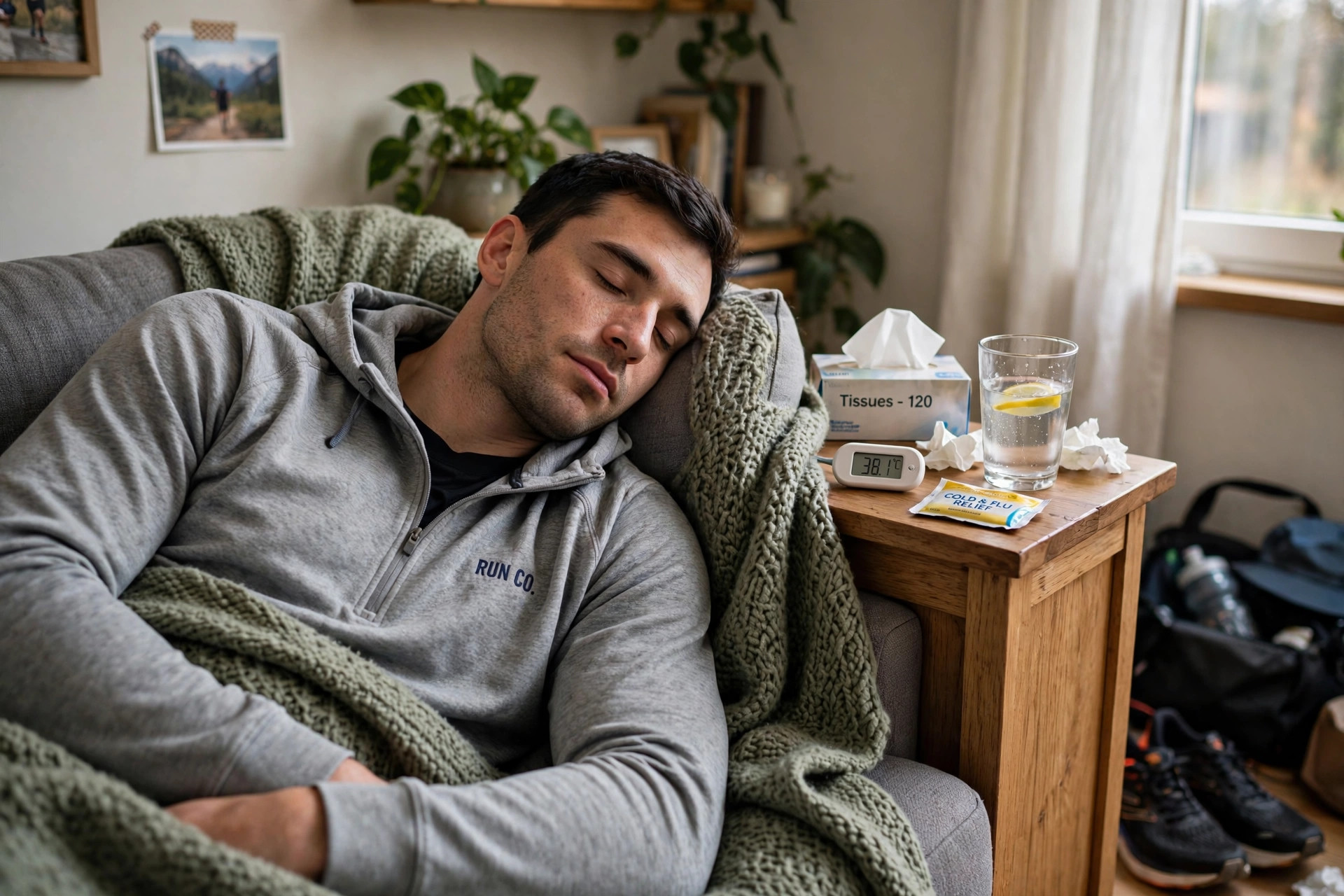
You know the feeling. It’s 9pm, your throat has that sandpapery tickle, and your head is already doing the math: if I skip tomorrow’s session, the whole week’s shot.
So you search it — training with a cold — and drown in forty-year-old locker-room wisdom. Above the neck, you’re fine. Below the neck, rest. The “neck check.” It’s advice your high-school coach gave you, and honestly, it wasn’t terrible. But it was never really data.
Now we have data. A 2026 study in the British Journal of Sports Medicine followed 114 athletes through pathogen-confirmed respiratory infections — not self-diagnosed sniffles, actual lab-tested bugs — and tracked exactly how long it took them to get back to normal training. The results are more useful than anything the internet’s been recycling for decades.
Here are the numbers, and they’re worth pinning to your fridge:
- Median return to any training: 3.5 days after symptoms started. A little over half the athletes did something — an easy spin, a walk, a light lift — by day four.
- Median return to full training load: 8 days. A full week-plus before they were back doing their normal sessions.
- Median return to pre-illness performance: 11 days. Almost two weeks before they actually felt like themselves again.
Read that last one twice. Eleven days. Most of us give a cold about three days of our patience, then we show up to the gym on day four expecting to pick up exactly where we left off. These numbers say that’s fantasy. Your body is still paying the bill well after the congestion clears.
I’ve done exactly this — gone back too early, felt fine for the first twenty minutes, then crashed so hard by minute forty that I lost the rest of the week too. Turns out I wasn’t weak-willed. I was just earlier than day eleven.
Not Every Bug Charges the Same Price
Here’s where the study gets genuinely useful. The researchers split the infections by pathogen and by severity (using the IOC’s consensus categories — mild, moderate, severe), and the differences were big.
Influenza and SARS-CoV-2 knocked athletes out noticeably longer than rhinovirus — the common cold. So “a cold” and “the flu” aren’t interchangeable when you’re planning your comeback. The flu cost several extra days at every stage: later first session, later full load, later feeling normal. If you’ve been through a rough flu stretch, our flu-season training guide has the prevention side covered.
Severity mattered just as much. Athletes with severe infections — fevers, chest symptoms, that flattened feeling — needed longer across the board than those with mild sniffles. Which sounds obvious until you realize what it implies: the athletes who got back fastest weren’t the toughest ones. They were the luckiest ones — mild bug, mild symptoms.
The takeaway: calibrate to your illness, not your training partner’s. Her three-day turnaround means nothing if your bug is worse than hers.
What Training With a Cold Should Actually Look Like
So what’s the practical playbook? The data suggests something like this:
Days 1–3 (symptoms peak): rest. This is where the 3.5-day median comes from. Sleep, fluids, food. Your immune system is doing actual work, and every hard session you squeeze in competes with it for resources.
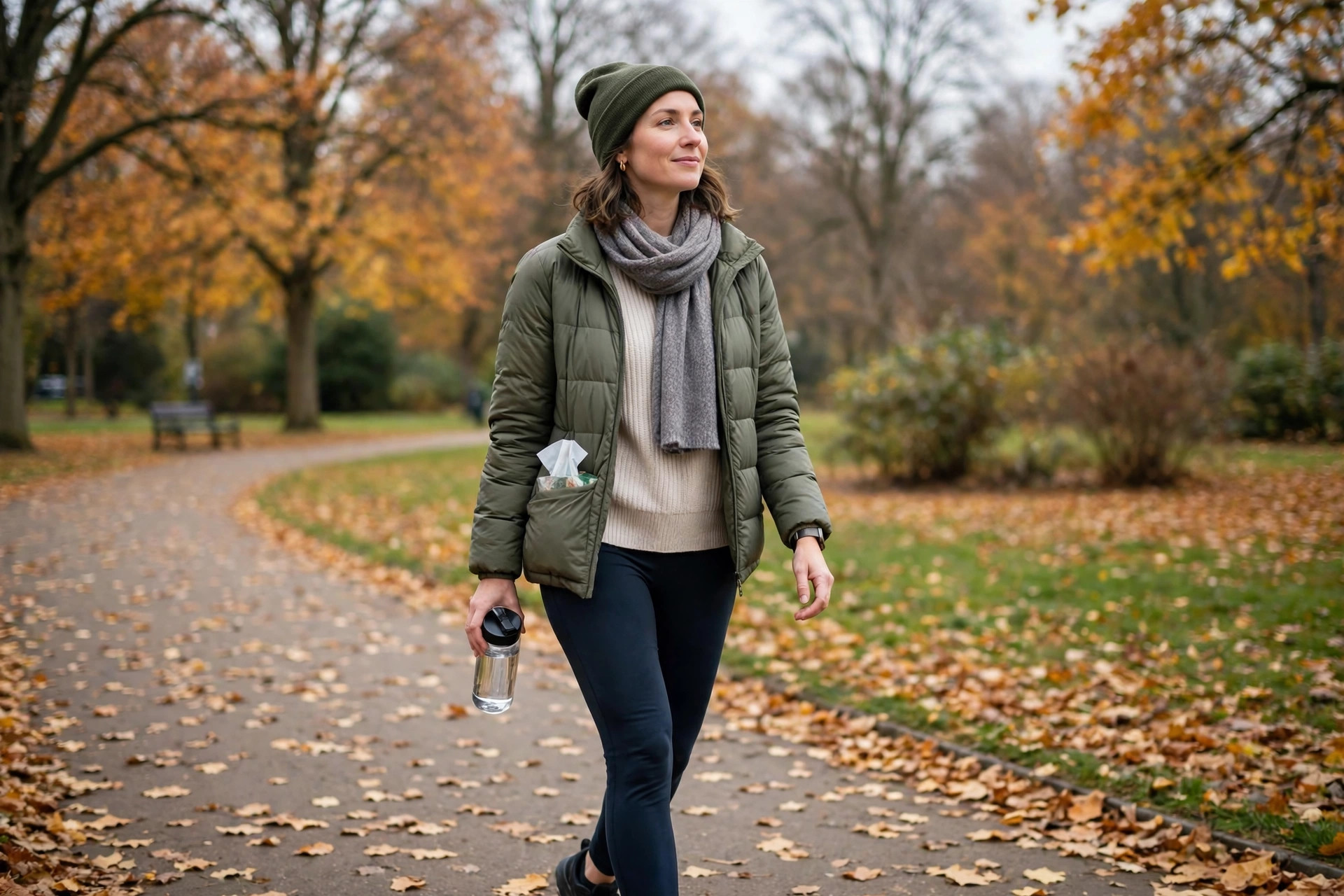
Days 4–8 (easing back in): easy movement only. Walks, easy cycling, mobility work. Keep your heart rate conversational — the old talk test still works. If you can’t hold a conversation, you’re going too hard. One hard effort here is what buys you the extra-week relapse. A solid post-workout recovery routine matters even more during this window.
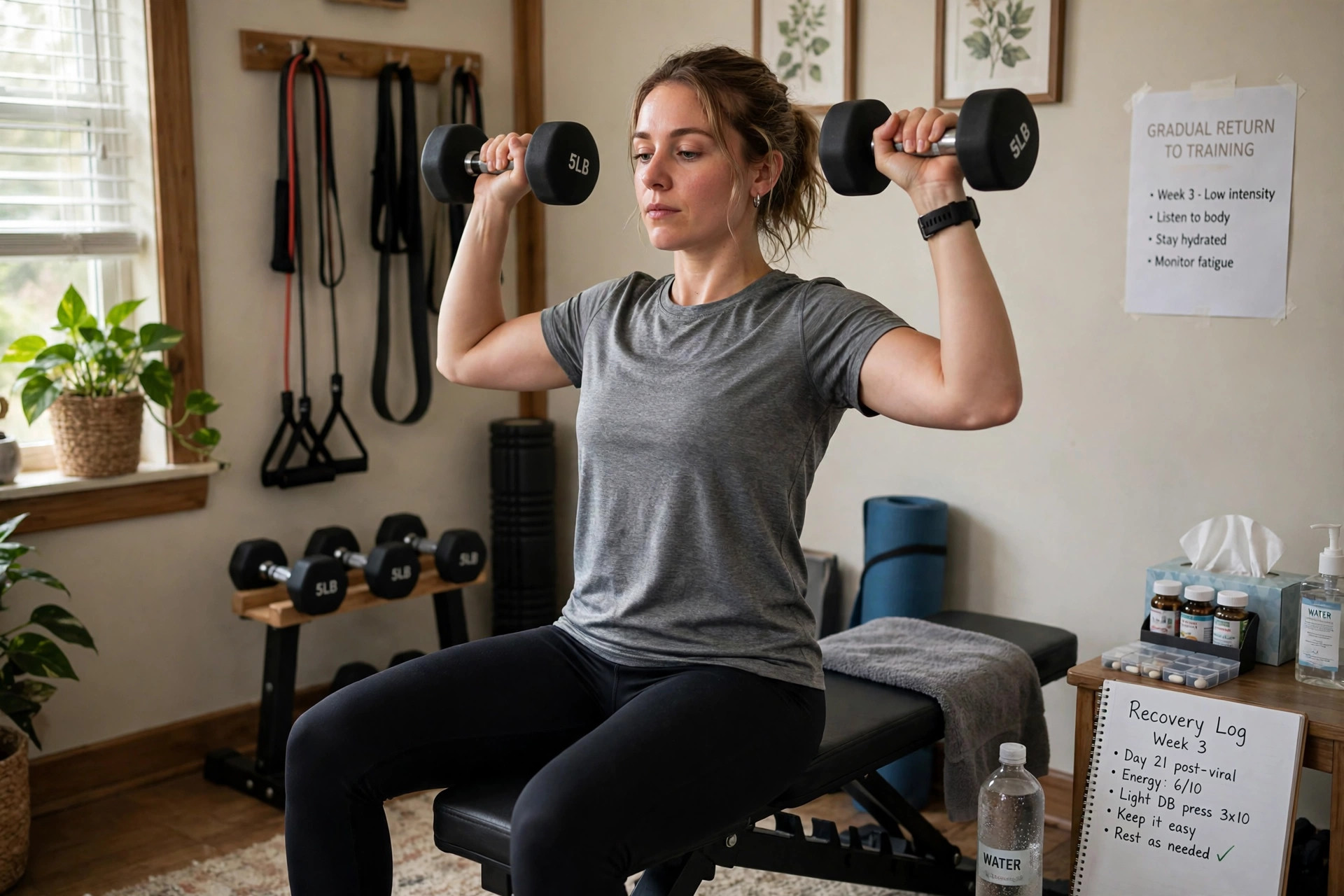
Days 8–11 (rebuilding): ramp gradually. Add volume before intensity. Get your normal training load back before you chase your normal performance. This is the part almost everyone skips, and it’s exactly the gap the study found: athletes were doing their full sessions (day 8) a full three days before they were performing like themselves (day 11).
After day 11 (or when you genuinely feel 100%): full send. If you’re still dragging past the two-week mark, that’s not a comeback problem anymore — see the doctor question below.
The Mistake That Costs Athletes Two Weeks Instead of One
The most expensive error isn’t resting too long. It’s the day-four hero session — going out, feeling okay for the warm-up, then burying yourself to “prove” you’re fine. The fallout has a clinical name (post-viral fatigue); athletes just call it the worst week of the season. One overreach while you’re still recovering can re-trigger symptoms and reset the whole timeline. Athletes coming back from chronic fatigue know this pattern well — the crash after pushing too soon.
A useful rule from the data: give it one more easy day than you think you need. If you feel 90% today, train at 60%. Your fitness isn’t going anywhere — it takes two to three weeks of total inactivity before aerobic fitness declines meaningfully. You are not in that territory. You are in “smart for three more days” territory.
Can I exercise with a runny nose?
Probably, if that’s genuinely all it is. Mild, above-the-neck symptoms with no fever and normal energy are the study’s mild category — the group that got back fastest. Keep it easy, keep it short, and skip the gym itself (your fellow lifters will thank you). But a runny nose plus body aches or a temperature is a different illness. Treat it like one.
How long should I wait after the flu to train hard?
Longer than you want to. Flu ran slower than rhinovirus at every stage in this study, so budget the full timeline — roughly 8 days to normal load, 11 to normal performance — and don’t compress it. If the flu included a real fever, add a buffer: no hard effort until you’ve been fever-free without medication for at least 48 hours.
When should I see a doctor instead of just waiting it out?
Chest pain, wheezing, or shortness of breath at rest. A fever that won’t break after a few days. Symptoms that improve and then come roaring back — the classic relapse pattern. And anything cardiac: a racing or irregular heartbeat during easy efforts in the weeks after an infection deserves a proper check, full stop.
The Bottom Line on Training With a Cold
The 114-athlete study gives training with a cold something it’s never had: an honest calendar. About 3–4 days before you move again, a week-plus before full training, nearly two weeks before you feel like yourself — longer for flu and COVID, shorter for a mild sniffle. Stop negotiating with day four. The athletes who respected the timeline got their fitness back. The ones who fought it just paid twice.
This article is for informational purposes only and is not medical advice. Talk to your doctor before resuming training after a respiratory infection, especially if you had a fever, chest symptoms, or take medication.