
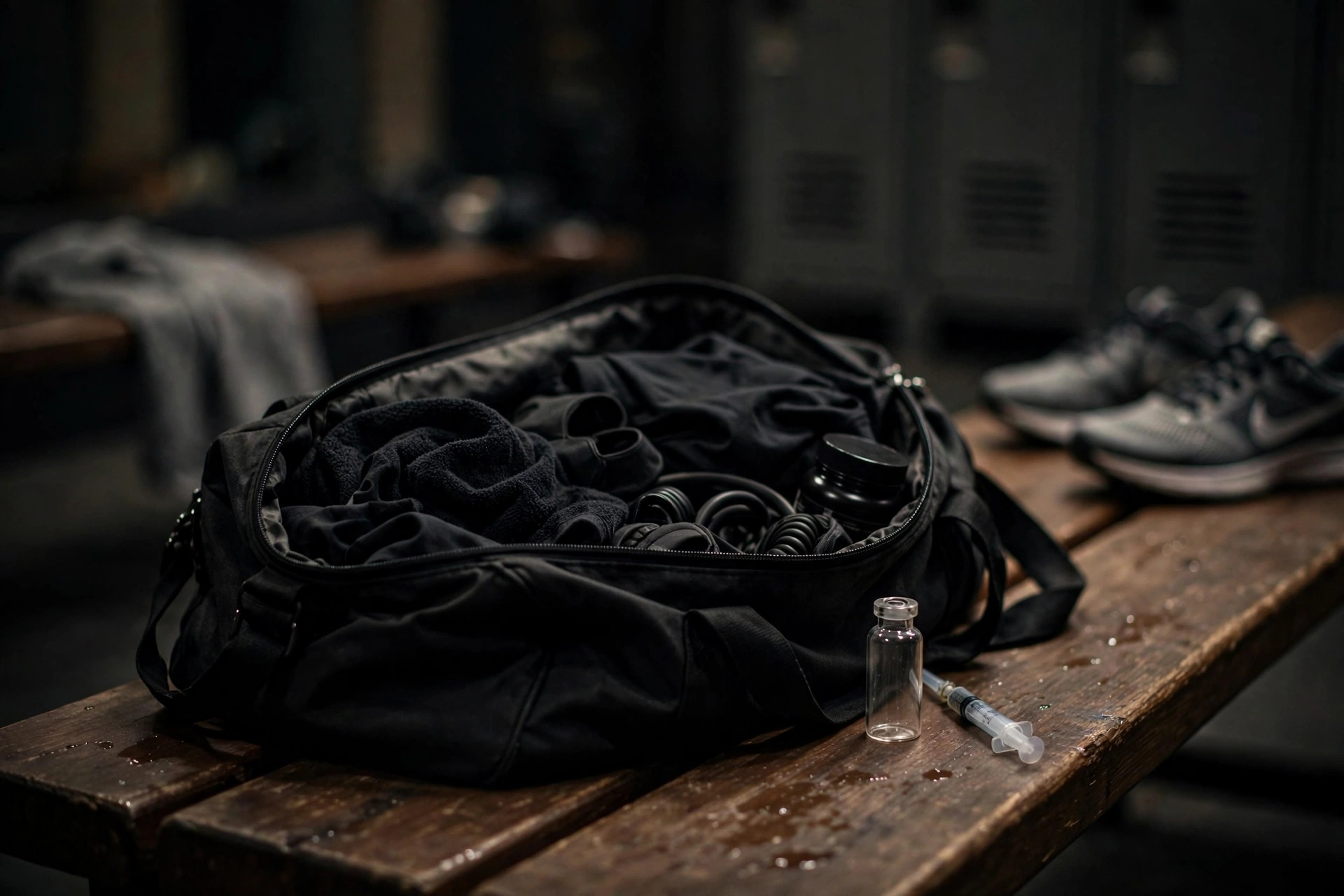

You’ve heard it in the locker room. Somebody’s nursing a cranky tendon, and a teammate leans in: “Mate, just run the Wolverine stack. You’ll be back training in two weeks.”
BPC-157. TB-500. A syringe, a vial labeled “research chemical — not for human use,” and a promise of superhero recovery.
Here’s what nobody in that locker room is saying: in Australia, emergency department visits linked to peptide use just surged 4,240% — from five cases in July 2025 to 217 in September 2026, with retatrutide driving much of the spike. Social media influencers are selling the dream; hospitals are counting the casualties.
So before you order a vial, let’s talk honestly about peptides for athletes: what’s real, what’s marketing, and what could end your season — or worse.
Why Peptides Exploded in Gyms and Locker Rooms

This didn’t come out of nowhere. In July 2026, a U.S. FDA advisory panel recommended loosening restrictions on six popular peptides, including BPC-157 and TB-500. The news hit the fitness world like a starter’s gun. Bodybuilders, biohackers, and podcasters started praising the so-called “Wolverine stack” for healing injuries and accelerating muscle repair.
Searches exploded — including for things like “how much bac water to reconstitute peptides 10mg,” which tells you exactly how people are actually using these: mixing injectables at home based on forum advice.
The appeal is obvious. You’re injured. Physio says eight weeks. Somebody on a forum swears a peptide cut their recovery in half. What do you do?
You read the science first. That’s what this article is for.
What Peptides Actually Are (And Why the Word Is a Mess)
“Peptide” just means a short chain of amino acids — tiny protein fragments the body uses as signaling molecules. But the single word covers three wildly different things, and gym conversations blur them together:
- Food-derived peptides like collagen peptides — sold legally as supplements, taken by mouth. Not prohibited in sport.
- Licensed peptide medicines like insulin and semaglutide — passed clinical trials, prescribed by doctors.
- Unapproved research compounds like BPC-157 and TB-500 — no licensed medical use, sold online for injection. This is what the hype is about.
When someone says “peptides work,” ask which kind. Collagen peptides have actual placebo-controlled trials in runners. The injectable “healing” peptides? That’s a very different conversation.
The 4,240% Number Nobody’s Talking About
Let me put that Australian data in plain terms. In July 2025, five people showed up at emergency departments with problems tied to peptide use. Fourteen months later: 217 in a single month.
Health authorities point the finger partly at retatrutide — the triple-receptor weight-loss drug making headlines — along with a wave of influencers promoting peptides for weight loss, muscle growth, injury recovery, and anti-aging. The official warning is blunt: “There is no certainty about what these products contain, and without proper regulatory oversight there is a risk of adverse effects.”
For athletes, the lesson lands harder: these products flow through the same gray-market supply chains. That vial didn’t come with a pharmacist, a prescription, or any guarantee of what’s actually in it.
What the Science Really Says About Peptides for Athletes
Here’s the uncomfortable part. A 2026 scoping review from UCLA’s orthopaedic surgery department, published in the American Journal of Sports Medicine, examined six peptides marketed for muscle, tendon, and bone recovery — including BPC-157, TB-500, CJC-1295, and ipamorelin.
The findings:
- 67% of all published research used preclinical animal models, mostly rats. The rat results look promising, sure — but rats aren’t athletes.
- Human research was limited to a handful of studies, mostly without proper controls, showing “modest improvements at best” for things like bone health and knee pain.
- The authors’ conclusion was direct: these peptides “should not currently be recommended as a replacement or adjunct for existing orthopaedic standard of care.”
BPC-157 — the darling of the Wolverine stack — is a 15-amino-acid synthetic peptide derived from a protein found in human gastric juice. There are zero published peer-reviewed randomized controlled trials demonstrating it works in humans. None. A Phase 2 trial on hamstring tears (BPC-HAMSTR) is underway, but results aren’t in.
Christopher Robinson, a physician-scientist at Johns Hopkins who specializes in chronic pain and regenerative medicine, puts it well in a September 2026 MedicalXpress report: “People need to understand that there’s a huge difference between peptides that have been rigorously studied and approved as medications, such as insulin and GLP-1 weight-loss drugs, and these newer compounds. These other peptides haven’t been adequately studied in humans and aren’t approved by the Food and Drug Administration.”
Animal healing is not human healing. Every drug that failed in human trials looked great in rats first.
The Real Risks Nobody Puts on the Label
Beyond “it might not work,” here’s what you’re actually risking:
You’re injecting an unknown substance. Studies have found gray-market peptide products ranging from 62% to 100% purity, with actual quantities diverging by up to ±260% from the label. That vial might be under-dosed, contaminated, or something else entirely.
It can end your competitive career. The World Anti-Doping Agency bans BPC-157 under S0 (non-approved substances) and TB-500’s family under S2 — at all times, in and out of competition. Growth hormone-releasing peptides like CJC-1295 and ipamorelin are explicitly named on WADA’s 2026 list. A tested athlete risks up to a four-year ban for a substance with no proven human benefit. That’s the worst trade in sports.
The law is murky. These compounds are sold as “research chemicals, not for human use” precisely because none has approval for that use. Buying them for injection is the black market, with black-market quality control.
We’ve covered what unapproved shortcuts can cost before — a decade-long Norwegian study of steroid-using lifters showed heart damage that lingered years after they stopped. The pattern repeats: short-term promise, long-term bill.

Smarter Ways to Recover (That Actually Have Evidence)
I know — the boring stuff doesn’t trend on TikTok. But here’s what the 2026 review authors actually recommend: proper diagnosis, progressive loading, sleep, and real medical care.
A few evidence-backed moves that outperform any vial:
- Progressive loading for tendons. Tendons heal by being loaded intelligently, not by being bypassed. A good physio’s loading program beats an unproven injection every time.
- Sleep 8+ hours. It’s the most underrated performance enhancer there is — growth hormone does most of its real work while you sleep, for free.
- Get protein right. Most athletes under-eat protein when injured, which slows tissue repair. Getting protein right matters more than any peptide protocol.
None of this is sexy. All of it works.
Frequently Asked Questions
Are peptides for athletes legal?
It depends on the peptide and where you compete. Collagen peptides and licensed medicines are legal. But BPC-157, TB-500, CJC-1295, ipamorelin, and similar “research” peptides are unapproved for human use in most countries, and WADA bans them for tested athletes at all times — in and out of competition.
Do peptides show up on drug tests?
Standard workplace urine panels won’t catch them, but anti-doping labs use targeted LC-MS screening that absolutely can detect peptides like BPC-157. Under WADA’s strict liability rules, the athlete is responsible for anything found in their body — “I bought it online” is not a defense.
Are “research peptides” sold online safe?
No. They’re manufactured without pharmaceutical oversight, and analyses have found purity ranging from 62% to 100% with wild dosing discrepancies. Australia’s 217 peptide-linked ER visits in one month show the risks aren’t theoretical.
The Bottom Line
The peptide craze isn’t driven by new science — it’s driven by old marketing, a July 2026 FDA panel headline, and influencers who don’t mention the 217 Australians in emergency departments.
If you’re an athlete tempted by the Wolverine stack, ask yourself: would you inject a substance with zero published human trials, bought from an unregulated website, that could earn you a four-year ban? Because that’s the actual deal on the table.
The fastest recovery is still the boring one: smart loading, real sleep, enough protein, and a doctor who knows your sport. Everything else is a gamble — and right now, the house is collecting.
This article is for informational purposes only and is not medical advice. Peptides and related compounds can carry serious health and legal risks; always consult a qualified healthcare professional or sports medicine doctor before considering any supplement, peptide, or recovery treatment.