
Athletes will spend a fortune on supplements, agonize over protein timing, then stay up until midnight scrolling. I did this for years: three protein powders in the cupboard, six hours of sleep a night. The most powerful recovery tool is free, and it’s sitting in your bedroom. Indeed, sleep improves athletic performance through nearly every system that matters. Strength, speed, accuracy, reaction time, injury risk, immunity, motivation. Sleep touches all of it.
In other words, unlike supplements with their marginal, debated evidence, sleep’s benefits are well documented and large. I wish I’d understood that a decade earlier.
Sleep Improves Athletic Performance: The Overnight Shift
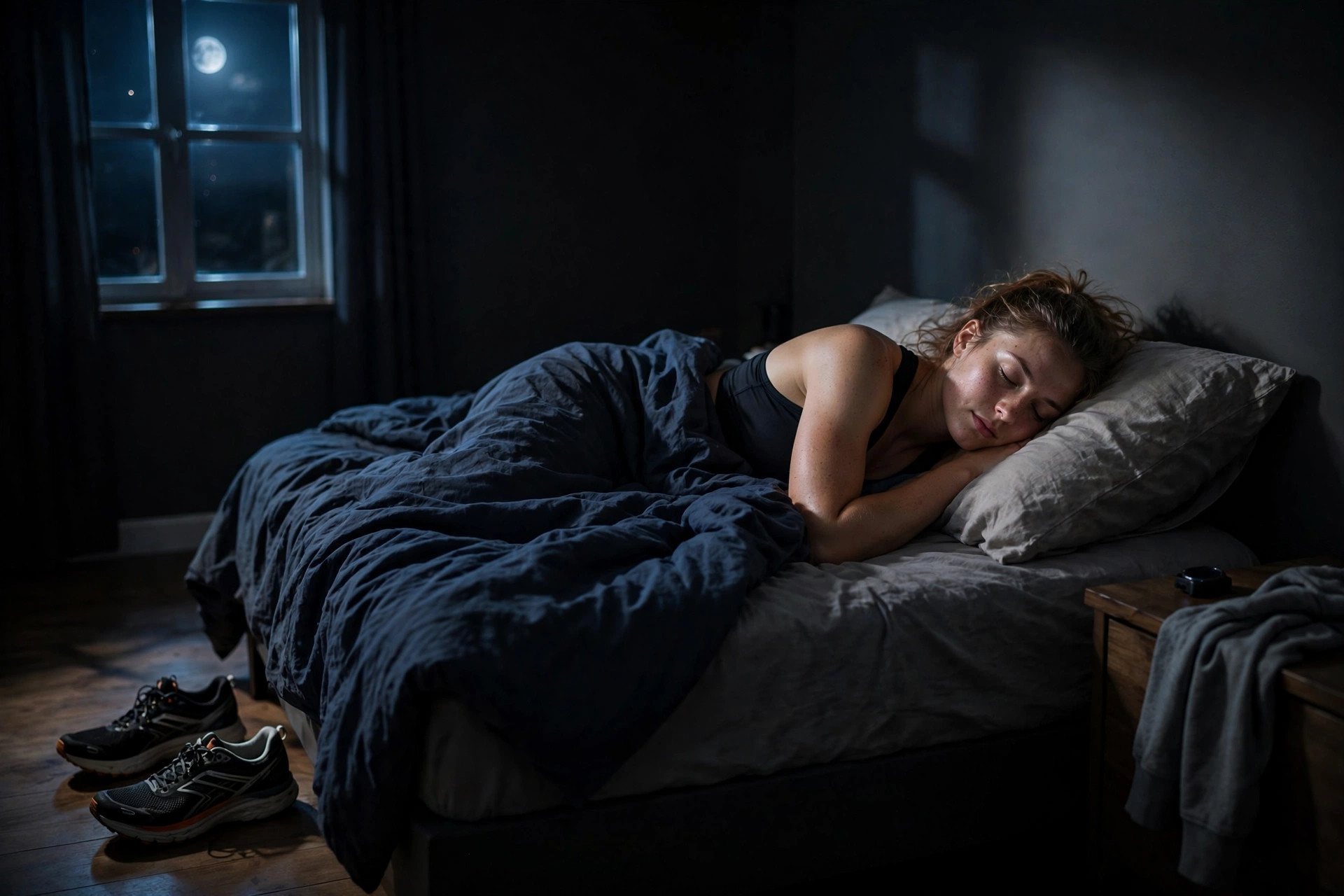
However, the division of labor is simple. Awake and training, you’re breaking things down. Asleep, you’re building back up. That’s physiology, not metaphor. This overnight repair cycle is the heart of the sleep and muscle recovery connection. For daytime strategies, see our post-workout recovery guide.
Fortunately, during deep sleep, your body releases its largest daily pulse of growth hormone, driving muscle repair. Sleep-deprived athletes show impaired protein synthesis and slower recovery. I used to wonder why I recovered so slowly despite “doing everything right.” Turns out “everything” didn’t include going to bed.
For example, poor sleep also impairs glucose metabolism: less glycogen, earlier fatigue. And during REM sleep, the brain consolidates motor learning. Coaches say you learn a skill “overnight.” You literally do.
Sleep Improves Athletic Performance: How Much Sleep Do Athletes Need?
To begin, more than the standard guideline, and more than most athletes get. The 7 to 9 hour recommendation is fine for regular folks, but athletes in heavy training do best at the upper end, and often beyond.
Next, studies found that extending sleep to 9 or 10 hours improved sprint times, shooting accuracy, and reaction time, plus better mood and less fatigue. That’s measurable performance change from doing nothing but sleeping more. The Sleep Foundation’s guide to sleep and athletic performance has more detail.
Then, a practical target: at least 8 hours, ideally 9, during intense training. Endurance athletes and anyone doing doubles may need 9 to 10. Plateauing, constantly sore, catching every cold, running on caffeine? Classic under-sleeping signs. I ticked all four.
Similarly, naps count too. A 20 to 30 minute early-afternoon nap tops up alertness without grogginess. They supplement nighttime sleep, not replace it, but for brutal schedules they’re genuinely useful. I was a nap skeptic. I was wrong.
Sleep Improves Athletic Performance: Your Brain on Too Little Sleep
In addition, physical recovery is only half the story. Sleep deprivation hits the brain first, and most sports are decided in split seconds.
Specifically, even one restricted night measurably slows reaction time and wrecks judgment: late reads, sloppy positioning, terrible decisions under pressure. There’s also a motivation effect nobody talks about: sleep-deprived athletes rate the same workout as feeling harder. You don’t just perform worse, training feels worse. Over a season, that quietly erodes consistency. Slow leak, not a blowout. Building mental resilience helps, but sleep is the foundation.
Subsequently, I once ran a morning time trial on four hours of sleep after staying up for a match. My pacing decisions were laughable. That was the day I stopped treating sleep as optional.
Sleep Improves Athletic Performance: The Injury Angle
In contrast, here’s the part that scared me straight. Athletes sleeping fewer than 8 hours a night are significantly more likely to get injured. One well-known study found adolescent athletes under 8 hours had nearly twice the injury risk. These are classic signs of overtraining syndrome when combined with heavy training.
Ultimately, tired muscles absorb force poorly, position sense degrades, reaction time slows, tissue repair stays incomplete. Prioritizing sleep isn’t just about performing better. It’s about staying in the game.
Sleep Improves Athletic Performance: Sleep Hygiene Tips for Athletes
As a result, keep a consistent schedule. Same bedtime and wake time daily, weekends included. Your circadian rhythm runs your hormonal orchestra, and irregular timing throws it off. Highest-impact change on the list, and the one people resist most.
In fact, cool, dark, and quiet. Aim for 18 to 19°C (65 to 67°F). Blackout curtains or an eye mask, plus earplugs or white noise if needed.
Certainly, cut screens 60 minutes before bed. It’s not just blue light, it’s mental stimulation. Scrolling keeps your nervous system switched on when it should wind down. Read a physical book instead.
Typically, time caffeine and alcohol. Caffeine’s half-life is 5 to 6 hours, so set a hard cutoff at least 8 hours before bed. That afternoon coffee is still in your system at midnight. Alcohol fragments sleep architecture, especially REM. Skip it before key training days.
Indeed, manage late training. Intense evening sessions delay sleep onset, so finish at least 2 to 3 hours before bed. Then wind down: stretching, a warm shower, dim lights.
Finally, plan for travel. Bring a sleep mask, shift your schedule a few days before time zone changes, and get morning sunlight at your destination to reset your clock.
This article is for informational purposes only and is not medical advice. If you struggle with persistent insomnia or a suspected sleep disorder, consult a healthcare professional.
Sleep Improves Athletic Performance FAQs
Can I catch up on sleep over the weekend?
Partially, but not fully. Weekend catch-up reduces some fatigue but doesn’t erase a week’s deficit, and it disrupts your circadian rhythm. Consistent nightly sleep beats binge-sleeping.
Do naps help athletic performance?
Yes, used correctly. Short naps of 20 to 30 minutes improve alertness and reaction time without grogginess. Just avoid napping too late in the day, which can sabotage nighttime sleep.
Does poor sleep really affect strength?
Indirectly but significantly. Sleep loss impairs recovery, kills motivation, slows reaction time, and disrupts the hormonal environment for muscle repair. One bad night won’t ruin your max. A bad week will show in your training.
Sleep Improves Athletic Performance: Final Thoughts
Understanding sleep improves athletic performance reframes it completely. Sleep isn’t downtime between workouts, it’s the phase where workouts pay off. Muscle repair, skill consolidation, hormonal balance, injury resilience, mental sharpness, it all runs on sleep. No supplement delivers that much across that many systems. Go to bed. On time. Every night.
This article is for informational purposes only and is not medical advice. Consult a healthcare professional if you have persistent sleep difficulties.