

You know that ache that just won’t quit. You’ve rested it, iced it, stretched it, maybe even swallowed your pride and taken a few weeks off. The moment you sprint, jump, or push through a heavy set, it’s right back there, nagging at the same spot. For a lot of athletes, that spot is a tendon: the Achilles, the heel, the elbow, the shoulder.
That’s exactly where shockwave therapy comes in, and it’s having a moment. Searches for it have surged this month. Clinics everywhere are advertising it as the non-surgical answer to pain that refuses to leave. But is it real science, or just an expensive gadget with good marketing? I dug into what the research actually says. If you’re going to spend real money on your body, you deserve better than a brochure.
What shockwave therapy actually is
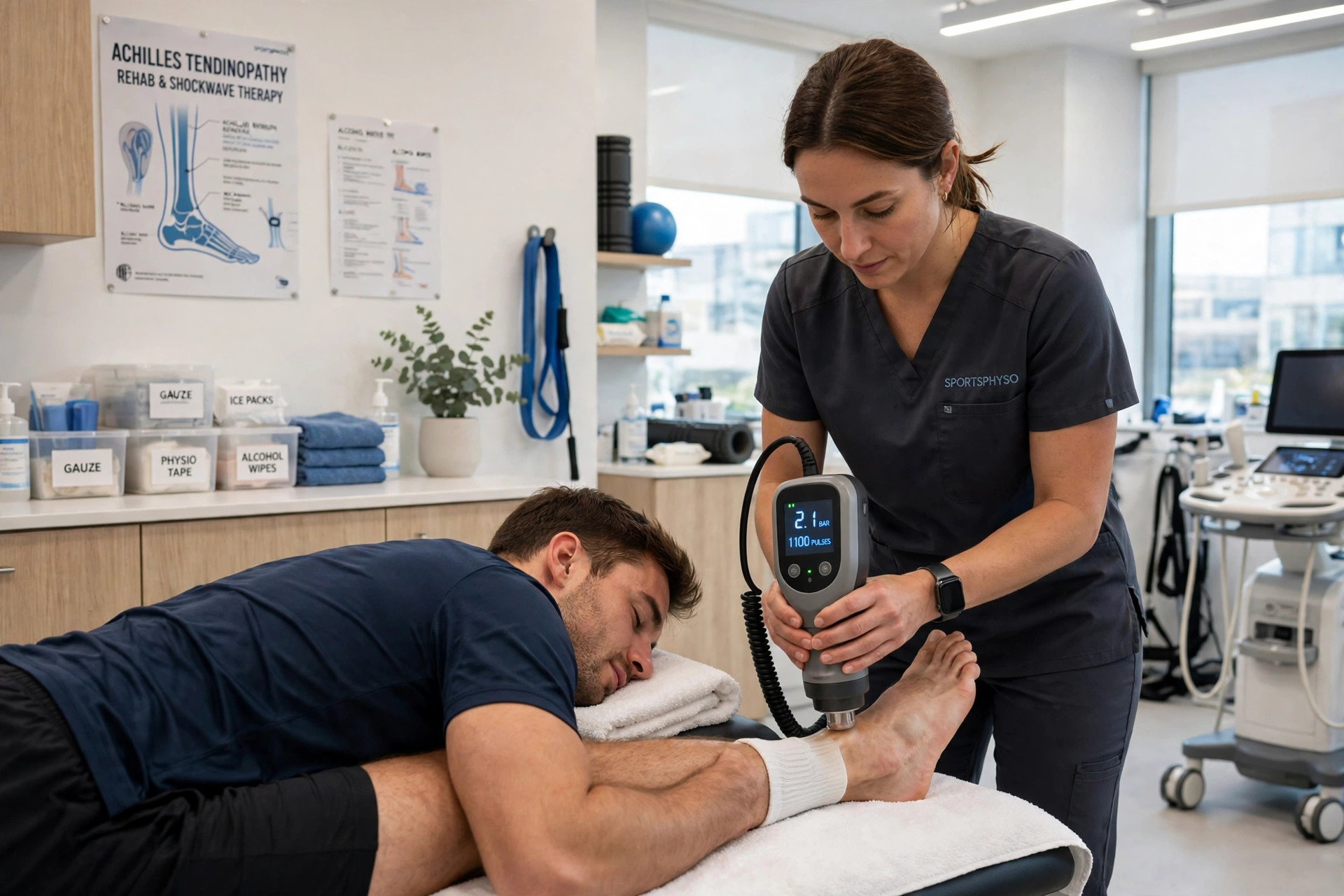
Despite the dramatic name, nobody is electrocuting you. Shockwave therapy sends acoustic pressure waves through your skin into the injured tissue. Doctors usually call it extracorporeal shockwave therapy, or ESWT. It uses a handheld device. Think of it like a very targeted, very controlled series of tiny pulses aimed at the exact spot that hurts.
Here’s a detail worth knowing before you book anything: not all “shockwave” is the same thing. Mayo Clinic’s sports medicine team points out that only focused shockwave creates a true shockwave. Radial devices produce pressure waves that spread out and lose energy as they travel. Both get sold under the same “shockwave therapy” banner. So it’s fair to ask a clinic which type they use and why they chose it for your injury. That one question alone separates a thoughtful clinic from a sales pitch.
The idea behind it is surprisingly simple. The pulses create tiny, controlled stress in the tissue. Your body responds the way it responds to any small injury. It sends more blood to the area, wakes up repair cells, and gradually remodels the tendon. It also seems to calm overactive pain nerves. Some people feel better surprisingly quickly, even before any real healing has happened.
Where the evidence is actually strong
This is where I have to be honest with you, because the honest answer is “it depends on what’s wrong with you.”
The strongest case is for chronic plantar fasciitis. That’s the sharp heel pain that greets you with your first steps in the morning. Multiple reviews and meta-analyses have found meaningful pain reduction there. It’s one of the few conditions where the US Food and Drug Administration has cleared focused shockwave devices. If you’ve had heel pain for months, this is where shockwave looks most convincing. The usual stretching, insoles, and rest may not have shifted it.
Achilles tendinopathy is next in line. A systematic review of chronic Achilles cases found consistent evidence of benefit at three months and beyond. A more recent review of athletes and active people concluded shockwave may work on its own for some tendons. It works best as an add-on to exercise for others. That’s an important distinction. We’ll come back to it.
There’s also decent support for calcific shoulder tendinopathy. That’s where calcium deposits build up in a rotator cuff tendon. There’s also support for gluteal tendinopathy, the outer-hip pain that plagues a lot of runners. The International Society for Medical Shockwave Treatment published updated guidance in 2024 covering exactly these conditions. That tells you this isn’t fringe anymore.
And where is it shakier? Patellar tendinopathy — jumper’s knee — and tennis elbow have more mixed results. Some trials look good. Others don’t. A 2026 systematic review and meta-analysis of 14 trials found the overall certainty of evidence to be very low. It also found a high risk of bias across the studies. That doesn’t mean it never helps those conditions. It means anyone promising you a guaranteed fix for jumper’s knee is overselling it.
What a session actually feels like
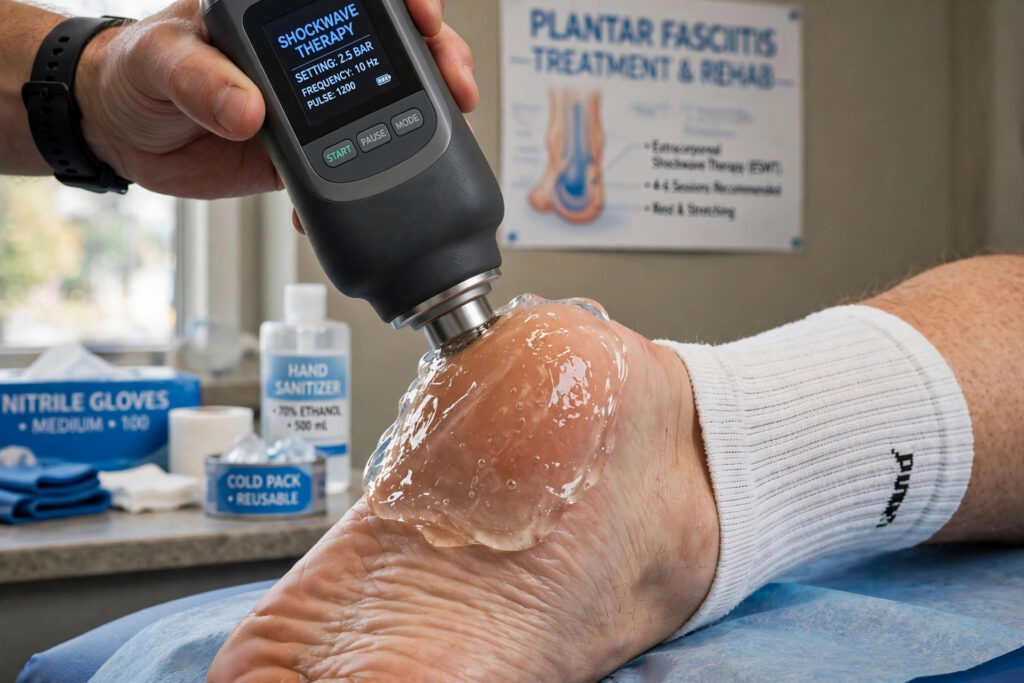
If the idea of a machine pulsing waves into your sore tendon sounds intimidating, here’s the reassuring part. There’s no surgery, no needles, and no anaesthetic in most cases. Columbia University’s rehabilitation team describes a typical session as 15 to 30 minutes. They apply gel to the skin and move the handheld probe over the painful area. A full course is usually three to four sessions, spaced about a week apart.
It isn’t painless, exactly. Most people describe it as uncomfortable pressure or a tapping thud over the sore spot. Clinicians often want your feedback during the session. Your reaction helps them aim. That’s why clinicians usually avoid numbing cream. If you can’t feel it, they can’t tell whether they’re hitting the right spot.
Afterwards, expect some redness, mild swelling, or a bit of bruising where clinicians applied the device. Mayo Clinic lists those as the common side effects. Rarer possibilities include haematoma, nerve irritation, and a theoretical risk of tendon rupture. That last one sounds scary, but experts describe it as theoretical, not common. Still, it’s one more reason to go to a qualified clinician rather than the cheapest chair in town.
Most people walk out and carry on with their day. You won’t be laid up. But you also shouldn’t expect to run a personal best the next morning.
The part most ads leave out: it works best with exercise
Here’s the bit that changed how I think about this treatment. Again and again, the research points the same way. Shockwave plus a proper rehab programme beats shockwave on its own.
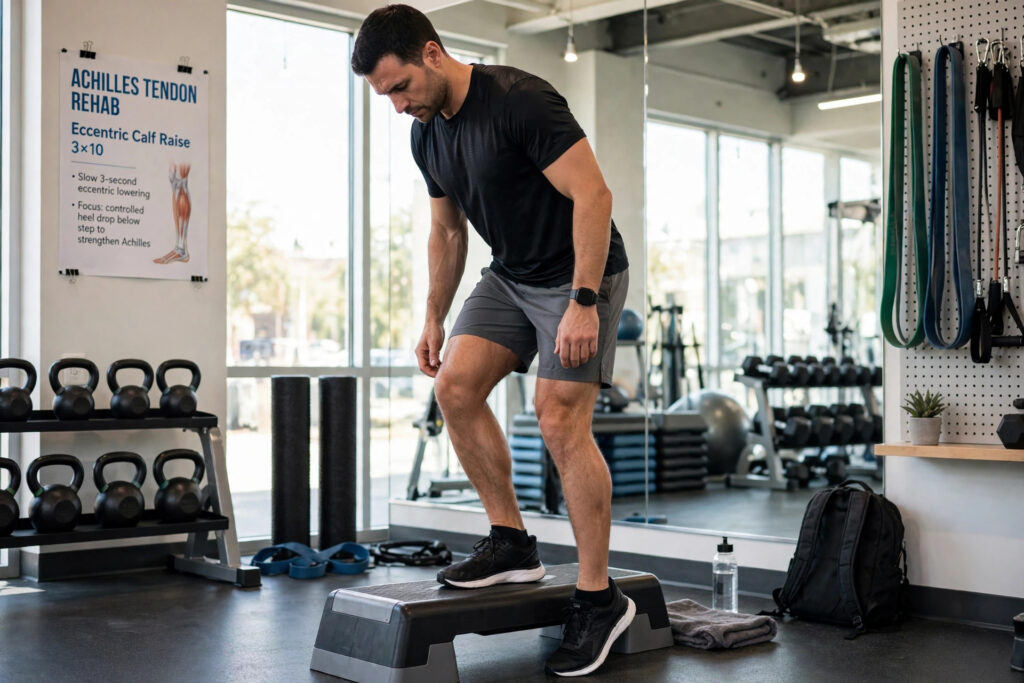
That makes sense when you think about it. A tendon doesn’t just need a wake-up call. It needs to be gradually reloaded so it can handle your sport again. Eccentric calf raises help an Achilles. Progressive loading helps a patellar tendon. Hip strengthening helps gluteal pain. That’s the boring, unglamorous work that actually rebuilds capacity. Shockwave may reduce pain and kick-start healing, but it can’t do your strength programme for you. A good post-workout recovery routine and the best recovery techniques matter just as much as the device itself. Even a well-planned marathon recovery week follows the same principle. The treatment opens a window. The rehab does the rebuilding.
So if a clinic offers you shockwave and waves you out the door with no exercise plan, that’s a red flag. The good ones pair the two. Ask upfront: “What rehab programme comes with this, and how will we measure progress?” If they can’t answer, keep your wallet closed.
Myth vs fact: the quick version
Myth: Shockwave therapy breaks up scar tissue like a jackhammer. Fact: The waves are far subtler than that. They trigger biological responses. Those include blood flow, cell activity, and pain-signal changes. They don’t smash anything apart.
Myth: One session and you’re cured. Fact: Most protocols use three to five sessions, and improvements typically build over weeks, not hours. Anyone selling a one-and-done miracle is selling, not treating.
Myth: It’s only for elite athletes. Fact: Most of the trial participants are everyday active people — recreational runners, weekend footballers, gym-goers. You don’t need a pro contract to qualify. You need a properly diagnosed chronic tendon problem.
Myth: If it doesn’t work, you’ve wasted everything. Fact: Even a “failed” course gives you useful information. You get a proper diagnosis, imaging, and a rehab plan you can carry forward. But that only holds if the clinic actually assessed you properly first.
What it costs — a worked example
Let’s talk money, because this is where a lot of athletes get caught out. In the US and UK, a single session typically runs roughly $200–$600 (or the local equivalent). Most insurers still classify shockwave as experimental for many diagnoses. So a lot of people pay out of pocket. Mayo Clinic notes that the FDA has cleared focused shockwave devices for plantar fasciopathy. Yet most insurance plans still don’t cover them.
Do the maths before you commit. Four sessions at $300 each is $1,200, before any physiotherapy sessions bundled alongside. That’s not pocket change. It’s worth comparing honestly against the alternatives. A structured 12-week loading programme costs far less. For many tendons, it’s the single most evidence-backed treatment there is. Shockwave starts to make financial sense when you’ve genuinely done the conservative work for months and you’re still stuck. It is not a shortcut past it.
Who should probably skip it — for now
Shockwave isn’t for everyone. It’s generally not used over areas with tumours, infections, or growth plates in children. Clinicians avoid it during pregnancy and in people with certain bleeding or clotting conditions. If you have a fresh, acute tear rather than a chronic, grumpy tendon, it’s also not the first move. Acute injuries need a different plan entirely.
And a word of caution for anyone chasing a quick return. Feeling less pain after a session is not the same as being healed. The temptation to go straight back to full training because it hurts less is real. It’s exactly how people turn a manageable tendon problem into a rupture. Let the pain reduction buy you a better rehab window, not an excuse to skip it.
So, should you try it?
Here’s my honest take. If you’ve got a chronic tendon problem, think three months or more. If you’ve already done a solid stretch of rest, loading exercises, and sensible training changes, and you’re still stuck, discuss shockwave therapy with a sports medicine doctor or physiotherapist. It’s a reasonable, evidence-backed next step. The evidence is strongest for plantar fasciitis and chronic Achilles problems. It’s decent for some shoulder and hip tendons. It’s more uncertain for jumper’s knee and tennis elbow.
Go in with the right expectations. Expect a few sessions, some discomfort, and gradual improvement over weeks, plus a rehab programme alongside it. Ask which device they use. Check what the evidence is for your specific condition. Ask what it will cost in total. Ask how they’ll measure whether it’s working. If the answers are vague, walk away. Your tendon deserves better than guesswork.
The athletes who get the most from shockwave aren’t the ones looking for a miracle. They’re the ones who treat it as one tool in a bigger plan. Diagnose properly, load progressively, and use the treatment to open a window for the work that actually rebuilds the tendon.
FAQs
How many shockwave therapy sessions do athletes usually need?
Most protocols use three to five sessions, spaced about a week apart. Each session lasts roughly 15 to 30 minutes. Improvement usually builds over several weeks after the course, not overnight.
Does shockwave therapy hurt?
It can be uncomfortable. Most people describe pressure or a tapping sensation over the sore spot. It’s usually tolerable without anaesthetic. Your feedback actually helps the clinician aim the treatment.
Is shockwave therapy better than physiotherapy?
It’s not an either-or. The best evidence supports shockwave combined with a structured exercise programme, not shockwave instead of one. For many tendons, progressive loading remains the foundation of treatment.
The bottom line
Shockwave therapy for athletes is neither a miracle cure nor a scam. It’s a genuinely promising, non-surgical option. It has real evidence behind it for certain chronic tendon problems. It also has real limits for others. Used at the right time, for the right condition, and alongside proper rehab, it can help. It can be the nudge that finally gets a stubborn tendon moving again. Used as a shortcut, it will disappoint you and lighten your wallet in equal measure. Choose the clinic carefully, ask the awkward questions, and do the rehab. That’s the part nobody can do for you.
This article is for general information only and isn’t medical advice. Talk to a qualified healthcare professional before starting any new treatment, especially if you have an existing condition or injury.