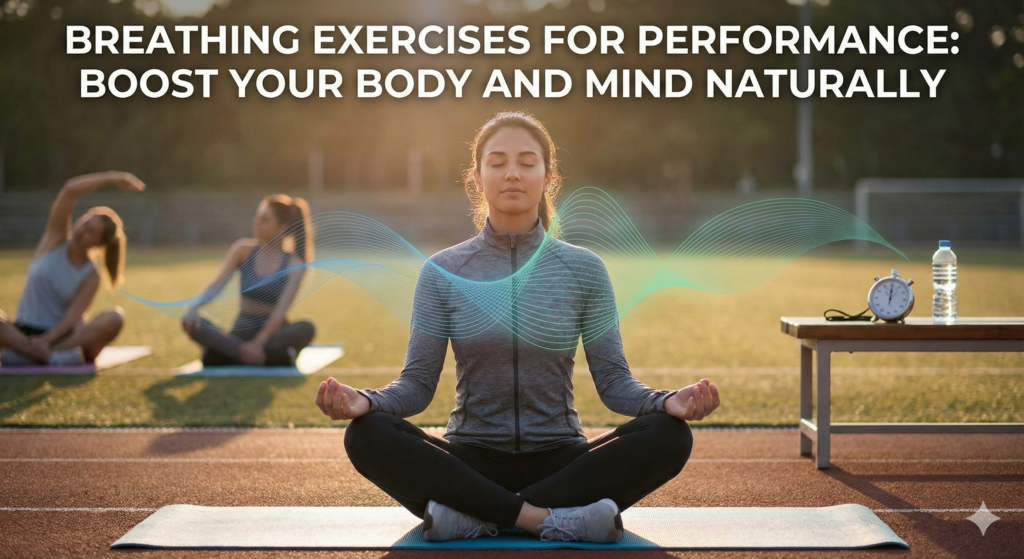
Breathing is an activity we constantly perform without actually thinking about it—but how one does their breathing can greatly affect their performance. In sports, business, and even for students and regular individuals, breathing exercises for performance are increasingly being recognized as an effective and scientifically supported technique in optimizing physical and mental performance and achieving emotional regulation.
_______________________________________
What are breathing exercises?
____________________________
Breathing Exercises
Breathing exercises, or techniques, are ways of deliberately breathing to regulate oxygenation and the expelling of carbon dioxide, as well as balance the nervous system. These exercises involve breathing in a way that’s different from the way we usually breathe. They are done consciously.
They are used in the following ways:
‘‘
• Mental clarity & focus
• Managing Stress and Anxiety
• Resilience/end
• Recovery and relaxation
______________________________________
How Breathing Exercises Can Enhance Performance
1. Enhance Oxygen Efficiency
Correct breathing patterns can raise the oxygen supply to your muscles and brain to enable you to:
• Face endurance without fatigue
• Recover faster between efforts
• Maintain strength and endurance
2. Improve Mental Focus and Clarity
The controlled breathing activates the parasympathetic nervous system, which:
• Counteracts mental fog
• Enhances
• Improves decision-making in stressful
3. Stress and Performance Anxiety Reduction
The breathing exercise can calm the nervous system by:
• Reduces Cortisol (Stress
• Slow heart rate
• Establishing a sense of mastery
It becomes particularly helpful before any competition, presentation, or exams.
_______________________________________
Breathing Exercises for Better Sports Performance
1. Diaphragmatic or Belly
Best Utilized for: Endurance, Stress Management, Regular Practice
How to do it:
• Seated or lying down position
• Breathe in fully through your nose
• Your belly should expand, not your chest
• Breathe slowly out through your mouth
Benefits:
• Increases lung capacity
• Improves
• Improves Breathing
2. Box Breathing
Best suited for: Concentration, intellectual performance, high-pressure performance
Steps:
• Inhale for 4 seconds
• Hold for 4 seconds
• Breathe out for 4
• Hold for 4 seconds
Repeat for 3 to 5 minutes
Benefits:
• Sharpens
• Cures Anxiety
• Regularizes heart rate
________________________________
3. Nasal Bre
Good for: Sports performance Enhanced endurance exercise
*How it helps:*
• Filters air and warms it
• Boosts oxygen intake
• Supports deeper, more measured
Practice nasal breathing during light exercises or warm-ups.
__________________________________________________
4. Expanded Exhale Bre
Best for: Rejuvenation & relaxation of the body
ANO
• Inhale 4 seconds
• Exhale slowly for
Benefits:
• Engages relaxation response
• Aiding in
• Reduces nervous tension
_____________________________________________________________________
5. Breath Holds (CO₂ Tolerance Training)
Ideal for use: Performing under fatigue
How to practice:
• Breathe
• Suspend breath for several seconds and inhale or exhale.
• Resume calm, regular
Benefits:
• Enhances carbon dioxide tolerance
• Augments
• Trains the body on how to remain calm in stressful situations
_______________________________________
It is appropriate to use breathing exercises in the following scenarios:
*
You may practice breathing skills in various situations:
• Before Performance: Reduces nervousness and improves concentration
• During activity: To sustain rhythm and endurance
• Post-performance: For recovery
• Practice every day: To get long-term benefits
Consistency trumps intensity.
______________________________________
Common Mistakes to Avoid
========================
• Over-breathing or forcing the breath
• Extended breath holding unsupported by instruction
• Competing demands for
• Pact
Start off slowly with a relaxed attitude.
_______________________________________
Conclusion
Respiration is one of those underestimated methods that will greatly benefit your performance levels. Whether it is your sports performance, your focus, or your stress management, breathing techniques for sports performance will provide an outstanding method that will benefit you immensely.
With just a few minutes a day, the respiratory system can be trained to help you perform to your optimal capabilities. Breathing exercises for sports performance will help athletes tackle situations much better, including sports performance, focus, stress, and endurance.
______________________________________
Frequently Asked Questions (FAQ)
1. How many minutes do I need to spend on breathing exercises per day?
It takes about 5-10 minutes for its benefits to be realized.
1. Should I set aside time each day to care for my
Yes. They increase oxygen efficiency, endurance, and recovery.
3. Are breathing exercises safe for everyone?
Usually yes, though those with medical conditions should consult a physician.
4. In how much time do breathing exercises produce effective results?
Some users report that they immediately notice relaxation, and functions improve in weeks.
5. Do I breathe with my nose or with my mouth?
Nasal breathing is encouraged for all kinds of training and activity.
